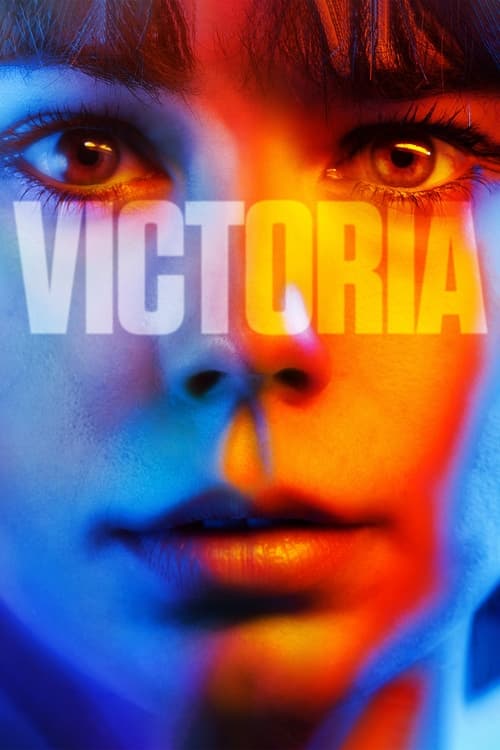
Victoria
2015 · Sebastian Schipper
For when you want a white-knuckle ride and the feeling of pulling an all-nighter in a foreign city — thrilling, immersive, and demanding. Save it for a night you can give it your full, uninterrupted attention.
What it's about
Around four in the morning outside a Berlin nightclub, a young Spanish woman — new to the city, working in a café, a little lonely — falls in with four local guys and a flirtation with one of them, Sonne. What starts as a charming, boozy wander through the pre-dawn streets slides, hour by hour, into something far more dangerous involving a debt that must be paid before sunrise. The whole film unfolds in real time, in one single unbroken camera take of over two hours.
The experience
First it's loose and romantic, like eavesdropping on the best night out you never had; then the dread arrives and your stomach drops and stays dropped. Because there's never a cut, there's never a release — you're trapped in the night with her.
Performances
Laia Costa is extraordinary in the title role, carrying an entire feature live with no safety net — her shift from giddy openness to shock feels frighteningly real — and Frederick Lau's Sonne makes rough-edged charm genuinely disarming.
The craft
The single 138-minute take is no gimmick: cinematographer Sturla Brandth Grøvlen ran the camera live across the city through nightclubs, rooftops, apartments, car chases and a heist, and largely improvised dialogue keeps every moment alive. Nils Frahm's aching electronic score seals the mood — this one deserves good speakers and zero phone-checking.
Why it matters
It pushed the long-take tradition to its absolute limit — a whole feature with no edit at all — and became an instant reference point in any conversation about real-time filmmaking and what a camera crew can physically do.
Horror · Suspense & terror. A boozy pre-dawn flirtation slides into real-time dread in one unbroken take, with no cut to let you out of the night.
Snapshot
Victoria is a Berlin-set crime thriller distinguished by a single, unbroken 138-minute take — no hidden cuts, no digital stitching, one continuous camera run captured live across the early-morning city. A young Spanish woman, newly arrived and working in a café, meets a quartet of local men outside a nightclub at around four in the morning; over the following two hours her flirtation with one of them, Sonne, carries her from courtship into an armed bank robbery and its lethal aftermath. The film's central claim on cinema history is formal: it takes the long-take tradition to its logical extreme, sustaining an entire feature — with location changes, driving, a heist, and a police shootout — in real time without a single edit. Directed by Sebastian Schipper and photographed by Sturla Brandth Grøvlen, it premiered in competition at the 2015 Berlinale, where it won the Silver Bear for Outstanding Artistic Contribution (awarded to the cinematography), and went on to dominate that year's German Film Awards. It stands as one of the defining single-take features of the 2010s, alongside — but methodologically opposed to — the same period's Birdman.
Industry & production
Victoria was a German production, made on a comparatively modest budget for a feature of its ambition and running time. It was produced by Schipper's own Berlin outfit (MonkeyBoy) in partnership with Deutschfilm and public-broadcaster support characteristic of the German film-financing landscape, with regional film-fund backing typical of Berlin-Brandenburg productions of the period. I do not have reliable exact budget or box-office figures and will not invent them; the honest summary is that this was an arthouse-scale production whose economic story is inseparable from its method — a small crew, minimal set dressing of real locations, and a shooting schedule built around a single successful run rather than conventional coverage.
The production's logic inverts standard filmmaking economics. Because the film is one take, there was no editing of the image in the ordinary sense and no possibility of pickups or reshoots within a scene; the "shoot" consisted of three complete attempts at the entire film, staged on three separate early mornings in April 2015. The third take is the film that was released. This meant the real expense and risk migrated to preparation: weeks of rehearsal, location securing across roughly two dozen sites in Kreuzberg and Mitte, and the coordination of a large crew who had to remain invisible while the camera moved live through streets, a nightclub, a rooftop, cars, a café, and a bank. The gamble is total in a way conventional productions never face — a failure at minute 130 wastes the entire night.
Technology
The film was shot on a Canon digital cinema camera (a Canon C300-class body), chosen for exactly the reasons that matter to a two-hour handheld run: it is light, it performs well in very low available light, and it can record continuously for the required duration. This is the technological enabler that makes Victoria a product of its precise moment. The single-take feature is an old dream — bound in the analog era by the ten-minute limit of a film magazine, which forced Hitchcock's Rope (1948) into disguised reel-change cuts. Digital sensors sensitive enough to expose a real, un-lit Berlin at 4 a.m. and media capable of holding 140 unbroken minutes are what turn the conceit from trickery into literal fact. Victoria is therefore inconceivable more than a few years before it was made.
Crucially, the film advertises its refusal of the other contemporary technology — the invisible digital seam. Where Birdman (2014) used post-production compositing to weld many long takes into one apparent shot, Victoria is genuinely singular, and the closing credits make the point by placing the cinematographer's name alone on screen first ("Ein Film von Sturla Brandth Grøvlen" / a film by Sturla Brandth Grøvlen), an unusual gesture acknowledging that the image is one continuous authored act.
Technique
Cinematography
Grøvlen operated the camera himself for the entire run, moving with the actors as a silent participant — walking, running, riding in the back of cars, climbing stairs. The photography is handheld and mobile throughout, and its aesthetic virtues are inseparable from its constraints: it must use available light (streetlamps, club interiors, dashboard glow, the gray of approaching dawn), it cannot relight between spaces, and it must make framing decisions live and irreversibly. The result is a texture of documentary immediacy — grain in the darkness, blown practical sources, focus that breathes — that no storyboarded scheme could counterfeit. The Silver Bear citation and the near-unanimous critical emphasis on the film's look confirm that the cinematography is not merely a stunt but a genuine, sustained act of on-the-fly composition under pressure.
Editing
There is, definitionally, no editing within the film — the running order is the shooting order, in real time. The "editorial" intelligence was relocated entirely to the pre-shoot: the choreography of where the camera goes, when it lingers, when it presses in. The only conventional post work is the sound mix and grade; the cut, in the traditional sense, does not exist. This makes Victoria one of the purest tests of the Bazinian belief that duration and spatial continuity carry their own truth, unmediated by montage.
Mise-en-scène / staging
Staging is the film's true directorial art, because everything a cut would normally accomplish — a change of location, a passage of time, the isolation of a face — had to be achieved by physically moving people and camera through continuous space. Schipper and his team blocked roughly two dozen real Berlin locations into one traversable itinerary, timed to the actual coming of dawn, so that the lightening sky performs its own dramatic function as the night's mood curdles. Crew, lighting, and traffic control had to be hidden in plain sight across a live city. The staging also had to accommodate improvisation (see Performance), meaning the blocking was a flexible armature rather than a fixed set of marks.
Sound
Sound was recorded live with the take, with all the attendant challenges of a moving, unmiked-looking city shoot; the mix reconstructs intimacy and space in post from that live capture. The score is by the Berlin-based pianist and electronic composer Nils Frahm, and its deployment is deliberately withheld: for long stretches the film runs on ambient, diegetic sound, so that when Frahm's music finally enters, it marks the tonal turn from romance to dread and gives the film's back half its aching lift. The restraint is central — the music is scarce enough that its arrival is an event.
Performance
The performances are the load-bearing element, because in a single unbroken take the actors cannot be rescued by a cut. The screenplay was famously skeletal — an outline of roughly a dozen pages rather than full dialogue — so the actors improvised their lines within a fixed sequence of beats and destinations. Laia Costa, as Victoria, and Frederick Lau, as Sonne, carry an arc that must move plausibly from stranger's flirtation through infatuation to complicity in violence and grief, all in continuous present tense; the supporting men (played by Franz Rogowski, Burak Yiğit and Max Mauff) supply the volatile group energy that pulls Victoria in. Costa's work in particular — she must remain the film's moral and emotional center while being physically present in nearly every frame for two hours — was singled out and honored at the German Film Awards. The improvisation reads as lived rather than loose because the emotional escalation is precisely governed even when the words are not.
Narrative & dramatic mode
The dramatic mode is real-time and unelided: story time and screen time are identical, which is the deepest consequence of the one-take method. The narrative is a gradual, almost imperceptible tonal slide — a "night film" that begins as a meet-cute and mutates into a crime tragedy without any hard tonal cut to warn us. The first half is patient, courtship-paced, seemingly aimless; the film earns the audience's investment in Victoria and Sonne precisely so that the later coercion into the robbery lands as a betrayal of intimacy rather than a genre beat. This structure — long, unhurried setup detonating into irreversible action — is only fully legible in retrospect, and the real-time form denies the viewer the relief of an ellipsis. There is no cutting away from consequence.
Genre & cycle
Victoria sits at the intersection of romance, heist thriller, and city-nocturne. It belongs to the lineage of the "one wild night" film and to the crime tradition in which an outsider is drawn into a robbery that spirals into a shootout — but it strips those conventions of their usual editorial rhythm. Where the heist film normally lives on cross-cutting, tension-building montage, and the getaway chase lives on cutting speed, Victoria must generate suspense purely through duration, proximity, and the dread of unbroken continuity. It is a crime film that refuses crime cinema's grammar, which is exactly why it feels new within a very old genre.
Authorship & method
The authorship is genuinely shared, and the film is unusually honest about that. Sebastian Schipper — an actor turned director (known to audiences from Tom Tykwer's Berlin films before moving behind the camera) — conceived the project and directed it, but he built it around collaborators whose live contributions are the film. Sturla Brandth Grøvlen, the Danish-Norwegian cinematographer, is close to a co-author: he physically authored the single image, and the film's end credits acknowledge this with the striking "a film by" attribution to him. The screenplay is credited to Schipper with Olivia Neergaard-Holm and Eike Frederik Schulz, but the operative "writing" happened live in the actors' mouths from an outline, making Costa, Lau and the others partial authors of their own dialogue. Nils Frahm's score is a distinct authorial signature. The method — extreme preparation, minimal script, one continuous performed-and-photographed run — makes Victoria a rare case where the usual hierarchy of director-over-crew is genuinely flattened into a single collective act.
Movement / national cinema
The film is a product of Berlin's contemporary German cinema, and it is emphatically a Berlin film — not a postcard Berlin but a nocturnal, migratory, polyglot one. Victoria is Spanish; the men speak a rough Berlin German; the lovers communicate in halting English across a language gap that is itself a plot mechanism and a portrait of the twenty-first-century European city. This connects Victoria to a strain of German filmmaking preoccupied with the capital as a space of transience and encounter, and its Berlinale triumph situates it squarely within the German industry's own account of its recent achievements. It is less a manifesto-movement film than a landmark work of the post-reunification Berlin cinema of atmosphere and youth.
Era / period
Victoria is set and shot in the present of its making — mid-2010s Berlin — and is thoroughly of that period: cheap sensitive digital cameras, a European youth culture of clubbing and precarious mobility, and a filmmaking climate newly fascinated by the seamless long take. It arrived in the same brief window as Birdman and the broader 2010s vogue for the "oner," and it functions as that vogue's purist counter-statement: the same era's fascination, honestly executed.
Themes
The film's governing theme is trust and its velocity — how quickly intimacy forms between strangers in a city of the sleepless, and how that same speed carries a person into catastrophe. Because the form denies ellipsis, the audience experiences the erosion of Victoria's caution in the same continuous time she does, which makes complicity the film's real subject: we watch, without escape, how an ordinary, sympathetic person can be swept step by step into an armed robbery. Secondary currents run through it — loneliness and displacement (an outsider's hunger for belonging in a foreign city), the language barrier as both romance and danger, the seductive pull of male group loyalty, and dawn as a merciless clock counting down a night that cannot be taken back. Underneath is a fatalism: the single take is itself a formal image of consequence without a cut, of actions that cannot be undone.
Reception, canon & influence
Critical reception was strong and centered, almost inevitably, on the achievement of the unbroken take — but the better criticism argued that the film transcends its stunt because the emotional arc and Costa's performance justify the method rather than merely surviving it. At the 2015 Berlinale it won the Silver Bear for Outstanding Artistic Contribution for the cinematography, and at the German Film Awards it was among the year's most decorated films, taking top honors including recognition for the film itself, for Schipper's direction, for Costa's lead performance, for Grøvlen's cinematography, and for Frahm's score. (Where I am uncertain of a specific category or count I have kept the claim general rather than risk error.)
Its influences, looking backward, are the whole history of the long take pressing against its technical limits: Hitchcock's Rope and its magazine-length disguised cuts; the bravura tracking shots of Welles, Tarkovsky, Béla Tarr, and Sokurov's single-take Russian Ark (2002), the digital precursor that first proved a whole feature could be one shot; and, contemporaneously, Birdman, against whose invisible stitching Victoria defines itself by being literally uncut.
Looking forward, Victoria became a reference point in the ongoing 2010s conversation about the single-take feature — cited alongside works like Birdman and the war film 1917 whenever the form's honesty and purpose are debated. Its specific legacy is as the "real one" of the cycle: the film most often invoked to argue that the unbroken take can be genuine rather than composited, and that its true difficulty and reward lie not in technology but in live performance sustained without rescue. Its lasting influence is thus as much a provocation to other filmmakers — proof that the extreme long take remains a viable, if terrifying, method — as it is a finished object.
Reception
It premiered at the 2015 Berlinale as a jaw-dropper — a 138-minute Berlin heist film in one genuine take — with a vocal minority dismissing the take as a stunt; a decade on, the stunt IS the legend, and it's settled in as the one-take movie other one-take movies get measured against.
How Victoria was received, from release to now →
How to watch Victoria: what to notice on a first viewing
- Notice you never see a single cut in the whole film. Cinematographer Sturla Brandth Grøvlen carries the camera himself for all 138 minutes, walking, running, and riding with the actors through real Berlin streets and interiors. Nothing you see was assembled afterward. It happened exactly once, in this order, in real time.
- Notice the light change as they move between locations. The photography can only use whatever light is actually there, streetlamps, club interiors, dashboard glow, the gray of approaching dawn, because there is no time to relight. The lighting is proof the crew never stopped to set anything up.
- Listen for how long the film goes without music. Nils Frahm's score is held back for long stretches while ambient, diegetic city sound carries the scene, so its eventual arrival becomes a noticeable event. The absence of music is doing work, keeping you inside the raw sound of the night.
- Watch how naturally the actors talk to each other. The script was a dozen-page outline of beats and destinations, so the actors improvised their actual lines within that structure, with Laia Costa on screen almost constantly. The conversation feels found rather than written, because in a real sense it was.
- Notice the sky slowly lightening as the night goes on. The route through roughly two dozen real Berlin locations was timed to the actual coming of dawn, so the literal sunrise tracks the story's own mood shifting. Time passing here is not implied by a cut. You watch it actually happen.
The whole guide to watching Victoria, with the keys for a rewatch →
Influences: the films it descends from and the films it influenced
- Rope (1948) — Establishes the feature-length illusion of continuity by hiding reel-length cuts in bodies and furniture, the original wager that a whole film could unfold as one real-time take confined to a single space.
- Touch of Evil (1958) — Its opening crane-and-track long take choreographs actors, vehicles and camera through a live urban space in one unbroken move, the bravura blocking-in-depth that Victoria extends to feature length.
- The Sacrifice (1986) — The climactic multi-minute burning-house shot proves the long take as an endurance stunt with no safety net, one performance and one camera run that must not fail — the exact terror Victoria sustains for 138 minutes.
- Werckmeister Harmonies (2000) — Builds a film from a few extended choreographed tracking takes that follow a lone figure through streets in available darkness, the walking-with-a-body-through-space grammar Grøvlen's handheld camera adopts.
- Timecode (2000) — Shoots its narrative as continuous unbroken real-time takes with actors improvising from a scored outline rather than a locked script, the same 'writing happens live in the actors' mouths' method Victoria uses.
- Russian Ark (2002) — The direct digital precursor: the first feature filmed as a single genuinely unbroken shot, proving the technology and the one-take feature as a form Victoria then defines itself against by being uncut yet also dramatic.
- Elephant (2003) — Long Steadicam takes trailing characters through corridors in flat available light, drifting between figures with no score — the withheld-music, follow-the-body handheld realism Victoria inherits.
- Children of Men (2006) — Cuarón and Lubezki fold gunfire, chases and chaos into single choreographed long takes, demonstrating that suspense and action — not just conversation — can be built inside an unbroken shot, which Victoria's heist turn requires.
- Silent House (2011) — A real-time thriller staged to appear as one continuous handheld take confined to a single location, using the unbroken shot to weaponize dread — the same real-time/continuous-space pressure Victoria applies to crime.
- Birdman or (The Unexpected Virtue of Ignorance) (2014) — Pushes the one-shot ambition to its literal endpoint as a genuine single unbroken take, riding the post-Birdman appetite for continuous-time cinema.
- Cléo from 5 to 7 (1962) — Schipper's one-take real-time night across a city, anchored to a young woman's continuous experience, is a direct descendant of Cléo's synchronized-clock walking film.
- One Cut of the Dead (2017) — Opens with a genuine unbroken single-take shot performed live with all its onset risk, then dramatizes the terror of executing a real oner without rescue — a direct meditation on the method Victoria embodies.
- Utøya: July 22 (2018) — Restages a terror attack as one continuous real-time handheld take, using the unbroken shot's inability to cut away as an ethical and dramatic instrument exactly as Victoria uses it to trap the viewer with the actors.
- 1917 (2019) — The war-film flagship of the oner vogue Victoria helped fuel; Mendes and Deakins engineer a composited continuous shot, and every debate over it invokes Victoria as the uncut 'real one' benchmark for whether the form is honest.
- Boiling Point (2021) — A genuinely single continuous take run live through a working restaurant, dependent on ensemble performers sustaining escalating pressure without a cut — the purest post-Victoria proof that the unbroken take rewards live performance over technology.
- Birdman (2014) — The contemporaneous 'oner' Victoria explicitly answers: Iñárritu and Lubezki digitally composite hidden cuts into a seamless illusion, whereas Victoria stakes its identity on being literally, un-stitched, one take.
- Son of Saul (2015) — Released the same season, it locks its long takes to a single body in shallow focus and lets the world blur past, betting the whole film on sustained proximity to one performer — a parallel commitment to camera-glued-to-actor duration.
- Good Time (2017) — Extends the city-nocturne crime propulsion: handheld available-light neon, a botched score-driven scheme unraveling across one desperate night, the same tonal slide from lark to catastrophe that Victoria rides.
- Tatami (2024) — Sustains a single real-time throughline whose unbroken temporal propulsion never lets characters (or viewers) off the hook — the momentum logic Tatami reproduces across a tournament day.
Similar films
- Boiling Point (2021) — influence & lineage
- Before Sunrise (1995) — same viewing thread
- Run Lola Run (1998) — shared sensibility
- 4 Months, 3 Weeks and 2 Days (2007) — shared sensibility
- Following (1999) — shared sensibility
- The Berlin File (2013) — shared sensibility
- Christiane F. (1981) — shared sensibility
- Notorious (1946) — shared sensibility
All the films related to Victoria →
Watch it with: curated runs of related films
- Strangers Who Walk and Talk — Watch these back to back for the particular magic of two people, a city, and a few borrowed hours of talk that may not outlast the night.