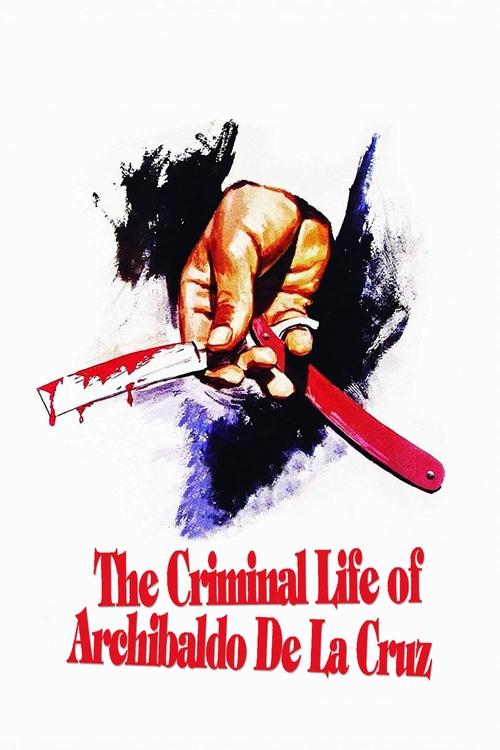
The Criminal Life of Archibaldo de la Cruz
1955 · Luis Buñuel
For when you're in the mood for something elegant and perverse — a wittier, stranger alternative to a standard crime picture. Great for a night when you want to be amused and slightly disturbed at the same time.
What it's about
Archibaldo de la Cruz is a wealthy, impeccably mannered Mexico City bachelor with a secret ambition: ever since a childhood music box convinced him he can kill by wishing, he's dreamed of becoming a great murderer of women. The joke is on him — every elaborate plot he hatches goes sideways, as fate keeps dispatching or rescuing his intended victims before he can lift a finger.
The experience
Deliciously wicked and dry — a black comedy that plays like a thriller told with a raised eyebrow. It's playful rather than gruesome, and its blurring of fantasy and reality keeps you pleasantly off-balance to the end.
Performances
Ernesto Alonso plays Archibaldo with perfect deadpan refinement — a dandy whose courtly surface never cracks, which is exactly what makes his homicidal daydreams so funny.
The craft
Buñuel constructs it as a surrealist comedy of manners in crisp black and white, using a recurring music box, a life-size mannequin, and dreamlike detours to dissolve the line between what Archibaldo does and what he merely imagines. The nonlinear, confession-framed storytelling is clockwork-precise — every thwarted scheme lands like a punchline.
Why it matters
One of the jewels of Buñuel's Mexican period, it distilled the surrealist attack on bourgeois respectability into popular comic form and paved the way for the great European provocations of his later career.
Snapshot
Released in Mexico as Ensayo de un crimen ("Rehearsal for a Crime"), this black-and-white feature is among the most perfectly balanced of Luis Buñuel's Mexican-period films — a surrealist comedy of manners disguised as a psychological crime story. Its protagonist, Archibaldo de la Cruz (Ernesto Alonso), is a wealthy Mexico City bachelor convinced from childhood that he possesses the power to kill by wishing, a conviction seeded by a music box and a governess's dead body glimpsed in a moment of erotic awakening. As an adult he sets out to become a connoisseur of murder, plotting the deaths of a succession of women — yet each intended victim dies by some other agency, or slips away, before he can strike. The film thus becomes a comedy of thwarted intention: a would-be killer who never actually kills. Adapted from a novel by the Mexican dramatist Rodolfo Usigli, it fuses Buñuel's Spanish-surrealist obsessions — fetishism, Catholic guilt, the tyranny of desire — with the polished production values of Mexican studio cinema. Running roughly ninety minutes, it remains a touchstone for scholars mapping the survival of Surrealism inside commercial genre filmmaking.
Industry & production
The film belongs to Buñuel's long Mexican exile, the roughly two-decade stretch (beginning in 1946) during which the director, cut off from Spain by the Franco regime and from Hollywood by circumstance, rebuilt his career inside Mexico's booming studio system — the industry then in the late glow of its "Golden Age." By 1955 Buñuel had already delivered Los Olvidados (1950), his international breakthrough and Cannes prizewinner, and Él (1953), so he approached Ensayo de un crimen as an established but still commercially constrained figure who had learned to smuggle personal preoccupations into modestly budgeted productions.
The picture was mounted by a Mexican production company operating in the standard Golden-Age mode: tight schedules, studio interiors, an economy geared to rapid turnaround. Buñuel was famous for working fast and under budget, qualities that suited him here. The source was Usigli's 1944 novel of the same Spanish title, and the adaptation retained the book's conceit of a man narrating his criminal ambitions, reframing it through Buñuel's characteristic irony.
The production is now inseparable from a real-life tragedy: Miroslava Stern — the Czech-born, Mexico-based actress billed simply as Miroslava, who plays the elusive Lavinia — died by suicide in 1955, around the time of the film's completion. Because her character is memorably destroyed on screen in effigy, the coincidence lent the film an eerie afterlife in Mexican memory; her story was later dramatized in the 1993 Mexican film Miroslava. The precise sequence of shooting relative to her death is the kind of detail on which popular accounts vary, and I will not assert a specific chronology beyond noting that her death came in the same period as the film's release.
Technology
Technologically the film is conventional for mid-1950s Mexican studio work: 35mm black-and-white photography, standard Academy framing (this precedes the Mexican industry's widespread adoption of anamorphic widescreen), and predominantly soundstage-based production supplemented by location and process work. There is no technical novelty being showcased; Buñuel had no interest in gadgetry for its own sake. What matters is how ordinary the toolkit is, because the film's power comes from imagination rather than apparatus — a wax mannequin, a pottery kiln, a music box, a straight razor. The one area where craft technology becomes expressive is in the effects work required for the mannequin's destruction, a practical in-camera illusion (the melting, burning figure) achieved with the modest resources of the period rather than any advanced special-effects pipeline.
Technique
Cinematography
Photography is credited to Agustín Jiménez, a distinguished Mexican cinematographer whose work here is precise, legible, and restrained. Buñuel generally distrusted showy camerawork, preferring compositions that let disturbing content register without stylistic underlining, and Jiménez serves that aesthetic. The camera favors clean medium shots and deep, balanced interiors that render bourgeois Mexico City — drawing rooms, a ceramics studio, a casino — with a matter-of-fact clarity that makes the eruptions of fantasy all the more startling. When Buñuel wants a fetish object to dominate, the framing isolates it (a stockinged leg, the music box, the mannequin's face) so that the fixation becomes the viewer's as well as Archibaldo's. The lighting is high-key studio realism for most scenes, reserving shadow and emphasis for the murder reveries.
Editing
The editing carries the film's central structural joke: repeatedly, Buñuel builds toward a killing with mounting deliberation, only to cut away or resolve the sequence with the victim's death arriving by unrelated means. Several of Archibaldo's murders are staged as fantasies and then undercut, so the cutting must manage the slippage between imagined act and actual event. The film also uses a framing device — Archibaldo recounting his life to a magistrate — so the editing threads present-tense confession and extended flashback. The specific editor's credit is not something I can attest with confidence from the historical record as I hold it, and I will not attach a name I cannot verify; Buñuel's Mexican films were cut by a small pool of studio editors, but I flag this as a genuine gap rather than guess.
Mise-en-scène / staging
Mise-en-scène is where the film is richest. Buñuel stages the bourgeois world with deadpan naturalism and then plants surrealist objects inside it. The recurring music box — a child's toy said to hold lethal power — is the organizing prop, and its tinkling waltz becomes a leitmotif of desire and death. The single most celebrated image is Archibaldo carrying a life-size wax mannequin modeled on Lavinia to his ceramics kiln and burning it, watching the figure's face melt and collapse — a substitute murder that is at once comic, erotic, and horrifying, and a pure distillation of the Surrealist logic of displaced desire. Equally memorable is the film's founding trauma: the child Archibaldo, during street fighting of the Mexican Revolution, seeing his governess fall dead from a stray bullet at the very moment he has wished it, her exposed thigh fusing eroticism and death in his imagination forever. These stagings are the film's argument, made in objects rather than dialogue.
Sound
The soundtrack is dominated diegetically by the music box's waltz, which recurs as the trigger of Archibaldo's compulsion and functions almost as a Pavlovian cue linking the toy to the wish to kill. Buñuel typically used music sparingly and pointedly rather than as continuous emotional scoring, and the film reflects that economy, letting the box's melody and ambient sound carry scenes that a more conventional melodrama would drown in strings. I cannot reliably attribute the film's incidental scoring to a specific composer from memory, and rather than risk a false credit I note that detailed music credits are an area where my grounding is thin.
Performance
Ernesto Alonso — later one of Mexico's foremost television producers — anchors the film as Archibaldo, playing him with an unnerving mixture of urbane charm, fastidiousness, and repressed mania. The performance is calibrated to keep the audience uncertain whether to laugh or recoil, which is precisely the tone Buñuel wants: Archibaldo is absurd, pitiable, and dangerous at once. The women around him are more than victims-in-waiting; Miroslava's Lavinia in particular is knowing and self-possessed, teasing Archibaldo's fixation, and the ensemble (including Rita Macedo and Ariadna Welter) plays the surrounding bourgeoisie straight, grounding the fantasies in a recognizably social world.
Narrative & dramatic mode
The narrative mode is confessional flashback laced with unreliability. Archibaldo tells his story to the authorities, and the film dramatizes his account, including reveries that are exposed as fantasy — so the viewer is never fully certain where wish ends and event begins. The dramatic engine is ironic reversal: the film sets up the mechanics of a crime thriller (the planning, the victim, the instrument) and then systematically denies the payoff, because someone or something always kills the woman first. This converts suspense into comedy and, finally, into a moral fable about impotence — the desire to kill repeatedly outrunning the capacity to act, until Archibaldo is left with the anticlimactic recognition that he is no murderer at all. The tone is Buñuel's signature deadpan black comedy, refusing both moralizing condemnation and prurient thrill.
Genre & cycle
Nominally a crime film — TMDB files it under Comedy, Drama, Crime — the picture is better understood as a surrealist black comedy wearing the costume of a psychological murder story. It sits inside two overlapping cycles: the Mexican studio product of the Golden Age, with its polished bourgeois settings and star performers, and Buñuel's own personal cycle of desire-and-repression studies, alongside Él and, later, works like Belle de Jour (1967). It also participates, ironically, in the international vogue for the perverse-psychology thriller of the 1950s, while parodying the genre's assumption that intention equals guilt. Its refusal to deliver an actual on-screen murder distinguishes it from the crime pictures it superficially resembles.
Authorship & method
This is unmistakably a Buñuel film, and its method is his: take a commercial premise, honor the studio's demand for a coherent story, and hollow it out from within with fetish objects, dream logic, and mordant irony directed at the Catholic bourgeoisie. Buñuel adapted Usigli's novel — the credited screenwriting collaboration reflects his standard Mexican practice of co-writing adaptations, with Buñuel shaping the material toward his obsessions — and he directed with his usual speed and refusal of sentiment. His key collaborator on the image was cinematographer Agustín Jiménez, whose clean realism was the ideal neutral ground for Buñuel's eruptions. The source author, Rodolfo Usigli, a major figure in Mexican theater, supplied the confessional structure and the central conceit of a man rehearsing crimes. On the editing and music credits I have flagged genuine uncertainty above and decline to invent names. What is not uncertain is authorship of vision: the wax effigy, the music box, the fusion of eros and death are pure Buñuel, continuous with the imagery of Un Chien Andalou (1929) a quarter-century earlier.
Movement / national cinema
The film is a hinge between two national-cinematic identities. Institutionally it is Mexican — a product of the country's Golden-Age studio industry, staffed by Mexican technicians and stars, set in a recognizable Mexico City of the propertied class, and haunted by the memory of the Mexican Revolution in its founding flashback. Aesthetically it is Spanish-surrealist — an extension of the Parisian avant-garde movement Buñuel had helped found with Salvador Dalí in the late 1920s, now transplanted into Latin American melodrama. This doubleness is the film's historical significance: it demonstrates how Surrealism survived not as a coterie art movement but as a sensibility embedded within popular commercial cinema, and it marks Buñuel's Mexican exile as a genuinely productive fusion rather than a mere holding pattern before his celebrated late French films.
Era / period
Ensayo de un crimen arrives at the tail end of Mexican cinema's Golden Age, when the industry's studio system was still robust but its dominance beginning to face the pressures that would reshape it. For Buñuel personally, 1955 sits in the fertile middle of his Mexican years, between Los Olvidados (1950) and Nazarín (1959), a period in which he alternated frankly commercial assignments with sharply personal projects; this film is among the most fully realized of the latter. It also belongs to a mid-1950s international moment fascinated by psychology, criminality, and the perverse underside of respectable life, a cultural current Buñuel engages ironically rather than earnestly.
Themes
The film's governing theme is the fetishistic entanglement of desire and death — Eros and Thanatos bound together in a single childhood image and reactivated for life by a music box. From this springs a cluster of Buñuelian preoccupations: the impotence of desire, dramatized by a would-be murderer who can never complete a murder; the hypocrisy and complacency of the Catholic bourgeoisie, whose polished surfaces the film quietly derides; the tyranny of obsession and the way early trauma calcifies into lifelong compulsion; and the gap between fantasy and act, which Buñuel treats as both comic and philosophically serious. There is also a persistent critique of the idea of guilt itself: Archibaldo believes himself a killer and yearns to be punished, yet has caused no death, so the film mocks the conflation of sinful wish with sinful deed that his Catholic culture instills. Objects — the box, the razor, the mannequin, the exposed leg — carry these themes more forcefully than any speech.
Reception, canon & influence
Critically, the film has come to be regarded as one of the finest and most characteristic works of Buñuel's Mexican period, frequently cited as evidence that his so-called commercial exile produced masterpieces rather than mere journeyman work. It is a fixture in scholarship on Surrealism in cinema and on Buñuel's authorship, valued for the clarity with which it stages the director's lifelong themes. I should note honestly that I cannot cite specific first-run box-office figures or particular contemporary reviews with confidence, and I will not fabricate them; the film's canonical standing rests on decades of retrospective critical esteem more than on any documented commercial triumph.
Looking backward, the film's influences are Buñuel's own surrealist origins — the shock imagery and dream logic of Un Chien Andalou and L'Âge d'Or (1930) — filtered through Usigli's confessional novel and the conventions of Mexican melodrama. Looking forward, its lineage runs directly into Buñuel's later international films, where the fetish object and the calmly perverse bourgeois protagonist recur (most famously in Belle de Jour), and more diffusely into the broad tradition of black comedies about murderous respectability and the comedy of thwarted intention. Its most durable single legacy is iconographic: the image of a man burning the wax effigy of the woman he desires has become one of the enduring emblems of Surrealist cinema, endlessly reproduced in studies of Buñuel and of film Surrealism, and the tragic coincidence of Miroslava's death has kept the film alive in Mexican cultural memory well beyond its own modest commercial life.
A Deleuzian reading
A man carries a life-size wax woman across his own workshop and feeds her into a pottery kiln.
The full Deleuzian reading of The Criminal Life of Archibaldo de la Cruz →
Reception
Dismissed for decades as just another job from Buñuel's 'commercial' Mexican period, it's since been reappraised as one of the peaks of those years — the film where the dry, absurdist black comedy of his late French masterpieces first snaps into focus.
How The Criminal Life of Archibaldo de la Cruz was received, from release to now →
How to watch The Criminal Life of Archibaldo de la Cruz: what to notice on a first viewing
- Watch for the frame isolating one object completely. When something catches Archibaldo's attention, a leg, a box, an object, Buñuel gives it the whole frame instead of keeping it inside a wider shot. Your eye goes where his obsession goes, before you decide to look there yourself.
- Listen for the music box's waltz returning again and again. The same tinkling melody recurs at key moments, functioning less like background music than like a cue that something in Archibaldo has just been triggered. The waltz is doing the work of a warning bell for an urge, not decorating a scene.
- Notice the lighting stay bright and even, even in disturbing scenes. Buñuel and Jiménez light drawing rooms and Archibaldo's darkest fantasies in the same clean, high-key studio style, with no shadow cueing you to feel afraid. The evenness of the light is its own kind of joke, refusing to treat horror as different from a dinner party.
- Watch Alonso's face for whether he's charming or unsettling. He plays Archibaldo with the same urbane courtesy in every scene, whether he is making small talk or planning a murder, and never signals which mode you are in. The performance keeps you deciding, scene by scene, whether to laugh at him or step back.
Influences: the films it descends from and the films it influenced
- Un Chien Andalou (1929) — Establishes Buñuel's method of severing fetish-and-shock images from narrative causality so an object (razor, ants, here the music box) carries dream-logic charge inside otherwise legible scenes.
- L'Âge d'Or (1930) — Codifies the eroticized fetish object and the toe/foot displacement of desire that Archibaldo restages as the wax effigy and the covetous handling of women as inert things.
- Los Olvidados (1950) — Demonstrates the Mexican-period trick of smuggling a frankly surreal fantasy insert into an otherwise straight studio-realist melodrama shot in neutral, restrained light.
- Él (1953) — Supplies the template of the clinically observed, urbane, repressed bourgeois man whose paranoid erotic mania is played straight-faced rather than as horror.
- Susana (1951) — Practices hollowing out the conventions of Mexican melodrama from within by loading them with perverse eros and mocking Catholic-bourgeois propriety.
- Monsieur Verdoux (1947) — Pioneers the black comedy built on a dapper, respectable serial murderer and, crucially, the recurring comedy of botched or accidentally-thwarted killings that structures Archibaldo's confession.
- Kind Hearts and Coronets (1949) — Models the first-person confessional-flashback narration of an elegant, ironic murderer whose account is riddled with reversals between intention and outcome.
- Viridiana (1961) — Extends the Catholic-bourgeois critique through charged fetish props (crucifix-knife, the beggars' 'Last Supper') deployed against pious respectability.
- The Exterminating Angel (1962) — Carries forward the signature staging of a single impossible surreal premise erupting inside a meticulously realist bourgeois interior.
- Diary of a Chambermaid (1964) — Houses overt shoe-and-foot fetishism inside cool, restrained realist photography, the same neutral-ground image strategy Jiménez gave Archibaldo.
- Belle de Jour (1967) — Perfects the calmly perverse bourgeois protagonist whose fantasy and reality interleave around fetish objects, the direct descendant of Archibaldo's music-box reveries.
- That Obscure Object of Desire (1977) — Builds its whole narrative on obsessive, endlessly thwarted desire for a woman, the mature form of Archibaldo's serially frustrated intent to possess/kill.
- Matador (1986) — Literalizes the eros-and-thanatos knot as arousal-through-killing within a Spanish-surrealist, Catholic-transgressive frame directly inheriting Buñuel's fusion.
- Blue Velvet (1986) — Embeds fetish objects and perverse desire inside placid, over-clean small-town realism, reproducing Buñuel's surreal-objects-in-realism staging.
- American Psycho (2000) — Deploys an urbane, murderously respectable narrator whose confessed killings may be fantasy, extending the unreliable-confession and ironic-reversal structure of Archibaldo's account.
- The Skeleton of Mrs. Morales (1960) — Alcoriza's own script model: a Mexican black comedy about a genteel would-be murderer, its droll tone, fetishized objects, and matter-of-fact cruelty are the direct writing precedent.
- Deep Crimson (1996) — The fetish-object as narrative engine (the music box that cues each murder fantasy) and the deadpan refusal to psychologize a killer's interiority establish the withheld-psychology contract Deep Crimson keeps with Coral and Nicolás.
- Peeping Tom (1960) — Independently fuses sexual desire with the mechanics of killing via a fetish apparatus, sharing Archibaldo's conceit of eros consummated only through a death-instrument.
- Repulsion (1965) — Renders a subjective descent into repressed sexual mania in which ordinary objects turn menacing, paralleling the fetish-object-in-realism device.
Similar films
- Él (1953) — influence & lineage · same viewing thread
- The Exterminating Angel (1962) — influence & lineage · same viewing thread
- Belle de Jour (1967) — influence & lineage · same viewing thread
- L'Âge d'or (1930) — influence & lineage · same viewing thread
- That Obscure Object of Desire (1977) — influence & lineage · same viewing thread
- Diary of a Chambermaid (1964) — influence & lineage · same viewing thread
- Un Chien Andalou (1929) — influence & lineage
- The Young and the Damned (1950) — influence & lineage
All the films related to The Criminal Life of Archibaldo de la Cruz →
Watch it with: curated runs of related films
- Buñuel and the Bourgeoisie — A run of surrealist provocations where every dinner, prayer, and marriage bed hides an appetite polite society can't admit — watch them together for the way Buñuel (and Pasolini's Theorem) keep pulling the tablecloth out from under the well-heeled.