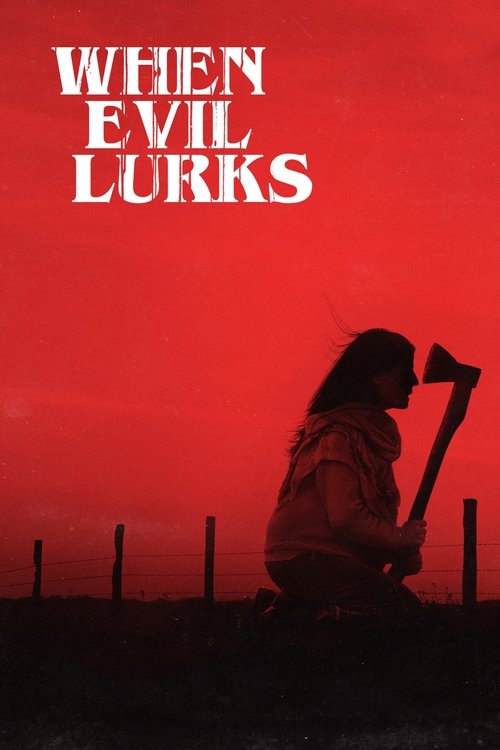
When Evil Lurks
2023 · Demián Rugna
When you're craving a real scare and want a horror film with actual teeth — one for hardened genre fans, not a gateway pick. Save it for a night when you can handle bleak.
What it's about
In a poor stretch of Argentine farmland, brothers Pedro and Jimi learn that a man on a neighboring property has become a 'Rotten' — a living incubator for a demon. There are rules for dealing with this, old and specific ones. The brothers, panicked and impatient, break them, and possession begins to spread through the countryside like a plague they can't outrun.
The experience
Relentless is the word — this is dread that keeps escalating and a film that genuinely will not protect you, breaking taboos most horror movies treat as off-limits. It's grim, shocking, and nerve-shredding rather than jumpy; expect to feel unsafe in the best horror-movie way.
The craft
Demián Rugna treats possession as contagion, and the folk-rules mythology — what you must and must not do around a Rotten — gives the mayhem a chilling internal logic. The practical gore effects are brutally convincing, and the sound design keeps the countryside humming with wrongness. Watch it loud, with the lights off, if you dare.
Why it matters
It became a landmark of the recent Argentine horror wave and one of the most talked-about international horror films of 2023, cementing Rugna's reputation after Terrified as a director willing to go where mainstream horror won't.
Horror · Possession & occult · Folk horror · Splatter & gore. Possession spreads like a plague across Argentine farmland — merciless folk horror with brutal practical gore and nobody safe.
Snapshot
When Evil Lurks (Spanish: Cuando acecha la maldad) is an Argentine supernatural horror film written and directed by Demián Rugna, his most widely seen work following the 2017 haunted-house film Terrified (Aterrados). It follows two brothers, Pedro and Jimi, in an impoverished rural region who discover that a man's body has become the incubator for a demonic entity — a "Rotten" (podrido) — and whose panicked, improvised attempt to be rid of it violates the codified procedures for handling such infections, unleashing a spreading contagion of possession across the countryside. The film is notable less for jump-scare mechanics than for its relentless, escalating dread and its willingness to breach genre taboos, particularly regarding harm to children and animals. It was received as a landmark of the recent wave of Argentine and Latin American horror and became one of the signature acquisitions of the streaming platform Shudder. Grounded in a bleak folk-horror logic and a refusal of consolation, it stands as a synthesis of possession cinema, contagion narrative, and rural-social realism.
Industry & production
The film is an Argentine production, made largely within the country's independent genre ecosystem and financed and distributed with international partners. Rugna developed the project on the strength of the international festival and streaming success of Terrified, which had circulated widely and reportedly attracted Hollywood remake interest — momentum that gave him greater resources and reach for this follow-up. The picture premiered on the 2023 genre-festival circuit, where it drew strong notices and festival honors; it is widely reported to have won the top fiction-feature prize at the Fantasia International Film Festival in Montreal that year. In the United States it was released by IFC Films with streaming on Shudder, the AMC Networks–owned horror platform, which had become a central home for elevated international genre cinema; a limited theatrical window preceded the streaming debut. I am not able to confirm precise budget or box-office figures from the reliable record, and given its primarily streaming-led distribution such numbers were not a headline metric — I flag that rather than estimate. The production reflects a now-established model in which Argentine genre filmmakers work at a modest budget scale while reaching a global audience through festival validation and streaming distribution, a pathway that Terrified had helped to pioneer for Rugna specifically.
Technology
The film was shot digitally, consistent with contemporary independent production, and its technological interest lies less in exotic apparatus than in disciplined, restrained use of standard tools. The visual effects program blends practical, on-set effects — prosthetics, makeup, and physically staged gore — with digital augmentation, and the film's reputation for shocking imagery rests substantially on the tactile credibility of practical work rather than heavy computer-generated spectacle. A recurring diegetic conceit organizes the film's relationship to technology: electrical devices, firearms, and modern conveniences behave unreliably or are proscribed near the infected, so that the possession "rules" systematically strip characters of technological recourse. This is a narrative rather than a purely production concern, but it shapes the production design and the film's texture, pushing scenes toward darkness, silence, and manual action. Where the record on specific cameras, lenses, or the VFX pipeline is thin in English-language sources, I note that rather than supply invented specifics.
Technique
Cinematography
The cinematography favors a cold, desaturated palette suited to overcast rural exteriors and underlit interiors, using natural and available-light aesthetics to keep the world grimly plausible. Rugna and his camera team stage horror in wide and medium framings that hold on physical space, allowing threat to accumulate within the frame rather than being manufactured through rapid cutting. The camera is frequently mobile but unshowy, following characters through farmhouses, fields, and vehicles with a documentary steadiness that grounds the supernatural in a tangible, deteriorating landscape. Crucially, the film resists the horror convention of concealment: violence and transformation are often shown plainly, in clear light and stable framing, which intensifies rather than softens their impact. I am not able to reliably confirm the director of photography credit from the sources available to me and decline to attribute it rather than risk error.
Editing
The editing is patient and cumulative, building sequences that deny the audience the release of a decisive cut. Rather than the staccato rhythm of much mainstream horror, the film lets scenes run to unsettling length, so that dread compounds and shocks arrive without the cushioning of anticipatory editing. Transitions between locations track the mechanics of the spreading contagion, giving the film a road-movie or procedural forward drive across its rural geography. The pacing tightens progressively toward a bleak final movement, and the withholding of conventional catharsis in the cutting is integral to the film's nihilistic effect.
Mise-en-scène / staging
Production design renders a convincingly impoverished rural Argentina — mud, livestock, decaying farm buildings, and cramped domestic interiors — that doubles as thematic terrain: a world already sick before the demon arrives. The "Rotten," the bloated, festering infected body, is a centerpiece of staging, a grotesque object around which characters and camera are organized. Rugna choreographs violence with a matter-of-fact spatial clarity that makes taboo acts land as brute events rather than stylized set pieces. The staging repeatedly places vulnerable bodies — children, the elderly, the disabled, animals — inside the zone of danger, and the film's refusal to move them out of harm's way is its most transgressive structural choice.
Sound
Sound design is among the film's strongest instruments of dread, exploiting quiet, ambient rural noise, and the wet, organic sounds of the infected body to keep the audience in a state of unease. The diegetic prohibition on certain sounds and technologies near the possessed heightens attention to what can and cannot be heard. I am not able to confirm the composer credit or describe the score with confidence from the reliable record, and I flag that rather than characterize music that I cannot verify; what is clear is that the film leans on restraint and organic sound texture more than on a swelling orchestral idiom.
Performance
The performances are naturalistic and grounded, resisting the heightened register common to possession cinema. Ezequiel Rodríguez as Pedro anchors the film with a beleaguered, increasingly desperate everyman quality, while Demián Salomón plays his brother Jimi with a rawer volatility; the supporting ensemble, drawn from Argentine character actors, sustains the film's realist texture. The physical performances tied to possession and infection are committed and unglamorous, contributing to the sense that the horror is happening to ordinary, exhausted people rather than to genre archetypes.
Narrative & dramatic mode
The film operates in a mode of escalating catastrophe: an inciting transgression — the brothers' botched disposal of the infected man in defiance of established rites — produces consequences that widen relentlessly outward, from a single farm to a whole community. Dramatically it functions as a tragedy of error, in which well-meaning but reckless action, born of fear and ignorance, causes exactly the disaster it hoped to prevent. The narrative is structured as a grim journey, following Pedro's attempts to protect his family, especially his children, as the contagion outpaces every effort at containment. Rugna withholds conventional narrative reassurance at nearly every turn; protections that the genre trains audiences to expect — the safety of children, the efficacy of ritual, the survival of the sympathetic — are systematically denied. The result is a fatalistic dramatic arc whose momentum is toward loss rather than victory.
Genre & cycle
When Evil Lurks sits at the intersection of several horror cycles. It is a possession film, but one that discards the Catholic-exorcism apparatus that has dominated the subgenre since The Exorcist (1973): here there are no confident priests and no reliable ritual authority, only fragmentary, failing folk procedures. It is simultaneously a contagion or "outbreak" horror, mapping demonic possession onto the structure of an epidemic that spreads through contact and proximity, aligning it with zombie and infection cinema. And it draws on folk horror's investment in rural landscape, communal belief, and buried local knowledge. Within the contemporary horror field it belongs to the wave of internationally distributed "elevated" or arthouse-adjacent genre films, though its extremity places it closer to a transgressive, no-limits tradition than to the restrained end of that category.
Authorship & method
The film is fundamentally an auteur work: Demián Rugna wrote and directed it, extending the concerns and methods of Terrified. Rugna's authorial signature lies in treating the supernatural with a quasi-procedural realism — building horror around implicit "rules" and grounding it in ordinary, unglamorous domestic and rural spaces — and in a willingness to violate audience-protective conventions for maximal dread. His approach to possession here is notably systematic: the film implies a coherent, if never fully explained, cosmology of infection, prohibition, and consequence, which the characters only partly understand. On collaborators, the reliable English-language record is uneven, and I will not attribute cinematography, editing, or score credits I cannot confirm rather than risk fabricating them; what is well established is that this is Rugna's conception, screenplay, and direction, and that the cast is led by Ezequiel Rodríguez and Demián Salomón. The continuity of tone, world-logic, and taboo-breaking from Terrified to this film marks Rugna as a distinctive and consistent voice in contemporary horror.
Movement / national cinema
The film is a prominent example of the contemporary Argentine and broader Latin American horror renaissance. Argentina's cinema has long been internationally respected for arthouse drama, but the 2010s and 2020s saw a surge of ambitious genre filmmaking that traveled globally through festivals and streaming. Rugna is among the leading figures of this movement, and When Evil Lurks both benefits from and advances it. The film's rooting in a specifically Argentine rural milieu — its class textures, landscapes, and communal fabric — gives the horror a national specificity even as its themes read universally. It belongs alongside the work of other Latin American genre filmmakers who have used horror to explore social decay, inequality, and violence, and it reflects the region's growing prominence within global horror.
Era / period
The film is firmly of its early-2020s moment. Its epidemic structure and imagery of contagion, quarantine logic, and communal breakdown resonate, whether by intention or atmosphere, with the post-pandemic mood in which it appeared, giving its outbreak of possession a topical charge. It also belongs to a period in which streaming platforms — Shudder chief among them for horror — reshaped how international genre films reach audiences, allowing an Argentine-language film to achieve broad global visibility without a wide theatrical release. Aesthetically it reflects a contemporary horror sensibility that prizes dread, realism, and thematic seriousness, while its extremity pushes against the more polished, restrained tendencies of the "elevated horror" of the same years.
Themes
The film's central theme is contagion as moral and social condition: evil spreads through contact, negligence, and the failure of collective knowledge, and it thrives where community and authority have already decayed. Closely tied is the collapse of ritual and institutional protection — the absence of a functioning church, state, or expert class capable of containing the threat, leaving ordinary people to improvise against forces they do not understand. Vulnerability is a persistent preoccupation: the film repeatedly foregrounds children, the disabled, the elderly, and animals, and its refusal to shield them dramatizes a world in which the innocent are not spared. Rural poverty and social abandonment form the substrate, suggesting that the demonic epidemic is continuous with an already-degraded material reality. Above all the film advances a nihilistic vision in which good intentions are futile, knowledge arrives too late, and evil is less a discrete adversary than an environmental inevitability.
Reception, canon & influence
Critically, When Evil Lurks was widely praised as one of the strongest horror films of 2023, with reviewers singling out its relentless dread, its inventive reworking of possession conventions, and its shocking, taboo-breaking imagery; its festival honors, reportedly including a top prize at Fantasia, reinforced this standing. It also generated discussion — and some division — precisely because of its extremity, especially its violence toward vulnerable characters, which some viewers found unbearable and others read as central to its uncompromising moral vision.
Looking backward, the film's influences are legible: the possession tradition inaugurated by The Exorcist (which it pointedly subverts by removing reliable ritual authority); the contagion and outbreak logic of zombie and infection cinema in the lineage of Romero and its many descendants; the rural, belief-driven textures of folk horror; and, most immediately, Rugna's own Terrified, whose rule-based, realist approach to the supernatural this film extends and sharpens.
Looking forward, its legacy is still forming, but it quickly entered the contemporary horror conversation as a benchmark for uncompromising, internationally distributed genre filmmaking and helped consolidate the visibility of Argentine and Latin American horror on the world stage. It further cemented Rugna's international profile and the streaming-led model by which such films now reach audiences. Any claims about specific remakes or a durable canonical position would, this soon after release, outrun the reliable record, and I flag that its long-term influence remains to be seen even as its immediate impact was substantial.
Reception
No slow burn here — it detonated out of TIFF's Midnight Madness in 2023, hit Shudder, and was almost instantly crowned one of the decade's great horror films; three years on it's already treated as a modern classic rather than a recent release.
How When Evil Lurks was received, from release to now →
How to watch When Evil Lurks: what to notice on a first viewing
- Watch how wide and steady the camera stays during threats. Rugna holds on physical space in wide and medium shots instead of cutting fast, so danger builds inside the frame rather than through editing tricks. You see the threat coming in real time, with nowhere for the camera to hide it or you to look away.
- Look at the mud, livestock, and decaying farm buildings. The production design renders a convincingly impoverished rural Argentina, cramped domestic interiors and rotting outbuildings that look sick before anything supernatural arrives. The world already looks broken before the demon shows up, so the horror has somewhere real to grow.
- Listen for the wet, organic sounds coming from the infected body. The sound design favors quiet ambient rural noise over music, so the smallest unnatural sound stands out against an otherwise plain, believable world. The restraint trains your ear, so a single wrong noise carries more dread than a jump scare would.
- Watch Pedro's exhaustion instead of any big display of fear. Ezequiel Rodríguez plays him as a beleaguered, grounded everyman, and the ensemble around him stays naturalistic rather than reaching for the heightened register common to possession films. The horror lands harder because it is happening to ordinary, tired people instead of genre archetypes.
The whole guide to watching When Evil Lurks, with the keys for a rewatch →
Influences: the films it descends from and the films it influenced
- The Exorcist (1973) — Establishes the possession-horror grammar of the afflicted body escalating from medical procedure to ritual authority — the exact structure Rugna inverts by making priests, doctors and rules useless.
- Night of the Living Dead (1968) — Supplies the contagion-siege architecture and the taboo-shattering nihilistic ending (ordinary people fail, a child is lost) that Rugna adopts as moral logic rather than shock.
- The Texas Chain Saw Massacre (1974) — Model for the grubby, sun-bleached rural naturalism and documentary-plain framing that strips horror of gothic comfort and makes degradation feel physically real.
- The Thing (1982) — Fuses practical-effects body horror with paranoid infection logic — the dread of not knowing who is already possessed — which drives Rugna's rules about touch, transmission and who can be trusted.
- The Beyond (1981) — Precedent for a supernatural governed by inexorable anti-logic and apocalyptic bleakness rendered in unsparing practical gore, where salvation is structurally impossible.
- Martyrs (2008) — New French Extremity template for deploying unbearable violence against the vulnerable as an uncompromising formal/moral device rather than exploitation.
- REC (2007) — Directly welds demonic possession to viral outbreak mechanics, the possession-as-infection hybrid that Rugna systematizes into an implied cosmology.
- Aterrados (Terrified) (2017) — Rugna's own prior film establishing his quasi-procedural, rule-based realism toward the supernatural set in unglamorous domestic Argentine space, which this film extends and sharpens.
- Kill List (2011) — Folk-horror belief systems delivered through naturalistic performance and a brutal late tonal collapse into an annihilating gut-punch ending, a rhythm Rugna mirrors.
- Talk to Me (2022) — Rule-governed possession in which breaking clearly stated prohibitions transmits harm and dooms the characters — the same 'know the rules too late' mechanics staged with everyday naturalism.
- The Wailing (2016) — Possession-plus-contagion where shamanic ritual fails and the protagonist's wrong choices doom his own child — the tragedy-of-error engine and collapse of ritual authority in a rural belief community.
- Hereditary (2018) — Shares wide, stable, dread-holding framing and the premise that ritual cannot protect the family, punishing the vulnerable through inherited fate rather than rescue.
- The Sadness (2021) — Contagion that converts the infected into gleeful sadists, weaponizing taboo extremity and harm to the defenseless as its central formal shock, contemporaneous with Rugna's approach.
- Tigers Are Not Afraid (2017) — Latin American genre realism that grounds the supernatural in impoverished, brutalized spaces and refuses to shield children from horror, a regional-renaissance kin.
- Huesera: The Bone Woman (2022) — Part of the same Latin American horror wave, blending folk belief and bodily dread with restrained natural-light naturalism rather than jump-scare spectacle.
- Late Night with the Devil (2023) — Contemporary possession film that likewise dismantles the authority figures meant to contain the demonic, arriving via the same streaming-led international genre pipeline in 2023.
Similar films
- The Wailing (2016) — influence & lineage · same viewing thread
- [REC] (2007) — influence & lineage
- Night of the Living Dead (1968) — influence & lineage
- The Exorcist (1973) — influence & lineage
- Evil Dead Burn (2026) — same viewing thread
- Evil Dead Rise (2023) — same viewing thread
- Exhuma (2024) — same viewing thread
- Relic (2020) — same viewing thread
All the films related to When Evil Lurks →
Watch it with: curated runs of related films
- Cursed and Contagious — Watch these back to back for how each imagines evil as something that moves — a curse handed off by a smile, a demon incubated in a neighbor, a possession creeping family member by family member.
- Curses, Shamans and the Rotten — Watch these together for horror from Korea, Taiwan, Japan, India and Argentina where evil follows rules: curses passed down through families, shamans called in too late, and possessions that spread like a contagion.