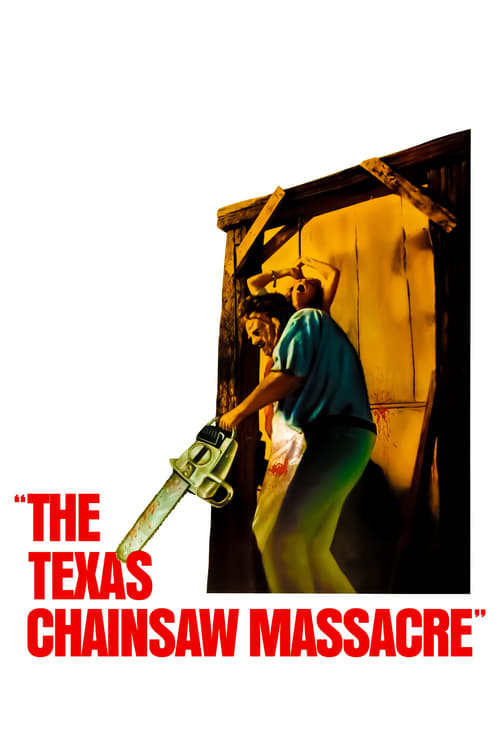
The Texas Chain Saw Massacre
1974 · Tobe Hooper
For when you're craving a real scare — the genuine article, raw and mean, not a polished studio jump-scare machine. Absolutely a challenge watch; bring a friend and don't plan anything relaxing afterward.
What it's about
Five young friends drive through the Texas backcountry to visit a grandfather's grave and pick up a hitchhiker they immediately regret. Low on gas and options, they poke around a seemingly abandoned farmhouse — and stumble into the territory of a family of former slaughterhouse workers, including a hulking figure in a mask made of skin who greets intruders with a chainsaw.
The experience
Relentless. It has far less on-screen gore than its reputation suggests, but the grimy, sun-blasted realism and the screaming, delirious final stretch make it feel like something you survived rather than watched. Decades on, it still rattles people.
Performances
Marilyn Burns's sustained, wide-eyed terror in the final act became the template for the horror heroine pushed past endurance — it barely reads as acting at all.
The craft
Shot on 16mm in brutal Texas heat, it looks and sounds like found evidence: grainy, sweaty, scored with clanging metal, animal noises, and that unmistakable engine snarl rather than music. Tobe Hooper's framing turns bones, feathers, and farmhouse clutter into pure dread, proving atmosphere can terrify more than blood. Watch it loud — the sound design does half the damage.
Why it matters
One of the most influential horror films ever made: a founding text of the slasher and rural-terror traditions, proof that a tiny independent film could scar the culture, and the origin of one of the genre's most iconic villains.
Snapshot
The Texas Chain Saw Massacre is a low-budget American horror film shot in and around Austin, Texas, in the summer of 1973 and released in October 1974. Directed by Tobe Hooper from a screenplay he co-wrote with Kim Henkel, it follows five young people who, while traveling through rural Texas, fall one by one into the orbit of a degenerate family of former slaughterhouse workers, among them the mask-wearing killer Leatherface. The film is celebrated less for graphic gore — it shows surprisingly little explicit on-screen bloodletting — than for its relentless, almost documentary intensity, its grimy 16mm texture, and a sustained final act of pure delirium. It became one of the most influential horror films ever made, a foundational text for the American slasher cycle and for the broader vein of rural-terror and "family of killers" narratives. Made for a famously small sum by a crew of largely inexperienced collaborators, it endured a difficult release history, censorship battles abroad, and decades of legal and financial disputes, even as its critical standing rose from disreputable exploitation to acknowledged classic.
Industry & production
The film was produced outside the Hollywood studio system as an independent, regionally financed venture. Hooper, then working in Texas in documentary and educational film, assembled the production through a company structure (Vortex, with partner Kim Henkel) and additional financing arrangements that would later become the source of protracted disputes; many cast and crew received little of the profits the film eventually generated, a grievance documented in numerous retrospective interviews. The budget was very low — frequently cited in the low six figures, though exact figures vary across sources — and the production was correspondingly arduous.
Shooting took place over a hot Texas summer, often in extreme heat that the cast has repeatedly described as punishing; the climactic dinner sequence in particular was filmed over an exhausting, near-continuous stretch in a house dressed with rotting and animal materials, conditions the actors recalled as genuinely nauseating. The grueling shoot has become part of the film's lore, and several participants have framed the on-screen exhaustion and hysteria as inseparable from the real conditions of its making.
Distribution proved complicated. The film was picked up for release in 1974 and found substantial commercial success on the drive-in and grindhouse circuit, but its lurid title and reputation drew the attention of censors. It was banned or heavily restricted in several countries and became a notorious case in debates over screen violence, including the United Kingdom's later "video nasties" controversy. The gap between its modest budget and its eventual cultural reach made it a touchstone example of independent horror's profitability, even as the people who made it saw comparatively little return.
Technology
The Texas Chain Saw Massacre was shot on 16mm film, a format associated at the time with documentary, news, and low-budget production rather than theatrical features. The choice was partly economic and partly aesthetic: 16mm's grain, its relative portability, and its capacity for available-light and run-and-gun shooting gave the film a raw, immediate texture that reads as reportage rather than polished fiction. The footage was later blown up for theatrical exhibition, and the resulting coarseness — heightened grain, harsh contrasts — became inseparable from the film's effect.
The production relied on practical, in-camera and on-set methods throughout. Effects were physical and improvised rather than optical or elaborate; the film's terror is built from real locations, real props, and real heat. The chainsaw itself is a functioning tool, used on set as a live, dangerous object, which contributes to the genuine apprehension visible in the performances. The film's technological modesty is, in effect, its method: lacking the resources for spectacle, the production extracted dread from texture, sound, and the physical reality of its materials.
Technique
Cinematography
The cinematography is credited to Daniel Pearl, who shot the film early in what would become a long career. The visual approach fuses two registers. In daylight exteriors, the film has an almost sun-blasted, naturalistic openness — wide Texas landscapes, glaring summer light, a deceptive pastoral calm. As the film descends into the killers' house and into night, the imagery tightens into claustrophobia and disorientation. Pearl and Hooper exploit unusual angles, extreme close-ups (notably of eyes and mouths), and compositions that fragment the human body and the domestic space into something alien. A recurring strategy is the withholding and sudden granting of horrific sight: the camera lingers, denies, then assaults. The 16mm grain and the often available or harsh artificial light produce a documentary credibility that makes the nightmarish content feel found rather than staged.
Editing
The editing, with Sallye Richardson and J. Larry Carroll among those credited, moves from a slow, dread-laden accumulation in the first two acts to a frenzied, near-incoherent intensity in the climax. The early sections build through duration and anticipation; the film is patient, even leisurely, in establishing unease. Once the violence begins, the cutting accelerates and fractures, particularly in the dinner-table sequence, where rapid inserts, screaming close-ups, and disorienting rhythm collapse narrative legibility into pure sensory ordeal. This structural asymmetry — long, quiet build followed by sustained derangement — is central to the film's design and would be widely imitated.
Mise-en-scène / staging
The film's most celebrated achievement may be its production design and dressing, particularly the interior of the killers' house. The space is a charnel environment assembled from bone, feathers, hide, and decaying organic matter, an aesthetic of slaughterhouse detritus and folk-art grotesquerie. Furniture and ornaments fashioned from animal and human remains transform the domestic into the abattoir, literalizing the film's preoccupation with meat, family, and labor. The staging repeatedly plays the ordinary against the monstrous: a farmhouse, a dinner table, a swing on a porch, all turned to horror. The art direction has been widely praised for converting a tiny budget into one of horror's most indelible environments.
Sound
Sound is arguably the film's primary instrument of terror. In place of conventional scoring, Hooper and Wayne Bell constructed a dense, abrasive soundscape of industrial drones, metallic scrapes, animal noises, clanging, and dissonant musique-concrète textures. The chainsaw's roar functions as a recurring sonic assault. Combined with near-constant screaming in the final act, the sound design produces an atmosphere of unrelenting auditory distress that exceeds anything shown on screen. This refusal of melodic, reassuring scoring in favor of noise is one of the film's most radical and influential choices, and it does much of the work that explicit gore does not.
Performance
The performances are pitched toward raw hysteria and physical extremity. Marilyn Burns, as the surviving young woman Sally, delivers an endurance performance of sustained screaming, terror, and physical abuse that anchors the film's climactic ordeal; her exhaustion is palpable and, by many accounts, partly real. Gunnar Hansen as Leatherface created an enduring figure of mute, lumbering menace, his character defined by a series of human-skin masks and a disturbingly childlike confusion beneath the brutality. The supporting players who make up the cannibal family — including Edwin Neal and Jim Siedow — bring a manic, blackly comic grotesquerie, especially in the dinner sequence, where horror tips into a kind of deranged family farce. The ensemble's commitment under brutal conditions is inseparable from the film's authenticity.
Narrative & dramatic mode
The film's structure is deceptively simple: a road trip, an investigation, and a descent. It opens with portentous framing — a narrated, faux-factual prologue and unsettling imagery — that lends the fiction a documentary, "based on true events" aura, although the story is not a literal account of real crimes despite loose thematic echoes of real-life cases. The narrative then proceeds through escalating intrusion, picking off the travelers in a deliberately uneven rhythm, before collapsing into the prolonged captivity and torment of its final survivor.
Dramatically, the film abandons psychological interiority and conventional suspense mechanics in favor of ordeal and sensation. There is little explanation, little backstory, and no reassuring restoration of order; the killers are never meaningfully accounted for, and the ending offers survival without resolution or comprehension. The closing image of Leatherface swinging his saw against the dawn sky is an emblem of irrational, unexhausted menace rather than narrative closure. This refusal of explanation — horror as brute fact rather than solvable mystery — is fundamental to the film's mode.
Genre & cycle
The Texas Chain Saw Massacre sits at a pivotal juncture in horror history. It belongs to the early-1970s wave of American horror that turned away from gothic and supernatural conventions toward contemporary, domestic, and rural terror, alongside films that relocated dread into the American landscape and the American family. It is routinely identified as a crucial proto-slasher, anticipating and shaping the body-count formula — a group of young victims, a masked and largely silent killer, a "final girl" who endures — that would crystallize later in the decade and dominate the genre into the 1980s.
At the same time it resists tidy categorization. It is more closely related to a strain of grotesque, regionally grounded horror about degenerate families and cannibalism than to the suburban stalker films it helped inspire, and its sensibility blends terror with a vein of grotesque black comedy, especially in its final act. Its title and reputation place it within exploitation cinema, yet its formal control and thematic seriousness have earned it a place in horror's critical canon.
Authorship & method
The film is the defining work of Tobe Hooper's career and the strongest case for his authorship. Hooper directed, co-wrote (with Kim Henkel), co-produced, and was deeply involved in its sound. His method here fuses a documentary background with a sensibility for the grotesque and the absurd; he has described aims around the era's atmosphere of violence and disillusionment, channeling cultural unease into a regional horror film. Crucially, Hooper's design privileges suggestion, sound, and relentless intensity over explicit gore — a deliberate strategy he has discussed in interviews, even noting hopes that restraint might yield a less restrictive rating, an expectation the film's reputation belied.
Key collaborators shaped the result decisively. Kim Henkel's co-writing established the film's grim premise and its blend of horror and dark comedy. Cinematographer Daniel Pearl gave it its distinctive visual texture. Wayne Bell, working with Hooper, built the experimental sound design that is central to its effect. The art and production design team created the unforgettable house of bones. The performances of Marilyn Burns and Gunnar Hansen gave the film its human anchor and its monster. Notably, the film has no conventional musical score in the orchestral sense; its "music" is its noise, a collaborative sonic construction rather than a composer's set-piece. The collective, low-budget, high-commitment nature of the production is itself part of its authorship.
Movement / national cinema
The film is a landmark of American independent and regional filmmaking, made far from Hollywood within a Texas production culture. It belongs to the broader transformation of American horror in the New Hollywood era, when younger filmmakers, working cheaply and outside studio oversight, used the genre to register social anxiety. Alongside contemporaries who were similarly relocating horror into the contemporary American scene, Hooper's film helped define a distinctly American, post-1960s horror idiom: secular, materialist, suspicious of family and nation, and rooted in real landscapes. Its regional specificity — the Texas heat, the rural backroads, the decaying agrarian and slaughterhouse economy — is essential rather than incidental, marking it as a work of American place as much as American genre.
Era / period
The Texas Chain Saw Massacre is deeply a film of its early-1970s moment. It emerged in the aftermath of the 1960s' political violence and disillusionment, the Vietnam era, and a broad cultural sense of institutional decay, and critics have long read its imagery of mutilation, predation, and collapsed authority against that backdrop. Its young travelers move through a landscape of abandoned industry and economic ruin; the killers are displaced slaughterhouse laborers whose trade has been automated away, situating the horror within a specifically 1970s anxiety about labor, modernization, and rural decline. The film's grimy texture, downbeat refusal of resolution, and absence of reassuring moral order are characteristic of American cinema's most disenchanted period. It stands as one of the era's signal expressions of horror as cultural diagnosis.
Themes
Several themes recur and interlock. The most insistent is meat and slaughter: the film draws a sustained analogy between the industrial killing of animals and the killing of humans, with the cannibal family literalizing the abattoir's logic. Closely related is labor and obsolescence — the killers as redundant workers whose skills, applied now to people, indict the economy that discarded them. The family itself is a central preoccupation: the film presents a grotesque parody of domesticity, with the dinner table, the patriarch, and the household turned monstrous, a savage inversion of American family values. Land and inheritance shadow the story, beginning with a visit to a grandfather's grave and unfolding across a landscape of ruined homesteads. Finally, the film dwells on the irrationality of violence — horror without motive, explanation, or redemption — and on the body as vulnerable matter. These themes give the film a seriousness that its exploitation packaging long obscured.
Reception, canon & influence
Initial reception was sharply divided. The film was a commercial success on the exploitation circuit and drew immediate notoriety for its title and reputation, prompting bans and censorship in numerous territories and making it a recurring example in debates over screen violence, including the British "video nasties" panic of the following decade. Some contemporary critics dismissed it as disreputable, while others recognized an unusual formal power beneath the lurid surface. Over time its critical standing rose dramatically; it has been acquired and exhibited by major cultural institutions and is now widely regarded as one of the most important horror films ever made and a landmark of American cinema.
Looking backward, the film drew on a confluence of influences: the contemporary turn of American horror toward domestic and rural settings; the broad cultural memory of real American crimes involving grave robbery and the use of human remains, which loosely informed its imagery without being a literal account; the documentary aesthetics of 16mm filmmaking; and a Texas regional sensibility. Looking forward, its influence is vast. It is a foundational text for the slasher film, helping to codify the masked killer, the imperiled group of youths, and the enduring final girl. It established the "family of killers" and rural-cannibal subgenres, and its restraint-through-suggestion, abrasive sound design, and documentary grit have been endlessly imitated. Leatherface became one of horror's iconic figures, and the film spawned a long franchise of sequels, prequels, and remakes across subsequent decades. Its DNA is visible across decades of horror that followed, securing its status as both a disreputable shocker of its moment and a permanent fixture of the genre's canon.
A Deleuzian reading
The steel door.
The full Deleuzian reading of The Texas Chain Saw Massacre →
Reception
Reviled on release as depraved trash — banned outright in the UK and several other countries — it's since been enshrined as maybe the greatest horror film ever made, with a print in MoMA's permanent collection.
How The Texas Chain Saw Massacre was received, from release to now →
Influences: the films it descends from and the films it influenced
- Psycho (1960) — Both films transpose Ed Gein's domestic charnel imagery into an ordinary house, and Hooper borrows Hitchcock's strategy of horror-through-suggestion — implying butchery via cutting and sound rather than showing the wound.
- Night of the Living Dead (1968) — Model for regional guerrilla low-budget production whose grainy newsreel-documentary texture and relentless siege structure end in a non-cathartic, nihilistic anti-climax.
- Carnival of Souls (1962) — Regional independent horror assembled from industrial-film craft, sustaining dread through an unrelenting organ/sound-bed in place of a conventional orchestral score.
- Repulsion (1965) — Subjective sound design and extreme close-ups that dramatize a mind's hysterical disintegration — the template for Sally's endurance-hysteria in the dinner sequence.
- Two Thousand Maniacs! (1964) — Southern-regional exploitation built on a backwoods community of killers ritually slaughtering passing outsiders, proving gore could profit on the drive-in circuit.
- Deliverance (1972) — Location-shot backwoods naturalism in which degenerate rural men menace city interlopers, supplying the rural-terror grammar of trespass and predation.
- Eyes Without a Face (1960) — Leatherface's stitched-together mask of human facial skin is the grotesque inversion of Génessier's surgical project: both are constructed faces that replace the killer's own, making the face itself — not the body, not the weapon — the site of horror, and both films stage this substitution as the visual center around which all other dread organizes.
- Halloween (1978) — Codifies the slasher template TCM seeded — mute masked killer, imperiled youths, a surviving final girl — adding the subjective stalking camera.
- The Hills Have Eyes (1977) — Directly extends the 'family of cannibal killers' preying on a stranded ordinary family in a hostile, sun-blasted rural landscape.
- Alien (1979) — Carries the final-girl survivor structure (Ripley) and the biomechanical charnel-house production design into science fiction.
- Friday the 13th (1980) — Industrializes the slasher's body-count rhythm with a masked killer and final girl, formalizing TCM's imperiled-group-of-youths premise.
- Henry: Portrait of a Serial Killer (1986) — Inherits the matter-of-fact documentary realism and the refusal-of-explanation, declining to moralize or psychologize its killer.
- The Texas Chainsaw Massacre 2 (1986) — Hooper himself amplifies the latent dark comedy and dinner-table absurdism that the original kept submerged beneath its terror.
- The Blair Witch Project (1999) — Extends documentary-texture and refusal-of-explanation to the extreme, generating fear entirely off-screen through suggestion, sound, and unseen rural menace.
- The Devil's Rejects (2005) — Direct aesthetic homage — 16mm grain, sun-blasted regional grit, and a charismatic clan of killers lifted from TCM's documentary-rough exploitation look.
- Wolf Creek (2005) — Slow-build naturalistic documentary realism that erupts into endurance-horror, withholding any explanation for its unmotivated outback predator.
- The Silence of the Lambs (1991) — The Ed Gein house of human trophies and skin/taxidermy craft that Gumb's lair and skin-suit literalize.
- X (2022) — Supplies the sun-baked 16mm grain, the isolated farmhouse, and the predatory rural household whose unseen elder rules the property — West reproduces its documentary-grit texture as a deliberate period skin.
- Alien: Romulus (2024) — Romulus inherits the survival-horror lineage of a lone young woman ('final girl') hunted through an industrial slaughterhouse-like space, a grammar Alien itself adapted from Hooper.
- The Last House on the Left (1972) — Same-moment vérité-grit exploitation marketed on transgressive notoriety, channeling early-70s disillusion into a 16mm-rough assault on a sense of safety.
- Eraserhead (1977) — Parallel use of continuous industrial noise-as-score and musique-concrète sound construction substituting for melodic music to build sustained unease.
- The Shining (1980) — Contemporaneous use of an abstract, found/industrial 'sound-world' in place of melodic scoring to generate unease, paralleling Kubrick's assembly of Penderecki and Bartók as atonal dread-engine.
- The Wicker Man (1973) — Same-moment turn toward sun-blasted, naturalistically lit horror in which a normal traveler walks unknowing into a ritualized killing community.
- Dawn of the Dead (1978) — Regional, self-financed American horror that weaponizes documentary grain and unromanticized slaughterhouse imagery, the same indie-production model Romero worked in.
- Evil Dead Burn (2026) — Founds the endurance-brutality 'gross-out Guignol' — spectacle-horror whose relentless assault is itself the point — the tradition Variety places Burn squarely within.
- Black Christmas (1974) — Same-year embrace of an abrasive musique-concrète soundscape and vocalized, animalistic screaming over restraint of on-screen gore — a parallel bet on sound-design dread.
- Pink Flamingos (1972) — Independently arrives at the same regional formula: 16mm blown up for theatrical release, a non-professional local company cast for voice and body, and a narrated 'account of the tragedy' prologue that lends staged horror evidentiary standing.
Similar films
- Halloween (1978) — influence & lineage · same viewing thread
- Night of the Living Dead (1968) — influence & lineage · same viewing thread
- The Blair Witch Project (1999) — influence & lineage
- Henry: Portrait of a Serial Killer (1986) — influence & lineage
- Carnival of Souls (1962) — influence & lineage
- Psycho (1960) — influence & lineage
- Black Christmas (1974) — same viewing thread
- House of 1000 Corpses (2003) — shared sensibility
All the films related to The Texas Chain Saw Massacre →
Watch it with: curated runs of related films
- Nowhere Left to Hide — Watch these when you want pure primal terror — ordinary people cornered by something relentless, from open water to a silent farmhouse to a stairwell in Barcelona.