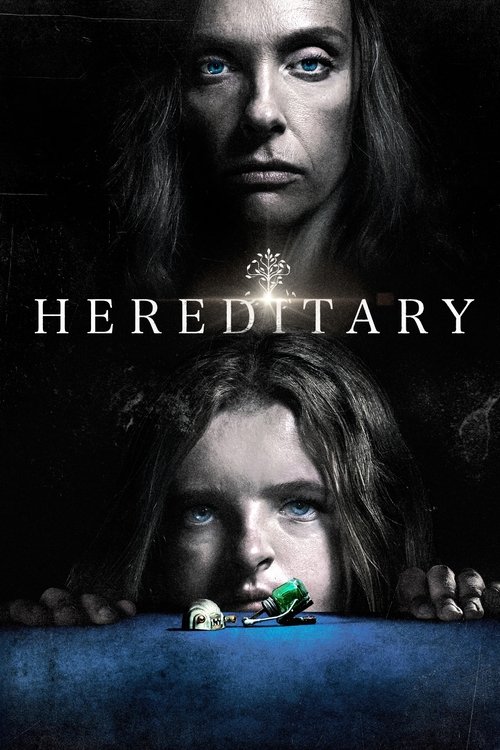
Hereditary
2018 · Ari Aster
Went from horror wunderkind (Hereditary, Midsommar) to deliberate audience-divider: Beau Is Afraid was a notorious A24 money-loser people still argue about, and Eddington, his COVID-era conspiracy western, split Cannes down the middle. The director people cite when debating whether "divisive" means brave or self-indulgent.
For when you're craving a real scare — not a fun popcorn jolt but the kind of horror that gets under your skin and stays there. Choose it when you want to be genuinely disturbed, not comforted.
What it's about
After the death of her secretive, estranged mother, miniature artist Annie Graham tries to hold her husband and two children together through the grief — but the bereavement starts pulling long-buried family secrets into the light. What begins as a raw domestic drama about mourning and resentment slowly curdles into something much darker, as the family comes to suspect their suffering isn't entirely their own doing.
The experience
A slow suffocation — the dread accumulates scene by scene until the film starts landing blows you genuinely don't see coming, and it's as emotionally brutal as it is frightening. Expect to feel wrung out, unsettled, and unable to shake certain images for days.
Performances
Toni Collette gives one of the most ferocious performances in modern horror — her grief, rage, and terror are so raw that whole scenes play like open wounds — and young Alex Wolff matches her with a portrait of a teenager coming apart.
The craft
Ari Aster directs his debut with eerie precision: locked-down compositions that make the family home feel like one of Annie's miniature dollhouses, patient editing that lets dread pool, and a droning, unnerving score. See it in the dark with the sound up — its scariest moments are as much heard as seen.
Why it matters
A landmark of the A24-era horror wave that proved a first-time director could turn a family tragedy into a box-office hit, and it launched Aster as one of the genre's defining new voices.
Snapshot
Hereditary is the feature debut of Ari Aster, a domestic tragedy in the shape of an occult horror film. It tracks the Graham family in the weeks after the death of Annie Graham's secretive, estranged mother, as a fresh bereavement opens onto a buried inheritance — psychological, hereditary, and ultimately demonic. The film is built on a structural sleight of hand: for roughly its first half it presents as a grief drama in the register of American family realism, only to reveal that the family's suffering has been authored from outside, by a cult devoted to the demon King Paimon. Anchored by a Toni Collette performance widely regarded as one of the decade's most committed pieces of screen acting, and distributed by A24 at the crest of the so-called "elevated horror" wave, Hereditary became both a critical landmark and a commercial breakout, establishing Aster as a major new voice in American genre filmmaking.
Industry & production
Hereditary was produced independently and acquired and distributed by A24, the company whose brand had by 2018 become closely associated with auteur-driven genre cinema. Production companies included PalmStar Media, Finch Entertainment, and Windy Hill Pictures, with Lars Knudsen and Buddy Patrick among the producers. The film was made on a modest budget — widely reported in the region of ten million dollars — and shot in Utah, a choice that gave the production controlled interiors and the isolated, wooded exteriors the story required.
The film premiered at the Sundance Film Festival in January 2018, where its midnight-section reception generated unusually intense early word of mouth, and A24 opened it theatrically in the United States in June 2018. It went on to become, by the figures reported at the time, A24's highest-grossing film worldwide to that point, with worldwide receipts widely cited at over eighty million dollars against its small budget — an emphatic return that helped consolidate the commercial logic of the studio's horror strategy. (These figures are drawn from contemporaneous trade reporting; precise final tallies vary slightly by source.) The film's marketing leaned on its festival acclaim and on a withholding campaign that foregrounded dread over plot, a strategy that itself became part of the discourse around the picture when some audiences, primed for conventional scares, reported disappointment — a friction the A24 model arguably courted.
Technology
Hereditary was shot digitally, a choice consistent with its budget and with cinematographer Pawel Pogorzelski's controlled, high-resolution image. The technological signature of the film, however, is less about capture format than about its use of practical craft: the recurring miniatures and the dollhouse that opens the film are physical builds, and the film's most discussed special-effects moments — including its notorious mid-film death and the climactic tableaux — rely substantially on practical prosthetics, makeup, and in-camera staging rather than conspicuous digital compositing. Where digital tools are used, they are largely invisible, in service of seamlessness rather than spectacle. The film's commitment to tangible, hand-built artifice is thematically loaded: the miniatures are not merely production design but the film's central metaphor for authorship and control.
Technique
Cinematography
Pogorzelski's photography is the film's formal cornerstone. The camera favors stillness, symmetry, and slow, deliberate movement — long static takes and creeping pushes that withhold the cutting rhythms horror audiences expect, so that dread accumulates within the shot rather than between shots. A defining strategy is the visual rhyme between the Graham house and Annie's miniatures: the film repeatedly frames real rooms to look like dioramas, beginning with the opening shot that pushes into a model of the house and dissolves the boundary between the dollhouse and the lived space. The effect implies that the family are figurines arranged by an unseen hand — fate rendered as composition. Lighting is restrained and naturalistic in the domestic scenes, with darkness used as genuine concealment in the later passages; the camera's patience makes the eventual eruptions of the uncanny — a figure half-seen in shadow, a presence on the ceiling — land with disproportionate force precisely because the frame has trained the eye to scan it.
Editing
The editing, credited to Lucian Johnston and Jennifer Lame, is governed by restraint and duration. Cuts are withheld; scenes are allowed to extend past comfort, particularly in the aftermath of trauma, where the film lingers on grief in close to real time. The most analyzed editorial decision in the film is the handling of the first-act catastrophe and its morning-after: the film cuts away from the act of discovery and holds on consequence, forcing the audience to absorb shock through duration and silence rather than montage. This rhythmic patience is what allows the film's tonal pivot from realist drama to horror to feel structurally earned rather than abrupt.
Mise-en-scène / staging
Production designer Grace Yun's work makes the house a closed system. The Graham home is dense with Annie's miniatures, which double the film's spaces and reframe domestic life as something curated and observed. Symbolic objects — sigils, the recurring inscription associated with Paimon, the grandmother's possessions — are seeded into the décor early, rewarding the second viewing and reinforcing the theme of predestination: the signs were always present, the outcome already built. Staging frequently isolates characters within the frame, separated by doorways and architecture, dramatizing a family that cohabits without communion. The treehouse, glowing at the film's climax, converts a familiar emblem of childhood into a site of ritual.
Sound
The sound design is among the film's most aggressive expressive tools. Beyond ambient dread, the film weaponizes a specific human sound — the tongue-click associated with the daughter, Charlie — turning a small, idiosyncratic tic into a carrier of menace that recurs as an aural haunting after her absence. Composer Colin Stetson, a saxophonist and experimental musician, built a score around woodwinds, brass, drones, and extended techniques that often read less as music than as texture or breath, blurring the line between score and sound design. The result is a soundscape that feels organic and bodily rather than orchestral, intensifying the film's atmosphere of physical and psychic invasion.
Performance
Performance is the film's emotional engine, and Toni Collette's Annie is its center: a portrait of compounded grief, guilt, and inherited mental illness that escalates from naturalistic mourning to operatic terror, including a much-cited dinner-table monologue whose fury and despair became emblematic of the film. Alex Wolff, as the son Peter, carries the film's later passages through a register of dazed, traumatized passivity, while Milly Shapiro's Charlie establishes an indelible strangeness in limited screen time. Gabriel Byrne plays the father Steve as a study in helpless reasonableness, and Ann Dowd's Joan provides a deceptively warm point of entry for the cult machinery. Collette's exclusion from the major awards conversation became a notable point of critical contention, frequently invoked in debates about the persistent marginalization of horror performances.
Narrative & dramatic mode
Hereditary's defining gambit is generic and structural. Aster has described conceiving the film as a family tragedy first and a horror film second, and the screenplay is built to honor that order: it withholds the supernatural explanation for as long as possible, presenting the family's disintegration in the idiom of domestic realism — bereavement, blame, adolescent guilt, a marriage under strain — before disclosing that these sufferings are the instrument of an occult design. The mode is closer to Greek tragedy than to conventional horror plotting: the characters are caught in a fate sealed before the film begins, their choices revealed as illusions, the machinery of doom hidden in plain sight. This dramaturgy of predestination is reinforced by the dollhouse motif, which literalizes the idea of human figures being arranged from above, and it gives the film's horror its particular bleakness — not the suspense of whether the family can escape, but the dread of recognizing that they never could.
Genre & cycle
The film arrived as a flagship of the late-2010s cycle variously labeled "elevated horror," "post-horror," or "art-horror" — a body of work, much of it distributed by A24, characterized by slow pacing, atmospheric dread over jump scares, prestige craft, and thematic ambition. Its immediate companions include The Witch (2015), It Follows (2014), The Babadook (2014), A Ghost Story (2017), and Get Out (2017). Within the horror tradition proper, Hereditary belongs to the lineage of the occult and "Satanic family" film and to the subgenre of grief-horror, where bereavement is the literal portal to the supernatural. The "elevated horror" label was itself contested — many critics and filmmakers, Aster among the implicitly skeptical, resisted the implication that ambition was foreign to the genre — but the film undeniably helped define the cycle's commercial and critical moment.
Authorship & method
Hereditary is the product of a tightly knit authorship centered on Aster and a set of collaborators, several carried over from his training and short-film work. Aster, a graduate of the AFI Conservatory, had built a reputation on provocative, formally precise shorts — most notoriously The Strange Thing About the Johnsons — that already displayed his interest in family dysfunction pushed to taboo extremes and his command of unsettling tone. As both writer and director here, he treats the family-drama scaffolding with the seriousness of an art-cinema dramatist, then detonates it.
Cinematographer Pawel Pogorzelski, who met Aster during their education and went on to shoot his subsequent features, is the key visual collaborator, responsible for the symmetrical, miniaturist image system that defines the film's look. Colin Stetson's score marks a significant authorial choice in hiring an experimental instrumentalist rather than a conventional film composer, yielding the film's distinctively bodily sound. The editing team of Lucian Johnston and Jennifer Lame shaped the film's patient, duration-driven rhythm, and Grace Yun's production design supplied the dense, sign-laden domestic world. The collaboration would carry forward — Aster and Pogorzelski reunited on Midsommar (2019) — establishing a recognizable house style across Aster's early career.
Movement / national cinema
Hereditary is an American independent film, and it sits within a distinctly American institutional context: the A24-led independent-distribution model that during the 2010s gave auteur genre cinema a viable commercial path. Aesthetically, however, the film is transnational in its debts, drawing on European art cinema's formal patience and psychological gravity. It is best understood not as the product of a national movement but as a node in a contemporary, festival-circuit-driven international art-horror tendency, made within and shaped by the American independent ecosystem.
Era / period
The film is a creature of the late 2010s. It reflects that period's cultural preoccupations — intergenerational trauma, the legacy of mental illness within families, grief as an unresolvable rather than redemptive process — and it benefits from the era's particular configuration of the film business, in which a small studio could turn a modestly budgeted, uncompromising horror film into a global crossover through festival acclaim and brand identity. Its release at the height of the "elevated horror" conversation makes it a useful period marker for a moment when horror moved decisively toward critical respectability.
Themes
The film's title names its central concern: inheritance, conceived simultaneously as genetic, psychological, and supernatural. Annie's family history of mental illness, suicide, and estrangement is the realist register of a curse that turns out to be literal, and the film deliberately holds the two readings in tension — is the family destroyed by hereditary illness and grief, or by a demonic design? — before resolving toward the supernatural without fully discharging the psychological charge. Grief is treated not as a passage toward healing but as a corrosive, isolating force that fractures the family from within. Guilt, blame, and the impossibility of communication run through the domestic scenes. Above all the film is about the absence of free will: its formal apparatus, from the dollhouse framing to the buried sigils, insists that the characters are figures being moved, their tragedy authored in advance — a vision of fate as bleak and total as anything in classical tragedy.
Reception, canon & influence
Critically, Hereditary was received as a major debut and one of the standout horror films of its decade, praised in particular for Collette's performance, Aster's formal control, and the audacity of its tonal architecture; the muted commercial-audience response (reflected in a notably lower exit polling than its critical reception) became part of its story, illustrating the gap between art-horror's critical and popular constituencies. Collette's omission from the season's major acting nominations was widely lamented and folded into a broader critique of awards bias against the genre.
Looking backward, the film's influences are legible and frequently cited. Its occult-family architecture descends from Roman Polanski's Rosemary's Baby (1968) and the Satanic-conspiracy tradition; its fusion of bereavement and the uncanny recalls Nicolas Roeg's Don't Look Now (1973); and its treatment of family grief and recrimination has been compared to the American domestic drama of films like Ordinary People (1980) and to the chamber intensity of Ingmar Bergman. Aster's avowed interest in melodrama and tragedy situates the film as much in the lineage of the family drama as in that of the horror film.
Looking forward, Hereditary helped define and popularize the late-2010s art-horror moment and confirmed A24's horror brand, lowering the barrier for slow-burn, grief-driven, atmosphere-first horror in the years that followed. It launched Aster as an auteur whose subsequent work — beginning with Midsommar — extended its preoccupations with trauma, fate, and ritual, and it established a template (prestige craft, durational dread, family tragedy as horror's substrate) that a wave of subsequent films would draw on. Its central images — the dollhouse frame, the glowing treehouse, the tongue-click — have entered the contemporary horror lexicon, and the film is now routinely cited among the defining horror works of its era.
A Deleuzian reading
The film begins by lying about its own scale.
The full Deleuzian reading of Hereditary →
Reception
Premiered at Sundance 2018 to 'scariest film in decades' hype, then famously got a D+ CinemaScore from opening-weekend audiences who expected a conventional scare machine. Eight years on it's settled comfortably into the modern horror canon — the audience caught up to the critics.
How Hereditary was received, from release to now →
Influences: the films it descends from and the films it influenced
- Rosemary's Baby (1968) — Stages the occult entirely within domestic realism and withholds the supernatural until a final reveal that the protagonist's own intimate circle was the coven all along — the 'the family was the cult' architecture Hereditary inherits wholesale.
- Don't Look Now (1973) — Fuses parental bereavement with the uncanny through associative, premonitory cross-cutting and a recurring color/object motif, modeling how grief curdles into precognitive dread rather than jump-scare horror.
- The Exorcist (1973) — Treats demonic possession as prestige, slow-build household tragedy centered on a mother helpless before her child's transformation, dignifying horror with art-drama craft as Aster does.
- The Shining (1980) — Rigid symmetrical and architectural framing turns the family dwelling into a geometric trap, and the hedge-maze scale model mirrors the diegesis — the direct source for Pogorzelski's static, dollhouse-as-frame symmetry.
- Carrie (1976) — Religious-domestic mother-daughter horror that locates dread in the maternal figure and climaxes in telekinetic familial destruction, prefiguring Hereditary's matrilineal curse.
- Ordinary People (1980) — Supplies the American domestic-grief-drama scaffolding — a mother who cannot love her surviving child, the lacerating dinner-table recrimination — that Aster adopts at art-drama seriousness before detonating it.
- The Wicker Man (1973) — A pagan-cult conspiracy whose protagonist is unknowingly groomed as the ritual's predestined sacrifice, establishing the engineered-victimhood reveal Aster's coven plot extends.
- Persona (1966) — Chamber psychodrama built on held close-ups of female psychological disintegration — the Bergman intensity register that shapes Collette's escalating breakdown and the film's faces-in-extremis performance style.
- The Babadook (2014) — Pioneers grief-as-literal-monster horror anchored to an unraveling single mother, founding the bereavement-horror wave that Hereditary crowns and refines.
- The Witch (2015) — A24 slow-burn period horror in which a family is destroyed from within by an ambiguous supernatural force and inherited religious dread, the atmosphere-first house style Hereditary runs parallel to.
- Funny Games (2008) — Aster inherits Haneke's formal device of the extended static take after violent death: the scene of Toni Collette discovering Charlie's decapitation holds on her face in the car for an uncomfortably sustained duration, refusing to cut or provide musical comfort; Aster also stages the child's death off-screen and reveals it through the mother's reaction performance alone — the exact staging principle Haneke uses for Georgie.
- We Need to Talk About Kevin (2011) — Adopts Kevin's structural architecture of a family trapped inside a domestic geometry that externalizes inherited violence and maternal guilt, using the home's physical layout and overhead framings to render the family as a closed system through which catastrophe has already been transmitted.
- Midsommar (2019) — Reunites Aster with DP Pogorzelski to extend the exact house style — grief metabolized into cult ritual and a protagonist's predestined engulfment — inverted from nocturnal interiors into pitiless daylight.
- Relic (2020) — Literalizes the inheritance theme as generational dementia passed mother-to-daughter inside a decaying family house, using slow architectural dread and matrilineal doom in Hereditary's wake.
- Saint Maud (2019) — A24 religious-psychological horror that sustains durational restraint and ambiguous possession to a fated, predestined climax, drawing on the prestige slow-burn template Hereditary confirmed.
- Talk to Me (2023) — Grounds its possession ritual in a teenager's unresolved grief over a dead mother, extending Hereditary's premise that bereavement is the doorway through which the supernatural enters the family.
- Nobody (2021) — Cinematographer Pawel Pogorzelski carried his slow-burn horror grammar — unnaturally flat domestic lighting, fluorescent under-illumination making familiar rooms feel wrong — from this film directly into Nobody, preventing the suburban interiors from ever registering as safe or cozy.
- Nope (2022) — Aster's demonstration that horror could sustain art-cinema formal density — shot scale, performance withholding, dread constructed through composition rather than shock — while maintaining genre structure established the elevated horror aesthetic within which Nope then operated at full Hollywood blockbuster scale.
- Eddington (2025) — Aster's foundational method of meticulous domestic observation curdling into uncanny dread, punctuated by abrupt eruptions of shocking violence.
- Fresh (2022) — Cinematographer Pawel Pogorzelski's exacting symmetrical framing and dollhouse containment — bodies boxed and centered in tasteful interiors — is the direct compositional method he carries into Fresh.
- Smile (2022) — Perfects the long, static, dread-loaded take that suddenly ruptures and the frozen uncanny human expression as horror image — the tempo and face-motif Smile emulates.
- Bring Her Back (2025) — Provides the domestic-grief-occult architecture in which the family house becomes a sealed chamber and grief literalizes into a controlling supernatural force, plus the slow-burn-then-detonation editing rhythm.
- Under the Skin (2013) — Hires an experimental instrumentalist (Mica Levi) rather than a conventional composer to generate a dissonant, bodily score — precisely Aster's decision to engage Colin Stetson for Hereditary's visceral sound.
- It Follows (2014) — Builds durational dread from slow, symmetrical wide compositions and a foregrounded synth score, sharing Hereditary's commitment to formal patience and editing restraint over shock.
- The Wailing (2016) — Aster's prolonged grief-ritual deploys extreme physical possession sequences and a Book of Job structure — innocent family members suffer without moral logic — alongside a dual-ritual parallel montage (the grandmother's cult vs. the family's ignorance of it) that mirrors The Wailing's competing-ritual cross-cutting.
- Get Out (2017) — Aster's tonal-compression editing — hard cuts between domestic naturalism and horror imagery with no genre-signalling buffer, trapping the audience in the protagonist's unreliable social reality — is the closest formal sibling to Plotkin's Get Out editing, both films using the withholding of conventional horror cues to make the viewer uncertain whether they are watching a drama or a genre film until the reveal has already occurred.
- Us (2019) — Aster's A24 prestige-horror peer uses Colin Stetson's unconventional choral score as affective engine and sustains a principled refusal of explanatory closure as genre stance, consolidating alongside Us the commercial-critical category of 'elevated horror' in which allegorical residue is treated as a feature rather than a flaw.
- Nosferatu (2024) — Defines the contemporary prestige-horror grammar of duration-over-shock and strategic silence — dread accreted through held, formally rigorous compositions rather than jump scares, the mode Eggers operates within.
- A Quiet Place Part II (2021) — Aster's debut demonstrates the contrast-register performance architecture AQP II uses: naturalistic family interaction — grief, resentment, ordinary domestic friction — suddenly interrupted by extreme events, with actors modulated to different emotional registers within the same scene; Krasinski uses the same technique to calibrate Blunt and Murphy's performances against each other across tonal shifts.
- The Invisible Man (2020) — Aster's film established deep-background staging as a core elevated horror technique — the peripheral frame as the primary site of dread, the camera holding on domestic space until the background becomes menacing — a formal grammar Whannell's film extends to the specific problem of invisible rather than merely unseen threat.
- Weapons (2025) — Collective trauma distributed across an ensemble performing at naturalistic register; structural hard cuts managing revelation across a family-scale catastrophe-procedural that withholds the full picture of communal violence and complicity until the architecture collapses in the third act.
- Oddity (2024) — A keystone of elevated craft-horror that times its scares with surgical patience and uses a constructed object (the miniatures, the severed figure) as the film's organizing image — the calibrated-dread economy Oddity exemplifies.
- Longlegs (2024) — Shares the inherited-evil cosmology delivered through dollhouse-frontal symmetrical staging and a slow occult-conspiracy reveal that recasts the family as a trap engineered by a cult.
- A Quiet Place (2018) — Treats the domestic unit and parental grief as the literal engine of dread, sharing AQP's conviction that family trauma, not gore, is the horror's true subject.
Similar films
- The Babadook (2014) — influence & lineage
- Midsommar (2019) — influence & lineage
- The Shining (1980) — influence & lineage
- Talk to Me (2023) — influence & lineage
- A Quiet Place (2018) — shared sensibility
- Beau Is Afraid (2023) — shared sensibility
- The Autopsy of Jane Doe (2016) — shared sensibility
- Blue Heron (2026) — shared sensibility
All the films related to Hereditary →