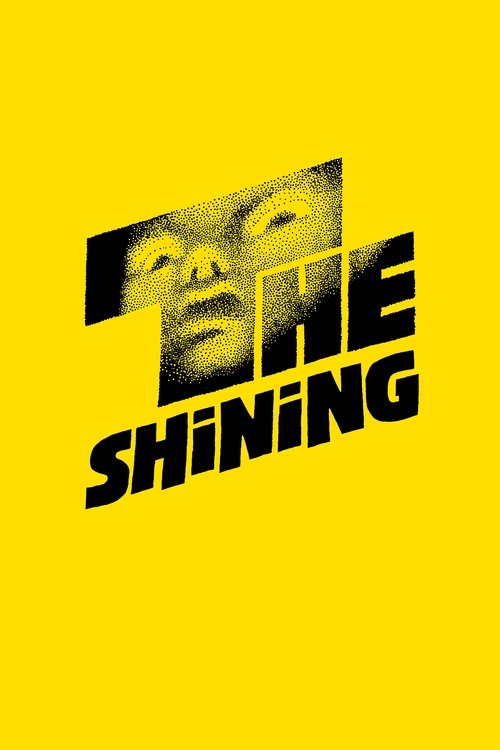
The Shining
1980 · Stanley Kubrick
For a proper horror night when you want to be unsettled for days, not just startled for two hours — best watched late, in the dark, ideally in winter. A challenge, but one of the most rewatchable ever made.
What it's about
A struggling writer takes a winter caretaker job at a grand Colorado hotel, bringing his wife and young son into months of total snowbound isolation. The boy has an unexplained psychic gift, the hotel has a history, and as the snow piles up the family begins to come apart — though whether the place is haunted or the father is simply unraveling stays terrifyingly unclear.
The experience
Slow-building, hypnotic dread rather than jump scares — the vast empty corridors, the droning score, and the wrongness of the geometry get under your skin long before anything overtly frightening happens. It's genuinely scary and strangely beautiful at once.
Performances
Jack Nicholson's descent from smirking charm into full derangement is iconic, and Shelley Duvall's raw, frayed-nerve terror — long underrated — gives the film its human stakes.
The craft
Kubrick's obsessive craft is everywhere: gliding Steadicam shots that stalk the hotel's corridors, symmetrical compositions that feel subtly wrong, and a shrieking modernist score that never lets you settle. Every frame is engineered for unease. This is a big-screen, good-speakers film if there ever was one.
Why it matters
Initially divisive — even Stephen King disliked it — it's now among the most analyzed and imitated horror films ever made, the cornerstone of horror's art-cinema wing, its images (the twins, the corridors, the typewriter) burned into pop culture.
Snapshot
The Shining is Stanley Kubrick's adaptation of Stephen King's 1977 novel, a slow-burning study of a family disintegrating inside the cavernous Overlook Hotel during a Colorado winter. Jack Torrance, a recovering alcoholic and failed writer, takes a caretaker position; his wife Wendy and psychically gifted son Danny accompany him into months of snowbound isolation. What follows is less a conventional haunted-house narrative than a hypnotic, geometric descent into madness, ambiguous as to whether the hotel is genuinely malevolent, whether Jack is simply unraveling, or both at once. The film was a critical puzzle on release and has since become one of the most analyzed horror films ever made — a touchstone for the genre's "elevated" or art-cinema wing, and a perennial object of obsessive interpretation. Its imagery (the twin girls, the elevator of blood, "Here's Johnny," REDRUM, the hedge maze, room 237) is among the most widely recognized in cinema.
Industry & production
The Shining was produced through Kubrick's long-standing arrangement with Warner Bros., the studio that distributed his work from A Clockwork Orange (1971) onward and granted him a degree of autonomy unusual in the New Hollywood era. Kubrick had relocated permanently to England, and the film was shot largely at EMI Elstree Studios in Hertfordshire, where vast interior sets — the Colorado Lounge, the Gold Room, the kitchen, the hotel corridors, the hedge maze — were constructed, allowing Kubrick total environmental control. Exteriors and establishing material drew on real locations, most famously the Timberline Lodge on Mount Hood, Oregon, used for the Overlook's facade; the production also shot aerial plates in Glacier National Park, Montana, for the opening drive.
The shoot became notorious for its length and intensity. Kubrick's method of extensive repetition produced famously high take counts, and the production stretched well beyond its schedule. Shelley Duvall, in particular, was subjected to a grueling process; accounts from the production and from the making-of documentary shot by Kubrick's daughter Vivian describe an exhausting, sometimes adversarial working environment. The precise figures and timelines vary across sources, so specific take-count claims should be treated cautiously, but the film's reputation as a punishing, perfectionist production is well documented.
A distinctive industrial footnote: Kubrick re-cut the film after its U.S. premiere, removing a hospital-set coda, and later prepared a shorter international version that ran roughly 25 minutes less than the American cut. These multiple versions complicate any single account of the film's "definitive" form.
Technology
The Shining is historically significant as one of the first feature films to make sustained, expressive use of the Steadicam, the camera-stabilization rig invented by Garrett Brown. Brown himself operated on the production, and Kubrick's exploitation of the device went far beyond its conventional use for smoothing motion. The low, gliding pursuit of Danny's Big Wheel through the corridors — the camera floating inches above the carpet, the sound shifting as the wheels move from rug to hardwood — turned a technical tool into a defining stylistic and dramatic instrument, generating dread through pure spatial fluidity. The maze chase climax likewise depended on the rig's ability to move fast and stably through tight, snow-strewn space.
Kubrick also pushed photographic technology in his pursuit of available-light naturalism, continuing the low-light sensibility he had developed on Barry Lyndon (1975) with fast lenses. The film's deep-focus, brightly and evenly lit interiors — corridors and lounges that read as flat, exposed, inescapable rather than shadowed and gothic — represent a deliberate technological and aesthetic choice that inverts horror convention.
Technique
Cinematography
Shot by John Alcott, who had photographed 2001's later stages, A Clockwork Orange, and Barry Lyndon, the film's look is defined by symmetry, depth, and unnerving clarity. Alcott and Kubrick favored one-point perspective compositions in which corridors and rooms recede to a central vanishing point, the frame rigorously balanced. The Overlook is rendered not as a place of concealing darkness but of pitiless, even illumination — there are few shadows to hide in, which paradoxically intensifies the unease. The Steadicam's smooth tracking, wide-angle lensing that exaggerates the depth and scale of interiors, and slow, deliberate zooms combine into a visual grammar of surveillance and entrapment.
Editing
Edited by Ray Lovejoy, the film's cutting is patient and architectural. Kubrick structures the narrative with intertitles ("THE INTERVIEW," "CLOSING DAY," days of the week, then escalating time-jumps) that impose a deceptively orderly chronology over a collapsing reality. The editing favors long-held shots and a measured rhythm that builds dread through duration rather than shock cutting, punctuated by Danny's abrupt, violent premonitory inserts (the blood elevator, the twins). The film's spatial geography is famously, and likely deliberately, "impossible" — windows where there should be none, rooms that cannot connect — a discontinuity that subliminally disorients and has fueled decades of interpretation.
Mise-en-scène / staging
The production design (Roy Walker) is central to the film's meaning. The Overlook is a curated collage of Americana — Navajo and Pueblo-derived motifs in the carpets and decor, a "frontier" lodge aesthetic, the gilded 1920s opulence of the Gold Room — that quietly invokes the colonial violence beneath American prosperity (the hotel is explicitly said to be built on a Native burial ground). Staging is dominated by symmetry, repetition, and the maze motif, externalized in the hedge labyrinth and mirrored in the carpet patterns and the hotel's own bewildering layout. Color is deployed with precision: the blood reds of the Gold Room bathroom and the elevator, the sickly institutional tones of room 237.
Sound
The soundtrack is one of the most aggressive and influential in horror. Rather than commissioning a traditional score, Kubrick and music editors built the film around existing modernist concert music — Béla Bartók's Music for Strings, Percussion and Celesta, and the dense, terrifying clusters of Krzysztof Penderecki, alongside electronic realizations of Berlioz's Symphonie fantastique "Dies Irae" by Wendy Carlos and Rachel Elkind, who were credited with original contributions. The result is a soundscape of dissonance and dread. Equally important is the design of diegetic and near-subliminal sound: the shifting texture of the Big Wheel, the heartbeat-like low tones, oppressive silences, and sudden amplifications.
Performance
Jack Nicholson's performance is a calculated arc from frayed civility to grinning demonic glee, theatrical and oversized in a way Kubrick clearly sought — Jack seems half-mad from the first interview, so the "transformation" reads as the surfacing of something already present. Shelley Duvall's Wendy, often unfairly maligned, delivers a portrait of raw, exhausting terror and frayed nerves that is integral to the film's claustrophobic realism. Danny Lloyd, a young child directed with great care (and reportedly shielded from understanding the film's content), gives an uncanny, controlled performance, his "Tony" voice and rigid affect deeply unsettling. Scatman Crothers as Dick Hallorann supplies warmth and the film's moral center, and the vocabulary of "the shining" itself.
Narrative & dramatic mode
The film operates in a register of sustained ambiguity. King's novel is a relatively legible tragedy of addiction and a sympathetic father destroyed by a malevolent hotel; Kubrick strips out much of the interiority and redemption, leaving a colder, more enigmatic text in which causation is deliberately unstable. Is the Overlook supernaturally active, or are we watching a folie partagée — a shared psychosis, or Danny's projected terror, or Jack's alcoholic disintegration? Kubrick refuses to resolve this. The dramatic mode is one of dread and dissociation rather than conventional suspense; even the famous closing image — Jack in a 1921 photograph — opens more questions (eternal recurrence, possession, reincarnation) than it answers. The narrative's intertitled, calendar-driven structure mimics order while reality decays, and key "explanations" are withheld or rendered untrustworthy.
Genre & cycle
The Shining arrived during a fertile and commercially booming period for horror, after The Exorcist (1973) and amid the post-Halloween (1978) slasher cycle and a wave of King adaptations (Carrie, 1976). Yet it stands apart from its contemporaries. Where the slasher trafficked in kinetic shock and the haunted-house film in gothic atmosphere, Kubrick brought the resources and seriousness of art cinema to the genre — measured pacing, formal rigor, thematic density, and refusal of catharsis. It belongs to a lineage of "prestige" or auteur horror that treats the genre as a vehicle for serious aesthetic and philosophical ambition, and it became a foundational reference point for what would later be called "elevated horror."
Authorship & method
The film is unmistakably Kubrickian: the obsessive symmetry, the cold irony toward humanity, the use of pre-existing modernist music, the architectural sense of space, the long perfectionist shoot, and the thematic interest in violence as something latent in civilization and recurring through history. Kubrick co-wrote the screenplay with the novelist Diane Johnson, with whom he reworked King's plot toward greater ambiguity and psychological abstraction; King himself was famously dissatisfied with the result, objecting to the de-emphasis of the family tragedy and the casting of Nicholson.
Kubrick's key collaborators were essential to the result: cinematographer John Alcott, whose naturalistic-yet-uncanny lighting realized the look; editor Ray Lovejoy; production designer Roy Walker; and Steadicam inventor-operator Garrett Brown. The "score" was assembled from Bartók and Penderecki, with original electronic work by Wendy Carlos and Rachel Elkind. Kubrick's method — total control of purpose-built sets, exhaustive repetition, and post-release re-editing — is itself part of the film's authorship.
Movement / national cinema
The Shining sits at an unusual cultural crossing. It is an American studio production, financed and distributed by Warner Bros. and adapted from a quintessentially American author, yet it was made by an American expatriate working entirely in Britain with a largely British crew, in the rarefied, autonomous mode Kubrick had carved out for himself. It does not belong to a national "movement" so much as to the singular institution of Kubrick's late career — a body of work that fuses Hollywood resources with the ambitions of European art cinema. Its concerns, however, are profoundly American: the frontier, colonial violence, the haunted national past, and the nuclear family as a site of dread.
Era / period
The film is a product of the late New Hollywood moment, when a handful of auteurs still commanded large budgets and creative control before the blockbuster era fully consolidated. It reflects the period's appetite for serious, adult genre filmmaking and the commercial ascendancy of horror. Set primarily in an unspecified contemporary winter (1980), the film is saturated with historical layering — the Gold Room's 1920s ghosts, the 1921 photograph, the invocations of a violent settler past — so that "period" within the film is recursive: the present is continually invaded by an unquiet history that will not stay buried.
Themes
The film's central concerns include: the disintegration of the family, with domestic abuse and alcoholism rendered as horror (Jack's violence toward Wendy and Danny is the film's true engine, supernatural or not); isolation and cabin fever as solvents of sanity; the violence underlying American history, signaled by the burial-ground motif and the colonial decor; cyclical recurrence and eternal return, crystallized in the final photograph; and the unreliability of perception and memory. Madness, possession, and addiction are held in deliberate superimposition. The maze — literal and architectural — externalizes a psyche and a history with no clear exit. The film's refusal to settle these themes into a moral or causal scheme is precisely what has sustained its interpretive afterlife.
Reception, canon & influence
On release in 1980, The Shining received a notably mixed and often cool critical response; many reviewers, and Stephen King himself, found it slow, emotionally remote, or unfaithful to the novel. It was even nominated for early Razzie awards (for Kubrick's direction and Duvall's performance), a judgment that now looks badly mistaken. Its critical reputation has risen steadily and dramatically over the decades; it is today widely regarded as one of the greatest horror films ever made and a major work in Kubrick's filmography.
Influences on the film (backward): Stephen King's source novel provides the architecture and central situation. Kubrick drew on the modernist concert tradition (Bartók, Penderecki, Ligeti-adjacent sound worlds, Berlioz) for its sonic palette, and on his own prior experiments in available-light photography (Barry Lyndon) and architectural symmetry (2001: A Space Odyssey). The film engages the broader haunted-house and gothic traditions even as it inverts them, and its concerns echo the period's cycle of "evil child" and family-horror films.
Legacy (forward): The film's impact is pervasive. Its Steadicam grammar reshaped how filmmakers move through interior space and stage pursuit and dread. Its iconography has been endlessly quoted, parodied, and referenced across film and television. It is a foundational text for "art-horror" and the later "elevated horror" tendency. It generated its own remarkable interpretive subculture — including the documentary Room 237 (2012), which catalogs elaborate (and frequently unfounded) readings, itself a testament to the film's bottomless ambiguity. The work spawned direct continuations: Mike Flanagan's Doctor Sleep (2019) adapted King's sequel novel while explicitly reconciling King's and Kubrick's competing visions. Within Kubrick's own oeuvre and within horror at large, The Shining stands as the case study for how rigorous formal control and interpretive openness can make a genre film inexhaustible.
A Deleuzian reading
A boy pedals a plastic trike through an empty hotel, and the camera floats behind him a few inches off the floor, smooth as a held breath.
The full Deleuzian reading of The Shining →
Reception
Greeted with shrugs in 1980 — mixed reviews, zero Oscar nominations, and Razzie nods for Kubrick and Shelley Duvall (Duvall's was formally rescinded in 2022) — it has since climbed to consensus status as one of the greatest horror films ever made.
How The Shining was received, from release to now →
Influences: the films it descends from and the films it influenced
- 2001: A Space Odyssey (1968) — Kubrick's own template for one-point-perspective symmetry and architectural framing, where corridors and rooms are composed as receding geometric tunnels — the visual grammar he carries directly into the Overlook's hallways.
- Barry Lyndon (1975) — John Alcott's available-light cinematography, perfected here shooting interiors lit to look natural-yet-uncanny, is the lighting method reapplied to give the Overlook its bright, flat, dread-inducing daylight.
- The Innocents (1961) — Established the 'is-it-the-house-or-the-mind' sustained ambiguity in a prestige haunted-house film, refusing to confirm whether ghosts are real — the interpretive openness Kubrick and Diane Johnson abstracted King's plot toward.
- The Haunting (1963) — Made architecture itself the antagonist via wide-angle distortion and a house with 'wrong' geometry, the impossible-space staging that becomes the Overlook's contradictory floor plans.
- Rosemary's Baby (1968) — The slow-burn 'is-the-protagonist-mad?' domestic horror built on a literary source, modeling the elevated, psychologically abstract treatment of genre material Kubrick pursued over King's overt scares.
- Repulsion (1965) — Confined-interior subjectivity in which an apartment warps to mirror a disintegrating mind, the model for staging madness as architectural and spatial rather than purely performed.
- Don't Look Now (1973) — Premonitory editing and recurring symbolic color (the red figure) treated as a precognitive motif, the formal precedent for the film's 'shining' visions and red-soaked symbolic palette.
- Rocky (1976) — The first feature to deploy Garrett Brown's Steadicam for fluid pursuit; Kubrick then weaponized Brown's same invention into low-gliding tracking through corridors, extending the identical tool toward dread.
- Last Year at Marienbad (1961) — Kubrick deploys Garrett Brown's Steadicam as the mechanized descendant of Marienbad's dolly to pursue a small figure through the Overlook's ornate baroque corridors; Jack's photographic appearance in a 1921 ballroom photograph reproduces Marienbad's central temporal loop — the same person occurring at irreconcilable times within the same architectural space, with the hotel itself functioning as Robbe-Grillet's purely present-tense anti-memory.
- The Exorcist (1973) — Kubrick's Steadicam — a pursuing, omniscient presence gliding through ordinary hotel corridors — is the formal evolution of Friedkin's handheld vérité approach; both films locate horror in a domestic, inhabited space made uncanny by a camera that documents rather than dramatizes.
- Hour of the Wolf (1968) — Kubrick's structural use of an isolated creative figure besieged by predatory presences in a studio-constructed labyrinthine space inherits Bergman's basic architecture; the Steadicam functions as his equivalent of Nykvist's face-seeking camera — a tracking device that registers the dissolution of the artist's self through spatial disorientation rather than close-up intensity.
- The Tenant (1976) — Extends the besieged-self-in-a-hostile-building into a hotel-as-panopticon, dread accreting from banal routine, with an unreliable protagonist whose madness may be the structure's own design.
- The Evil Dead (1981) — Adopted relentless low, gliding Steadicam-style point-of-view movement through interior space to embody a malign force stalking victims — the Overlook's hallway grammar turned into a roving menace.
- The Blair Witch Project (1999) — Inherited the sustained refusal to show or explain the threat, trusting ambiguity and off-screen dread over revelation, descending from Kubrick's interpretive openness.
- The Others (2001) — Available-light, symmetrically composed prestige haunted-house horror sustaining ambiguity about the supernatural until the architecture itself reveals the truth — the Overlook method transplanted.
- The Shining (Room 237) (2012) — A documentary entirely about the film's impossible spaces and buried symbols, formalizing the interpretive subculture Kubrick's deliberate ambiguity and 'wrong' geometry generated.
- The Witch (2015) — Period-accurate available-light photography, abrasive modernist string score, and a slow disintegrating-family arc define the 'elevated horror' tendency for which The Shining is the foundational text.
- Hereditary (2018) — Symmetrical doll's-house framing, family disintegration as horror, and a dread-saturated atonal score extend Kubrick's marriage of rigorous formal control to genre material.
- Doctor Sleep (2019) — Directly continues the story while meticulously reconstructing Kubrick's Overlook sets, symmetry, and Steadicam blocking to reconcile King's and Kubrick's competing visions.
- Jacob's Ladder (1990) — Kubrick's Steadicam tracking through the Overlook's institutional corridors to generate ambient spatial dread — combined with the building as a self-contained hallucination engine that personalizes its horrors to the protagonist's psychic wounds — provides the staging template for Lyne's hospital and subway corridor sequences.
- We Need to Talk About Kevin (2011) — Formalizes the domestic architecture as a hostile agent — corridors, rooms, and enclosed spaces that channel and amplify violence — combined with a malevolent child functioning as a vessel the adults around him cannot read, both of which Kevin reconstructs in a suburban register.
- Only God Forgives (2013) — The symmetrical corridor composition — hallways as spatial traps, mirror-geometry as psychological architecture — is Refn's most precisely reproduced Kubrick device; the Bangkok brothel's long-take corridor passages are The Shining's Overlook geometry transposed, a debt simultaneously cinephilic and technical through Larry Smith's working familiarity with Kubrick's visual system.
- The Killing of a Sacred Deer (2017) — Kubrick's symmetrical wide-angle Steadicam tracking through institutional corridors — converting domestic architecture into threatening geometry through lens distortion — is replicated in Sacred Deer's hospital sequences with evident deliberateness.
- Us (2019) — Kubrick's symmetrical corridor compositions — the frame as mirror that doubles rather than simply records — and his staging of identical twins as uncanny spatial intrusion are direct visual precedents for Gioulakis's symmetrical-doubling framings and the Tethered's choreographic mirroring of every Wilson gesture.
- The Texas Chain Saw Massacre (1974) — Contemporaneous use of an abstract, found/industrial 'sound-world' in place of melodic scoring to generate unease, paralleling Kubrick's assembly of Penderecki and Bartók as atonal dread-engine.
- Suspiria (1977) — Built terror from saturated symbolic color and architecture-as-trap with abrasive modernist sound, the same 'horror as formal design' impulse running parallel to Kubrick's Overlook.
- The Shining (1997 miniseries) (1997) — King's own faithful re-adaptation defined explicitly against Kubrick's — restoring the family tragedy and overt supernatural that Kubrick suppressed — a craft dialogue with the same source novel.
- Eraserhead (1977) — Kubrick explicitly screened Eraserhead for his cast and crew as a tonal reference for the kind of dread he wanted; The Shining shares Lynch's use of durational slow cutting and ambient industrial sound design — the Overlook's mechanical hum, Wendy Carlos's sustained electronics — to generate unease through textural accumulation rather than through narrative event or jump-cut shock.
- Nosferatu the Vampyre (1979) — Both films incorporate pre-existing Romantic and modernist orchestral music — Wagner and Gounod versus Bartók, Penderecki, and Berlioz — as horror score rather than commissioning genre-functional underscore, and both replace shock-cut montage with accumulative atmospheric duration as the primary mechanism of dread.
- Elephant (2003) — Origin of the Steadicam-through-architecture vocabulary — Garrett Brown's fluid low tracking of a figure down endless institutional hallways, the exact rig-and-space relationship Savides quotes in the school's corridors.
- Misery (1990) — The benchmark King adaptation using isolation-as-suspense: a writer and a confined snowbound space where derangement detonates, proving King's prose could yield serious performance-led cinema.
Similar films
- Repulsion (1965) — influence & lineage · same viewing thread · often watched together
- Rosemary's Baby (1968) — influence & lineage · same viewing thread
- 2001: A Space Odyssey (1968) — influence & lineage · often watched together
- Doctor Sleep (2019) — influence & lineage
- Hereditary (2018) — influence & lineage
- Don't Look Now (1973) — influence & lineage
- The Innocents (1961) — influence & lineage · same viewing thread
- The Exorcist (1973) — same viewing thread
All the films related to The Shining →
Watch it with: curated runs of related films
- The Walls Are Closing In — Watch these when you want horror that comes from inside the house — a mind or a family cracking apart in rooms that slowly turn hostile.
Film essays and courses that include it
- Stanley Kubrick
- Shadow, Psyche, Flesh: The Formal Breakthroughs of Horror Cinema
- The Fractured Mind: Twelve Landmarks of the Psychological Thriller
- No Vacancy: A Century of Rooms
- What the Darkness Knows: The Occult Procedural and Its Investigators
- The Frame as a Trap
- The Ghost That Walks
- The Horror of the Family