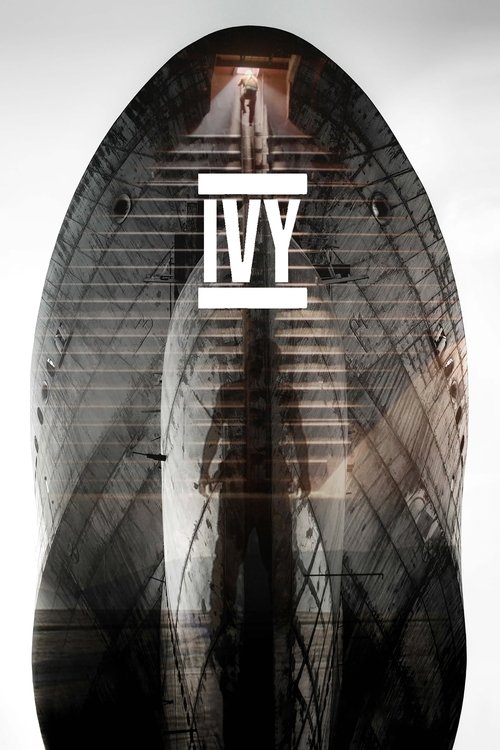
Ivy
2015 · Tolga Karaçelik
For when you're in the mood for a slow, atmospheric psychological thriller that trusts you — the kind you sit with quietly and argue about after. Definitely a challenge pick, best watched late at night.
What it's about
A cargo ship's company goes bankrupt, a lien freezes the vessel off the Egyptian coast, and six unpaid crewmen are stuck aboard — legally required to stay, with no wages, dwindling supplies, and no end date. What starts as a story about boredom and back pay slowly becomes something stranger, as isolation, resentment, and the ship's shifting hierarchy begin to warp the men's grip on reality.
The experience
A slow-burn pressure cooker: deadpan and observational at first, then steadily more menacing, until the film slips from realism into genuine dread. You feel the stalled time in your body — and then it starts to feel haunted.
The craft
Karaçelik turns one anchored freighter into a whole world — rusting corridors, empty decks, the sea as a wall — with patient framing and a soundscape of creaks and silence that does the horror work without jump scares. The gradual slide from naturalism into hallucination is handled with real control.
Why it matters
A Sundance-premiering breakthrough for Turkish independent cinema that swept the national awards at Antalya and marked Tolga Karaçelik as a director to watch.
Horror · Psychological horror · Suspense & terror. Six unpaid sailors stuck on an impounded freighter: a deadpan slow burn where time stalls and isolation curdles into creeping dread.
Snapshot
Ivy (Turkish: Sarmaşık) is the second feature by the Turkish writer-director Tolga Karaçelik, a 104-minute chamber drama that strands six unpaid seamen aboard a freighter anchored off the Egyptian coast after their shipping company goes bankrupt and a lien freezes the vessel in place. What begins as a study in enforced idleness — men waiting for wages and a berth that never come — curdles into a psychological siege, and finally slips its realist moorings into hallucination and dread. The film premiered in the World Cinema Dramatic Competition at the 2015 Sundance Film Festival (screening from late January 2015), traveled to more than thirty international festivals, and swept the National Feature competition at Turkey's Antalya Golden Orange in December 2015. It sits at the confluence of three modes named in its own billing — Drama, Fantasy, Thriller — and its distinction lies precisely in how it lets the first decay into the last two. Among a certain cohort of younger Turkish viewers it acquired a cult standing as political allegory; abroad it functioned as a calling card for Karaçelik, whose next film, Butterflies (2018), would win the Sundance World Cinema Dramatic Grand Jury Prize.
Industry & production
Ivy is a product of the post-2000 Turkish art-cinema economy: a festival-facing, auteur-driven film made on modest means and dependent on the festival circuit, national film-support mechanisms, and eventually streaming for its life beyond a brief domestic theatrical window. It opened in Turkish cinemas on 4 December 2015 and later reached international audiences via Netflix. Its reported domestic gross — on the order of 259,000 Turkish lira from roughly 24,800 admissions — confirms what the film's form already implies: this was never a commercial proposition but a critical and festival object, financed and valued as cultural capital rather than box office.
The exact financing structure and the roster of production and co-production companies are not well documented in the accessible English-language record, and I will not invent them; what is clear is that the film was mounted as a Turkish production with the festival-competition ambitions typical of the country's international breakout titles of the decade. Its single most consequential production decision was casting the drama entirely within the physical fact of a ship — a real cargo vessel that becomes the film's only set, its only landscape, and effectively its antagonist. That choice governs budget, schedule, and aesthetic alike: the confinement that torments the characters is the same confinement that concentrates the production.
Technology
The specific camera and capture package used on Ivy is not reliably documented in sources I can verify, and I will not manufacture a spec sheet. What can be stated with confidence is that the film was shot by Gökhan Tiryaki — best known as Nuri Bilge Ceylan's cinematographer on Once Upon a Time in Anatolia and Winter Sleep — working in the digital-cinematography idiom that had by 2015 become standard for Turkish art films of this scale. The relevant "technology," in any case, is less the sensor than the environment: shooting aboard an anchored freighter imposes hard constraints — cramped corridors, engine rooms, holds, and the surrounding flatness of open water — that shape lens choice, lighting, and blocking far more than any camera-brand decision would. The production's technological problem was how to make a fixed, metal, largely windowless interior legible and expressive across a feature's length, and the solutions are visible on screen in the film's disciplined handling of confined space and available light.
Technique
Cinematography
Tiryaki's photography drew the most consistent critical attention, and its reception is instructively split. Reviewers called the images "technically impeccable" while also noting that their controlled beauty sat "strangely out of synch" with the crew's psychological disintegration — an elegance that, depending on the viewer, either ironizes the men's squalor or holds it at too cool a remove. The camera treats the ship architecturally: horizontals of deck and rail, verticals of ladders and bulkheads, the pressing enclosure of interiors set against the indifferent openness of sea and sky. This is a cinematography of graded confinement, using the vessel's geometry to keep the men boxed within the frame long before the narrative admits they are trapped.
Editing
Cut by Umut Şenyol (per the available credits), Ivy is a deliberate slow burn. Critics repeatedly flagged that although the story is understood to unfold across roughly four months, the editing withholds clear temporal markers, so the passage of time becomes disorienting rather than measured — an effect that mirrors the crew's own loss of bearings. The cutting builds toward an ending judged both logical and surprising, which suggests an editorial strategy of patient accumulation rather than escalation: the film earns its final turn by refusing to signpost it.
Mise-en-scène / staging
The staging is the film's central achievement, because the ship is the film. Karaçelik must generate an entire drama of hierarchy, resentment, and unraveling within a single, unchanging, claustrophobic set. The seamen are arranged and rearranged across decks, mess, cabins, and engine room in configurations that externalize the pecking order — captain-figure over crew, the assertion and erosion of authority — and its collapse. As supplies dwindle and command decays, the same spaces are restaged as arenas of confrontation and, eventually, of the uncanny. The mise-en-scène thus carries the thematic load directly: power is spatial, and its dissolution is visible in who occupies which part of the ship and how.
Sound
Several critics found the soundscape more expressive than the images at conveying psychological deterioration — an atmospheric design that makes even a large vessel feel airless, suggesting "how even a big boat can sometimes not be big enough." The ambient reality of a ship (metal, engine, water, wind) becomes an instrument of unease, and the film leans on this sonic pressure as the men's grip loosens. The score is credited to Ahmet Kenan Bilgiç in the available filmographic record, though I have only limited corroboration for that attribution and flag it accordingly; the more securely documented point is that atmosphere and sound do heavy lifting in the film's turn toward dread.
Performance
The ensemble is the film's engine, and Nadir Sarıbacak — playing Cenk — anchors it, a performance recognized with the Best Actor prize at Antalya. The cast around him includes Hakan Karsak (Nadir), Kadir Çermik (İsmail), Özgür Emre Yıldırım (Alper), Osman Alkaş (Beybaba), and Seyithan Özdemir (Kürt), a naming scheme that itself gestures at type and social position. Reviewers described the characters as well-drawn but familiar, and often deliberately unlikeable — an assessment that reads less as a flaw than as a design choice, since the film is about the corrosion of solidarity among men with nothing left to share but confinement.
Narrative & dramatic mode
The dramatic spine is a pressure-cooker structure: an inciting economic catastrophe (bankruptcy, lien, non-payment) removes the men's ability to leave or be paid, and the rest is a study of what enforced immobility does to a small hierarchy. Crucially, the film does not stay in social-realist register. As the men decompensate, the narration itself becomes unreliable: a possible fall or push overboard is followed by the drowned man's ghostly reappearance, and hallucination increasingly contaminates the film's reality. This is where the "Fantasy" and "Thriller" of the billing enter — not as spectacle but as an epistemological slippage, the audience losing its footing alongside the crew. Some critics felt the surreal turn arrived under-foreshadowed; others read that abruptness as the point, madness declining to announce itself. The result is a drama that migrates modes without changing location, its genre instability enacting the characters' own.
Genre & cycle
Ivy belongs to the durable lineage of the confined-vessel psychodrama — the ship as pressure vessel for masculinity, authority, and mutiny — while inflecting it toward contemporary art-house ambiguity. It sits alongside "stuck-in-place" chamber thrillers in which the antagonist is circumstance and the descent is internal. Within Karaçelik's own small body of work it continues a clear preoccupation begun in his debut Toll Booth (Gişe Memuru, 2010): psychological unraveling inside a confined space and a deteriorating order. As part of the mid-2010s cycle of Turkish festival cinema, it shares that cinema's taste for slow duration, allegorical undercurrent, and formal control, even as its genre hybridity distinguishes it from the more strictly realist strain associated with Ceylan.
Authorship & method
Karaçelik, who both wrote and directed, is the film's clear author, and his method here is one of constraint as generator: take an unyielding single location and a fixed social unit, apply economic catastrophe, and observe the decay. The available record indicates the screenplay's awards were shared with co-writer Bilge Elif Turhan, and I note that collaboration while flagging that the precise division of writing credit is not fully clear in every source. His most significant collaborator is cinematographer Gökhan Tiryaki, whose association with Nuri Bilge Ceylan lent Ivy an immediate visual pedigree and whose "impeccable" images are inseparable from the film's identity. Editor Umut Şenyol shaped its disorienting temporality, and composer Ahmet Kenan Bilgiç is credited with the music (attribution held loosely, per above). Karaçelik has openly located the writing in a literary tradition — Conrad, Melville, and Coleridge's Rime of the Ancient Mariner — which frames his authorship as consciously working through the sea-narrative canon rather than around it. His subsequent trajectory confirms the arrival Ivy announced: Butterflies took the Sundance World Cinema Dramatic Grand Jury Prize in 2018, making him one of the more internationally visible Turkish directors of his generation.
Movement / national cinema
The film is a representative artifact of the "New Turkish Cinema" that gained international traction in the 2000s and 2010s — festival-oriented, auteurist, formally rigorous, and frequently allegorical about the nation's social and political condition. Ceylan is the towering figure of this tendency, and Ivy's use of his cinematographer situates Karaçelik explicitly within its orbit even as he pushes toward genre. That younger Turkish audiences embraced the film as political allegory is itself characteristic of this national cinema, whose confined dramas of authority and endurance were routinely read as parables of the country's power structures.
Era / period
Made and released in 2015, Ivy is a film of a particular Turkish moment — a period of intensifying political tension and contested authority — and its parable of a stranded crew abandoned by owners, bound by an invisible legal lien, and turning on itself under a decaying command lent itself readily to national reading. More broadly it belongs to the mid-2010s international art cinema in which slow-cinema duration met genre inflection, and in which streaming platforms (Netflix, in Ivy's case) began to serve as the afterlife for festival titles that had thin theatrical exposure.
Themes
The film's governing subject is hierarchy and its decay — the fragile fiction of command, and what remains of authority when its material basis (wages, orders, purpose) evaporates. Braided through it are class and labor: these are working men rendered disposable by a bankruptcy they did not cause and cannot escape, held by an abstraction (the lien) as much as by the sea. Isolation and the plasticity of time form the psychological core, with the film's smeared chronology making duration itself a torment. And there is the thin membrane between reason and madness, dramatized by the intrusion of the uncanny into a realist world. Above all sits the ship-as-microcosm — of a workplace, a nation, a social order — the confined-vessel allegory in which the men's descent stands for something larger than themselves.
Reception, canon & influence
Critical reception was largely favorable but qualified. International reviewers admired the film's craft — Tiryaki's photography, the enveloping sound design, the assurance of a second feature — while several found it "more ambitious than controlled," faulting under-motivated surreal turns and characters described as familiar and unlikeable. The consensus praised atmosphere and technique over narrative freshness, positioning Ivy as an accomplished but not fully resolved work. Domestically its standing was higher: it took four top prizes at the 52nd Antalya Golden Orange in December 2015 — Best Film, Best Director, Best Screenplay, and Best Actor for Nadir Sarıbacak — cementing Karaçelik as a major young talent and, per the record, among the youngest Golden Orange laureates.
The influences on the film are, by the director's own account, literary as much as cinematic: the sea narratives of Conrad and Melville and the guilt-and-drift of Coleridge's Ancient Mariner, filtered through the confined-space psychodrama of his own Toll Booth and the visual grammar of the Ceylan school via Tiryaki. Its influence forward is harder to measure and I will not overstate it: Ivy did not spawn an evident imitative cycle, and its principal legacy is career-shaped — it established the international platform and the thematic signature (confinement, decaying order, tonal slippage) that Karaçelik carried into the Sundance-winning Butterflies. Within Turkey its afterlife has been as a cult allegory, a film whose reputation among younger viewers rests on reading the stranded ship as a figure for the nation. That is a modest but genuine form of canonization: not a template widely copied, but a work that continues to be argued over for what it means.
Reception
It premiered in Sundance's World Cinema Dramatic competition in 2015 to respectful-but-split reviews, then swept Turkey's Antalya Golden Orange awards later that year; these days it's mostly encountered in reverse, by fans working back through Tolga Karaçelik's catalog after Butterflies and The Shallow Tale of a Writer Who Decided to Write About a Serial Killer.
How Ivy was received, from release to now →
How to watch Ivy: what to notice on a first viewing
- Watch how the ship's rails, ladders, and bulkheads box the men in frame. Tiryaki's camera treats the vessel architecturally, using its horizontals and verticals to keep the crew visually confined long before the plot admits they are trapped. The geometry of the ship is doing the work of a cage before anyone says the word.
- Notice who occupies which part of the ship as the film goes on. The seamen are rearranged across deck, mess, cabins, and engine room in configurations that shift as command among them erodes. Power on this ship is shown as a matter of physical space, and you can watch it fail.
- Listen to how the ship itself sounds, not just the men. Metal, engine, water, and wind build into an atmosphere of unease that critics found more expressive than the images. The sound design makes a large vessel feel airless as the men's control slips.
- Notice how little the film tells you about how much time has passed. Although the story spans roughly four months, clear time markers are withheld, so duration becomes disorienting rather than measured. You lose your bearings on time the same way the stranded crew does.
- Watch how guarded and unfriendly the men stay with each other. The characters are deliberately unlikeable, drawn with familiar but distinct positions in the ship's pecking order. Keeping them hard to warm to is what lets the film show solidarity actually corroding rather than simply being threatened.
The whole guide to watching Ivy, with the keys for a rewatch →
Influences: the films it descends from and the films it influenced
- Once Upon a Time in Anatolia (2011) — Shot by Gökhan Tiryaki, its long-take nocturnal landscape compositions and patient architectural framing establish the exact image grammar Ivy inherits through the same cinematographer.
- Climates (2006) — Tiryaki's first Ceylan collaboration models the chamber study of decaying human relations through observational slow-burn rhythm and interior framing that Ivy transposes onto the ship.
- Toll Booth (2010) — Karaçelik's own debut establishes his method of using a single unyielding location (a toll booth) as a generator of psychological decay, the constraint-as-engine he later moves to a freighter.
- Knife in the Water (1962) — The confined-vessel three-hander of shifting dominance and class resentment, staging an ensemble psychodrama entirely aboard a boat with escalating, unlikeable power games.
- Repulsion (1965) — Subjective mental disintegration rendered through architectural distortion of a single location and sound design, the template for Ivy's unreliable, dread-soaked perception.
- Alien (1979) — The blue-collar freighter crew whose labor hierarchy decays under pressure, framed inside the vessel as an architectural labyrinth generating slow-burn dread.
- Das Boot (1981) — Immersive confined-vessel sound design and the enveloping claustrophobia of shipboard rank under duress, the atmospheric-dread precedent for Ivy's anchored-freighter acoustics.
- Apocalypse Now (1979) — Adapts Conrad's voyage-into-madness structure directly, the same literary sea-narrative descent (Conrad/Melville) Karaçelik openly builds his screenplay from.
- The Shining (1980) — Uses geometric, symmetrical architectural framing of a confining structure to track a caretaker's slow unraveling, the spatial-dread device Ivy applies to the ship's corridors.
- Stalker (1979) — Slow-cinema temporal dilation on a confined journey where the environment itself becomes the psychological state, the mid-2010s slow-cinema lineage Ivy extends.
- Butterflies (2018) — Karaçelik's Sundance-winning follow-up carries forward the same authorial signature of confinement, decaying order, and tonal/genre slippage that Ivy first announced.
- Enys Men (2022) — An isolated single-location slow-burn where temporal disorientation and dense atmospheric texture dissolve genre categories, extending Ivy's editing-driven unreliability.
- Winter Sleep (2014) — Contemporaneous Tiryaki-shot New Turkish Cinema chamber drama of hierarchy and class resentment, sharing the slow-burn ensemble decay in an enclosed social unit.
- The Lighthouse (2019) — A confined maritime two-hander of collapsing rank and mutual madness, using boxed architectural framing and genre slippage to erode a narrator's reliability as Ivy does.
- Triangle (2009) — Ship-set temporal disorientation achieved through looping, fractured editing that destabilizes the protagonist's grip on sequence aboard a vessel.
- Leviathan (2012) — An immersive fishing-vessel sensory envelopment treating the working ship as a self-contained microcosm through overwhelming sound and destabilized image.
Similar films
- Winter Sleep (2014) — influence & lineage
- Once Upon a Time in Anatolia (2011) — influence & lineage
- Evolution (2016) — shared sensibility
- The Currents (2025) — shared sensibility
- The Man from London (2008) — shared sensibility
- Blue Heron (2026) — shared sensibility
- Hour of the Wolf (1968) — shared sensibility
- The Lobster (2015) — shared sensibility