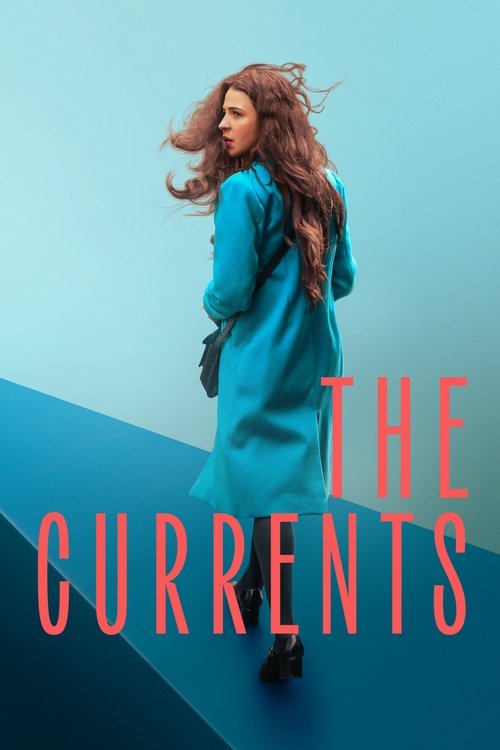
The Currents
2025 · Milagros Mumenthaler
For a quiet, attentive night when you want to sit with a character rather than be swept along by plot — a film to chew on, not comfort food.
What it's about
Lina is a 34-year-old Argentine stylist at the top of her game, in Switzerland to collect an award, when a sudden impulse cracks something open in her. She flies home to Buenos Aires and tells no one. On the surface her life continues — work, family, the routines of success — but underneath, a past she thought she'd outrun begins quietly pulling everything loose.
The experience
Hushed, slow, and interior — the drama plays out in glances, silences, and small ruptures rather than confrontations. It asks patience and repays it with a low hum of unease that builds without you noticing.
Performances
Isabel Aimé González Sola carries nearly every frame as Lina, playing a woman in crisis who refuses to explain herself — the performance works almost entirely through what she withholds.
The craft
Milagros Mumenthaler directs with unusual restraint: no confessions, no flashback machinery, just precise attention to behavior and atmosphere as a composed life comes apart. It's filmmaking that trusts you to read faces and rooms, and it rewards watching without distractions.
Why it matters
Mumenthaler's third feature premiered in competition at Toronto and won a prize at San Sebastián, consolidating her reputation as one of the most rigorous portraitists of women's inner lives in Latin American cinema.
Snapshot
The Currents (Spanish: Las corrientes) is the third feature by the Swiss-Argentine director Milagros Mumenthaler, a roughly 104-minute psychological drama that premiered in the Platform competition of the 50th Toronto International Film Festival in September 2025 and went on to play San Sebastián, where it took the RTVE Otra Mirada Award. It is a quiet, interiorized character study of Lina (Isabel Aimé González Sola), a thirty-four-year-old Argentine fashion stylist who, at the apex of her professional life, travels to Switzerland to collect an award and, on a sudden impulse, throws herself from a Geneva bridge into the freezing Rhône. She survives, returns to Buenos Aires, and tells no one. The film tracks the slow, almost subterranean unraveling that follows — a crisis registered not through confession or plot but through atmosphere, displacement, and the textures of an ordinary affluent life that no longer fits its owner. After two films built around adolescence and family memory, The Currents extends Mumenthaler's career-long inquiry into women's inner weather into adult disquiet, and confirms her as one of the more rigorous formalists working across the Argentine–European art-cinema axis.
Industry & production
The picture is a Swiss-Argentine co-production between Mumenthaler's Geneva-based home, Alina Film, and the Buenos Aires company Ruda Cine. Producers include Eugenia Mumenthaler and David Epiney (Alina Film) alongside Violeta Bava and Rosa Martínez Rivero on the Argentine side — a continuation of the bi-national producing partnership that has shaped Mumenthaler's filmography since her debut. The structure is characteristic of her work and of a broader European-Latin American co-production ecology: Swiss cultural funding and post-production infrastructure paired with Argentine locations, crew, and creative grounding. Paris-based Luxbox acquired international sales, announcing the deal around the film's Toronto bow, while Cinetren handled Argentine distribution. The film's festival itinerary — Toronto's Platform (a curated, juried competition for auteur work), then San Sebastián — situates it squarely in the festival-driven art-house market rather than in any commercial release calculus; precise budget and box-office figures are not part of the public record, and the film's economic logic is that of grants, co-production funds, and specialized distribution rather than theatrical recoupment.
Technology
The granular technical specifications of The Currents — camera system, capture format, aspect ratio, lenses — are not well documented in the available public record, and it would be irresponsible to assert them. What can be said is that the film belongs to the contemporary digital art-cinema idiom: clean, controlled, low-key imagery dependent on precise exposure and color management rather than on film grain or spectacle. Reporting around the film makes clear that color was treated as an expressive, non-naturalistic instrument — Mumenthaler has described conceiving Buenos Aires as "an old, gray city" and setting Lina apart through stronger, warmer chromatic notes that externalize her internal state — which implies a deliberate, design-forward approach to grading and palette in post. Likewise, the prominence of finely layered ambient sound points to careful location recording and detailed sound design in finishing. Beyond these reasonable inferences, the technical specifics remain thin, and this dossier declines to invent them.
Technique
Cinematography
Shot by Gabriel Sandru, the film's images are its primary narrative engine. Critics have singled out a striking opening in which Lina's reflection partly obscures her own face as she looks out over a city — an emblematic gesture for a film about a woman estranged from herself. Sandru and Mumenthaler favor "canny composition" that uses architecture against the protagonist: the clean, ultramodern domestic spaces of Lina's life read as isolating rather than secure, their order and emptiness pressing in on her. The palette is purposive rather than observational, with a muted gray register for the city and stronger color reserved for Lina as a barometer of her psychic temperature. The result is a controlled, frame-conscious style in which what is withheld — faces, full views, explanation — does as much work as what is shown.
Editing
Editing is by Gion-Reto Killias, and it is structurally central. Reviewers describe a recursive, "constantly curling" construction in which the film returns to and re-frames moments so that first impressions prove unreliable; meaning accrues through repetition and revision rather than linear exposition. Mumenthaler — who has said that writing and editing are the phases of filmmaking she finds most generative — also deploys what she calls "flights of thought," passages that drift away from Lina to follow other women, a free-floating movement of attention explicitly modeled on the consciousness-to-consciousness drift of Virginia Woolf's Mrs. Dalloway. The cutting thus serves a literary, subjective logic: it maps a mind, not a chronology.
Mise-en-scène / staging
The film's staging is built on the dissonance between surface and interior. Lina moves through the well-appointed milieu of Buenos Aires's upper-class fashion world — composed, capable, outwardly intact — while the mise-en-scène quietly registers her detachment. Sleek interiors become traps; social settings emphasize her separateness. Mumenthaler's long-standing fascination with domestic space as a psychological pressure chamber, evident since her debut, is here transposed from the family house to the adult worlds of work, marriage, and motherhood, with the staging consistently privileging stillness, distance, and the eloquence of a body holding itself together.
Sound
With no prominent original score in the available credits, the film's sonic architecture rests on ambient and diegetic sound, used as a direct conduit to Lina's inner life. Mumenthaler has spoken of building the soundtrack from wind, water, and metallic noises to convey her protagonist's crisis "from within." Water, in particular, threads through the design as both literal motif and acoustic signature, carrying the trauma of the Rhône into the ostensibly placid Buenos Aires everyday. Sound here is not accompaniment but a second narrative track — the audible form of a disturbance the character will not speak.
Performance
Isabel Aimé González Sola anchors nearly every scene, and the film lives or dies on the precision of her restraint. Critics have praised a "strong performance" whose "placid demeanor" masks turbulence, conveying through stillness depths the character cannot or will not articulate. The role is built on suppression — a woman performing continuity while coming apart — and the performance's achievement is to make that suppression legible without ever breaking it. She is supported by Esteban Bigliardi, a fixture of Argentine art cinema (notably Lisandro Alonso's Jauja), as Pedro, along with Emma Fayo Duarte, Jazmín Carballo, Ernestina Gatti, Claudia Sánchez and others who populate Lina's family and professional orbit.
Narrative & dramatic mode
The Currents operates in a mode of psychological interiority and ellipsis rather than incident. Its inciting event — a suicide attempt — occurs early and is then, crucially, withheld from every other character; the drama is the gap between Lina's concealed rupture and the unchanged routines she resumes. This is cinema of the unsaid: tension derives from what is not disclosed, and "events" are largely internal shifts in perception and desire. The recursive structure refuses the catharsis of confession or breakdown, instead letting the audience accrue an understanding of Lina's wants ahead of, or in place of, the character's own articulation of them. The Woolfian "flights of thought" widen this into something closer to a collective female consciousness, briefly tethering Lina's crisis to the inner lives of other women around her.
Genre & cycle
Nominally a drama, the film belongs more precisely to the contemporary art-house lineage of the feminine interior crisis — the study of a woman's quiet psychic emergency beneath an intact bourgeois surface. Critics have framed it as a deliberate reworking of the "unhappy housewife" narrative, stripped of melodramatic beats and rebuilt around perspective and originality. It sits within a recognizable cycle of recent women-authored character studies that treat domestic and professional success as a kind of pressure rather than a resolution, and that render mental distress as atmosphere and form rather than as diagnosable event.
Authorship & method
Mumenthaler is the film's writer-director, and The Currents is unmistakably a continuation of a singular authorial project. She has described an instinctive, image-first method: beginning not from plot but from "a sensation or a state of mind," then locating images before structure — an approach that accounts for the film's atmospheric, recursive shape. The originating image here is autobiographically tinged in its setting if not its events: Mumenthaler has said the picture of a woman jumping from a Geneva bridge had haunted her since 2016, and the film's Swiss–Argentine axis mirrors her own divided life. Literature is, by her account, the true engine of her cinema; she cites Virginia Woolf, Joyce Carol Oates, and the Argentine writer Samanta Schweblin, and Mrs. Dalloway is an acknowledged structural touchstone. Her key collaborators extend the authorial signature: cinematographer Gabriel Sandru, whose compositional withholding gives the film its watchful surface; editor Gion-Reto Killias, whose curling construction realizes the "flights of thought"; and her producing partners at Alina Film and Ruda Cine, including her sister and longtime collaborator Eugenia Mumenthaler, who sustain the bi-national framework. No original composer is prominent in the credits, consistent with the film's reliance on a designed ambient soundscape.
Movement / national cinema
The film stands at the meeting point of two cinemas. By formation and material, Mumenthaler is a daughter of the Nuevo Cine Argentino — the Buenos Aires-centered renewal of the late 1990s and 2000s known for observational rigor, non-melodramatic realism, and an attention to the textures of class and domestic life — and her cast (Bigliardi above all) draws directly from that pool. At the same time, she is a Swiss filmmaker by funding and residence, and The Currents is formally a Swiss film as much as an Argentine one; her debut remains, notably, the last Swiss production to win Locarno's Golden Leopard. The work thus exemplifies a transnational art cinema in which national categories blur — a condition Mumenthaler has described in personal terms, feeling "not 100% Argentinian" and "neither very Swiss."
Era / period
The Currents is a film of the mid-2020s festival circuit, a moment in which slow, interiorized, women-authored dramas of psychological unease have become a defining strand of international art cinema, and in which European–Latin American co-production remains a primary vehicle for such auteur work. Its contemporary setting — affluent Buenos Aires, the global fashion economy, the ceremonial machinery of awards — is rendered without period markers or topical commentary; the present functions less as a dated milieu than as a smooth, frictionless surface against which an individual crisis can register all the more sharply.
Themes
The film's central preoccupations are estrangement and the unsustainability of a successful self. Water and currents furnish its governing metaphor — submersion, drift, the pull of something beneath the surface — for a woman carried by forces she cannot name. Around this cluster: the dissonance between public composure and private collapse; the suffocations of a comfortable bourgeois life; the difficulty of speech and the violence of concealment; and the doubled, displaced identity of someone who belongs fully to neither of her two worlds. Through the Woolfian widening to other women, these private themes open toward a more general meditation on feminine consciousness, the invisibility of inner crisis, and the labor of holding a life together.
Reception, canon & influence
Critical reception out of Toronto and San Sebastián was warm toward the film's formal control. Variety characterized it as an "elegant, elusive" character study of "meticulous, silkily textured formal construction," and the broader critical conversation praised its compositional intelligence, its sound design, and González Sola's interior performance, while acknowledging the demands its withholding, recursive method places on viewers. The film's San Sebastián RTVE Otra Mirada Award, a subsequent Best Director recognition for Mumenthaler at Cartagena in 2026, and a Swiss Film Awards cinematography nomination mark its early institutional standing; its longer-term canonical position is, as with any 2025 release, not yet settled.
The influences on the film are explicit and largely literary: Virginia Woolf's Mrs. Dalloway as a structural and perspectival model, with Joyce Carol Oates and Samanta Schweblin in Mumenthaler's wider field of reference, and her own prior cinema of domestic interiority (Back to Stay, The Idea of a Lake) as immediate antecedent. Cinematically it converses with the restrained, atmosphere-driven women's studies of contemporary art film and with the observational ethos of New Argentine Cinema. Its forward influence cannot yet be assessed; what The Currents most clearly consolidates is Mumenthaler's own authorial line — and, given her stated move toward a first male-led project, it may come to be seen as the capstone of her early trilogy of films listening closely to the inner lives of women.
A Deleuzian reading
The image everyone comes away with arrives early: Lina at a window, high over the city, her own reflection sliding across her face until she is half-cancelled by the glass she is looking through.
The full Deleuzian reading of The Currents →
Reception
Premiered quietly in TIFF's Platform section in September 2025, then built a critics'-darling glow through San Sebastián and NYFF — by its US release it was sitting in the 90s on Rotten Tomatoes, a proper festival sleeper.
How The Currents was received, from release to now →
How to watch The Currents: what to notice on a first viewing
- Watch Lina's reflection slide across her own face. The opening image doubles Lina in a window, her reflection partly canceling her face as she looks out over the city, present and half erased at once. This tells you before any dialogue that she is watching her own life from outside it, unable to act on what she sees.
- Listen for wind, water, and metal instead of music. Mumenthaler builds the track from wind, water, and metallic noise rather than a conventional score, using pure sound to carry Lina's unspoken crisis. The sound carries what Lina will not say aloud, water threading her Geneva crisis into her everyday Buenos Aires life.
- Notice how empty and orderly Lina's apartment looks. The sleek, ultramodern rooms of her marriage and work should read as secure, but the emptiness and order press in on her rather than comfort her. The order of these rooms is the trap, not the safety they should offer.
- Watch Lina hold her composure through ordinary conversations. González Sola plays her with a placid demeanor that never breaks, even as the household and the marriage quietly become traps around her. Her stillness is doing the opposite of what it looks like: holding together while she comes apart.
The whole guide to watching The Currents, with the keys for a rewatch →
Influences: the films it descends from and the films it influenced
- Back to Stay (2011) — Mumenthaler's own debut establishes the watchful fixed-frame observation of women confined within an inherited house, handling grief through ellipsis rather than exposition — the domestic-interior grammar The Currents refines.
- The Idea of a Lake (2016) — Her own second feature builds memory outward from a single haunting photographic image and a recurring lake/water motif, modeling the image-first, recursive construction that organizes The Currents.
- Mrs. Dalloway (1997) — The direct Woolf source-model: translates the single-day perspectival drift and involuntary surfacing of memory into an intercut flashback architecture, the structural touchstone Mumenthaler names.
- The Hours (2002) — Dramatizes Woolf's stream-of-consciousness through cross-cut parallel lives bound by water and drowning imagery — a precedent for fusing the water motif to feminine interior crisis.
- Jeanne Dielman, 23 quai du Commerce, 1080 Bruxelles (1975) — Durational, frontal staging of a woman inside domestic architecture, where placid surface routine masks interior rupture — the foundational text for surface-interior dissonance.
- Cléo from 5 to 7 (1962) — Uses mirror and reflection framing to track a woman's interior crisis across a city in near-real time, externalizing psychological state through reflective surfaces.
- Persona (1966) — Builds reflective doubling and withheld speech — a cinema of the unsaid — in a seaside/water setting that renders psychic dissolution formally rather than verbally.
- L'Eclisse (1962) — Emptied modernist architecture and elliptical cutting carry emotional withholding, the template for architectural isolation expressing what characters cannot say.
- Mirror (1975) — Non-chronological 'flights of thought' structure threaded with wind-and-water ambient design as the very texture of memory — the recursive-editing model behind Killias's curling construction.
- Hiroshima mon amour (1959) — Pioneers editing that braids present perception with intruding memory, the recursive temporal grammar in which the remembered keeps surfacing into the now.
- La Ciénaga (2001) — The New Argentine benchmark for layered ambient sound and active off-screen aural space, with a stagnant-water motif of bodily torpor — the observational sound ethos The Currents inherits.
- The Headless Woman (2008) — Renders dissociative interiority through reflective surfaces (car glass, windows) and rigorous informational withholding, refusing to narrate the protagonist's crisis directly.
- The Souvenir (2019) — Stages autobiographically tinged interiority through mirror-and-window reflection framing and rigid architectural compositions, sustaining restraint over psychological exposition.
- In the Mood for Love (2000) — Conveys suppressed feeling through expressive saturated color and framing-through-thresholds, a maximal example of emotion delivered via the unsaid.
- Clouds of Sils Maria (2014) — A transnational art-cinema study of a woman's inner life via doubling and weather/landscape motif (the cloud-river of the title), carried by a restrained two-hander performance.
- Tótem (2023) — Maps a feminine interior crisis through the confining architecture of a single house and dense ambient domestic sound, holding to performative restraint and withheld grief.
Similar films
- La Ciénaga (2001) — influence & lineage
- Tótem (2023) — influence & lineage
- The Headless Woman (2008) — influence & lineage
- Trenque Lauquen (2023) — shared sensibility
- Close Your Eyes (2023) — shared sensibility
- The Mysterious Gaze of the Flamingo (2025) — shared sensibility
- White Mangrove (2020) — shared sensibility
- Sound of Falling (2025) — shared sensibility