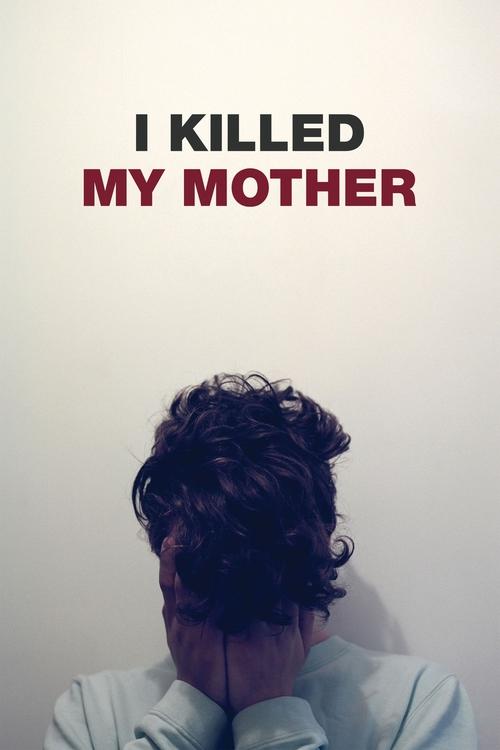
I Killed My Mother
2009 · Xavier Dolan
For when you want something raw and personal — a film to watch when you've just hung up on your own mother, or when you want to remember being seventeen and furious at everyone you loved. Emotionally bruising but cathartic.
What it's about
Hubert is sixteen, caustic, gay, and at war with the person he loves most: his mother. Their life together in suburban Quebec is a cycle of petty irritations that detonate into screaming matches — her kitsch, his cruelty, her guilt, his shame — while boarding school, a boyfriend, and the first stirrings of an artistic life pull him toward the door. It's a portrait of that unbearable age when a parent's every gesture feels like an attack, and leaving feels like both murder and survival.
The experience
Volatile and intimate — the arguments have the sting of things actually said, and the quiet moments ache. It's also stylish and often funny, a film that channels teenage self-importance so honestly you wince in recognition.
Performances
Xavier Dolan plays Hubert himself, and his semi-autobiographical rawness is inseparable from the film's charge; Anne Dorval, as the mother, is remarkable — maddening and heartbreaking at once, never letting Chantale become a caricature.
The craft
Dolan wrote, directed, produced, and starred at nineteen, and the film announces itself with black-and-white video confessionals, slow-motion reveries, and bold music cues — a teenager's grievances rendered with a cinephile's ambition. The style is showy in exactly the way its narrator is, which is the point.
Why it matters
It premiered at Cannes' Directors' Fortnight, won three prizes, and instantly made Dolan the emblem of precocious auteurism — a debut that launched one of the most talked-about young careers in world cinema.
Snapshot
I Killed My Mother (J'ai tué ma mère) is the debut feature of Québécois filmmaker Xavier Dolan, made when he was nineteen and released the year he turned twenty. A semi-autobiographical chamber drama, it dissects the corrosive love-hate bond between Hubert Minel, a caustic sixteen-year-old, and his mother Chantale — a relationship rendered with the rawness of lived grievance and the stylistic ambition of a young cinephile determined to announce himself. Dolan wrote the screenplay as a teenager, directed it, produced it, and played Hubert himself, folding autobiography, provocation, and formal daring into a single gesture. The film premiered in the Directors' Fortnight (Quinzaine des Réalisateurs) at the 2009 Cannes Film Festival, where it took three prizes and instantly established Dolan as one of the most precocious talents in world cinema. Its title is deliberately hyperbolic: the "murder" of the closing metaphor is the death of childhood, not a literal killing, and the film's real subject is the impossibility of loving and living with the same person.
Industry & production
The film is a landmark of low-budget Québécois independent production driven by extreme authorial ownership. Dolan, who had worked as a child actor and in commercials, is widely reported to have committed his own money to the project and to have pushed it forward through his own production entity after the script had circulated. He is credited as writer, director, producer, lead actor, and — per his consistent public account — a shaper of nearly every department, including costume and production design. This concentration of roles, unusual for a first feature, is central to both the film's coherence and the mythology that grew around it. The precise budget figure is not something I can state reliably, and I will not invent one; what the record supports is that this was a modestly financed Montreal production realized largely on Dolan's initiative rather than through the conventional Telefilm-Canada/SODEC development pipeline that shapes most Quebec features, though it operated within that broader ecosystem. Its Cannes selection converted a small domestic film into an international calling card and set the template for Dolan's subsequent career of rapid, self-authored productions.
Technology
The film is built on a pointed contrast of image textures. The body of the narrative is shot as a conventional theatrical feature with saturated, carefully lit color, while Hubert's confessional monologues are presented as grainy, high-contrast black-and-white video diaries — a lower-fidelity register that reads as home footage, deliberately set apart from the polished surrounding material. This two-tier approach to image capture is the film's most conspicuous technological choice: it uses the visible "cheapness" and intimacy of a video-diary aesthetic as an expressive device, letting the format itself signal privacy, self-examination, and unmediated address to the camera. I will not overstate the exact acquisition formats, as I cannot verify each with confidence; the salient point is that Dolan and his cinematographer exploited a difference in image quality between the diegetic drama and the confessions to structure the film's psychology.
Technique
Cinematography
The cinematography, by Stéphanie Anne Weber Biron, is far more assured than a first feature's budget would predict. It swings between two modes. In domestic scenes — especially the kitchen and car confrontations between Hubert and his mother — the camera is close, static or lightly handheld, and unflinching, holding faces in tight framing so that argument becomes a form of physical entrapment. Against this, Dolan and Weber Biron insert lyrical set-pieces of pure stylization: slow motion, sudden shifts to shallow focus and heightened color, and reverie sequences detached from the naturalistic baseline. The most cited of these is a sensuous, slow-motion sequence in which Hubert and his boyfriend cover each other and a canvas in paint — an image that reaches openly toward abstract-expressionist painterliness and toward the ecstatic, decelerated tableaux of art cinema. The tension between clinical domestic realism and rapturous stylization is the film's visual signature.
Editing
The editing organizes the film as a series of escalating confrontations punctuated by the black-and-white confessionals, which act as chapter breaks and interior monologue at once. The cutting is at its most expressive in the lyrical interludes, where rhythm slackens into slow motion and music-driven montage; in the argument scenes it is comparatively restrained, letting takes run long enough that the actors' escalation registers as unbroken duration. I cannot confirm the editor's credit with certainty and will not guess at a name; what is clear is that the film's grammar alternates deliberately between naturalistic sustained scenes and heightened montage passages.
Mise-en-scène / staging
Dolan's control of décor is precocious and thematically loaded. The mother's home is dressed in fussy, ornamental, faintly kitsch bourgeois taste — patterned surfaces, knick-knacks, floral excess — a visual environment that externalizes Hubert's aesthetic revulsion and class-inflected contempt for his mother's world. Costume and color are used to separate the characters' sensibilities: Hubert's self-consciously artful presentation against Chantale's louder, "common" register. Staging repeatedly traps the pair in confined spaces — the kitchen, the front seat of a car — where there is nowhere to retreat, so that proximity itself becomes the drama. The banks of the Saint Lawrence, invoked in the closing movement, open the frame outward and return Hubert to the landscape of his childhood, giving the film's central metaphor a physical setting.
Sound
Sound is dominated by dialogue — the film is fundamentally a talking, arguing film, and its Québécois-French cadences, slang, and profanity carry much of its texture and authenticity. Around this, Dolan deploys music as emotional punctuation: needle-drops and classical cues that swell over the stylized interludes to lift them out of the naturalistic flow. This use of pre-existing music as an operatic amplifier of feeling would become one of his most recognizable authorial habits across later films. I will not attribute specific song titles here that I cannot verify precisely, but the strategy — pop and classical tracks scoring slow-motion reverie — is unmistakable and central.
Performance
Performance is the film's engine. Anne Dorval's Chantale is the anchor: by turns garish, wounded, defensive, needy, and fierce, she resists caricature and keeps the mother sympathetic even as the film funnels us into Hubert's hostility. Dolan's own Hubert is all adolescent absolutism — witty, cruel, self-dramatizing, and secretly desperate for the love he sabotages. Suzanne Clément brings warmth and moral counterweight as Julie, the teacher who offers Hubert an alternative model of adult attention; François Arnaud plays Antonin, his boyfriend. The Dorval–Dolan duets, especially the kitchen and car confrontations, are the performances on which the film's reputation rests, and they announced an actor-director partnership Dolan would return to.
Narrative & dramatic mode
The film's mode is autobiographical psychodrama structured as a cycle of ruptures and fragile reconciliations rather than a plotted arc. There is little conventional causality; instead the film accumulates domestic scenes — screaming matches, silences, small betrayals, a boarding-school subplot, forays into Hubert's romantic and school life — that circle the same wound. The direct-address confessionals give the narration a first-person, diaristic subjectivity: we are inside Hubert's aggrieved account, and the film is honest about the unreliability and self-flattery of that vantage. The dramatic engine is not "what happens" but whether these two people can survive their need for and rejection of one another. The closing turn toward the Saint Lawrence resolves the film metaphorically — the "murder" of childhood — rather than through incident.
Genre & cycle
Formally it belongs to the coming-of-age drama and, more specifically, to the autobiographical first-feature — the young filmmaker's self-portrait as an adolescent in revolt. It sits within the lineage of the sensitive-adolescent film descended from Truffaut's Antoine Doinel cycle, and within the queer coming-of-age film, treating Hubert's homosexuality candidly but without making "coming out" the central crisis; his sexuality is a fact of the character rather than the film's problem. It also participates in the domestic chamber drama — the two-hander of familial combat. Within Dolan's own body of work it inaugurates a recurring cycle of films fixated on mothers, sons, and the violence of intimate love, most directly answered by Mommy (2014).
Authorship & method
This is auteur cinema in the most literal sense: a film substantially authored, top to bottom, by one person. Dolan wrote the screenplay as a teenager, drawing on his own adolescence and relationship with his mother, then directed, produced, and starred, while superintending the look of costume and décor. His method fuses confessional autobiography with unabashed cinephile stylization — he treats personal material with an art-film vocabulary of slow motion, saturated color, and pop-and-classical scoring. Key collaborators shaped the result: cinematographer Stéphanie Anne Weber Biron, whose imagery gives the film its two-register visual identity, and the ensemble of Anne Dorval, Suzanne Clément, and François Arnaud. Dorval and Clément in particular became core members of Dolan's recurring troupe. On the editing and music-supervision credits I will not assert names I cannot verify; the through-line is that authorship here is unusually singular, with Dolan functioning as the film's origin point in nearly every department. The film opens with an epigraph attributed to Guy de Maupassant on the near-unconscious love one bears one's mother — a literary framing that signals Dolan's self-positioning within a tradition of confessional art.
Movement / national cinema
The film is a product of Québécois cinema and of Montreal specifically — its language, class textures, suburban bourgeois interiors, and river geography are unmistakably local. Yet Dolan's sensibility is transnational and cinephilic rather than rooted in any Quebec realist school; his reference points read as European art cinema and Asian stylists more than the documentary-inflected traditions of earlier Quebec filmmaking. The film thus sits at an interesting hinge: a Quebec story told through an international art-house idiom. Its Cannes success also fed a broader early-twenty-first-century visibility for Quebec auteurs on the festival circuit, with Dolan quickly becoming the most internationally recognizable face of that generation.
Era / period
Released in 2009, the film belongs to a moment when festival cinema was actively seeking young, stylistically bold voices, and when the "wunderkind" narrative — a teenager premiering at Cannes — had obvious press appeal. It arrives at the tail end of the DV-and-early-digital democratization of low-budget filmmaking, and Dolan's blend of glossy stylization with video-diary intimacy reflects a filmmaker fluent in both registers. Set in a contemporary, recognizably late-2000s Montreal, it is a period film only in the sense that its adolescence is Dolan's own recent past.
Themes
The governing theme is the ambivalence of maternal love — the way intimacy and hostility can be the same emotion, and the way a child can be consumed by a parent he cannot stop needing or wounding. Radiating from this are: adolescent identity and self-invention, with Hubert constructing an aesthetic persona partly to escape his origins; class and taste, dramatized through the war between Hubert's cultivated pretensions and his mother's "kitsch," so that aesthetic contempt becomes a proxy for emotional cruelty; queerness as an ordinary condition rather than a crisis; and the loss of childhood as a form of death, made explicit by the title and the closing metaphor. Underneath runs a study of communication and its failure — two people who cannot speak without wounding, whose love is legible mainly through its damage.
Reception, canon & influence
Critically, the film was received as a startling debut, its Cannes reception cementing that view: in the 2009 Directors' Fortnight it won three awards, including the CICAE (Art Cinema) Award, the SACD Prize, and the Prix Regards Jeune. The dominant critical line paired admiration for its emotional force, Dorval's performance, and Dolan's precocious visual command with reservations about youthful excess — a certain stylistic showiness and self-regard native to a nineteen-year-old's self-portrait. That double reaction — dazzled and slightly wary — would follow Dolan for years.
Influences on the film (backward): the autobiographical adolescent tradition of the French New Wave, especially Truffaut's Antoine Doinel films, sits behind its portrait of a rebellious youth; Godardian gestures survive in its stylistic self-consciousness. The rapturous slow-motion, color saturation, and pop-scored reverie owe an evident debt to Wong Kar-wai, and the sensitive treatment of queer adolescence resonates with the North American independent tradition associated with filmmakers like Gus Van Sant. The literary framing via Maupassant signals Dolan's alignment with a confessional literary lineage as much as a cinematic one.
Legacy (forward): the film launched one of the defining art-house careers of the 2010s. Dolan followed rapidly with Heartbeats (2010), Laurence Anyways (2012), Tom at the Farm (2013), Mommy (2014), and It's Only the End of the World (2016), accumulating major Cannes honors along the way and building a recognizable authorial style — needle-drops, slow motion, emotional maximalism, aspect-ratio experiment — whose seeds are all visible here. Crucially, it inaugurated the collaborations that anchored his work: Anne Dorval and Suzanne Clément became central to his ensemble, and the mother-son material returns, transfigured, in Mommy, which can be read as a mature answer to this debut. More broadly, I Killed My Mother became a reference point for the "teenage prodigy at Cannes" narrative and for a wave of stylistically bold, emotionally direct queer and coming-of-age cinema. Within Quebec, it helped project a new generation of the province's filmmakers onto the world stage. Its lasting standing rests less on technical perfection than on the shock of a fully formed sensibility arriving all at once — a debut that already contained the whole artist.
Reception
It exploded out of nowhere at Cannes 2009 — a Directors' Fortnight sensation that anointed the 20-year-old Dolan as cinema's new enfant terrible, complete with a lengthy standing ovation. Now it's read less as a one-off prodigy stunt and more as the origin story of one of the most prolific auteur runs of the 2010s.
How I Killed My Mother was received, from release to now →
Influences: the films it descends from and the films it influenced
- The 400 Blows (1959) — Establishes the autobiographical adolescent alter-ego at war with the parental home, the director's own childhood externalized through a rebellious on-screen surrogate that Dolan reprises by casting himself as Hubert.
- Stolen Kisses (1968) — Extends the recurring Doinel surrogate across a body of work, modeling the practice of a filmmaker returning to the same fictionalized self that Dolan adopts and later revisits in Mommy.
- The Mother and the Whore (1973) — Builds an autobiographical portrait out of long confessional monologues delivered near-directly, the talk-to-the-void mode Dolan converts into black-and-white video-diary address to camera.
- In the Mood for Love (2000) — Step-printed slow motion married to a repeating musical motif to render erotic and emotional longing, the exact reverie grammar Dolan lifts for his saturated interludes.
- Chungking Express (1994) — Uses a pop needle-drop (California Dreamin') as recurring structural scoring rather than background, the technique behind Dolan's song-driven emotional set-pieces.
- Breathless (1960) — Foregrounds self-conscious stylistic gesture and rupture of realist illusion, the show-off formal reflexivity critics flagged as the nineteen-year-old Dolan's inheritance.
- Autumn Sonata (1978) — Stages the mother-child reckoning as a chamber duel in confined domestic interiors, faces held in close accusatory confrontation, the two-hander architecture of the Dorval-Dolan duets.
- My Own Private Idaho (1991) — Interrupts naturalistic queer-youth drama with lyrical formal interludes and time-warped imagery, licensing Dolan's dreamlike breaks from kitchen-sink realism.
- Take It All (1963) — Autofiction in Jutra's precise sense — the author directs and plays himself, cheap and privately financed — with pieces-to-camera video monologues functioning as the confessional voice-over track that the dramatized scenes then quietly contradict.
- Heartbeats (2010) — Immediately amplifies the slow-motion, color-saturated, pop-scored reverie into a whole aesthetic system, treating the seed film's interludes as the new baseline mode.
- Laurence Anyways (2012) — Pushes the needle-drop maximalism and aspect-ratio experimentation latent in the debut into full-scale operatic set-pieces like the falling-clothes montage.
- Mommy (2014) — Reprises the mother-son material with Anne Dorval and answers it formally through the 1:1 aspect ratio that literally boxes the confined domestic staging first tested here.
- Tom at the Farm (2013) — Carries the confined-domestic staging and queer emotional pressure into thriller register, proving the debut's chamber-drama spaces could bear genre weight.
- Waves (2019) — Fuses emotional-maximalist needle-drops, shifting aspect ratios, and hyper-saturated color into a single sensibility that reads as a direct extension of Dolan's grammar.
- Girlhood (2014) — Deploys a full pop needle-drop (Rihanna's Diamonds) as a suspended emotional reverie inside a coming-of-age narrative, the same song-as-catharsis device.
- Moonlight (2016) — Structures a queer coming-of-age in discrete titled chapters with saturated color and a lyrical scored intimacy, paralleling the confessional chapter-break architecture.
- Blue Is the Warmest Color (2013) — Builds a Cannes-anointed queer adolescence out of relentless facial close-ups that hold raw emotion in the frame, extending the same intimate-portrait proximity.
- Weekend (2011) — Grounds a contemporary queer relationship in confined domestic interiors and unshowy real-time intimacy, a naturalist counterpart to the same emotionally-direct queer wave.
Similar films
- Mommy (2014) — influence & lineage
- Laurence Anyways (2012) — influence & lineage
- The 400 Blows (1959) — influence & lineage
- Breathless (1960) — influence & lineage · often watched together
- Dogtooth (2009) — often watched together
- Lady Bird (2017) — shared sensibility
- Mother (2009) — shared sensibility
- All About My Mother (1999) — shared sensibility