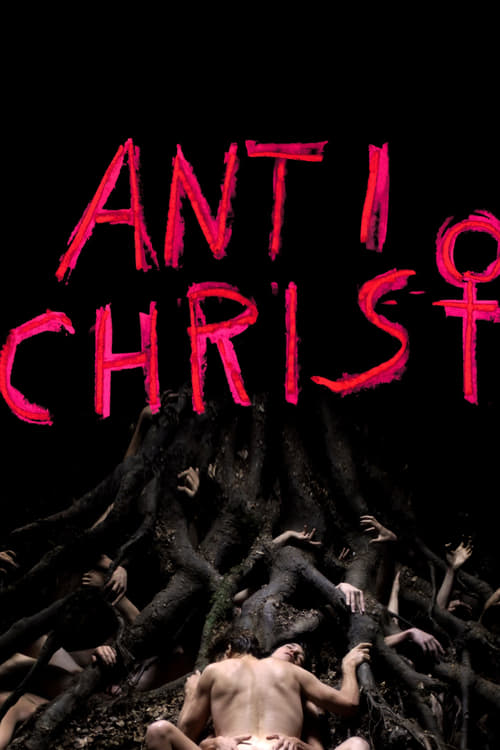
Antichrist
2009 · Lars von Trier
For when you want to be pushed past your comfort zone by a film that treats horror as seriously as grief — a challenge, emphatically not a comfort watch, and not one for a fragile night.
What it's about
A married couple, shattered by the death of their young son, retreat to their remote forest cabin — named Eden — where the husband, a therapist, decides to treat his wife's crushing grief himself. Isolation does not heal them. The woods grow stranger, her terror deepens, and the therapy sessions curdle into something between a marriage on trial and a haunting, with nature itself seeming to turn hostile.
The experience
Suffocating from the first frame and only tightening — this is dread as a physical sensation, punctuated by images of eerie beauty and, eventually, violence with a fearsome reputation. It is genuinely upsetting, and it means to be; you come out shaken, arguing with the film and with yourself.
Performances
Charlotte Gainsbourg won Best Actress at Cannes for a raw, fearless portrait of grief tipping into something wilder, and Willem Dafoe matches her with controlled, quietly arrogant calm — the entire film rests on just the two of them.
The craft
Lars von Trier frames the descent with stunning formal control: a slow-motion black-and-white prologue set to a mournful aria, chapter titles, and forest imagery that shifts from lush to malevolent. The sound design makes the woods breathe and groan around the couple. It looks like a dark fairy tale and plays like a nightmare — big screen and good speakers make it hit even harder, if you can take it.
Why it matters
One of the most divisive premieres in Cannes history — booed, walked out on, and defended in equal measure — it opened von Trier's so-called Depression Trilogy and reset the boundary of what art-house horror could show and say.
Snapshot
Antichrist is Lars von Trier's plunge into grief, dread, and the metaphysics of nature, a two-hander of almost unbearable concentration in which a couple known only as "He" (Willem Dafoe) and "She" (Charlotte Gainsbourg) retreat to a forest cabin called Eden after the death of their toddler son. Conceived during, and partly as therapy for, a severe depressive episode, the film fuses an art-house chamber drama with the iconography of horror — a talking fox, mutilation, supernatural portents — into something deliberately ungovernable by genre. It premiered in competition at Cannes in May 2009, where Gainsbourg won Best Actress and the film provoked the most violently divided reception of the festival: walkouts, jeers, and a notorious "anti-award" from the Ecumenical Jury, which denounced it as misogynist. It opens the loose triptych later called von Trier's "Depression Trilogy," continued by Melancholia (2011) and Nymphomaniac (2013). More than a decade on it stands as a touchstone of the so-called extreme art cinema of the 2000s and a film whose deliberate provocations — formal and thematic — remain genuinely unresolved.
Industry & production
Antichrist was produced through von Trier's Copenhagen company Zentropa, founded with Peter Aalbæk Jensen, with Meta Louise Foldager among the producers, and financed as a pan-European co-production drawing on Danish, German, French, Swedish, Italian, and Polish partners — the kind of subsidy-and-broadcaster mosaic typical of Zentropa's international features. Reported budgets cluster around €11 million, modest for the visual ambition on screen and large for a two-character film. Crucially, the production decamped to Germany: the forest interiors and exteriors were shot in North Rhine-Westphalia, with the woodland sequences filmed in the Kottenforst near Cologne and additional work at the region's studios, German tax incentives and the Film- und Medienstiftung NRW helping anchor the shoot. The prologue and certain inserts were captured separately under more controlled, high-speed conditions.
The casting reflected the film's logic of two performers carrying everything. Willem Dafoe came aboard as the rationalist therapist husband; Gainsbourg replaced an earlier attachment (Eva Green had been associated with the project) and committed to physically and emotionally punishing material. Von Trier, by his own repeated account, wrote the script while hospitalized or recovering from depression, working in a state where he claims he could barely function — a biographical frame he encouraged critics to use, while also warning against taking it as simple confession. The shoot was reportedly disciplined and fast despite the extremity of the content, with much of the cabin material staged in built sets to allow controlled lighting and effects, and the most graphic moments — genital mutilation, ejaculated blood — realized through prosthetics, body doubles, and digital work rather than anything literal.
Technology
The film is a significant document in the transition to high-end digital cinema. The principal photography was shot digitally on RED One cameras — then a young technology — exploited for their resolution and their tolerance of the low, naturalistic light of forest and cabin interiors. The celebrated prologue, by contrast, used ultra-high-speed photography (a Phantom-class high-frame-rate camera) to render falling water, drifting snow-like laundry, and the couple's lovemaking in extreme slow motion, the image so smoothed and silvered that it approaches still photography in motion. That technical split — pristine, monochrome, hyper-slow overture against grainier, handheld, color body — is the film's foundational formal gesture, and it is a gesture only available because digital high-frame-rate capture had matured enough to deliver it at this image quality. Extensive digital compositing and grading bound the disparate material together, and visual-effects work supplied the film's uncanny touches: the disembowelled fox, the deer with a stillborn fawn half-emerged, the rain of acorns, the dissolving bodies of the epilogue.
Technique
Cinematography
Anthony Dod Mantle, fresh from his Academy Award for Slumdog Millionaire, shot Antichrist, and the film is among his most controlled. The prologue is staged in lustrous black-and-white slow motion, shallow-focus and balletic, every droplet legible — a consciously "beautiful" overture that the rest of the film will corrode. Once the couple reaches Eden, the camera turns restless and handheld, with von Trier's characteristic willingness to let focus drift, frames go unbalanced, and the image breathe with available light. Dod Mantle works in desaturated greens and browns, the forest rendered less as scenery than as a pressurized, sentient space; selective focus isolates faces and hands while the woods blur into menace behind them. Recurrent devices — racked focus, near-subliminal inserts of distorted faces and bodies, superimpositions of figures in the undergrowth — keep the visual field unstable, so that the supernatural never arrives as spectacle but seeps in at the edges of an otherwise observational style.
Editing
The film was edited by Anders Refn and Åsa Mossberg. The cutting enforces the film's bipolar structure: the prologue and epilogue are smooth, suspended, almost timeless, while the central chapters (the film is partitioned by intertitles — "Grief," "Pain (Chaos Reigns)," "Despair (Gynocide)," "The Three Beggars") proceed in a jagged, escalating rhythm. Match-cuts and graphic rhymes bind the controlled overture to the chaos that follows, and the editing repeatedly intrudes flash-frames and brief grotesque images into otherwise naturalistic scenes, a strategy that primes dread before any overt horror occurs. As the narrative breaks down, so does the cutting's stability, the rhythm growing more violent in step with the couple's disintegration.
Mise-en-scène / staging
Eden — a cabin in a clearing, an attic crammed with the wife's abandoned research, a forest that groans and drops its seed on the roof — is the film's controlling environment, and almost every element is symbolically loaded. The three "beggars," animals corresponding to the chapter titles, recur as omens. The attic holds the wife's unfinished thesis on "gynocide," its walls papered with images of witch-burnings, a detail that quietly reframes everything we have seen. Props accrete a punishing literalism in the final act — a grindstone, a wrench, scissors — as the abstract war between reason and nature becomes bodily. Von Trier dedicated the film to Andrei Tarkovsky, and the staging openly courts comparison: the wet, breathing nature of Mirror and the zone-logic of Stalker hover over Eden, a homage many critics found presumptuous given the violence it frames.
Sound
There is no conventional musical score. Apart from Handel's aria "Lascia ch'io pianga," which scores the prologue and returns in the epilogue, the film's soundtrack is built almost entirely from designed, diegetic, and near-subliminal sound. Kristian Eidnes Andersen's sound design makes the forest into a continuous, oppressive presence — the patter of acorns on the roof becomes a recurring sonic motif of inescapable fertility and threat, and low, organic textures keep the woods audibly alive. The decision to strip away music from the body of the film throws the spectator onto raw sound and the actors' breathing and screaming, intensifying the sense of unmediated exposure; the lush Handel that bookends it consequently registers as a cruel, ironic beauty.
Performance
The film rests entirely on two performances. Gainsbourg, in the role for which she won the Cannes Best Actress prize, gives a performance of total physical and psychological abandon, charting a grieving mother's collapse into self-loathing, sexual aggression, and finally something the film leaves ambiguous between madness and malignancy. Dafoe plays the husband as a complacent rationalist — a therapist who treats his wife as a case, his calm a form of arrogance the film systematically dismantles. The two-hander structure means the acting carries the argument: his measured therapeutic language against her escalating conviction that "nature is Satan's church," reason and instinct embodied and set at war. Both performers submitted to extraordinary demands, and the candor of the work is inseparable from the film's capacity to disturb.
Narrative & dramatic mode
Structurally the film is a prologue, four titled chapters, and an epilogue — a quasi-allegorical architecture that announces its themes (Grief, Pain, Despair) rather than concealing them. The dramatic mode is chamber tragedy curdling into horror: it begins as a recognizable, if stylized, account of bereavement and couples therapy, with He attempting to cure She of her grief through graduated exposure, and slowly reveals that the therapeutic project is itself a hubris. Information is withheld and reframed — the late discovery that She may have been deforming her son's feet, glimpsed in autopsy and photographs, retroactively poisons the maternal grief we have been asked to share, without ever fully resolving whether she is guilty, mad, or possessed. Von Trier exploits this undecidability as the film's engine; the supernatural and the psychological are kept in superposition, and the epilogue's vision of faceless women streaming through the forest pushes the whole toward myth.
Genre & cycle
Antichrist is a deliberate genre hybrid — billed and received as horror yet operating as art cinema, drawing on the "cabin in the woods" template, the folk-horror tradition of malevolent landscape, and the body-horror of mutilation, while refusing horror's usual catharsis. It belongs to the wave of confrontational European art films of the 2000s often grouped, after critic James Quandt's polemical coinage, as the "New French Extremity" and its broader continental cousins — films by Gaspar Noé, Catherine Breillat, Bruno Dumont, Michael Haneke — that fused explicit sex and violence with high-art ambition. Within von Trier's own output it inaugurates the Depression Trilogy, and it can also be read against the genre experiments that run throughout his career, from the Dogme 95 austerity of The Idiots to the Brechtian theater of Dogville.
Authorship & method
The film is unmistakably authored. Von Trier wrote and directed it as, by his account, both an attempt to work through clinical depression and a provocation aimed at his own reputation and at the audience. His method here partly abandons the Dogme strictures he had co-authored a decade earlier — embracing effects, slow motion, and a composed prologue he would once have forbidden — while retaining the handheld immediacy and performer-centred intensity of his earlier work. His key collaborators are central to the achievement: Anthony Dod Mantle's cinematography supplies the split between sublime overture and degraded body; editors Anders Refn (a longtime von Trier associate) and Åsa Mossberg shape the escalating structure; sound designer Kristian Eidnes Andersen builds the scoreless soundscape; and Gainsbourg and Dafoe embody the film's dialectic. There is no credited composer in the conventional sense — a pointed authorial choice — with Handel doing the only "musical" work. Von Trier has spoken of writing intuitively, distrusting his own intentions, and has openly invited contradictory readings, including the charge of misogyny, which he has by turns courted and disclaimed.
Movement / national cinema
Antichrist is a Danish-authored, German-shot, pan-European production, and it sits at the intersection of several traditions. It is a product of the Zentropa ecosystem that made Danish cinema internationally visible in the 1990s and 2000s, and it carries the residue of Dogme 95, the movement von Trier and Thomas Vinterberg launched in 1995, even as it breaks Dogme's rules. It also participates self-consciously in a Northern European art-cinema lineage — Dreyer's spiritual severity, Bergman's marital chamber dramas, the Tarkovsky homage made explicit in the dedication — while its physical production in North Rhine-Westphalia ties it to the regionally subsidized German film economy of the period.
Era / period
The film is firmly of the late 2000s: a moment when digital cinematography had reached the quality threshold to attract major auteurs, when the festival circuit was hospitable to extreme art cinema, and when von Trier's own standing as a provocateur was at its height. It precedes by two years the Melancholia press conference at Cannes 2011 whose "Nazi" remarks led to von Trier being declared persona non grata at the festival, an episode that retrospectively colors Antichrist's 2009 reception as the last of his unencumbered Cannes triumphs. It belongs to the post-millennial cycle of grief-and-trauma cinema and to the broader cultural turn toward ecological anxiety that its vision of vengeful nature anticipates.
Themes
The film's central dialectic pits reason against nature, the masculine therapeutic gaze against an idea of femininity bound to the earth, fertility, and death. Grief is its starting subject — the impossibility of "curing" mourning, the arrogance of treating it as pathology — but it widens into a meditation on whether nature, and by extension the body and the feminine, is fundamentally malevolent: "Nature is Satan's church," and the fox's hoarse pronouncement that "chaos reigns." The motif of "gynocide," drawn from the wife's abandoned thesis on the historical persecution of women as witches, makes the film's most contested move: She has apparently internalized the misogynist logic she set out to study, coming to believe in women's innate evil. Whether the film endorses this view or stages it as a horror to be diagnosed is the crux of the misogyny debate. Around these run subsidiary themes — sexuality fused with guilt and death, parental failure, the inadequacy of psychotherapy, and the figure of Eden as a fallen rather than innocent garden.
Reception, canon & influence
The Cannes 2009 premiere was a scandal in the classical sense. Audiences laughed, gasped, and walked out; at the press conference von Trier was asked to justify the film and declared himself the world's greatest director, half-provocation, half-bravado. The jury awarded Gainsbourg Best Actress, while the festival's Ecumenical Jury took the unusual step of giving the film an "anti-award," calling it misogynist — a charge that dominated subsequent commentary. Critical opinion split sharply and durably: detractors read it as juvenile button-pushing or genuine woman-hatred, while defenders (among them critics who placed it on year-end and decade-end lists) argued it was a serious, formally extraordinary confrontation with depression, grief, and the violence latent in the nature/culture divide. The graphic content guaranteed censorship battles and trims in several territories.
Looking backward, the film is a dense weave of influence. The Tarkovsky dedication is explicit; Dreyer's and Bergman's Nordic spiritual and marital cinema stand behind it; Strindberg's sexual antagonism and the folk-horror tradition of malign landscape feed its imagery; and the broader continental "extreme" cinema of Noé, Breillat, and Haneke is its immediate context. Looking forward, Antichrist consolidated von Trier's Depression Trilogy and helped legitimize a strain of elevated horror and "art-horror" that critics would invoke through the 2010s — its forest dread, scoreless sound, and fusion of grief with the supernatural prefiguring a cycle of festival horror to come. Its single most quoted fragment, the fox's "chaos reigns," entered the culture as a meme, an afterlife that says something about how the film travels: as both a serious and contested art object and a piece of pop notoriety. Its standing in the canon remains, fittingly, unsettled — admitted as a major work of its director and its decade, while never ceasing to be argued over.
A Deleuzian reading
The acorns fall on the cabin roof all night.
The full Deleuzian reading of Antichrist →
Reception
Booed and walked out of at Cannes 2009 — where an Ecumenical Jury even handed it a special 'anti-award' — it has since been reclaimed as the harrowing first chapter of von Trier's Depression Trilogy and a founding text of modern art-horror.
How Antichrist was received, from release to now →
Influences: the films it descends from and the films it influenced
- Cries and Whispers (1972) — Bergman's anguished female interiority climaxing in an act of genital self-mutilation, set against near-scoreless silence and a charged palette, is the most literal forerunner of Gainsbourg's self-harm.
- Häxan (1922) — Its pseudo-documentary cataloging of witchcraft iconography and the misogynist machinery of witch-hunting is the visual-thesis tradition behind She's scholarship and the film's nature-as-Satan logic.
- Hour of the Wolf (1968) — Von Trier deploys an apparatus nearly identical to Hour of the Wolf's: an isolated couple in a forest setting, extreme close-ups under high-contrast chiaroscuro lighting (the Nykvist inheritance transmitted through Anthony Dod Mantle), and a narrative in which the female partner is revealed as the conduit for demonic forces the male protagonist cannot confront — a direct structural reworking of Johan and Alma's dynamic.
- Don't Look Now (1973) — Its prologue intercutting lovemaking with a child's fatal fall is a direct structural echo of Roeg's grief-detonating opening montage.
- Possession (1981) — A couple's grief curdles into the woman's sexual-violent abandon and self-mutilation as monstrous-feminine — the most direct heir to Possession's performance extremity and marital nightmare.
- Onibaba (1964) — Reprises the 'demon within' the woman set loose in a hostile natural setting, fusing eroticism, grief, and the landscape's malevolence in the lineage of Onibaba's survival-amid-collapse parable.
- Audition (2000) — Prestige art-horror staging genital and bodily mutilation with scoring-by-subtraction and clinical calm, inheriting Audition's strategy of making restraint and beauty the frame for violation.
- Salò, or the 120 Days of Sodom (1976) — Carries forward the gambit of wrapping extreme bodily horror in chapter-segmented structure and self-conscious beauty so that aesthetic form continually indicts its own atrocious content.
- The Third Part of the Night (1972) — Pushes a grieving couple to hysterical bodily and metaphysical extremity and stages nature as apocalyptic revelation, in the emotionally maximalist register Żuławski pioneered.
- Face to Face (1976) — Von Trier's explicitly Bergman-dedicated grief-and-breakdown chamber piece, using expressionist dream-tableaux and prolonged facial suffering as the externalized unconscious.
- The Brood (1979) — Restages Raglan's method as a husband-therapist administering exposure therapy to his grieving wife in an isolated retreat, structured as sequential named sessions, and again lets bereavement discharge itself as literal bodily mutilation.
- Melancholia (2011) — Direct Depression-Trilogy descendant: it repeats the Dod Mantle slow-motion, hyper-saturated tableau-prologue scored to a single classical work (Wagner here, Handel there), with Gainsbourg again anchoring the dread.
- The House That Jack Built (2018) — Sets the late-period confrontational art-and-atrocity mode — handheld grotesque with self-implicating cruelty — and is one of the clips inserted to make Jack's body of work von Trier's own.
- The Ritual (2017) — Turns the forest into an externalized psychological space where a grieving character's guilt manifests as environmental menace — 'nature is Satan's church.'
- Mirror (1975) — The dedicatee of the film: its slow-motion, super-saturated reverie of wind, water and falling bodies in nature directly models Antichrist's monochrome prologue and the forest's animate, dream-logic landscape.
- The Sacrifice (1986) — Tarkovsky's Nordic apocalyptic mode — a marriage in crisis, ritual around a single tree, and long-take spiritual dread — supplies Antichrist's grammar of metaphysical anxiety staged in austere natural space.
- Persona (1966) — The two-hander template of psychic fusion and antagonism between two isolated figures, prefaced by an abstract, disjunctive image-montage prologue, is the chamber structure von Trier rebuilds.
- Day of Wrath (1943) — Dreyer's slow, oppressive Lutheran study of witch persecution and the demonization of female desire is the historical 'gynocide' that She researches and internalizes in the cabin's attic.
- The Wicker Man (1973) — Folk-horror's foundational move of making the pagan landscape itself malign and ritually hostile underwrites Antichrist's Eden forest, where the ground, the animals and the trees become agents of dread.
- Breaking the Waves (1996) — Von Trier's own precedent for handheld emotional immediacy and chaptered storytelling broken by static landscape tableaux — here the intertitle chapters and composed wide-frame interludes return, scored rather than silent.
- Irreversible (2002) — New French Extremity sibling whose disorienting formal assault — vertiginous camera, sub-bass sound design and durational atrocity framed as art — is the immediate context for Antichrist's provocation-as-form.
- Trouble Every Day (2001) — Denis fuses sexual desire and bodily mutilation into clinical art-house body horror, the eros-becomes-evisceration dialectic that Antichrist pushes to its genital climax.
- The Piano Teacher (2001) — Haneke stages female masochism and self-inflicted genital harm with rigorous art-cinema austerity and withheld judgment — the controlled, unflinching register von Trier adopts for the same material.
- 28 Days Later (2002) — Shot by Anthony Dod Mantle: the degraded digital-handheld, available-light texture he pioneers here is the very method he splits against the polished high-frame-rate prologue in Antichrist.
- Anatomy of Hell (2004) — Breillat's confrontational, near-essayistic use of unsimulated sex and the female body as philosophical battleground is the body-politics frame von Trier weaponizes inside a horror chassis.
- Nymphomaniac (2013) — The trilogy's close reuses the intertitle-chaptered structure, Gainsbourg's body as battleground, and explicit sexuality as confessional argument — extending Antichrist's chaptered allegory of guilt and desire.
Similar films
- Melancholia (2011) — influence & lineage · often watched together
- Hereditary (2018) — influence & lineage
- Breaking the Waves (1996) — influence & lineage
- mother! (2017) — influence & lineage
- Day of Wrath (1943) — influence & lineage
- Irreversible (2002) — influence & lineage
- The House That Jack Built (2018) — often watched together
- Possession (1981) — often watched together
All the films related to Antichrist →