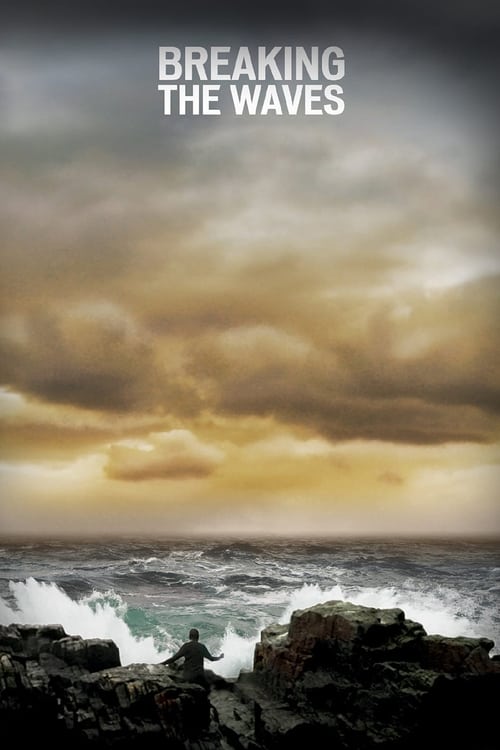
Breaking the Waves
1996 · Lars von Trier
For when you want to be devastated by a film and sit with it afterward — a full-hearted, punishing love story about faith taken to its limit. Absolutely not comfort viewing; bring reserves.
What it's about
In a rigidly devout village on the Scottish coast in the early 1970s, a guileless young woman with a fierce, childlike faith marries an oil-rig worker — to the quiet disapproval of her austere church. When an accident on the rig leaves him paralyzed, he makes a request of her that no one around her can understand, and her love and her faith begin pulling her toward choices that put her at war with her whole community.
The experience
Emotionally overwhelming — raw, intimate and increasingly harrowing, shot so close to its heroine that you feel every flicker of joy and hurt. It's a film that wrings you out; few dramas ask this much of a viewer or give this much back.
Performances
Emily Watson's debut is one of the great screen performances — open-faced, fearless and so transparent you seem to watch her soul in real time, often looking straight into the camera. Stellan Skarsgård matches her with warm, wrenching work as the husband.
The craft
Lars von Trier shoots it like documentary footage of a miracle — handheld, grainy, jump-cut, all rules thrown out — then punctuates the story with painterly chapter cards set to 1970s rock. The rough style makes the emotion feel caught rather than staged, and it hits harder for it.
Why it matters
A prizewinner at Cannes that announced von Trier to the world and launched Emily Watson's career, it opened his string of dramas about self-sacrificing women and helped make raw handheld realism a defining art-house style of the late 1990s.
Snapshot
Breaking the Waves is the first panel of Lars von Trier's informal "Golden Heart" trilogy, followed by The Idiots (1998) and Dancer in the Dark (2000). Set in an unnamed Free Presbyterian community on the Scottish coast in the early 1970s, the film follows Bess McNeil (Emily Watson), a guileless, faith-saturated young woman who marries an oil-rig worker named Jan (Stellan Skarsgård) against the tacit disapproval of her austere congregation. When Jan is paralyzed in an industrial accident, he instructs Bess—believing the arrangement will sustain him and eventually cure him—to take sexual partners and describe the encounters to him. Bess, interpreting Jan's request as a divine command mediated through the man she loves, degrades herself in an increasingly literal martyrdom that the film steadfastly refuses to ironize. The narrative ends with a miracle: bells ring above the fjord where Jan and his crewmen have committed Bess's body to the sea, the congregation's centuries-old prohibition on bell-ringing overturned by grace itself. The film won the Grand Prix at the 1996 Cannes Film Festival—the Palme d'Or that year going to Mike Leigh's Secrets & Lies—and secured Watson an Academy Award nomination for Best Actress.
Industry & Production
Breaking the Waves was produced by Zentropa Entertainments, the Danish production company von Trier co-founded with producer Peter Aalbæk Jensen, in co-production with partners across France, Sweden, Norway, the Netherlands, and Iceland. The budget was modest by the standards of international art cinema; the film was financed through a patchwork of European television pre-sales and national film-fund contributions consistent with the Nordic co-production model that sustained Scandinavian art cinema throughout the decade. Shooting took place primarily in the Outer Hebrides and on the Isle of Skye, locations chosen for their stern, Protestant-coded landscape—treeless, salt-scoured, edged in gray Atlantic light. The decision to write an English-language screenplay—von Trier's first—was a deliberate bid for wider international reach while keeping production within the European art-cinema infrastructure Zentropa had built. Emily Watson, cast from the London stage, had virtually no prior screen experience; her selection was characteristic of von Trier's readiness to court inexperience in the service of unmediated presence. Stellan Skarsgård, by contrast, was already an established international figure, providing the production institutional ballast alongside Watson's volatility.
Technology
The film was photographed on 35mm, but its technical signature departs decisively from the polished, crane-assisted cinematography associated with European prestige productions of the same period. Von Trier and cinematographer Robby Müller employed lightweight handheld cameras with long zoom lenses, suppressing the stabilization and controlled framing that conventional 35mm production assumed. The resulting image is grainy, unstable, occasionally soft: a texture borrowed as much from observational documentary as from narrative fiction. The chapter-card sequences—painted landscape visions interleaved between narrative sections—were assembled using digital compositing, an early deployment of digital tools in European art cinema to generate a self-consciously aesthetic, non-photographic interpolation within an otherwise live-action work. These interludes were created in collaboration with Danish visual artist Per Kirkeby, whose layered, atmospheric canvases provide a painted counterpoint to the film's kinetic documentary grain. The soundtrack draws exclusively on licensed period recordings rather than any commissioned score.
Technique
Cinematography
Robby Müller's camera is always in motion, but the movement is not the expressive, choreographed fluency of a Steadicam: it lurches, reframes, and pushes in impulsively, as though caught in the same bewilderment as its subject. Close-ups—of Watson's face especially—are relentless, often held beyond any conventional limit of decorum; the face becomes the film's primary landscape. Müller works with available or near-available light throughout, stripping the Scottish interiors of glamour or shelter. Zoom lenses compress and isolate figures against blurring backgrounds in a way that reads less as classical Hollywood emphasis and more as a desperate reach for proximity. The overall palette is desaturated, tending toward gray-green, the light of the North Atlantic in continuous overcast. The Per Kirkeby chapter cards are warm, painterly, almost ecstatically chromatic in contrast—a deliberate formal rupture that marks narrative time and holds the story momentarily at arm's length even as the chapters themselves collapse all distance.
Editing
The film was edited by Anders Refn, who had a long collaborative relationship with von Trier. The cutting is governed less by classical continuity than by emotional logic: shots are held until their affective charge has transferred, then released without ceremony. The editing accommodates Watson's performance above all else—she is rarely cut around; the camera and the cut wait for her. The structure of seven chapters, each introduced by its painted tableau and a pop recording from the early 1970s, gives the editing a chapter-book rhythm that alternately distances and reinvests the viewer. Within chapters, tempo tightens as Bess's situation degrades, but even at its most urgent the film does not deploy montage as spectacle.
Mise-en-scène / Staging
Von Trier's staging derives its force from systematic restraint. The Scottish interiors—church, hospital ward, family home—are stripped of decorative weight; the Free Presbyterian meetinghouse in particular is emphatically plain, its whitewashed austerity a visual argument about the faith practiced inside. Community scenes are staged with a sense of improvised collective behavior: congregation members, elders, and bystanders feel observed rather than placed. The film is not vérité illusion—von Trier controls the emotional architecture of every scene with precision—but it reproduces the phenomenological experience of documentary watching. Bess's progressive degradation is managed through a steady erosion of the protected domestic spaces she has occupied; the world outside those spaces grows more threatening in steady geometric increments.
Sound
The sound design is intimate, close-miked, and often oppressively dry—dialogue registers as though recorded in rooms with no reverb, pressing faces into the viewer's proximate space. The decision to license rather than commission music is one of the film's most formally disruptive gestures. Recordings by artists including David Bowie, Elton John, Jethro Tull, Leonard Cohen, and others bracket each chapter in a world of secular feeling that the Calvinist community within the narrative has officially refused. These songs do not underscore the action; they precede it, arriving before the images in the chapter cards, and their effect is ironic, elegiac, and tenderly anachronistic simultaneously. The pop music positions the viewer outside the community's time even while the narrative insists on immersion.
Performance
Emily Watson's performance is the technological and artistic center of the film. Trained in theater and without significant screen experience, she had never led a major film, and von Trier's method—long takes, extensive improvisation within scripted frameworks, a camera that follows rather than anticipates—placed the entire affective burden of the narrative on her face and body. The performance operates at a register that attracted accusations of hysteria in some contemporary criticism; its intelligence lies in Watson's ability to make Bess's faith and her sexuality continuous rather than contradictory—not two forces in conflict but one compound drive. Stellan Skarsgård, grounded in a contrasting naturalism, anchors the film's more conventional dramatic exchanges. Katrin Cartlidge as Bess's sister-in-law Dodo supplies the film's ethical conscience: the figure who watches, understands, and fails to intervene in precisely equal measure.
Narrative & Dramatic Mode
The film is structured as a martyrology rather than a tragedy in any Aristotelian sense, because Bess has no moment of anagnorisis—no recognition of error—because the film declines to frame her actions as error. The dramatic mode is closer to hagiography shot through with irony the film never makes explicit, placing the viewer in the position of adjudicating between saint and victim while consistently refusing disambiguation. The miracle that closes the film—the celestial bells—has divided critics since 1996 between those who read it as sincere affirmation of grace and those who read it as the film's most devastating irony, a final cruelty disguised as reward. Von Trier has offered deliberately ambiguous accounts of his own intention, consistent with his broader tendency to construct interpretive traps from which sincerity and provocation are indistinguishable.
Genre & Cycle
Breaking the Waves operates within a loose cycle of European art films of the 1990s concerned with female abjection and bodily sacrifice—a cycle that includes Kieslowski's Three Colors trilogy and, in a different register, films later associated with the Romanian New Wave and the New French Extremity. It is also a direct descendant of the women's melodrama tradition—Sirk, Ophüls—transposed into a contemporary realist mode that strips the melodrama of its lush formal excess while preserving its extreme emotional register. In genre terms it resists classification: it is simultaneously art cinema, melodrama, religious allegory, and provocation piece, and its generic instability is not incidental but constitutive of its argument.
Authorship & Method
Lars von Trier wrote the screenplay himself, working from a long-standing preoccupation with female martyrology that persists across the "Golden Heart" trilogy and into Dancer in the Dark. His conversion to Catholicism in 1995—the year before the film's release—is frequently cited as context for Breaking the Waves' engagement with grace, miracle, and sanctified suffering, though von Trier's relationship to his own conversion was publicly ambivalent from the outset. His approach to working with actors—particularly female actors—has attracted sustained critical scrutiny: multiple collaborators have described his methods as psychologically demanding in ways that blur the line between direction and coercion, and this tension has shaded retrospective reception of the film.
Robby Müller, the Dutch-German cinematographer whose career was built in collaboration with Wim Wenders (Paris, Texas, Kings of the Road) and Jim Jarmusch (Down by Law, Mystery Train), brought to Breaking the Waves a commitment to available-light photography and handheld presence that extended his existing practice rather than departing from it. His work here is continuous with those earlier collaborations: the suppression of artifice in service of phenomenal immediacy. Editor Anders Refn had been associated with von Trier since the early features, providing continuity across formally dissimilar projects.
Movement / National Cinema
Breaking the Waves is Danish-produced but non-Danish in setting, language, and subject—a configuration characteristic of von Trier's sustained resistance to national-cinema identification. It belongs formally and institutionally to the wave of European co-production art cinema that defined the 1990s, sustained by television partnerships and state film institutes across multiple countries. The film is pre-Dogme but proto-Dogme in its aesthetic commitments. Von Trier and Thomas Vinterberg had released the Dogme 95 manifesto in 1995, and while Breaking the Waves is not an official Dogme film—it uses non-diegetic music, it was lit—it articulates many of the manifesto's underlying commitments: handheld photography, location shooting, a privileging of performance over spectacle. The official Dogme films, The Idiots and Vinterberg's Festen, both arrived in 1998.
Era / Period
The film is set in the early 1970s, established through costume and licensed music rather than explicit title card. The period setting serves a double function: it historicizes the Free Presbyterian cultural landscape as a particular moment of resistance to the liberalization sweeping British society, and it licenses the use of 1970s rock recordings that punctuate the chapter breaks with secular energy. The film was made in 1995–96, in the immediate context of a European art cinema re-energized by Kieslowski's Three Colors trilogy (1993–94), Danish cinema's growing international profile, and a broader critical appetite for formally demanding, emotionally extreme prestige cinema as an antidote to Hollywood blockbuster dominance.
Themes
The film's central tension is between institutional religion—the closed, patriarchal Calvinist community whose elders pronounce on Bess's moral condition throughout—and what the film figures as authentic, unmediated grace: a relationship with God that Bess conducts in dialogues she voices on both sides, a relationship that exceeds the congregation's doctrinal categories and ultimately outmaneuvers their authority. The body is the film's other primary terrain: Bess's body as instrument of Jan's recovery, as site of her degradation, as vehicle of her faith. The film does not separate sexuality and spirituality but makes them coterminous, a gesture that forces the question of whether sincere belief can sanctify any act, including its own destruction. Institutional religion and personal faith are posed throughout as antagonists—the elders' doctrinal rigidity versus Bess's direct, tactile apprehension of the divine—and the miracle at the film's close is partly a judgment against the institution.
Reception, Canon & Influence
Critical reception. Breaking the Waves arrived at Cannes to polarized but intense response. Major critics at Sight & Sound, the Village Voice, and across European film culture treated it as a provocation of the first order: some exhilarating, some troubling, rarely indifferent. The central debate concerned whether the film's investment in Bess constituted feminist identification—a radical portrait of faith as radical freedom—or a patriarchal fantasy of female sacrifice dressed in the rhetoric of grace. This argument has not been resolved in subsequent critical literature and is arguably constitutive of the film's continuing critical life. Watson's performance was nearly universally praised even by critics hostile to von Trier's methods and premises.
Influences on the film. The strongest antecedents are Carl Theodor Dreyer's The Passion of Joan of Arc (1928)—the close-up as theological instrument, the female martyr arraigned before an institutional male tribunal—and Dreyer's Ordet (1955), which also closes with a miracle in a small Protestant community and also poses the question of whether genuine faith can exist outside doctrinal containers. The Bressonian model of spiritual realism—the body as surface through which grace passes, the non-professional face as conduit—is structurally present even where direct stylistic affinity is not obvious. The handheld aesthetic draws on John Cassavetes's exploratory, actor-centered cinema and on documentary traditions within Nordic filmmaking. The melodramatic female-sacrifice narrative has roots in Fassbinder and in classical Hollywood weepies that von Trier has cited with varying degrees of irony.
Legacy and influence. Breaking the Waves established the template for the "Golden Heart" trilogy's investigation of female sacrificial suffering and directly shaped the aesthetic projects of The Idiots and Dancer in the Dark. More broadly, it contributed to the legitimation of a formally rough, handheld, emotionally extreme mode of European art cinema that gathered force through the late 1990s and found institutional expression in Dogme 95. The film consolidated von Trier as a major international director following the more hermetic Europa trilogy and introduced Emily Watson to international cinema at the highest level. Its debates about the politics of representing female suffering—whether such representation enacts victimhood or examines it—have remained live in feminist film criticism and have shaped the reception of subsequent films by Michael Haneke, Andrea Arnold, and others working with female protagonists in extremis. Breaking the Waves appears regularly on major retrospective lists of the most significant European films of the 1990s, and its combination of formal austerity and melodramatic extremity has proved one of the more durably influential aesthetic propositions in art cinema of the period.
A Deleuzian reading
Start with the face.
The full Deleuzian reading of Breaking the Waves →
Reception
It arrived already anointed — Grand Prix at Cannes 1996, Roger Ebert's best film of the year, an Oscar nomination for its unknown lead — and it has never really left the canon; what's shifted is the frame, as it's now read as the opening of von Trier's 'Golden Heart' trilogy and ground zero for every argument about him since.
How Breaking the Waves was received, from release to now →
Influences: the films it descends from and the films it influenced
- La Passion de Jeanne d'Arc (1928) — Dreyer's construction of martyrdom through sustained, uncomfortably held close-ups of the female face—refusing audience distance through relentless frontal coverage—establishes the visual-theological template von Trier applies to Watson: the face as the film's primary landscape, close-up held past decorum until spiritual interiority becomes legible.
- Ordet (1955) — The climactic resurrection miracle that overturns institutional religious grief through an act of private faith is the structural model von Trier almost liturgically lifts: both films end with an impossible grace-event that the surrounding Protestant community cannot process, the miracle staged as correction of institutional failure rather than spectacle.
- Through a Glass Darkly (1961) — Bergman's island-set chamber drama of religious delusion and ambiguous divine encounter—shot in spare Nordic Protestant light with sustained close-up psychological probing of a woman unraveling under a faith her family cannot hold—provides the immediate Scandinavian formal and thematic precedent for von Trier's register.
- Vivre sa vie (1962) — Godard's chapter-card architecture—twelve titled tableaux tracking a woman's progressive degradation, each introduced by intertitle—is the direct structural model for von Trier's seven-chapter organization of Bess's martyrdom, including the device of using the chapter break as simultaneous emotional distancing and narrative punctuation.
- Mouchette (1967) — Bresson's accumulative documentation of a rural girl's sexual abjection and final drowning, refusing emotional editorializing through non-diegetic score or expressive close-up, establishes the martyrology template von Trier inherits and deliberately inverts—replacing Bressonian distance with relentless facial close-up while retaining the structure of suffering-without-redemption-until-grace.
- A Woman Under the Influence (1974) — Cassavetes' handheld coverage edited to accommodate the actress's internal rhythm—the cut waiting for Rowlands rather than imposing editorial tempo on her—is the performance-driven editing model von Trier deploys with Watson; both films build their formal grammar around refusing to cut away from the female performer before she has transferred her affective charge.
- Paris, Texas (1984) — Robby Müller's specific cinematographic grammar here—available-light desaturation, telephoto zoom compression that isolates figures against blurring backgrounds, location shooting in harsh natural light—is the visual language Müller carries directly into Breaking the Waves; the collaboration is continuous across the decade.
- The Seventh Seal (1957) — Von Trier explicitly names Seventh Seal as a primary reference; the Kierkegaardian structure — a believer's ordeal testing an absent God's silence — is the direct narrative and theological inheritance, with the severity of Watson's performance stillness in crisis moments echoing Bergman's stillness-as-spiritual-register direction.
- The Sacrifice (1986) — The sacrifice narrative in which an irrational, extreme vow made to God saves another person—directly echoing Alexander's bargain—set against northern European Protestant landscape; von Trier cited Tarkovsky as his model for treating extreme spiritual gesture as cinematically literal rather than metaphorical event.
- Winter Light (1963) — Von Trier's chapter structure as liturgical organization — each section prefaced by a title card and landscape painting — transplants Winter Light's division of a single day into discrete spiritual stations onto a longer arc, treating institutional Calvinist faith as a site of suffering rather than comfort.
- From the Life of the Marionettes (1980) — Chapter-titled intertitle structure partitioning narrative into discrete inquiry units, with extended frontal close-up sequences held in ambient-only silence — von Trier absorbing and radicalizing Bergman's case-study editing grammar.
- Miracle (1982) — Centers a female visionary whose absolute faith is validated by an ambiguous literal miracle, extending Himala's refusal to confirm or deny the supernatural into martyr melodrama.
- The Idiots (1998) — Von Trier's official Dogme 95 submission formalizes the handheld available-light protocol Breaking the Waves had prototyped, stripping even the licensed-pop-score counterpoint to pursue diegetic sound exclusively—marking the shift from proto-Dogme experiment to codified manifesto enactment within the same directorial project.
- Rosetta (1999) — The Dardennes adopt the close-following handheld camera that tracks a young woman's social and economic abjection without editorial mitigation—refusing reaction shots, cutaways, or scored emphasis—building directly on the observational documentary grammar von Trier and Müller established for female degradation-narrative.
- Morvern Callar (2002) — Ramsay's use of a dense licensed-recording soundtrack—Aphex Twin, Can, Velvet Underground deployed as chapter-marking emotional counterpoint rather than commissioned underscore—extends von Trier's strategy of period pop as narrative punctuation and mood-inversion device into a female-abjection narrative with a similarly ambiguous transcendence.
- Lilya 4-ever (2002) — Moodysson transposes von Trier's female-martyrdom structure into Scandinavian social realism, using handheld available-light documentary photography to chronicle a teenage girl's sexual exploitation toward a transcendence that echoes Bess's—the licensed-pop counterpoint (Rammstein, Britney Spears) functioning as ironic chapter-marker in direct formal inheritance.
- Requiem (2006) — Schmid adapts the female-religious-martyrdom template—close-up performance documentation of a young woman whose faith is indistinguishable from psychosis, faith vs institutional medicine, ambiguous supernatural climax—grounding in a true exorcism case the theological and formal territory Breaking the Waves had already mapped.
- Fish Tank (2009) — Arnold extends the Müller visual grammar—handheld zoom, available-light desaturated location photography, performance-driven editing that holds close-ups past editorial convention—into British social realism, applying it to female abjection and marginal belonging in a register directly traceable to von Trier's template.
- Far from the Madding Crowd (2015) — Von Trier's Dogme-adjacent close observation of female interiority under male possession, combined with his chapter-dividing landscape sequences that function as ambient-score substitution rather than diegetic pause, directly anticipates two of FFTMC's most distinctive facets — the sound strategy and the male-possession-as-central-craft-concern.
- Julien Donkey-Boy (1999) — Its restless handheld camera bound to a woman's disordered, divinely-addressed inner speech pioneers the sacred-and-profane subjectivity Julien adopts for Ewen Bremner's schizophrenic monologues.
- Mifune (1999) — Its restless handheld camera and raw natural-light emotional realism prefigured the stripped Dogme grammar of immediacy that Mifune inherits.
- Brothers (2004) — Jittery handheld close-up camera and emotional maximalism trained on a woman's devotion during her man's absence, the visual grammar of raw-nerve intimacy Bier adapts.
- Tigerland (2000) — Pioneers the grainy, loose-framed, constantly-correcting handheld image that lets the camera chase performance, the exact vérité grammar Libatique reproduces on 16mm here.
- Head-On (2004) — Yokes intertitled chapter interludes and a raw handheld camera to operatic doomed-love melodrama, the exact device-plus-tone pairing Head-On uses to segment its narrative.
- Festen (1998) — Vinterberg's application of Dogme 95 rules—consumer-grade handheld video, available light, no non-diegetic music—codifies as manifesto the aesthetic Breaking the Waves had demonstrated as viable for major art-cinema competition; its Cannes triumph confirmed the institutional legitimacy of the protocol von Trier's film had informally proven.
- Dancer in the Dark (2000) — Completes the Golden Heart trilogy's martyrology arc—chapter structure, licensed-pop-score as emotional counterpoint to suffering, female protagonist degraded toward execution as grace-event—while replacing Müller's 35mm handheld with 100-camera digital video capture, the technology shift itself marking the trilogy's internal evolution.
- 21 Grams (2003) — Modeled raw, mobile handheld coverage of extreme emotional and physical suffering, captured close on grainy stock — the 'unglamorous performance captured close and mobile' aesthetic Prieto adopts.
- Dogville (2003) — The 'Golden Heart' martyr-heroine whose goodness is stress-tested to destruction, plus handheld chaptered structure with hymn/song interludes, is the direct authorial precursor Grace inverts into judgment.
- Antichrist (2009) — Von Trier's own precedent for handheld emotional immediacy and chaptered storytelling broken by static landscape tableaux — here the intertitle chapters and composed wide-frame interludes return, scored rather than silent.
Similar films
- Dancer in the Dark (2000) — influence & lineage · same viewing thread · often watched together
- Rosetta (1999) — influence & lineage · same viewing thread
- Ordet (1955) — influence & lineage
- Lilya 4-ever (2002) — influence & lineage · often watched together
- Dogville (2003) — same viewing thread
- Beyond the Hills (2012) — same viewing thread
- The Piano (1993) — same viewing thread
- The Idiots (1998) — influence & lineage · often watched together
All the films related to Breaking the Waves →
Watch it with: curated runs of related films
- The World Against Her — A run of women worn down or driven to extremity by a merciless community, marriage, or economy — watch them near each other and the sacrifice, the drift, and the violence start to rhyme.