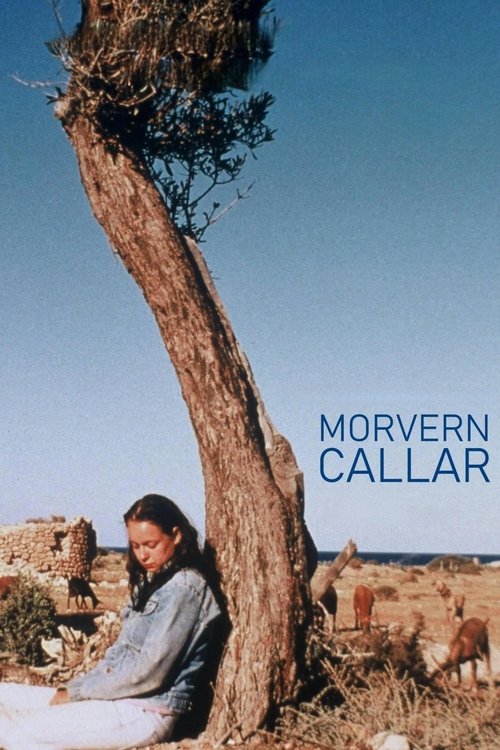
Morvern Callar
2002 · Lynne Ramsay
For when you want mood over story — a headphones-on, late-night film to drift through and puzzle over afterward. Reach for it when you're drawn to grief, escape, and beautiful strangeness rather than answers.
What it's about
A young supermarket worker in a gray Scottish port town wakes at Christmas to find her boyfriend dead by suicide, leaving behind money and an unpublished novel. Instead of reporting it, she puts her own name on the manuscript, takes the cash, and heads for the heat and noise of Spain with her best friend — grieving in a way nobody around her can read.
The experience
Dreamlike and immersive rather than plot-driven — it moves on textures, music, and Morvern's unreadable face, and it feels like being inside someone else's numbness. Quietly haunting; it works on you sideways.
Performances
Samantha Morton gives a nearly wordless, mesmerizing performance — she makes withholding everything more expressive than most actors' big scenes.
The craft
Lynne Ramsay builds the film from sensation: tactile close-ups, sickly Christmas lights, Spanish sun, and a killer mixtape soundtrack that stands in for everything Morvern won't say. Sound and music carry so much that good speakers genuinely change the film.
Why it matters
Confirmed Ramsay as one of British cinema's most distinctive stylists and became a touchstone for a generation of sensory, music-driven character studies.
Snapshot
Morvern Callar is Lynne Ramsay's second feature, an adaptation of Alan Warner's 1995 debut novel about a Scottish supermarket worker who wakes to find her boyfriend dead by his own hand on the kitchen floor, his unpublished novel and a sum of money left behind on his computer. Rather than report the death, Morvern (Samantha Morton) deletes his name from the manuscript, types in her own, and submits it to publishers; she uses his money to flee a gray port town for the heat and noise of southern Spain. The film is less a thriller of guilt than a study of grief refracted through dissociation — an interior, sensory work that prizes texture, music, and the unreadable surface of a face over plot mechanics or psychological explanation. It confirmed Ramsay, after Ratcatcher (1999), as one of British cinema's most distinctive image-makers and stands as a touchstone of early-2000s art cinema centered on opaque female experience.
Industry & production
Morvern Callar was a British production assembled from the constellation of public-service and equity financing that sustained ambitious UK auteur cinema around the turn of the millennium. It was produced by Company Pictures, with backing from the BBC (through BBC Films), the UK Film Council's funds, Scottish Screen, and Alliance Atlantis, among the financing partners typical of the period. The producers most associated with the film were Robyn Slovo and Charles Pattinson. The adaptation rights to Warner's well-regarded novel — a totemic text of 1990s Scottish fiction alongside the work of Irvine Welsh and James Kelman — gave the project literary cachet, though Ramsay and co-writer Liana Dognini substantially pared the book's first-person voice down to image and gesture.
The film premiered in 2002 in the Directors' Fortnight (Quinzaine des Réalisateurs) sidebar at the Cannes Film Festival, the festival route by which much of this kind of work reached international distributors and critics. It received a measured arthouse release rather than a wide commercial one; precise box-office figures are not something I can state reliably, and the honest characterization is that the film was a critical rather than commercial event — its returns were modest, in keeping with its scale and ambition. Its industrial significance lies less in revenue than in its role consolidating Ramsay's reputation and in the model it offered: a literary property reconceived as pure cinema by a director with a strong visual signature, financed through the patchwork of broadcaster and national-agency money that defined British art film of the era.
Technology
The film was shot photochemically on 35mm, consistent with the period and with the tactile, grain-inflected image Ramsay and her cinematographer pursued. Its technological character is defined less by any novel apparatus than by a sensibility that treats the camera as an instrument of proximity and the available textures of light — the sodium glow of a Scottish winter, the strobing colored bulbs of a flat at Christmas, the blanched sun of Almería — as raw material. Music technology, in a different sense, is central to the film's conception: the dead boyfriend's mixtape, encountered on a personal cassette Walkman, structures Morvern's experience and much of the soundtrack, so that the diegetic playback device becomes a near-constant prosthetic for her consciousness. The film's modernity registers not in equipment but in this attention to how a young woman of her time and class actually moves through the world, headphones in, mediated by recorded sound.
Technique
Cinematography
The cinematography, by Alwin H. Küchler — who had shot Ratcatcher and remained a defining collaborator for Ramsay's early work — is the film's most celebrated element. Küchler works close to bodies and surfaces, favoring shallow focus, handheld intimacy, and a palette that swings between the desaturated cold of the port town and the saturated warmth of Spain. The opening, lit largely by the intermittent flashing of Christmas-tree lights across Morvern's face and the dead body beside her, is a justly famous passage: information is withheld, the image pulses between darkness and color, and the viewer is placed inside a perceptual state rather than told what has happened. Throughout, the camera privileges fragments — hands, the nape of a neck, objects half-seen — over establishing clarity, producing a cinema of sensation. In Spain the light opens up and the framing loosens toward landscape, the visual register tracking Morvern's movement from enclosure toward an ambiguous openness.
Editing
The editing, by Lucia Zucchetti (another recurring Ramsay collaborator), is elliptical and associative rather than expository. Cuts follow sensory and emotional logic more than narrative cause and effect; time is compressed, dilated, and occasionally left deliberately uncertain. The film often lingers past the conventional cutting point or excises connective tissue entirely, so that Morvern's decisions arrive without the scaffolding of explanation. This withholding is structural, not incidental: the editing refuses the audience the reassurance of motive, keeping the protagonist opaque and the viewer in a state of attentive uncertainty.
Mise-en-scène / staging
Ramsay's staging is object-driven and richly material. The texture of a cheap flat at Christmas, the fluorescent aisles of a supermarket, the press of bodies in a rave or a foreign hotel — these environments are rendered with anthropological specificity and a painterly eye for incidental beauty in unglamorous settings. The dead body is staged not as a shock effect to be quickly resolved but as a persistent fact Morvern lives around, a piece of domestic furniture she steps over and tends to. Props carry weight: the Walkman, the manuscript, gifts, a lighter, money. The Spanish sequences shift the mise-en-scène toward sun, dust, and anonymity, the package-holiday hinterland of Almería becoming a landscape of estrangement rather than escape.
Sound
Sound design and music are arguably co-equal with the image as the film's expressive core. The soundtrack is built largely from the mixtape the dead man leaves behind — a curated assemblage of art-rock, electronica, and pop that includes work by Can, Aphex Twin, Stereolab, Broadcast, Lee Hazlewood and Nancy Sinatra, the Velvet Underground, Holger Czukay, and Boards of Canada, among others (the exact sequencing is documented in the film's released soundtrack). The crucial device is that this music is frequently diegetic, heard through Morvern's headphones, so that the audience is sutured into her private auditory world and cut off, with her, from the ambient sound of her surroundings. There is no conventional orchestral score; meaning and mood are carried by these found tracks, which function as a posthumous communication from the boyfriend — a voice that speaks through curation rather than words. The interplay of headphone-bound music and the muffled or absent world beyond is one of the film's signal achievements.
Performance
Samantha Morton's performance is a masterclass in interiority achieved with minimal dialogue. Morvern is watchful, often blank-faced, her grief and resolve legible only in micro-gestures and the steadiness of her gaze. Morton externalizes almost nothing in conventional dramatic terms, trusting the camera's proximity to register thought; the result is a portrait of a consciousness that remains finally unknowable. Opposite her, Kathleen McDermott plays Lanna, Morvern's friend and foil. McDermott was a non-professional performer cast by Ramsay's team in Glasgow, and her untrained naturalism — looser, more outwardly expressive — provides essential contrast to Morton's contained intensity. The pairing of a major actress with a first-timer is itself characteristic of Ramsay's commitment to texture and authenticity over polish.
Narrative & dramatic mode
The film operates in a mode of withheld interiority. Its premise contains the engine of a thriller — a concealed death, a stolen identity, the threat of exposure — but Ramsay systematically declines those generic payoffs. There is little suspense in the conventional sense and no moral reckoning staged for the audience's benefit; Morvern's appropriation of the manuscript is presented without judgment or explanation. The narrative proceeds by drift and ellipsis, organized around states of feeling rather than goals. Dialogue is sparse and oblique. The dramatic mode is closer to lyric or tone poem than to the well-made plot: we are asked to inhabit Morvern's perceptual present rather than to follow her toward a resolution. The ambiguity is the point — the film ends on a note of suspension that refuses to convert her experience into a moral or a meaning.
Genre & cycle
Nominally a drama, Morvern Callar sits within the loose international cycle of early-2000s art cinema devoted to opaque, often female, protagonists and to the privileging of sensation over story — a sensibility shared with directors working in a register sometimes grouped under a "cinema of the senses." Within British cinema it belongs to a lineage of socially grounded but formally adventurous work that departs from the explanatory tendencies of mainstream social realism. It also participates in the literary-adaptation cycle of Scottish fiction reaching the screen in the wake of Trainspotting (1996), though Ramsay's approach is the antithesis of that film's kinetic verbal energy. If it has a generic home, it is the art film of grief and dissociation, adjacent to road-movie and coming-of-(un)age structures without committing fully to either.
Authorship & method
Morvern Callar is a director's film in the fullest sense, and it crystallizes the method Ramsay established with Ratcatcher: a cinema built from images, sound, and the bodies of performers rather than from script-led psychology. Ramsay, Glasgow-born and trained in part as a photographer before attending the National Film and Television School, brings a still-photographer's eye to composition and a poet's instinct for ellipsis. Her adaptation method, developed with co-writer Liana Dognini, was radically reductive: Warner's novel is narrated in Morvern's idiosyncratic first-person voice, and the film's central decision was to strip that voice away almost entirely, translating an interior monologue into exterior surface and trusting the audience to read the gap. The key collaborators are inseparable from the result — cinematographer Alwin H. Küchler, whose tactile handheld imagery defines the look; editor Lucia Zucchetti, whose associative cutting governs the film's temporality; and the curated soundtrack, which substitutes for a composed score and functions as a structuring authorial choice rather than mere accompaniment. The film is the second panel in what would become a body of work — through We Need to Talk About Kevin (2011) and You Were Never Really Here (2017) — preoccupied with trauma, perception, and characters sealed inside their own experience.
Movement / national cinema
The film is a product of Scottish and British cinema at a moment of confident devolution-era cultural identity. It draws on the same milieu of contemporary Scottish writing that produced Warner's novel, and it benefited from the funding architecture — Scottish Screen, BBC Films, the UK Film Council — that supported indigenous filmmaking. Yet Ramsay's affinities are as much European as British: her formalism, her trust in duration and image, and her refusal of explication align her with continental art-cinema traditions more than with the documentary-inflected social realism often taken as the British norm. Morvern Callar thus reads as Scottish national cinema in its sources and textures and pan-European in its aesthetic allegiances, the Spanish second half literally relocating the film into a transnational space.
Era / period
Made and set around the turn of the millennium, the film is precisely of its moment in its sensory furniture — the cassette Walkman, the rave culture, the package holiday to the Spanish costas as the horizon of working-class escape, the supermarket job as the texture of contemporary labor. It captures a pre-smartphone intimacy with recorded music as a private, portable world. More broadly it belongs to a brief, fertile period for British auteur cinema in which national funding bodies underwrote genuinely uncompromising work, and it stands as one of the strongest fruits of that arrangement.
Themes
Grief and its unrepresentability sit at the film's center: Morvern's bereavement is processed not through speech or weeping but through movement, music, and a strange continuation of ordinary life. Closely bound to this is dissociation — the sense of a consciousness operating at a remove from its own actions. Authorship and appropriation form a second axis: by claiming a dead man's novel, Morvern raises questions about whose stories get told, who gets credited, and whether identity itself can be authored or stolen. Class and economic constraint underwrite everything — the manuscript and the money are, brutally, the only inheritance that lets her move. Escape and its limits recur: the flight to Spain promises transformation but delivers another form of aimlessness. And throughout runs a fascination with the sensory and embodied — heat, sound, touch, light — as the true medium of experience, set against the inadequacy of language.
Reception, canon & influence
Critically, Morvern Callar was received as a confirmation of major talent. Reviewers singled out Ramsay's command of image and sound and Samantha Morton's wordless performance, and the film accrued the kind of festival and critics'-circle recognition that marks serious art cinema; precise award tallies vary by source and I won't enumerate them from memory, but its standing among critics was high and has grown. Its influences run backward to the European art-film tradition of perceptual, elliptical storytelling and to the contemporary Scottish literary scene that produced Warner's source. Forward, its legacy is twofold. It cemented Ramsay's authorship and helped license a strain of British and international cinema willing to build films around opaque interiority and sensory immersion rather than explanatory plot — an approach echoed in subsequent work by filmmakers, including women directors, exploring female experience through atmosphere and withheld motive. And it has endured as a critical favorite, regularly cited in reconsiderations of the best British films of its decade and as a key text in the study of music's expressive function in cinema, its mixtape soundtrack remaining one of the most discussed uses of curated source music in the period.
A Deleuzian reading
Christmas lights flash on a kitchen floor.
The full Deleuzian reading of Morvern Callar →
Reception
A quiet critical hit at Cannes in 2002 but barely seen in cinemas, it spent years as the 'other' Lynne Ramsay film before Letterboxd-era cinephiles — and the near-decade gap before We Need to Talk About Kevin — turned it into a treasured object.
How Morvern Callar was received, from release to now →
Influences: the films it descends from and the films it influenced
- Ratcatcher (1999) — Ramsay's own first feature established the working method this film extends — narrative built from tactile images, ambient sound and object-gesture rather than dialogue, with Alwin Küchler's handheld available-light camera reading interiority off surfaces.
- Mouchette (1967) — Bressonian 'model' performance — affect withheld, meaning carried by hands and objects and the fragments of action between events — underwrites Morvern's blank exterior surface standing in for a stripped-away inner monologue.
- Vagabond (1985) — A young woman drifts across a cold landscape with her motive deliberately withheld, the film refusing psychological explanation and trusting episodic, elliptical structure to build a portrait from the outside.
- Jeanne Dielman, 23 quai du Commerce, 1080 Bruxelles (1975) — Minimalist female interiority rendered entirely through duration, domestic objects and repeated physical gesture, so that emotional rupture registers as a barely perceptible disturbance in routine rather than as plot.
- The Passenger (1975) — A protagonist appropriates a dead man's identity and life, the film treating that theft as an opaque, unexplained act — the same withheld-motive engine as Morvern claiming her dead boyfriend's novel as her own.
- Chungking Express (1994) — Pop source music ('California Dreamin'') used as a structuring emotional device rather than scoring, paired with restless handheld camera and mood-over-narrative drift — the template for Morvern's mixtape-as-score.
- Days of Heaven (1978) — Néstor Almendros's available and magic-hour light, with sensory image and elliptical voice displacing causal plot, models the 'cinema of the senses' surface Ramsay and Küchler pursue.
- Don't Look Now (1973) — Associative, fragmentary editing that fractures chronology to render grief and dissociation from the inside — the elliptical cutting grammar Lucia Zucchetti adapts to Morvern's destabilized temporality.
- Three Colors: Blue (1993) — Ramsay routes the soundtrack entirely through Morvern's Walkman, making technically diegetic music function as non-diegetic score-as-interiority — cutting in and out without preparation in direct application of Preisner's intrusion method — while the female mourner's project of deliberate self-erasure is structurally derived from Blue.
- Breaking the Waves (1996) — Ramsay's use of a dense licensed-recording soundtrack—Aphex Twin, Can, Velvet Underground deployed as chapter-marking emotional counterpoint rather than commissioned underscore—extends von Trier's strategy of period pop as narrative punctuation and mood-inversion device into a female-abjection narrative with a similarly ambiguous transcendence.
- Jesus' Son (2000) — Carries forward the same subjective sound mix and associative drift in a literary adaptation, with Samantha Morton again the locus of an interior, near-wordless point of view.
- The Man Who Fell to Earth (1976) — British art-cinema associative montage scored by a compiled needle-drop soundtrack, advancing the elliptical, sensory grief-grammar Roeg pioneered.
- We Need to Talk About Kevin (2011) — Ramsay extends the same reductive adaptation method on Lionel Shriver — interiorizing a first-person novel into associative image, color motif and sound design that withholds and fractures the protagonist's psychology.
- You Were Never Really Here (2017) — The mature form of the method: trauma conveyed through elliptical sensory fragments, withheld backstory and Jonny Greenwood's curated/composed sound, the protagonist sealed inside unspoken experience exactly as Morvern is.
- Fish Tank (2009) — Handheld, available-light immersion (Robbie Ryan) around a non-professional lead, with needle-drop source music carrying a working-class girl's inarticulate interiority — Arnold's direct inheritance of Ramsay's British sensory realism.
- Wuthering Heights (2011) — A radically reductive literary adaptation that strips dialogue and exposition to elemental texture — wind, mud, breath, available light — trusting sensory surface over plot in the same anti-illustrative spirit as Morvern's gutting of Warner's prose.
- Red Road (2006) — A Scottish-set study of a grief-driven woman whose motive is withheld until late, building dread and interiority through observation and surveillance rather than explanation.
- The Souvenir (2019) — Opaque female interiority told through elliptical drift and withheld feeling, the camera observing surface and refusing to dramatize the protagonist's inner reckoning with loss.
- Aftersun (2022) — A Scottish elliptical study of grief and dissociation that withholds motive, reconstructs memory from sensory fragments and uses needle-drop source music as the load-bearing emotional structure — Ramsay's idiom carried into a new generation.
- Die My Love (2025) — Establishes Ramsay's signature use of needle-drop pop tracks as subjective emotional counterpoint and haptic, skin-close close-ups that render a woman's interiority through texture rather than dialogue.
- Beau Travail (1999) — Contemporaneous 'cinema of the senses' built on bodies, light and movement with Agnès Godard's tactile camera, music and gesture replacing explanatory narration — a parallel sensory-over-script project.
- Lost in Translation (2003) — Curated source-music cues function as an emotional score for a minimalist, withheld female interiority, mood and atmosphere displacing dramatized motivation — the contemporaneous American cousin of the mixtape method.
- Under the Skin (2014) — Scottish, anti-expository sensory cinema centered on an opaque woman, using available-light textures and music-as-interiority — the closest national and aesthetic cousin in British art cinema.
Similar films
- Die My Love (2025) — influence & lineage
- Ratcatcher (1999) — influence & lineage
- We Need to Talk About Kevin (2011) — influence & lineage
- In the Mood for Love (2000) — shared sensibility
- The Currents (2025) — shared sensibility
- Blue Heron (2026) — shared sensibility
- White Mangrove (2020) — shared sensibility
- Romería (2025) — shared sensibility
All the films related to Morvern Callar →