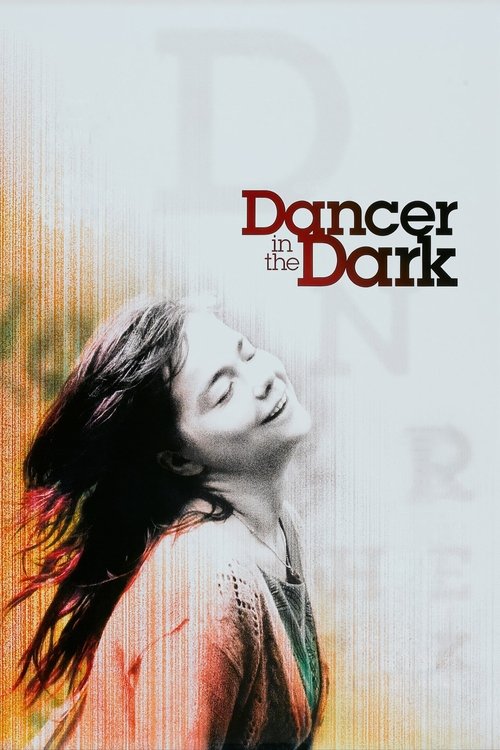
Dancer in the Dark
2000 · Lars von Trier
For when you actively want to be wrecked — a film to sob through and then argue about for a week. Absolutely not comfort viewing; save it for a night you can absorb it.
What it's about
Selma, a Czech immigrant working a factory floor in early-1960s small-town America, is going blind — and secretly hoarding every dollar for an operation to spare her young son the same hereditary fate. Her one escape is musicals: when life presses too hard, the clatter of machines and trains blooms into imagined song-and-dance numbers. Then a betrayal sets her on a collision course with catastrophe.
The experience
Devastating — the musical numbers arrive as relief and then twist the knife, and the raw handheld camera gives you nowhere to hide. It's one of the most punishing sits in modern cinema, and people come out of it either shattered or furious, sometimes both.
Performances
Björk, in her only major screen role, is almost unbearably raw — she seems to be living Selma rather than acting her, and the performance won Best Actress at Cannes.
The craft
Von Trier splits the film in two: drab, grainy handheld video for Selma's real life, and color-drenched, multi-camera musical numbers scored to Björk's strange, percussive songs built from factory rhythms. The whiplash between the two registers is the whole design — hear it on good speakers.
Why it matters
It won the Palme d'Or, capped von Trier's trilogy of saintly, suffering heroines, and stands as one of the most divisive films of its era — a lightning rod people still fight about.
Snapshot
Dancer in the Dark is Lars von Trier's lacerating anti-musical, a film that weds the most consoling of Hollywood genres to one of the bleakest tragedies in modern art cinema. Selma Ježková, a Czech immigrant going blind on a factory floor in early-1960s rural America, hoards her wages for an operation that will spare her young son the hereditary disorder she carries, and retreats into elaborate song-and-dance fantasies cued by the rhythms of machinery, trains, and footsteps. The narrative engine is melodramatic to the point of cruelty — theft, a killing, a trial, an execution — but von Trier's formal strategy is austere and confrontational: drably handheld digital video for the "real" world, color-drenched fixed-camera sequences for the musical numbers. The film completed von Trier's self-described "Golden Heart" trilogy (after Breaking the Waves and The Idiots), won the Palme d'Or at Cannes 2000 with a Best Actress prize for Björk, and remains one of the most polarizing prestige films of its era — adored as a devastating tragedy, reviled as manipulative sadism. It is also a landmark in the early creative use of consumer-grade digital cameras.
Industry & production
The film was produced through von Trier's Copenhagen company Zentropa (which he co-founded with Peter Aalbæk Jensen), with Vibeke Windeløv as producer, and assembled as a sprawling European co-production drawing partners across Denmark, France, Sweden, Germany and beyond — a financing model characteristic of post-1995 European art cinema, where national subsidy and Eurimages-style pooling underwrote ambitious auteur projects. Though set in Washington State, the production shot in Scandinavia (Sweden and Denmark), reconstructing an imagined "America" von Trier had never visited — a deliberate conceit he would extend into the USA: Land of Opportunities films (Dogville, Manderlay).
The casting was unusually international and star-laden for a von Trier film: Catherine Deneuve, an icon of the French musical via Demy, took the supporting role of Selma's protective friend Kathy; David Morse and Peter Stormare anchored the American and immigrant communities; Joel Grey, of Cabaret, appears as a figure from Selma's musical imagination. At the center was Björk, the Icelandic singer-songwriter, in what was effectively her first and — by her own subsequent account — last leading film role. The collaboration became legendary for its hostility; the well-documented antagonism between star and director during the shoot has shadowed the film's reception ever since, and Björk has repeatedly described the experience as traumatic. The specific allegations she later raised are a matter of public record from her own statements rather than something to be paraphrased loosely here; what is uncontested is that the production was extraordinarily fraught and that Björk did not pursue an acting career afterward.
Technology
Dancer in the Dark is a key early case study in the artistic adoption of digital video. The dramatic scenes were shot on lightweight consumer/prosumer digital cameras, handheld, exploiting the format's mobility, low light tolerance, and cheapness to permit long takes and improvisatory framing. The decisive technological gambit, however, was the staging of the musical numbers: von Trier's team rigged large arrays of small fixed digital cameras — by the production's own account on the order of a hundred — running simultaneously to capture each number from dozens of angles in a single continuous performance. Editor and director could then assemble the sequence from this bank of synchronized viewpoints without re-staging, a method enabled specifically by the low unit cost of digital cameras (an equivalent array of film cameras would have been economically and logistically prohibitive). This anticipated, in a handmade way, the multi-camera "bullet-time" and volumetric capture experiments that digital cinema would pursue in the following decade. The image was ultimately blown up to 35mm for theatrical release, retaining the smeared, low-resolution texture of the source as an aesthetic signature rather than a defect to be hidden.
Technique
Cinematography
The cinematography is credited to Robby Müller, the great Dutch cinematographer associated with Wim Wenders and Jim Jarmusch, working far outside his usual celluloid lyricism. For the dramatic scenes Müller and von Trier embraced a deliberately ugly aesthetic: handheld, jittery framing, washed-out and desaturated color, available light, snap zooms and reframes that betray the camera operator's searching eye. The look descends directly from the Dogme 95 "Vow of Chastity" von Trier co-authored, though Dancer in the Dark is not a certified Dogme film. Against this drabness, the musical numbers shift register entirely — brighter, more saturated, the fixed-camera multiplicity producing a mosaic of static viewpoints that feels both euphoric and oddly mechanical, mirroring Selma's flight from a gray world into Technicolor memory.
Editing
The editing (by Molly Malene Stensgaard, with François Gédigier) is the film's structural keystone, because the multi-camera musical method effectively relocated the mise-en-scène of those sequences into the cutting room. With up to a hundred angles per number, the rhythm, geography, and emotional shape of each song were composed through selection and assembly after the fact. The contrast between the nervous, continuity-loose cutting of the drama and the percussive, music-driven montage of the numbers is the film's central formal argument: the cuts themselves perform the difference between grinding reality and redemptive fantasy.
Mise-en-scène / staging
Production design renders a stylized, slightly unreal Americana — the factory, the trailer home, the courtroom, the prison — built and shot in Scandinavia and never aiming at documentary fidelity to the United States. The staging of the musical numbers grows organically out of diegetic sound sources: the clank of presses, the rhythm of a train, the scratch of a pencil during the trial. Choreography (the film's dances were developed for non-professional movers as much as trained ones, foregrounding Björk's untrained, idiosyncratic physicality) is keyed to these found rhythms, so that the fantasy never fully escapes the material world that oppresses Selma.
Sound
Sound is arguably the film's true subject. Selma, losing her sight, lives increasingly through hearing, and the film's musical numbers are literally generated from ambient noise — industrial and environmental sounds metabolized into rhythm and song. Björk composed the score and songs herself (released as the album Selmasongs, produced with Mark Bell), and the music is built from these mechanical textures rather than imposed orchestrally. The duet "I've Seen It All," performed in the film with Peter Stormare's character on a railway, became the film's signature piece and earned an Academy Award nomination for Best Original Song; the album version pairs Björk with Thom Yorke. The sound design's insistence that beauty is assembled from the noise of labor is the film's most original formal idea.
Performance
Björk's performance is raw, unguarded, and stylistically discontinuous with the professional cast around her — a quality the film exploits. She is least "actorly" and most exposed precisely where the drama is cruelest, and her singing voice carries an emotional directness no conventional musical-comedy lead would attempt. Deneuve provides a grounding warmth and intertextual resonance (her presence summons the French musical tradition the film both honors and shatters); Morse and Stormare supply naturalistic counterweight. The jury at Cannes recognized Björk's work with the Best Actress award, a striking endorsement of so untrained and self-immolating a turn.
Narrative & dramatic mode
The dramatic mode is tragic melodrama pushed to an almost unbearable extreme — what von Trier's detractors call emotional sadism and his admirers call moral seriousness. The plot follows an iron logic of sacrifice: every choice Selma makes to protect her son tightens the noose, literally, around her own neck. The musical numbers function as ironic relief and as tragic counterpoint, since Selma's fantasy that "in a musical nothing dreadful ever happens" is precisely what the surrounding film refutes. The structure is a deliberate collision of incompatible genres: the consolations of the Hollywood musical detonated by the determinism of naturalist tragedy. The withholding of relief at the climax — the film refuses the rescue the genre conditions us to expect — is the engine of both its devastation and the controversy over its ethics.
Genre & cycle
Formally the film belongs to the musical, but as critique and demolition rather than continuation. It sits within a small lineage of self-aware, melancholic, or deconstructive musicals, and explicitly invokes the genre's golden age through Deneuve, Joel Grey, and Selma's love of The Sound of Music (she performs in an amateur staging). Within von Trier's own output it is the third panel of the "Golden Heart" trilogy — films built around a naïvely good woman destroyed by a world that exploits her goodness — following Breaking the Waves (1996) and The Idiots (1998). It also belongs to the cycle of digital-video art films that flowered around Dogme 95 and the turn of the millennium, when cheap cameras temporarily democratized serious filmmaking.
Authorship & method
The film is unmistakably von Trier's: the cruel central woman-martyr, the formal provocation, the rules-based production constraints, the Brechtian impulse to expose the apparatus even while wringing maximum feeling from it. His method here was deliberately destabilizing — handheld improvisation in the drama, the radical multi-camera bank for the songs — and the punishing on-set dynamic was, by many accounts, part of how he extracted Björk's performance, a method that became inseparable from later ethical reckonings with his practice.
But authorship is genuinely shared. Björk is effectively co-author of the film's soul: composer, lyricist, lead, and the source of its musical conception. Robby Müller's cinematography supplied the textural identity; Molly Malene Stensgaard's editing realized the musical sequences that the shooting method had only made possible in principle; Vibeke Windeløv's producing held the unwieldy co-production together. The film is best understood as a high-tension collaboration between a controlling director and a singular musical artist, with the friction visible on screen.
Movement / national cinema
Dancer in the Dark is a product of the Danish new wave of the 1990s — the Dogme 95 moment that von Trier and Thomas Vinterberg launched and that briefly made Denmark the most discussed national cinema in the world. Though not a Dogme-certified film (its music, artifice, and elaborate technology violate the Vow of Chastity), it carries the movement's DNA: handheld digital immediacy, distrust of glossy illusion, and a confrontational ethic. It also exemplifies the pan-European co-production system that allowed small national cinemas to mount internationally cast, festival-scaled projects, and it inaugurated von Trier's career-long, deliberately external imagining of America.
Era / period
Released in 2000, the film arrived at the precise hinge between analog and digital cinema, when DV had become cheap and good enough for theatrical ambition but had not yet been normalized — making its low-fi image a statement rather than a convenience. It belongs to the late-1990s/early-2000s peak of the international festival auteur, when Cannes laurels could launch a challenging film into wide art-house release. Its diegetic setting, by contrast, is the early 1960s, an America of factory labor, immigrant aspiration, and capital punishment — a period the film treats as myth rather than history.
Themes
The film's core themes are sacrifice and maternal love carried to self-destruction; the dignity and exploitation of immigrant labor; disability and the slow loss of sight (and the compensatory intensification of hearing); the gap between the consolations of art and the indifference of the world; and capital punishment, which the film stages as a bureaucratic, mechanical horror. Running beneath them is a meta-theme about the musical genre itself — about whether fantasy redeems or merely anesthetizes suffering. Selma's faith that musicals are a place where nothing bad happens is both her salvation and the instrument of the film's cruelty toward her and toward the audience.
Reception, canon & influence
Critical reception was sharply, almost violently divided — perhaps the defining fact of the film's reception history. It won the Palme d'Or at the 2000 Cannes Film Festival, with Björk taking Best Actress, and "I've Seen It All" went on to an Academy Award nomination for Best Original Song. Yet many critics recoiled, accusing von Trier of manipulation, misogyny, and sadism toward both his heroine and his viewers, while admirers defended it as a genuinely tragic and formally daring work. That split — masterpiece or emotional torture device — has never fully resolved, and the film's standing has been further complicated over time by Björk's accounts of the production.
Looking backward, the film's influences are clear: the Hollywood and French studio musical (Demy above all, summoned through Deneuve; the Rodgers-and-Hammerstein tradition through The Sound of Music); the melodramas of suffering womanhood; Brechtian theater's distancing devices; the determinism of literary naturalism; and von Trier's own Dogme 95 aesthetic. Looking forward, its legacy is twofold. Technically, its multi-camera digital method and its insistence that a serious, prize-winning film could be made on consumer video helped legitimize digital cinema for auteurs in the 2000s. Aesthetically, it stands as a touchstone for the "deconstructed" or anti-musical and for a strain of confrontational European art cinema that refuses catharsis. Within von Trier's filmography it is the bridge between the handheld intimacy of the Golden Heart films and the stylized America of Dogville. Its most lasting cultural resonance, however, may lie outside the film proper — in the way the Björk–von Trier conflict became a defining example, revisited in later years, of the human cost behind a director's method.
A Deleuzian reading
The stamp of the press comes down, and down, and down.
The full Deleuzian reading of Dancer in the Dark →
Reception
It won the Palme d'Or at Cannes 2000 (with Best Actress for Björk) while simultaneously getting booed — critics called it either a masterpiece or emotional sadism, sometimes in the same review. A quarter-century on it's settled into the canon as the ultimate 'devastating cinema' benchmark, its divisiveness now part of the legend.
How Dancer in the Dark was received, from release to now →
Influences: the films it descends from and the films it influenced
- The Umbrellas of Cherbourg (1964) — The sung-through melodrama-as-musical whose saturated artifice and Deneuve casting von Trier inverts — he summons Deneuve precisely to weaponize the audience's memory of Demy's consoling lyricism against Selma's grim reality.
- Stella Dallas (1937) — The maternal-sacrifice 'weepie' architecture — a mother ruining herself unseen for a child's better life — supplies the melodramatic engine von Trier runs without its compensatory final uplift.
- 42nd Street (1933) — Berkeley's overhead, mechanized geometric choreography turning industrial labor into pattern is the direct precedent for shooting the factory and rail-yard numbers as rhythm extracted from machinery.
- The Sound of Music (1965) — Functions as the explicit diegetic referent — Selma rehearses it for community theater — so its earnest Rodgers-and-Hammerstein optimism is the genre object the film cites in order to negate.
- The Idiots (1998) — Dogme 95 method of handheld, available-light, improvisational consumer-video shooting that becomes the drama register of Dancer, against which the multi-camera song banks are set in contrast.
- Paris, Texas (1984) — Showcases cinematographer Robby Müller's textural method — naturalistic available light, emotional use of color temperature — the same hand that supplies Dancer's drama-section visual identity.
- Nights of Cabiria (1957) — Von Trier adopts Cabiria's structural counterpoint—theatrical performance sequences offering interior escape from naturalist social suffering—and applies it to a female protagonist whose irreducible consciousness organizes episodic accumulation toward a devastating finale she cannot avoid.
- Opening Night (1977) — Von Trier's use of Björk as a non-actress playing a character who performs musicals deploys the actor-playing-actor doubled consciousness Opening Night established, and the film's structural refusal of emotional relief at its climax is formally identical to Cassavetes' narrative anti-catharsis.
- All That Jazz (1979) — Erupts into musical numbers as psychological escape from a death-bound narrative, treating song as a defense against mortality rather than as spectacle.
- They Shoot Horses, Don't They? (1969) — An anti-musical built on diegetic numbers and handheld camera around a doomed female lead, repositioning a non-actor (Björk) as tragic protagonist — the structural and performative echo of Fonda's against-type turn.
- Cabaret (1972) — Restricts its musical numbers to the heroine's diegetic interior escape, jump-cut and multi-camera against a social-realist frame — song as a coping fiction, never a spontaneous overflow.
- Dogville (2003) — Carries forward the Brechtian impulse to expose the apparatus — chalk-outline stage in place of the camera-bank — extending Dancer's strategy of stylized abstraction wrung for maximum melodramatic feeling.
- 8 Women (2002) — Builds an artifice-forward musical around Deneuve's intertextual star image in the same year, mining the audience's Demy-era memory of her the way Dancer does, but toward pastiche rather than tragedy.
- Annette (2021) — The fullest heir to the deconstructed anti-musical — a sung-through tragedy that uses song to alienate rather than console and withholds catharsis from a doomed performer-parent.
- 28 Days Later (2002) — Took the proof that consumer digital video could carry a serious feature and pushed grainy DV into mainstream auteur cinema, accelerating the analog-to-digital hinge Dancer helped legitimize.
- Inland Empire (2006) — An established auteur shooting a full feature on a cheap consumer DV camera, embracing the low-resolution, available-light texture as expressive choice — the path Dancer opened for prestige directors.
- Once (2007) — Shot its numbers on banks of fixed consumer DV cameras in real industrial spaces, establishing that a musical sequence could be captured on prosumer digital without a soundstage; Once keeps the DV and the working-class frame and discards the fantasy staging.
- Breaking the Waves (1996) — First Golden Heart martyr film: establishes the handheld, Robby Müller-shot, sacrificial-woman template, with the song-interludes of Dancer functioning as the digital extension of its chapter-card musical breathers.
- The Celebration (1998) — Proved a Cannes-prize serious film could be shot on a palm-sized consumer DV camera, legitimizing the desaturated handheld digital aesthetic von Trier deploys for the dramatic scenes.
- Dead Man (1995) — Another Müller collaboration whose stark, grained handling of light demonstrates the cinematographer's range that von Trier exploits in the muted, desaturated palette of Selma's world.
- Timecode (2000) — Contemporaneous experiment in simultaneous multi-camera digital capture, sharing Dancer's wager that consumer-grade DV and a camera array could restructure how a scene is recorded and assembled.
- The Testament of Ann Lee (2025) — A Scandinavian art-house musical that generates its numbers out of a heroine's transfiguring inner world, setting handheld immediacy against the eruption of staged song.
- The Green Mile (1999) — Von Trier engages the identical subject—institutional execution of an innocent miraculous figure who refuses to save herself with truth—but deploys Dogme-adjacent handheld intimacy and fragmented sound design as a formal counterargument to Darabont's classical composition, making these two films a pointed aesthetic dialogue about the ethics of rendering judicial murder with beauty.
- The Young Girls of Rochefort (1967) — Inverts the Demy musical by keeping the fantasy numbers but pushing the 'sweetness needs salt' undertow into full tragedy, exposing the melancholy Demy hid beneath his color.
- Memories of Matsuko (2006) — The film's explicit template: musical production numbers that erupt out of a doomed woman's degradation, so that fantasy song-and-dance becomes the psychic defense mechanism against unbearable suffering — Matsuko literally quotes this structure of misery-into-musical.
- There's Still Tomorrow (2023) — Directly rhymes with the abuse-as-ballroom-dance conceit—transfiguring an oppressed woman's brutalization into stylized choreographed musical sequences that reframe pain as reverie.
- Sweeney Todd: The Demon Barber of Fleet Street (2007) — Contemporary demonstration that a musical could be a brutal tragedy ending in execution, using an untrained-voiced lead (Björk) for raw intimate vocals over technical polish — the same anti-Broadway singing ethic Burton embraces.
- Kiss of the Spider Woman (1985) — Builds imagined musical numbers intercut as a fantasy refuge from a grim, prison-bound reality — the two-register reality/fantasy structure pushed to its limit.
Similar films
- Breaking the Waves (1996) — influence & lineage · same viewing thread · often watched together
- Dogville (2003) — influence & lineage · same viewing thread
- The Girl with the Needle (2024) — same viewing thread
- Wild Strawberries (1957) — often watched together
- The Idiots (1998) — influence & lineage · often watched together
- The Umbrellas of Cherbourg (1964) — influence & lineage · often watched together
- Lilya 4-ever (2002) — often watched together
- Cries and Whispers (1972) — often watched together
All the films related to Dancer in the Dark →
Watch it with: curated runs of related films
- The World Against Her — A run of women worn down or driven to extremity by a merciless community, marriage, or economy — watch them near each other and the sacrifice, the drift, and the violence start to rhyme.