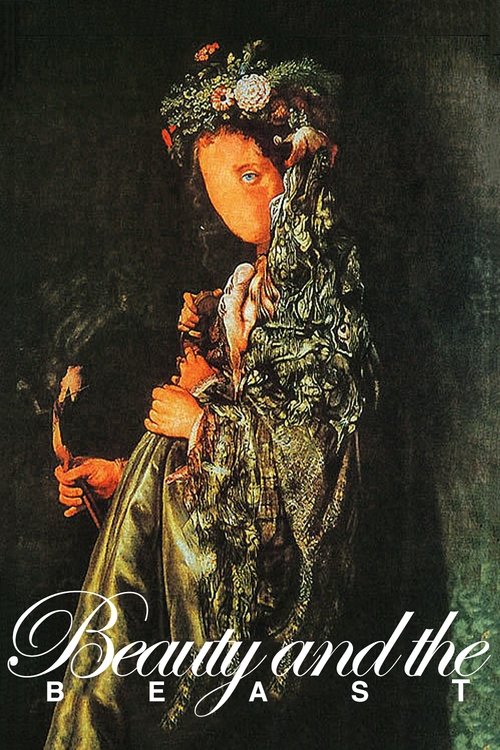
Beauty and the Beast
1979 · Juraj Herz
For a stormy autumn night when you want romance with teeth — a fairy tale for grown-ups who like their fantasy dark. Reach for it when standard versions of this story feel too safe.
What it's about
Julie, youngest daughter of a bankrupt merchant, gives herself up to save her father and travels to a fog-bound castle in the woods. Its master, Netvor, is no velvet-pawed prince-in-waiting but a taloned, bird-headed predator — and as he falls in love with his guest, he has to fight the voice inside him urging him to kill her.
The experience
Genuinely gothic — mist, ruin, and real menace — with a swooning romantic undertow that makes the danger feel inseparable from the love story. It's eerie and lush at once, closer to a beautiful nightmare than a bedtime story.
The craft
Juraj Herz films much of the story from the Beast's own tormented vantage, so his inner monologue turns the romance into a battle of self-overcoming rather than simple enchantment. Petr Hapka's swooning score and the art direction — rotting opulence, black lace, endless fog — give it a sensory richness that rewards a dark room and good sound.
Why it matters
Made by the director of The Cremator, a childhood survivor of the camps, it stands as the darkest screen version of this tale and a high-water mark of Czechoslovak gothic fantasy.
The Czech Beauty and the Beast — Panna a netvor — and the darkest version of the tale ever filmed: a bankrupt merchant's daughter delivered to a fog-bound castle whose master is no velvet lion but a taloned, bird-headed predator at war with the voice in his head urging him to kill her. Juraj Herz, the Slovak director of The Cremator and a childhood survivor of the camps, came to fairy tales with none of the genre's usual comfort; his gothic is genuinely gothic — rotting opulence, sisters sketched with acid wit, romance inseparable from mortal danger. Where Cocteau's 1946 Beast invited adoration, Herz's Netvor is filmed mostly from his own tormented vantage, a monster whose interior monologue makes the love story a matter of self-overcoming rather than enchantment. Petr Hapka's swooning score and the art direction — all mist, black lace, and candle smoke — put it in the strange, rich vein of 1970s Czechoslovak fantasy that horror devotees have been excavating ever since. Herz shot it back-to-back with a vampiric companion piece, Ferat Vampire arriving later; his fairy-tale period remains Czech cinema's velvet-gloved hand around the throat.
Reception
Barely seen outside Czechoslovakia for decades, it was quietly beloved at home and near-invisible abroad — until restorations and boutique releases in the 2020s turned it into a word-of-mouth cult discovery, now a fixture of 'gothic fairy tale' lists.
How Beauty and the Beast was received, from release to now →
Influences: the films it descends from and the films it influenced
- La Belle et la Bête (1946) — The direct template Herz reworks: the enchanted castle rendered as living architecture (candelabra arms, watching statuary), the leonine beast makeup, and the poetic-surreal treatment of the fairy tale as waking dream.
- Vampyr (1932) — Supplies the fog-bound, gauze-diffused dread and the drifting, unmoored subjective camera that detaches the frame from any fixed observer — the atmospheric grammar Herz's castle inherits.
- Nosferatu, eine Symphonie des Grauens (1922) — Establishes the predatory monster staged through expressionist shadow and lurching silhouette as an object of dread AND pity — the sympathetic-beast blocking Herz extends.
- Bride of Frankenstein (1935) — Model for granting the monstrous predator an aching interior life, letting gothic set-pieces carry the creature's loneliness rather than mere threat.
- Les Yeux sans visage (1960) — Demonstrates poetic-horror lyricism laid over genuine cruelty — hushed fog, the fixed mask, beauty and mutilation held in the same lyrical register that Herz adopts.
- Peeping Tom (1960) — Pioneers the beast's-eye subjective camera that traps the viewer inside the predator's gaze — the formal device Herz uses for his roaming Beast-POV shots.
- The Cremator (1969) — Herz's own precedent — the wide-angle grotesque subjective lens and the interior monologue that seats us inside a monstrous, self-justifying mind, carried forward into the Beast.
- Morgiana (1972) — Companion piece by the same author: acid-witted dueling sisters, a prowling animal-POV subjective camera (the cat), and lush rotting-opulence production design as psychological state.
- The Company of Wolves (1984) — Extends the adult gothic fairy tale with on-camera beast-transformation effects and Angela Carter's fusion of monstrous predation with awakening female desire.
- Edward Scissorhands (1990) — Carries the Beauty-and-the-Beast pathos into gothic fabulism — the sympathetic monster marooned in a rotting-opulent manor, framed for tenderness over menace.
- Pan's Labyrinth (2006) — Stages the fairy tale as gothic horror through a fog-bound labyrinth, a child confronting monstrous predators, and creature-POV empathy — a direct heir to Herz's tonal fusion.
- The Shape of Water (2017) — A literal Beauty-and-the-Beast romance built on beast-POV empathy and creature design that solicits desire, extending Herz's sympathetic-predator project.
- Crimson Peak (2015) — Makes the rotting-opulence gothic mansion a breathing character — bleeding walls, decaying grandeur as moral atmosphere — the exact set-as-psyche device Herz deploys.
- La Belle et la Bête (2014) — A direct restaging of the Cocteau/Herz template: the fog-bound enchanted castle, animate architecture, and Beast makeup rendered as lush gothic spectacle.
- Valerie and Her Week of Wonders (1970) — Fellow Czechoslovak dark-fairy-tale surrealism: dream-logic editing, eroticized gothic menace, and the fairy tale as a threshold between childhood and predatory adult desire.
- Alice (1988) — Fellow Czech puppet-trained surrealist rendering a children's tale as tactile nightmare — grotesque object-life and uncanny materiality kin to Herz's living, decaying castle.
- The Spirit of the Beehive (1973) — Reframes the Frankenstein-monster as tender predator glimpsed through a child's dread, in the same hushed, amber-fogged, near-silent atmospheric register.
Similar films
- Beauty and the Beast (1946) — influence & lineage
- Valerie and Her Week of Wonders (1970) — influence & lineage
- The Cremator (1969) — influence & lineage
- Bride of Frankenstein (1935) — influence & lineage
- Morgiana (1972) — influence & lineage
- Nosferatu (1922) — influence & lineage
- Eyes Without a Face (1960) — influence & lineage
- Beauty and the Beast (2017) — shared sensibility