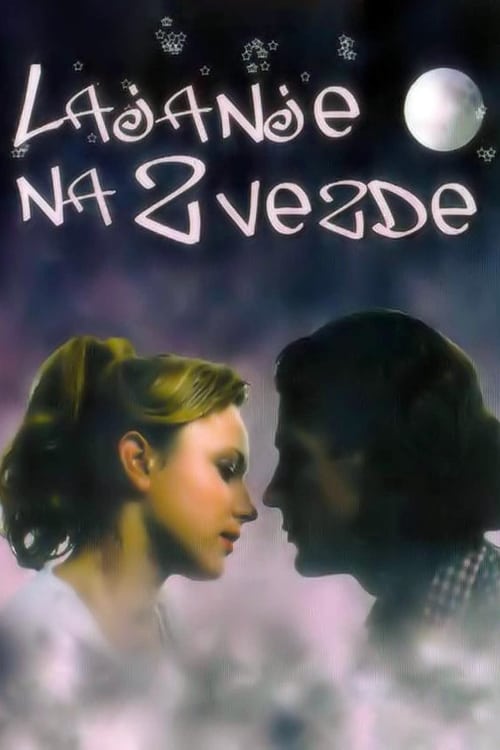
Barking at the Stars
1998 · Zdravko Šotra
For a light, feel-good evening when you want to laugh and ache a little for being young — pure comfort viewing about first love and last days of school.
What it's about
In the last two weeks of the school year, 1963, the graduating seniors of a small-town Serbian high school scheme, flirt, and stall their way toward adulthood. At the center is a shy, bookish boy nicknamed "the Philosopher," working up the nerve to pursue a classmate while a rival — his own brother among the complications — competes for her. Around them orbits the whole town: teachers, the principal, and every local character with an opinion.
The experience
Warm, mischievous, and unabashedly nostalgic — a hangout comedy where the pranks and courtships matter less than the golden glow of a world about to end with graduation. It goes down easy and leaves you sentimental about your own school days.
The craft
Veteran director Zdravko Šotra, adapting a beloved novel with its author, keeps a big ensemble spinning while giving the 1963 setting a sunlit, storybook charm. The pleasure is in the character work — every teacher and town eccentric gets a moment.
Why it matters
Released into a Yugoslavia worn down by a decade of war, its sunny nostalgia struck a deep chord — it became one of the most loved Serbian comedies of its era, the kind of film generations quote and rewatch.
Snapshot
Barking at the Stars (Serbian: Lajanje na zvezde) is a nostalgic coming-of-age comedy set among the graduating seniors of a provincial Serbian gymnasium in the spring of 1963. Directed by the veteran Zdravko Šotra and adapted by him with the writer Milovan Vitezović from Vitezović's own novel, the film compresses "the last two weeks of the school year" into a warm ensemble portrait of first love, examination dread, and the small conspiracies of adolescence. Its nominal plot — the shy, bookish Mihailo "the Philosopher" Knežević pursuing his classmate Danica while a rival competes for her — is less an engine than an excuse to survey a whole social world: teachers, the school principal, town characters, and a graduating class on the cusp of adult life. Released in June 1998 into a Yugoslavia worn down by a decade of war and isolation, the film pointedly contains no politics, no vulgarity, and no cynicism; it is an exercise in remembered innocence. It has since become one of the most affectionately regarded Serbian screen comedies of the 1990s, sustained less by international scholarship — of which there is essentially none — than by durable domestic popularity and repeated television broadcast.
Industry & production
The film was produced under the banner of Komuna in partnership with Radio-televizija Srbije (RTS), the state broadcaster, with Maksa Ćatović among the credited producers alongside Aleksandar Avramović, Radmilo Stefanović, and Zoran Janković. This RTS-adjacent production base is significant: Šotra was for decades a house director of Yugoslav and Serbian television, and Barking at the Stars carries the production logic of that world — an ensemble drawn heavily from established stage and television actors, a modest 95-minute running time, and a reliance on real, characterful locations rather than expensive constructed sets. It was shot largely in Sremski Karlovci, the historic Vojvodina town whose Baroque civic architecture, the celebrated Karlovci Gymnasium, and the Four Lions fountain supply the film with a ready-made period townscape; additional work was done in and around Belgrade.
The economic context matters. The film was made in the FR Yugoslavia of the late 1990s, an industry hollowed out by sanctions, hyperinflation earlier in the decade, and the collapse of the old Yugoslav distribution market. In that environment, a broadcaster-backed, location-driven, star-ensemble comedy was a rational bet: comparatively cheap to mount and aimed squarely at a domestic audience hungry for reassurance rather than reckoning. Precise budget and box-office or attendance figures are not reliably documented in the accessible record, and any specific number would be speculation; what is clear is that the film achieved lasting popular reach through theatrical release and, above all, television.
Technology
Barking at the Stars was a conventional late-1990s 35mm film production, photographed by Veselko Krčmar and finished on photochemical stock in the standard workflow of the period — well before the digital-intermediate and digital-projection transitions reshaped regional filmmaking in the following decade. There is no evidence that the film pursued any technical novelty; its ambitions were dramatic and atmospheric rather than technological. The one meaningful "technology" of the project is period reconstruction: the film's illusion depends on dressing 1990s locations back to 1963, a task carried by production designer Miodrag Nikolić's set dressing, costume, and prop work rather than by any optical or post-production trickery. Given how thin the technical record is, it is more accurate to describe the film as competently traditional than to claim any innovation for it.
Technique
Cinematography
Veselko Krčmar photographs the film in a soft, sunlit register appropriate to memory-comedy: bright exteriors of the Karlovci streets and gymnasium courtyard, unfussy interior coverage of classrooms and the family home. The camera is fundamentally an ensemble instrument here — its job is legibility of performance and place, keeping the large cast readable within the frame and letting the Baroque architecture of the town do atmospheric work. This is classical, unobtrusive shooting that privileges the actors and the reconstructed 1963 milieu over authorial visual signature; one should not overstate a stylistic program the film does not advertise.
Editing
Petar Putniković's cutting serves the film's twin demands: sustaining comic ensemble rhythm across many small vignettes, and managing the framing device by which the story is recalled from a later vantage. The film is organized as a remembrance, opening and ultimately returning to the adult couple, so the editing must knit an episodic middle — pranks, lessons, romantic near-misses across the last fortnight of school — into a single emotional arc that pays off in the closing return to the present. The result reads as an accumulation of incident rather than a tightly plotted drive, which is consistent with its nostalgic mode.
Mise-en-scène / staging
The film's staging is its strongest craft dimension. Nikolić's production design turns Sremski Karlovci into a convincing 1963: uniforms, chalkboards, period costume, and the town's own architecture combine into an enveloping sense of place. Šotra stages in depth around groups — the classroom, the teachers' room, the street, the family table — using these fixed social spaces as small theaters in which the ensemble can play. The approach betrays the director's long theatrical and television grounding: scenes are built around clearly blocked group dynamics and the interplay of well-drawn types rather than around camera movement.
Sound
Vojkan Borisavljević's score is central to the film's affect. A composer and arranger associated with orchestral and big-band idioms, Borisavljević supplies a warm, melodic underscore that cues the film's nostalgic, gently comic tone and lends the romance its sentimental lift. The soundtrack functions as an emotional frame around the period reconstruction, signaling "remembered past" as clearly as the costumes do. Beyond the score, the sound design is naturalistic and unremarkable in the best sense — the ambient life of a small town and a busy school.
Performance
Performance is the film's true medium. Dragan Mićanović anchors it as Mihailo "the Philosopher" Knežević, the sensitive, over-reading adolescent whose bookishness both charms and hobbles him; Nataša Tapušković plays Danica, the object of his and his rival's pursuit. Around them Šotra assembles a deep bench of respected Serbian actors as the teaching staff and town figures: Nikola Simić as the school principal, Velimir "Bata" Živojinović as Professor Božović, Aleksandar Berček and Bogdan Diklić as fellow professors, with Nikola Đuričko among the students. The casting of such heavyweight character actors in the adult roles gives the comic milieu density and authority, and the film's pleasures are substantially the pleasures of watching this ensemble inhabit sharply observed types with affection rather than caricature.
Narrative & dramatic mode
The dramatic mode is nostalgic ensemble comedy structured as retrospective memoir. The film is narrated from a later vantage — the adults the students will become — so the events of 1963 arrive already gilded by recollection, and the closing image of the grown couple "barking at the stars" from their balcony reframes the whole as a story about a love that lasted. Dramatically, the stakes are deliberately low: examinations, a romantic rivalry, adolescent pranks. The film's TMDB grounding frames the rivalry as one between brothers, while other summaries describe classmates competing for Danica's affection; the essential shape — a diffident hero, a desired girl, a more assertive rival — is constant, but the exact configuration of the rivalry should be treated with caution given the variance in the record. What is unambiguous is the tone: episodic, character-driven, and elegiac beneath the comedy, closer to the memoir-comedy tradition than to farce.
Genre & cycle
Formally the film sits at the intersection of teen/coming-of-age comedy and period romance. Within Serbian and post-Yugoslav cinema, it belongs to a recognizable cycle of nostalgic, small-town, sentimental comedies — literary in origin, warmly retrospective in tone — that flourished as an alternative to the harsher "war and transition" films of the same years. Its studied avoidance of politics, profanity, and violence is itself a generic statement, positioning it as consoling popular entertainment. This cycle would find its fuller commercial expression a few years later in Šotra's own turn-of-the-century adaptations of Stevan Sremac (see below), of which Barking at the Stars is an important immediate forerunner.
Authorship & method
The governing authorship is a two-handed collaboration between director Zdravko Šotra (b. 1933), one of the most prolific figures in Serbian film and, especially, television, and writer Milovan Vitezović (1944–2022), the novelist, aphorist, and screenwriter whose source novel and co-adapted screenplay supply the film's voice. Šotra's method is that of the seasoned television and theatrical director: fidelity to a literary text, trust in a strong ensemble, clear group staging, and an unshowy camera in service of story and performance. Vitezović's contribution is tonal and verbal — the warmth, wit, and remembered-provincial-life sensibility that runs through much of his work.
The key craft collaborators reinforce this literary-classical approach: cinematographer Veselko Krčmar, editor Petar Putniković, production designer Miodrag Nikolić, and composer Vojkan Borisavljević, whose score does much of the film's emotional signaling. The auteur signature here is corporate and traditional rather than individual and stylistic — this is filmmaking as faithful, affectionate adaptation.
Movement / national cinema
The film belongs to Serbian national cinema within the immediately post-Yugoslav frame, produced in FR Yugoslavia in 1998 with the state broadcaster as partner. It stands consciously apart from the internationally visible strand of 1990s regional cinema — the caustic, politically charged work associated with figures like Emir Kusturica or Goran Paskaljević's Cabaret Balkan — offering instead an inward, consoling, popular-national mode. In that sense it is a document of a domestic audience's appetite, during a period of crisis and isolation, for images of a gentler, pre-conflict national past.
Era / period
Two eras coexist in the film. Its production era is the beleaguered late 1990s, and its diegetic era is 1963 — the relatively settled, optimistic middle period of socialist Yugoslavia. Crucially, the film treats 1963 as a golden, apolitical idyll, declining to engage the ideological texture of the Titoist era in favor of universal adolescent experience. That gap between a hard present and a softened past is the film's animating emotional mechanism: it invites a 1998 audience to take refuge in a 1963 that the film has deliberately cleansed of history.
Themes
The central themes are first love and its idealization; the passage from adolescence into adulthood; and memory as a transfiguring force. The recurring image of "barking at the stars" — youthful longing hurled at the unreachable — operates as the film's controlling metaphor for adolescent desire and defiance, and its recurrence in the adult framing scene turns it into a symbol of a love and a self-image sustained across a lifetime. Secondary themes include the comedy of the teacher–student relationship, the closed sociability of the small provincial town, and a broader nostalgia for lost innocence, both personal and, implicitly, national. The film's insistent wholesomeness — its avoidance of politics and vulgarity — is itself thematic, a formal argument for tenderness in a bitter time.
Reception, canon & influence
Contemporary international critical reception is, in practical terms, undocumented; the film had little festival or foreign-market life, and the accessible English-language scholarly and critical record is thin — a limitation worth stating plainly rather than papering over. Its real reception history is domestic and long-tailed: Barking at the Stars has endured as a beloved, frequently rebroadcast title in Serbia, remembered warmly for its ensemble, its gentle humor, and its consoling nostalgia. Specific box-office or attendance figures are not reliably available and are not asserted here.
Looking backward, the film's influences are literary and traditional: Vitezović's own novel above all, and behind it the broad Serbian tradition of affectionate provincial storytelling. Looking forward, its significance is best read as a bridge in Šotra's own career and in the wider cycle of nostalgic Serbian literary comedy. In the years immediately following, Šotra achieved major domestic hits with his period adaptations of Stevan Sremac — Zona Zamfirova (2002) and Ivkova slava (2005) — films that share this one's formula of literary source, warm ensemble comedy, meticulous period reconstruction, and pointedly apolitical nostalgia. Barking at the Stars is thus most accurately positioned not as a widely influential landmark but as a well-loved, formative entry in that popular national tradition: a film whose legacy lives in domestic affection and in the commercially successful nostalgic comedies it helped make possible.
Reception
An instant crowd-pleaser in 1998 Serbia — embraced precisely because it offered warm, apolitical 1960s nostalgia in the middle of a grim decade — it has since settled in as a perennial TV-rerun classic that ex-Yugoslav audiences rewatch ritually.
How Barking at the Stars was received, from release to now →
Influences: the films it descends from and the films it influenced
- Amarcord (1973) — The master template for memory-as-transfiguration: a provincial town rendered as episodic, season-by-season vignettes with a grotesque-yet-warm character-actor ensemble and a nostalgic orchestral score (Nino Rota) that carries the emotional signaling instead of plot.
- I Vitelloni (1953) — Establishes the affectionate provincial-idler ensemble film, holding a group of aimless small-town young men together through episodic character vignette rather than through a driving narrative line.
- Do You Remember Dolly Bell? (1981) — The direct national-tradition ancestor — an early-1960s Yugoslav coming-of-age story filtered through fond remembrance of a working-class ensemble, tender rather than satirical.
- When Father Was Away on Business (1985) — Supplies the child's-eye retrospective-narration framing device, reframing a period of Yugoslav life as intimate family memoir seen from a boy's limited, forgiving vantage.
- Fanny and Alexander (1982) — Models theatrical group blocking of a large period-family ensemble and the transfiguration of a child's memory into warm, lamplit spectacle.
- Cinema Paradiso (1988) — The retrospective-memoir framing device — an adult narrator bracketing a recollection of provincial youth — married to a nostalgic orchestral score (Morricone) that does the emotional lifting.
- My Life as a Dog (1985) — Soft, sunlit child's-eye memoir of provincial mid-century life, carried by a gently comic character-actor ensemble of local types rather than by incident.
- The Elusive Summer of '68 (1984) — A Serbian provincial coming-of-age comedy structured as fond period recollection, pairing a boy's sexual/political awakening with a broad character-actor family ensemble.
- Zona Zamfirova (2002) — Šotra's own next step — a Stevan Sremac literary adaptation applying the identical formula of warm period-romance ensemble comedy, unobtrusive camera, and meticulous provincial period reconstruction.
- Ivkova slava (2005) — Continues the same literary-comedy-of-provincial-life method: faithful Sremac adaptation, character-actor ensemble, and pointedly apolitical nostalgic reconstruction of a bygone town.
- Montevideo, God Bless You! (2010) — Extends the nostalgic-period Serbian ensemble comedy cycle Šotra helped make commercially viable — retrospective framing, a large affectionate ensemble, and detailed 1930s period reconstruction.
- The Chorus (2004) — Deploys the same retrospective flashback framing device over a boys'-institution ensemble, leaning on a swelling nostalgic orchestral score to convert remembered youth into consoling emotion.
- Nacionalna klasa (1979) — Shares the Serbian character-actor ensemble method — vivid, sharply drawn local types staged in theatrical group scenes that read as an affectionate community portrait.
- Who's Singin' Over There? (1980) — Extends the same tradition of ensemble comedy built from indelible character-actor types arranged in near-theatrical group blocking, mining warmth and humor from a cross-section of ordinary Serbs.
- Balkan Spy (1984) — A literary/stage adaptation driven by theatrical blocking and a character-actor's escalating performance, showing the same fidelity-to-text, ensemble-forward stagecraft Šotra practices.
- Hope and Glory (1987) — Autobiographical childhood memoir that transfigures a difficult period into sunlit, comic nostalgia through a domestic ensemble and a forgiving remembered-past lens.
Similar films
- My Life as a Dog (1985) — influence & lineage
- Cinema Paradiso (1988) — influence & lineage
- The Graduate (1967) — same viewing thread
- Rushmore (1998) — same viewing thread
- The Perks of Being a Wallflower (2012) — same viewing thread
- Kes (1970) — same viewing thread
- Black Cat, White Cat (1998) — shared sensibility
- National Class Category Up to 785ccm (1979) — shared sensibility
All the films related to Barking at the Stars →
Watch it with: curated runs of related films
- Restless Youth, Rigid Walls — Watch these as one long walk through the school years — the teachers who crack you open, the friends who pull you off the sidelines, the first loves and the institutions you push against — where a beloved tearjerker and a surreal boarding-school revolt turn out to be cousins.