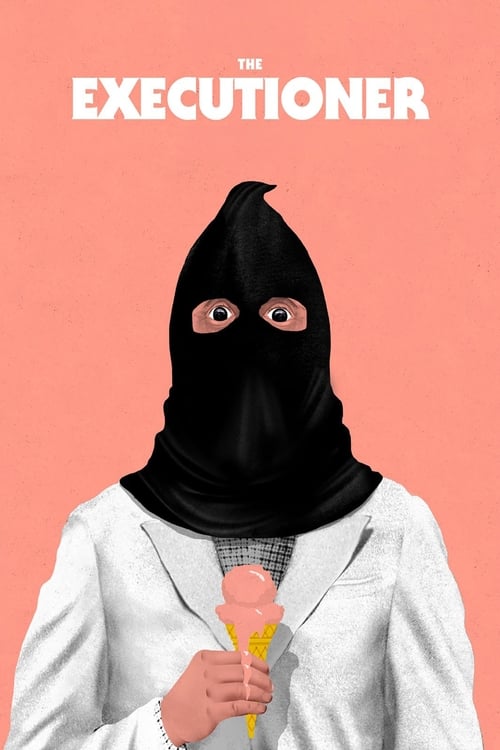
The Executioner
1963 · Luis García Berlanga
For when you want dark humor with real teeth — a satire that entertains all the way through and then sits heavily with you afterward. Comfort viewing it is not; brilliant viewing it is.
What it's about
José Luis is a mild-mannered undertaker in Franco-era Spain who dreams of emigrating and becoming a mechanic. Instead he falls for Carmen, the daughter of an aging state executioner, and marriage pulls him into the family business: to keep the subsidized apartment reserved for civil servants, he must inherit his father-in-law's job. The film follows an ordinary, decent man being coaxed, step by bureaucratic step, toward the one thing he swears he'll never actually do.
The experience
Very funny and steadily horrifying — a comedy of nagging relatives, paperwork, and apartment hunting whose punchlines keep tightening like a noose. It leaves you laughing and implicated at once.
The craft
Luis García Berlanga stages the whole descent with a straight face, hiding the trap inside everyday scenes of weddings, in-laws, and domestic haggling so that the horror arrives through the ordinary. The escalation is so cunningly written that you barely notice each small surrender until they've added up to something monstrous.
Why it matters
Made under Franco's censorship and aimed squarely at the machinery of state killing, it's ranked among the greatest Spanish films ever made — proof that comedy could say what open protest couldn't.
Snapshot
The Executioner — released in Spain as El verdugo, and abroad under titles including Not on Your Life and the Italian La ballata del boia — is a Spanish-Italian black comedy that ranks among the most celebrated films of the Franco era and of Spanish cinema generally. Its premise is a joke told with a straight face: José Luis, a mild undertaker who dreams of emigrating and becoming a mechanic, marries Carmen, the daughter of an aging state executioner, and finds himself gradually maneuvered into inheriting the old man's job. The lure is not vocation but an apartment — a subsidized flat reserved for civil servants — and the film's engine is the terrible logic by which an ordinary, decent man is coaxed step by step into becoming a killer for the state. Directed by Luis García Berlanga from a screenplay written with Rafael Azcona, the film converts Spain's method of capital punishment, the garrote, into a sustained meditation on conformism, complicity, and the way comfort domesticates conscience. It premiered at the 1963 Venice Film Festival, where it won the international critics' (FIPRESCI) prize and provoked a diplomatic incident with the Spanish regime.
Industry & production
El verdugo was made as a Spanish-Italian co-production, a common arrangement in early-1960s European cinema that pooled financing and widened distribution. The Italian partnership shaped the credits and casting: the lead, José Luis, was played by the Italian actor Nino Manfredi, and the co-production requirements are the most plausible explanation for the screenplay credit shared with the Italian writer Ennio Flaiano (Fellini's frequent collaborator), even though the essential authorship of the script belongs to Berlanga and Azcona.
The film was produced during the period of Spanish "desarrollismo" — the developmentalist boom of tourism, consumer goods, and modest social mobility that the regime promoted as evidence of national progress. That context is not incidental; it is the film's raw material. The apartment that seduces José Luis, the honeymoon in a touristic Mallorca, the household appliances and small aspirations are the currency in which the film trades.
Production coincided with a fraught political moment. In 1963 the regime carried out several executions by garrote — most notoriously that of the Communist Julián Grimau, and of the anarchists Francisco Granado and Joaquín Delgado — that drew international condemnation. A comedy premised on the state executioner was therefore explosive. Spanish censorship intervened during approval and release, and the film's screening at Venice embarrassed the government; Spanish diplomatic officials protested, and the episode is usually recounted as a public clash between Berlanga and the regime's cultural apparatus. The precise wording of official reactions is often repeated in secondhand form, so specific quoted attacks should be treated with caution, but the broad fact of high-level regime displeasure is well established.
Technology
The film was shot on 35mm black-and-white stock, the standard professional format of the period. As was near-universal in Spanish and Italian production of the era, it was made with post-synchronized sound rather than live location recording: dialogue and effects were rebuilt in the studio and dubbed, which among other things allowed an Italian lead to be voiced in Spanish. This working method is a genuine technological and industrial fact of the production rather than a stylistic afterthought, and it underwrites the film's freedom of camera movement and its crowded, overlapping soundscapes. I have not verified a specific anamorphic or widescreen format for the release and will not assert one; the film's compositional strategy is legible regardless of the exact aspect ratio.
Technique
Cinematography
The cinematography was by Tonino Delli Colli, one of the major Italian cameramen of the century, whose credits include work for Pasolini, Sergio Leone, and later Fellini. Delli Colli's contribution matters because Berlanga's aesthetic depends on it: the film favors wide, deep-focus compositions that keep many figures legible within a single frame, and long takes in which the camera reframes and travels rather than cutting. The black-and-white photography sets the sunlit, whitewashed brightness of tourist Spain against the shadowed interiors of the profession, and it reserves its most striking image for the climax, where a vast, pale, cavernous space swallows the human figures. The refusal of the emphatic close-up is a deliberate ethical strategy as much as a visual one, keeping the viewer at the observational distance of a witness rather than a confidant.
Editing
The editing works against the grain of comic tempo. Because so much of the film unfolds in extended sequence shots, cutting is comparatively sparse within scenes; the rhythm is generated inside the frame by blocking and dialogue rather than by the splice. The overall structure is a slow tightening — a series of episodes each of which advances José Luis one small, deniable step toward the gallows — so that the "plot" is really an accumulation of postponements and rationalizations. The editing's restraint is what makes the ending land: the film has taught us to expect that the next reprieve will arrive, and then it does not.
Mise-en-scène / staging
Staging is the heart of Berlanga's art, and El verdugo is one of its clearest demonstrations. He composes "choral" scenes in which multiple characters talk at once, over and across one another, within a single deep-focus long take — the celebrated plano secuencia coral. The effect is a social density: individuals are never isolated from the crowd, the family, the bureaucracy, or the neighbors, and moral pressure is applied collectively, almost ambiently, rather than by a single antagonist. Domestic and institutional spaces are packed with props and bodies; the comedy of embarrassment plays out in cramped flats, offices, and public places where privacy is impossible. The final sequence inverts everything: in an enormous, near-empty white hall, the reluctant executioner is half-carried toward his duty while the condemned man walks more composedly than he does, so that the two are visually confused — the punisher indistinguishable from the punished.
Sound
Built through post-synchronization, the soundtrack privileges overlapping, naturalistic chatter — the babble of family and officialdom — as an instrument of the film's argument: the noise of ordinary life is exactly what drowns out the moral question. Miguel Asins Arbó's score, discussed below, punctuates rather than underlines, and the film generally resists the swelling musical cue that would tell an audience how to feel, preferring the drier comedy of overheard, unexceptional speech.
Performance
The performances are calibrated to the film's grotesque-realist register. Nino Manfredi plays José Luis as a fundamentally passive, sympathetic weakling — a man whose tragedy is that he never quite refuses — which keeps the audience implicated in his drift. José Isbert, one of the great character actors of Spanish cinema and a Berlanga regular, plays the old executioner Amadeo with a genial, almost bureaucratic ordinariness that is the film's darkest joke: the killer is a doting, garrulous grandfather worried about his pension and his family's future. Emma Penella plays the daughter, Carmen, as the pragmatic agent of domestic reality. The ensemble's refusal to signal villainy — everyone is reasonable, everyone is kind, everyone is complicit — is precisely what gives the satire its force.
Narrative & dramatic mode
The dramatic mode is tragicomedy pushed toward the grotesque. Structurally the film is a comedy of entrapment: each episode offers José Luis an exit he fails to take, and each accommodation (the marriage, the flat, the "he'll surely be pardoned" reasoning) is individually forgivable while the sum is monstrous. This is the machinery of the "banality of evil" rendered as farce — no melodramatic villain, only a chain of small conveniences. The tone modulates constantly between the sainete (the Spanish comic sketch of everyday manners) and something closer to horror, so that laughter and dread arrive together. The ending withholds catharsis: there is no rescue, no principled refusal, only the deed done and the queasy suggestion that José Luis will do it again.
Genre & cycle
Nominally a comedy-drama, El verdugo belongs to the distinctively Spanish lineage of black comedy that fuses social satire with the esperpento — the tradition, descending from Ramón del Valle-Inclán, of deforming reality into grotesque caricature to expose its truth. It sits within the Berlanga–Azcona cycle of corrosive comedies about Spanish society under Franco, alongside Berlanga's earlier Plácido (1961) and, more broadly, the strain of Iberian cinema that used comedy to say what drama could not under censorship. Its subject — capital punishment — also places it, uniquely, as one of the few films of its moment to confront the death penalty through satire rather than solemnity.
Authorship & method
The film is inseparable from two authorships. Luis García Berlanga, its director, had already established himself with Bienvenido, Mister Marshall (1953) and Plácido (1961, nominated for the Academy Award for Best Foreign Language Film); his method — choral long takes, ensemble casts, refusal of heroes, moral ambiguity, and a camera that observes rather than judges — is fully mature here. The screenplay was written with Rafael Azcona, whose partnership with Berlanga (and, separately, with Marco Ferreri) produced some of the sharpest black comedy in European cinema; Azcona's corrosive, unsentimental wit and his gift for the deadpan grotesque are everywhere in the script. The Italian writer Ennio Flaiano shares screenplay credit, most plausibly as a function of the co-production, while the film's essential conception is Spanish. Key collaborators include the cinematographer Tonino Delli Colli, whose deep-focus black-and-white photography realizes Berlanga's staging; the composer Miguel Asins Arbó, a recurring Berlanga collaborator whose music punctuates without sentimentalizing; and the editor Alfonso Santacana. Berlanga consistently framed the film not narrowly as an anti–death-penalty tract but as a study of how circumstance, comfort, and social pressure trap the individual into complicity — an emphasis that broadens the satire from a single institution to the whole texture of conformist life.
Movement / national cinema
El verdugo is a landmark of Spanish national cinema and one of the peaks of the anti-Francoist comedic tradition. It stands apart from — while sharing air with — the dissident art cinema associated with Luis Buñuel's Viridiana (1961), and it is distinct from the contemporaneous Nuevo Cine Español promoted by the regime's own film institutions; Berlanga's roots lie earlier, in the postwar generation that reinvented Spanish comedy as social critique. The film also belongs to the transnational Spanish-Italian production culture of the period, and its debts to Italian neorealism and to the grotesque comedies of that industry (the world of Flaiano and Ferreri) are audible in its blend of everyday texture and moral savagery.
Era / period
The film is a document of Spain in 1963: a dictatorship midway through its economic "opening," selling tourism and consumer aspiration while retaining the garrote. That contradiction is the film's exact target. The honeymoon on a sun-drenched, foreigner-filled Mallorca, the coveted state apartment, the small appliances and the pension anxieties — these are the emblems of desarrollismo, and the film shows how the promise of modest prosperity functions as an instrument of political domestication. To accept the good life the regime offers is, the film argues, to accept the machinery that underwrites it.
Themes
The film's central theme is complicity: how a decent person becomes an executioner not through malice but through a sequence of reasonable accommodations. Around this cluster its other concerns — conformism and the surrender of individual will to family, bureaucracy, and social expectation; the corrupting price of material comfort; and the critique of capital punishment as an ordinary state function performed by ordinary men. The garrote, a method that kills by mechanical constriction, is itself a metaphor for the film's vision of society: a slow, bureaucratic tightening from which the individual cannot wriggle free. The recurring joke — "surely he'll be pardoned" — dramatizes the psychology of denial by which people consent to what they claim to oppose.
Reception, canon & influence
Critically, El verdugo was received abroad as a major work: it took the FIPRESCI prize at the 1963 Venice Film Festival, and its screening there became a flashpoint in the regime's uneasy relationship with its own artists, prompting official protest and censorship friction at home. Its backward-facing influences are clear: the Valle-Inclán tradition of esperpento; the Spanish sainete of everyday manners; Italian neorealism and the transnational black comedy of Berlanga's Italian collaborators; and Berlanga's own prior work with Azcona, especially Plácido. Looking forward, the film became a cornerstone of the Spanish canon — routinely cited in surveys of the greatest Spanish films — and a foundational text for the country's enduring tradition of savage social comedy, a lineage later carried by filmmakers such as Álex de la Iglesia. Its fusion of humane sympathy with pitiless satire, and its refusal to let the audience off the hook, have kept it a living reference point in debates about capital punishment, conformism, and the moral compromises of ordinary life. Where the archival record on specific production details is thin, the film's stature and its essential facts — authorship, principal collaborators, festival prize, and political reception — are firmly documented.
Reception
In 1963 it was a scandal — Franco's regime cut it, and Spain's ambassador in Rome tried to block its Venice premiere as an attack on the country — yet it still took the FIPRESCI critics' prize there. Today it's routinely voted the greatest Spanish film ever made.
How The Executioner was received, from release to now →
Influences: the films it descends from and the films it influenced
- Bicycle Thieves (1948) — Supplies the neorealist deep-focus, location-shot structure of an ordinary man ground into an impossible act by economic circumstance — Berlanga inherits the 'decent everyman cornered by need' engine and turns it satirical.
- Umberto D. (1952) — Zavattini's pedinamento — patiently trailing unremarkable daily behavior and letting dead time accumulate meaning — is the observational grammar Berlanga adapts into his non-judging, watching camera.
- Big Deal on Madonna Street (1958) — Model for commedia all'italiana's ensemble of bumbling amateurs whose deadpan farce keeps colliding with grim material reality, pioneering the tragicomic tonal blend Berlanga sharpens.
- Bienvenido, Mister Marshall (1953) — Berlanga's own foundational choral method — a roving camera distributing attention across a whole crowd rather than a hero — first fully deployed here and matured in El verdugo.
- Plácido (1961) — The immediate precursor: the Berlanga–Azcona 'plano-secuencia coral' with its overlapping simultaneous dialogue and Christmas-charity satire is the exact staging technique El verdugo extends.
- El pisito (1959) — Azcona's own template of housing scarcity solved through a grotesque bargain with death (marrying a dying landlady for her flat) — the literal narrative machinery of El verdugo's 'take the job to keep the apartment' trap.
- El cochecito (1960) — Azcona's deadpan grotesque about an ordinary man and death, establishing the corrosive, unsentimental black-comedy voice the screenwriter brings intact to Berlanga.
- Monsieur Verdoux (1947) — Indicts a whole society through a 'professional killer' reframed as a mild bourgeois breadwinner, prefiguring El verdugo's capital-punishment irony of murder as respectable salaried employment.
- La Grande Bouffe (1973) — Azcona pushes the same death-as-appetite black comedy of complicity to a grotesque bourgeois extreme, extending his El verdugo method of implicating comfort itself.
- La escopeta nacional (1978) — Berlanga scales up the choral long-take ensemble satire into a full trilogy of Spanish society, the technique of El verdugo become a whole grammar.
- ¿Qué he hecho yo para merecer esto? (1984) — Carries forward the grotesque domestic ensemble and the sympathetic-yet-pitiless view of an ordinary person crushed by economic circumstance into the post-Franco generation.
- Amanece, que no es poco (1989) — Extends the choral village satire — a whole community filmed as a single absurd organism — into surreal esperpento, inheriting Berlanga's crowd-as-protagonist staging.
- La comunidad (2000) — The explicit heir to Spain's 'savage social comedy' lineage: an ensemble of neighbors turned monstrous by greed, fusing humane sympathy with pitiless satire exactly as El verdugo licensed.
- Herod's Law (1999) — The black comedy of an ordinary man incrementally swallowed by a monstrous state function, each compromise rationalized as survival — the graduated-complicity engine driving Vargas's descent.
- I Vitelloni (1953) — Co-written by Ennio Flaiano, El verdugo's third screenwriter — shares his episodic satirical construction and wry provincial ensemble portraiture, the Italian scenarist's fingerprint on the co-production.
- Accattone (1961) — Shot the same period by cinematographer Tonino Delli Colli in the same austere deep-focus black-and-white — a sibling in Delli Colli's mature low-life realist photography.
Similar films
- Welcome Mr. Marshall! (1953) — influence & lineage
- The Exterminating Angel (1962) — shared sensibility
- The Criminal Life of Archibaldo de la Cruz (1955) — shared sensibility
- Viridiana (1962) — shared sensibility
- The Discreet Charm of the Bourgeoisie (1972) — shared sensibility
- The Skeleton of Mrs. Morales (1960) — shared sensibility
- The Phantom of Liberty (1974) — shared sensibility
- Él (1953) — shared sensibility