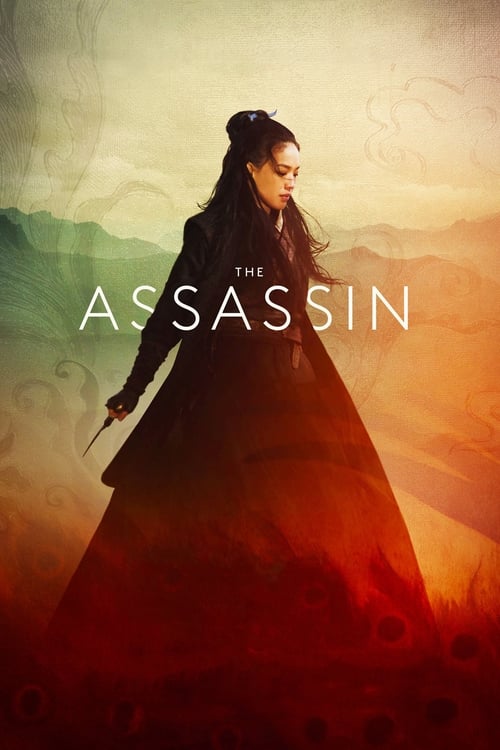
The Assassin
2015 · Hou Hsiao-hsien
For when you want to be transported rather than gripped — a meditative evening, phone in another room, letting images wash over you. Not the film for an action fix; the film for when beauty itself is the draw.
What it's about
In ninth-century China, a general's daughter is taken as a child and raised by a nun who trains her into a flawless assassin, sent against corrupt provincial governors. After she falters on a mission, her mistress hands her a crueler test: return to her home province and kill the man she was once promised to — her cousin, now its military governor. She moves through his court like a shadow, watching, waiting, weighing the order against everything she left behind.
The experience
Hypnotic and deliberately unhurried — long stretches of stillness, candlelight, and wind in the trees, broken by fights that flash past in seconds and end before you've caught your breath. It asks you to slow your pulse to its rhythm; do that, and it's ravishing.
Performances
Shu Qi carries the film almost wordlessly — a performance built from stillness, watchfulness, and the smallest flickers of feeling on an otherwise unreadable face.
The craft
Every frame is composed like a painting: silk curtains breathing in the wind, mist rolling over birch forests, court interiors lit by candle. Hou shoots the action the way the rest of the film moves — sudden, brief, half-glimpsed — and the sound design of rustling fabric and distant drums is as important as any score. This one genuinely demands the biggest screen and best speakers you can find.
Why it matters
It won Hou Hsiao-hsien the Best Director prize at Cannes in 2015 and was hailed as a once-in-a-generation reinvention of the martial-arts film — proof the genre could be contemplative rather than kinetic.
Snapshot
The Assassin (聶隱娘, Nie Yinniang) is Hou Hsiao-hsien's first and only excursion into the wuxia genre, and the long-gestating project the Taiwanese master had reportedly wanted to make for much of his career before circumstances finally aligned in the 2010s. Adapted from a brief Tang dynasty chuanqi tale by Pei Xing, the film follows Nie Yinniang (Shu Qi), a woman trained from childhood by a nun-preceptor into a peerless assassin, who is dispatched back to her home province of Weibo and ordered to kill her cousin and former betrothed, the military governor Tian Ji'an (Chang Chen). She does not. The film is, in effect, the drama of an assassin who declines to assassinate — a martial-arts picture whose central action is refusal. Premiering in competition at Cannes in May 2015, it won Hou the Best Director prize and was widely received as one of the decade's signal achievements in art cinema, even as its elliptical narration and refusal of genre payoff divided audiences expecting conventional swordplay. It marked Hou's return to feature filmmaking after an eight-year gap following Flight of the Red Balloon (2007).
Industry & production
The project carried an unusually long development history: Hou had spoken for years about wanting to adapt the Nie Yinniang story, and the film that emerged is the product of an extended, painstaking production financed through a Taiwan–China–Hong Kong configuration with additional French involvement, reflecting Hou's standing in the European festival and co-production circuit. The shoot itself was protracted and ranged across mainland Chinese locations — including forests, mountains, and lakes selected for their unspoiled landscapes — with interiors and additional photography that drew on locations associated with Tang-era architecture; portions of the production are associated with Inner Mongolia and with Japan, where Hou's long ties (he had shot Café Lumière in Tokyo) and the survival of Tang-influenced architecture in Kyoto/Nara are relevant. The precise budget and box-office figures are not something I can state with confidence, so I will not invent them; what is securely documented is that the film was a comparatively expensive undertaking by the standards of Hou's career, shot on celluloid with elaborate period costume and set work, and that it was positioned as a prestige international release. It swept the major categories at the 2015 Golden Horse Awards, including Best Feature Film and Best Director, consolidating its regional standing alongside its Cannes laurel.
Technology
The Assassin was photographed on 35mm film rather than digitally, a deliberate choice consistent with Hou and cinematographer Mark Lee Ping-bing's commitment to the texture, grain, and color rendition of photochemical capture. Its most conspicuous technical signature is aspect ratio: the film is composed predominantly in the boxy Academy ratio of roughly 1.37:1, an archaic, near-square frame that lends the images the quality of hanging scrolls or framed portraits and runs deliberately counter to the panoramic widescreen long associated with the wuxia epic. The prologue is presented in black and white before the film opens into color, and at least one later passage shifts to a wider ratio for an expansive misty landscape — a calculated rupture in the frame's proportions. (I am confident about the Academy-ratio dominance and the black-and-white prologue; the exact specification of the wider insert I would treat as a detail to verify rather than assert precisely.) Visual effects are used sparingly and unobtrusively; the film eschews the wire-fu spectacle and CGI-augmented combat that defines the modern martial-arts blockbuster, keeping its few fights brief, grounded, and largely free of digital enhancement.
Technique
Cinematography
The cinematography by Mark Lee Ping-bing — Hou's frequent collaborator and one of the most celebrated camera artists in world cinema — is the film's most lauded element. Lee works in long, patient takes, frequently with a slowly drifting or near-static camera, allowing natural light, weather, and atmosphere to become the real events of a shot. Interiors are staged behind layers of translucent silk gauze that billow in drafts, so that characters are repeatedly veiled, revealed, and re-veiled by moving fabric; candlelight and diffused daylight model faces softly against deep, painterly shadow. Exteriors favor mist, birch and autumnal foliage, mountain ranges, and bodies of water, composed with an attentiveness to landscape that recalls classical Chinese painting more than genre cinema. The Academy frame concentrates this into dense, jewel-like compositions. The result is among the most ravishing photography of the decade, and it foregrounds Hou's long-standing principle that mood and environment carry meaning that dialogue and plot do not.
Editing
Editing, by Hou's longtime collaborator Liao Ching-sung, is governed by ellipsis and withholding. Scenes are frequently entered late and left early; causal and expository connective tissue is excised, so that political alignments, kinship relations, and even the identity of speakers must be inferred by the viewer. The cutting is unhurried within scenes — Hou holds shots well past the point of conventional narrative economy — yet between scenes it can be abrupt and lacunary, refusing to clarify. This tension between the durational long take and the elliptical jump is central to the film's difficulty and its hypnotic effect: time within a shot is generous, but the architecture of the story is deliberately full of gaps.
Mise-en-scène / staging
Staging is the film's expressive core. Hou and production/costume designer Hwarng Wern-ying reconstruct the material world of the late Tang — textiles, lacquer, screens, robes, hairstyles, and ornament — with a tactility that the camera lingers over. Action is frequently observed from a fixed remove, framed through doorways, screens, and the recurring gauze curtains, so that the viewer occupies the position of a hidden watcher — which is precisely Yinniang's own position throughout. Bodies are placed within architecture and landscape rather than dominating the frame; the human figure is one element among textiles, foliage, and light. The famous gauze-curtain interiors literalize the film's epistemology: we, like the assassin, watch from concealment, our view partial and intermittently obscured.
Sound
The soundscape is overwhelmingly diegetic and ambient — wind, insects, birdsong, the rustle of silk, the crackle of fire, the rush of water — recorded and mixed with a clarity that makes the natural world a near-constant presence. Dialogue is sparse, often delivered in a formal, classically inflected register, and long stretches pass with no speech at all. Lim Giong's score is used with restraint, withholding music across much of the running time and reserving percussion and drums for charged moments, including a memorable rhythmic passage; the end of the film gives way to a more pronounced musical statement. The overall effect is to let silence and environmental sound, rather than orchestration, do the emotional work.
Performance
Performance is pitched at extreme reserve. Shu Qi — in her third feature with Hou after Millennium Mambo and Three Times — plays Yinniang almost entirely through stillness, watchfulness, and minute changes in bearing; her assassin is defined by what she suppresses. She has strikingly little dialogue, and the role's power lies in opacity. Chang Chen brings a more worldly authority to the governor Tian Ji'an, navigating court intrigue and domestic tension. The supporting players inhabit a mannered, ritualized style of court address. Across the ensemble, Hou directs against psychological exposition: interiority is implied through gesture, glance, and physical placement rather than declared.
Narrative & dramatic mode
The film operates in an elliptical, fragmentary mode that frustrates the cause-and-effect legibility of mainstream narrative cinema. Drawn from a terse Tang source tale, the screenplay — credited to Hou with longtime collaborator Chu Tien-wen, alongside Hsieh Hai-meng and the novelist Ah Cheng (Zhong Acheng) — deliberately preserves the obliquity of classical Chinese storytelling, leaving political context and relationships to be reconstructed from glancing detail. The dramatic engine is internal and ethical rather than external and kinetic: Yinniang's defining choice is to not kill, to refuse the role into which she has been forged. Parables and embedded stories — most notably the tale of the bluebird (luan) that, lacking a mate, dances itself to death before a mirror — function as emotional keys that the surrounding narrative otherwise withholds. The mode is contemplative, allusive, and resolutely anti-melodramatic.
Genre & cycle
The Assassin is a wuxia film that systematically negates the pleasures of its genre. The wuxia tradition — from King Hu's A Touch of Zen and Come Drink with Me through Tsui Hark's reinventions to the global art-wuxia of Ang Lee's Crouching Tiger, Hidden Dragon and Zhang Yimou's Hero and House of Flying Daggers — is built on choreographed, often gravity-defying combat and clear moral-romantic stakes. Hou retains the iconography (the female swordswoman, the master-disciple bond, the jianghu world of martial codes) but strips out spectacle: fights are short, abrupt, frequently incomplete, and shot with documentary plainness. The genealogy with King Hu is the most cited — Hu's painterly, ellipsis-friendly A Touch of Zen is the clearest precursor — but Hou pushes austerity further than any of his predecessors, making the film as much a corrective commentary on the wuxia cycle as a contribution to it.
Authorship & method
The film is a near-summation of Hou Hsiao-hsien's method as developed across decades of Taiwanese New Cinema and after: the long take, the observational distance, the priority of mood and environment over plot, the trust in the viewer to assemble meaning. It is also a family affair of Hou's enduring collaborators. Chu Tien-wen, his screenwriter since the early 1980s, again shapes the script. Mark Lee Ping-bing, his cinematographer across many films, supplies the images. Liao Ching-sung, his editor of long standing, cuts. Lim Giong, who scored earlier Hou films, composes. Hwarng Wern-ying handles the production and costume design that anchors the period world. Hou's working method — extensive preparation, location-driven shooting, openness to the contingencies of light and weather, and a willingness to let scenes breathe — is everywhere evident; the film's protracted production reflects his refusal to force the material. The authorship is thus both singular (an unmistakable Hou film) and collective (the product of a decades-deep ensemble).
Movement / national cinema
Hou is the central figure of the Taiwan New Cinema that emerged in the 1980s — alongside Edward Yang and others — a movement defined by realism, autobiography, historical reckoning, and a contemplative aesthetic opposed to commercial formula. The Assassin arrives long after that movement's heyday but extends its values into the wuxia register, and it is the work of a filmmaker who has become one of the most internationally honored directors in the festival sphere. The film also sits within the broader pan-Chinese co-production landscape of the 2010s, drawing on mainland locations, Taiwanese and Hong Kong talent, and European financing — a transnational configuration typical of prestige Sinophone cinema of the period, even as its sensibility remains rooted in Hou's Taiwanese auteurism.
Era / period
The film is set in 9th-century China, in the late Tang dynasty, a period of weakening central imperial authority and powerful regional military commanderies (the fanzhen) governed by often-fractious military governors (jiedushi) — a political order shaped by the long aftermath of the An Lushan rebellion. The action centers on the province of Weibo and the court of its governor, and the drama of loyalty, marriage alliance, and the fragile balance between the provinces and the imperial center is grounded in this historical reality of decentralized power. Hou's reconstruction of Tang material culture — its textiles, music, ritual, and architecture — is unusually scrupulous, and the film functions partly as an act of historical imagination, conjuring a world rarely depicted with such care on screen.
Themes
At its heart the film concerns a question of vocation and conscience: what it means to be made into an instrument, and the cost of reclaiming one's will. Yinniang's refusal to kill is an assertion of human feeling against the discipline that has erased it. Solitude is the governing emotional condition — crystallized in the bluebird parable of a creature that cannot bear to dance alone — and the film is suffused with figures isolated within power, marriage, exile, or duty. Other strands include the tension between political order and private loyalty; the burden of memory and return (Yinniang confronting the home, parents, and betrothal of her childhood); the gendered figure of the swordswoman caught between agency and instrumentalization; and a broadly Buddhist-inflected ethic of withdrawal and non-attachment. Watching, concealment, and partial knowledge — encoded in the gauze-veiled mise-en-scène — operate as both formal device and theme.
Reception, canon & influence
Critically, The Assassin was among the most acclaimed films of 2015. Hou's Best Director award at Cannes anchored a wave of strong notices, and the film featured prominently in year-end and decade-end critics' polls internationally, frequently cited as one of the most beautiful films of its era. Its reception was not unanimous: viewers and some commentators found its narrative opacity and refusal of genre catharsis alienating, and the gap between its wuxia trappings and its glacial, contemplative method became the central axis of debate. That very tension is part of why it endures as a touchstone.
Looking backward, the film's influences are deep and well-documented in spirit if rarely as explicit citation: the Tang chuanqi source tale; the painterly, ellipsis-rich wuxia of King Hu (especially A Touch of Zen); the long tradition of Chinese landscape painting and classical poetry that informs its compositions and pacing; and Hou's own prior cinema, whose durational aesthetic the film carries into period genre. Looking forward, its legacy lies less in imitation — its method is famously difficult to replicate — than in its standing as a high-water mark for art-cinema treatment of genre material, a demonstration that the wuxia film could be slowed, stilled, and stripped to its contemplative essence. It reaffirmed Hou's position in the global canon and stands, given the rhythm of his late career, as a possible capstone to one of world cinema's major bodies of work. Claims about specific filmmakers it has directly influenced would be speculative, so I note only that its critical stature has made it a frequent reference point in discussions of slow cinema and of the art-wuxia lineage.
A Deleuzian reading
A woman stands behind a billowing silk curtain, watching a man she has been ordered to kill.
The full Deleuzian reading of The Assassin →
Reception
Rapturous at Cannes 2015 — Best Director for Hou — then topped the Sight & Sound and Film Comment year-end polls, even as general audiences bounced off it hard. A decade on, the split has settled: it's fixed in the modern arthouse canon (it made the BBC's 2016 poll of the century's greatest films), and the walkout stories are part of its legend.
How The Assassin was received, from release to now →
Influences: the films it descends from and the films it influenced
- A Touch of Zen (1971) — Hu's model of dissolving swordplay into landscape and ellipsis — combat glimpsed in fragments amid bamboo, mist, and Buddhist stillness rather than coherent action geometry — is the direct template for The Assassin's withheld, near-abstract violence.
- Dragon Inn (1967) — Hu's choreography of tension as stillness punctuated by sudden bursts, with combatants blocked geometrically in confined space, supplies the rhythm Hou adopts: long held compositions broken by a few seconds of decisive movement.
- Come Drink with Me (1966) — Cheng Pei-pei's Golden Swallow established the reticent female swordswoman whose lethal competence reads through poise rather than display — the prototype for Shu Qi's near-silent Yinniang.
- Flowers of Shanghai (1998) — Hou and Mark Lee Ping-bing's lamplight-only interiors and slow lateral long takes that build a period world entirely through enclosed, screened rooms are carried directly into The Assassin's candlelit Tang chambers.
- The Puppetmaster (1993) — Hou's durational static tableaux reconstructing a historical period through patient observation and large temporal ellipses establishes the method The Assassin applies to the Tang dynasty.
- A City of Sadness (1989) — The observational long-take distance, action pushed off-screen, and reliance on the viewer to assemble an elliptical narrative is the Taiwan New Cinema grammar Hou ports into period genre.
- Ugetsu (1953) — Mizoguchi's 'one scene, one shot' long takes that treat landscape and weather as emotional register is an acknowledged influence on Hou's commitment to the unbroken, environment-driven frame.
- Spring in a Small Town (1948) — Fei Mu's pacing borrowed from classical Chinese poetry and his aesthetic of emotional reserve — desire and conflict held beneath an unmoving surface — is the native tradition of restraint Hou's contemplative method extends.
- In the Mood for Love (2000) — Mark Lee Ping-bing's cinematography — framing through doorways, curtains and screens, with restrained desire lit by practical sources — is the same shooting sensibility he brings to The Assassin's partitioned interiors.
- Crouching Tiger, Hidden Dragon (2000) — Lee's art-house reclamation of wuxia descends from King Hu's bamboo-forest combat and painterly landscape, a parallel-track high-cinema treatment of the genre Hou would later slow further.
- The Grandmaster (2013) — Wong aestheticizes martial arts into mood, ellipsis and fragmented duration over plot mechanics — the same prioritization of contemplative texture over genre catharsis that defines The Assassin.
- Fireworks (1997) — Hou carries tableau composition and the withheld countershot to a programmatic extreme: scenes are structured by pictorial and rhythmic logic rather than dramatic exchange, and ambient sound fills the space where scoring would conventionally anchor the viewer's emotional response.
- Long Day's Journey Into Night (2018) — Bi Gan's durational long takes and dreamlike period reverie, prizing atmosphere and the breathing of time over narrative legibility, extend Hou's contemplative long-take method into a younger Chinese-language cinema.
- Stray Dogs (2013) — Tsai pushes the held shot to extreme duration with minimalist performance and natural light, radicalizing the same trust-the-frame, trust-the-viewer aesthetic The Assassin practices.
- Hero (2002) — Zhang's painterly, color-coded wuxia built on nested embedded-parable narration shares The Assassin's strategy of telling a martial tale through framed, recounted story-within-story structure.
- Goodbye, Dragon Inn (2003) — Tsai's durational stillness and near-silent long takes, built explicitly around King Hu's Dragon Inn playing in an empty cinema, is the parallel Taiwan slow-cinema elegy for the same wuxia inheritance.
- Uncle Boonmee Who Can Recall His Past Lives (2010) — Apichatpong's reliance on diegetic ambient forest soundscapes and patient held frames to summon a contemplative, time-suspended mood is the same slow-cinema sound-and-duration craft Hou deploys.
- Resurrection (2025) — Painterly elliptical narration built from stillness and held composition extends the Chinese-arthouse-auteur formal rigor Bi works within.
- 2046 (2004) — Mark Lee Ping Bing's extreme telephoto compression and slatted framing through silk screens, beaded curtains, and foliage partially obscures figures using the same staging grammar as 2046's partition shots; deliberate-withholding performance combined with shallow-focus chromatic bokeh constitutes the deepest formal echo of 2046's cinematographic language in subsequent world cinema.
- 13 Assassins (2010) — Hou's wuxia art film shares the formal strategy of long-shot static restraint punctuated by sudden brief violence, minimal score, and natural environment as dramatic agent rather than backdrop — both films use the historical action genre as a vehicle for compositional severity and elliptical emotional restraint.
- Shadow (2018) — The contemporary painterly-minimalist wuxia — long-held, screen-like compositions and a hushed restraint that, like Shadow, treats the wuxia frame as a moving classical painting rather than an action delivery system.
- Zama (2017) — Hou's historical film denies establishing shots and buries story in ambient sound and elliptical cuts, sharing Zama's method of withholding period legibility and refusing narrative coverage.
Similar films
- Dragon Inn (1967) — influence & lineage
- Flowers of Shanghai (1998) — influence & lineage
- Crouching Tiger, Hidden Dragon (2000) — influence & lineage
- The Grandmaster (2013) — influence & lineage
- Come Drink with Me (1966) — influence & lineage
- Resurrection (2025) — influence & lineage
- Goodbye, Dragon Inn (2003) — influence & lineage
- A City of Sadness (1989) — influence & lineage
All the films related to The Assassin →
Watch it with: curated runs of related films
- Stillness, Then the Blade — Watch these back to back for the way each one holds its breath — painterly stillness, coiled calm, and violence that lands like a single brushstroke.