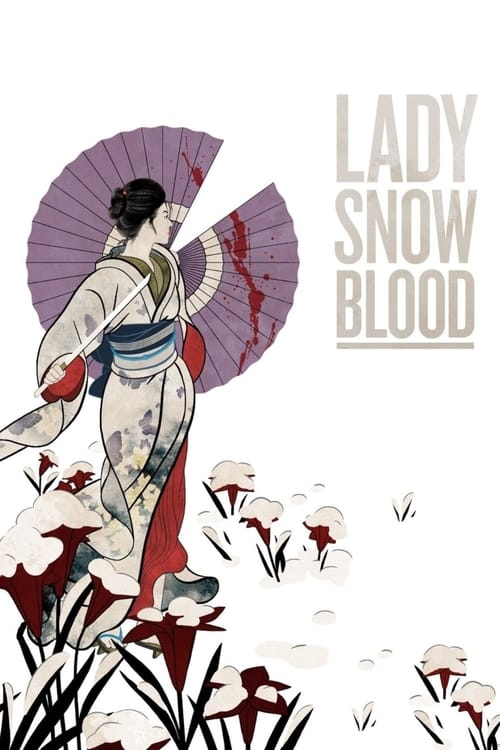
Lady Snowblood
1973 · Toshiya Fujita
For when you're craving something fierce and visually intoxicating — a revenge fix with real style. Not a cozy watch; it's icy by design, and all the more striking for it.
What it's about
In Meiji-era Japan, a child is conceived and raised for a single purpose: revenge. Yuki Kashima grows into a strikingly beautiful, utterly lethal assassin who moves through snow-covered landscapes hunting the swindlers who destroyed her family, dispatching them one by one in a story told in chapters, like the manga it came from.
The experience
Stylized, arterial, and morally cold — bursts of shocking violence set against imagery of almost painterly beauty. It's pulp with a strange gravity, hypnotic more than fun.
Performances
Meiko Kaji is unforgettable in the title role — she barely speaks, and doesn't need to; her stillness and lethal glare carry the entire film.
The craft
Fujita compresses a sprawling manga into a taut, chaptered narrative, and the visual design is the star: white snow, black umbrellas, and geysers of red, composed with a control that elevates the exploitation material. The theme song, sung by Kaji herself, is as iconic as any image in the film.
Why it matters
A defining work of early-1970s Japanese genre cinema whose look, structure, and music were famously foundational for Tarantino's Kill Bill — though its own formal control gives it a life well beyond that footnote.
Snapshot
Lady Snowblood (Shurayuki-hime, literally "Carnage Snow Princess") is a Japanese revenge film directed by Toshiya Fujita and released by Toho in 1973, starring Meiko Kaji as Yuki Kashima, a woman conceived and raised for the sole purpose of avenging her family's destruction. Adapted from the manga written by Kazuo Koike and drawn by Kazuo Kamimura, the film compresses a sprawling serialized story into a taut, chaptered narrative set in Meiji-era Japan. It stands as one of the defining works of the early-1970s Japanese exploitation moment — arterial, stylized, and morally cold — while carrying a seriousness of design and theme that has kept it in critical circulation. Its most conspicuous afterlife is as a foundational text for Quentin Tarantino's Kill Bill, but that reputation understates the film's own formal control: its snow-and-blood color scheme, its heroine's blank implacability, and Kaji's mournful theme song remain touchstones of the period's genre cinema.
Industry & production
The film was produced and distributed by Toho, one of the major Japanese studios, at a moment when the studio system was under severe strain. By the early 1970s, collapsing theatrical attendance — driven by television and shifting leisure habits — had pushed the majors toward cheaper, more sensational product aimed at a young, predominantly male audience. This is the commercial context that produced the so-called "pinky violence" cycle and the broader wave of stylized ero-guro (erotic-grotesque) action to which Lady Snowblood belongs. The film capitalized on an existing property: Koike and Kamimura's manga had been serialized in Weekly Playboy beginning in 1972, and Koike in particular was a bankable source for screen adaptation, having also authored Lone Wolf and Cub, whose film series ran concurrently. Casting Meiko Kaji was itself a commercial calculation — she had become a genre star through Toei's Female Prisoner Scorpion and Stray Cat Rock films, embodying a specific image of the silent, vengeful woman that Lady Snowblood extends. A sequel, Lady Snowblood: Love Song of Vengeance, followed in 1974, again directed by Fujita with Kaji, confirming the first film's commercial viability, though precise budget and box-office figures for the original are not well documented in accessible English-language sources, and I won't invent them.
Technology
Lady Snowblood was shot on 35mm color film in a widescreen anamorphic format, the standard for Japanese studio genre production of the era. Its technological interest lies less in any novel apparatus than in the deliberate, almost theatrical use of conventional tools: optically printed opticals, hand-articulated blood effects (pressurized geysers and blood bags rather than any digital augmentation, decades before such a thing existed), and freeze-frames and still-image inserts used as expressive punctuation. The film also incorporates illustrated stills and manga-derived panels within its montage, folding its source medium into the moving image — a low-tech but pointed device. Nothing about the production suggests access to unusual technical resources; its power comes from disciplined orchestration of standard 1970s studio filmmaking equipment.
Technique
Cinematography
The cinematography, by Masaki Tamura, is the film's most celebrated craft element. Tamura — better known for his later documentary work — brings a striking compositional rigor to the material. The governing visual idea is chromatic contrast: white snow and pale skin set against sudden, saturated red. Blood is not merely spilled but staged as color, arcing against snowscapes and paper screens. Tamura favors bold, frontal compositions and abrupt tonal shifts, moving between naturalistic exteriors and stylized, near-abstract fields of white or black. Frames are frequently organized around a single figure isolated in negative space, reinforcing Yuki's separation from the world she moves through.
Editing
The editing constructs the film's distinctive chaptered, non-linear architecture. The story is divided into titled sections and proceeds through interlocking flashbacks, most importantly the extended account of Yuki's mother Sayo and the origin of the vendetta. Cuts to illustrated stills, freeze-frames, and captions interrupt the flow, giving the film a graphic, storyboard-like rhythm that echoes its manga origins. Action is cut for sharp, percussive impact rather than sustained spatial continuity — violence tends to arrive suddenly and resolve quickly. The specific credited editor is not something I can reliably attribute from memory, and I won't guess.
Mise-en-scène / staging
Fujita stages the film as a series of tableaux. Meiji-era settings — teahouses, gambling dens, a masquerade ball where East meets a Westernizing elite — are dressed with attention to the period's cultural hybridity. Duels are choreographed with a theatrical clarity: opponents framed at a distance, closing suddenly, the kill delivered in a single decisive motion. Snow recurs as both literal weather and symbolic ground, the "carnage snow" of the title. The masquerade sequence, with its Western gowns and chandeliers, visually literalizes the film's argument about a nation remaking itself.
Sound
The score and, above all, Meiko Kaji's vocal theme "Shura no Hana" ("The Flower of Carnage") are central to the film's identity. The song — a dirge of resignation and vengeance sung in Kaji's low, unhurried voice — functions as Yuki's interior monologue made audible, and it recurs as a motif of doom. Sound design otherwise alternates between quiet, almost hushed passages and the sharp report of violence, using silence to frame each eruption.
Performance
Meiko Kaji's performance is built on restraint. Yuki is nearly affectless — watchful, still, economical in movement — and Kaji conveys interior life almost entirely through the eyes and through minute shifts in bearing. It is a performance of withholding, and its blankness is the point: Yuki has been made into an instrument, and Kaji plays her as someone whose humanity has been deliberately hollowed out and replaced with purpose. The supporting cast populates a rogue's gallery of grotesques and victims, but the film belongs unambiguously to its star.
Narrative & dramatic mode
The dramatic mode is tragic revenge, structured as a quest with a predetermined end. The premise is stark: Yuki's mother, having watched her husband and young son murdered and having herself been raped and enslaved by a gang of four swindlers, kills one of them and is imprisoned; there she deliberately conceives a child — Yuki — as a living weapon of vengeance, and dies in childbirth after entrusting the mission to her daughter. Yuki is thus "born of the netherworld," raised to a single end. The narrative proceeds as a hunt for the surviving conspirators, each confrontation peeling back another layer of the origin story through flashback. The dramatic engine is not suspense about whether Yuki will succeed but the accumulating moral weight of what she is — a person with no life of her own, executing a dead woman's will. The film complicates its own catharsis: revenge here is inherited, mechanical, and ultimately self-consuming.
Genre & cycle
Lady Snowblood sits at the intersection of several early-1970s Japanese genre currents. It is a chanbara (swordplay) film in its duels and its Meiji-adjacent iconography, but it belongs equally to the darker, more transgressive cycle of "pinky violence" and ero-guro exploitation, marked by female protagonists, sexualized cruelty, and extreme bloodshed. It shares DNA with the concurrent Lone Wolf and Cub series — another Koike adaptation built on stylized carnage and a lone avenger — and with the female-revenge films Kaji had already anchored at Toei. Within this cycle, Lady Snowblood is distinguished by its greater aesthetic ambition and its period setting, which lends the pulp material a mythic, almost operatic register.
Authorship & method
Authorship of Lady Snowblood is genuinely distributed. Toshiya Fujita, the director, was not primarily a genre stylist — much of his work leaned toward youth dramas — and part of the film's interest lies in the tension between its lurid material and his controlled, at times lyrical handling of it. The source authors, Kazuo Koike (story) and Kazuo Kamimura (art), supply the narrative architecture, the chaptered structure, and the central conceit of the child-weapon; Koike's fingerprints as a manga writer of stylized vendetta are unmistakable, and he is credited with the lyrics to the theme song. The screenplay was written by Norio Osada, who performed the considerable work of compressing the serialized manga into feature form. Cinematographer Masaki Tamura shapes the film's visual signature. And Meiko Kaji is an authorial presence in her own right: her star persona, her physical performance, and her singing voice are so integral that the film is inconceivable recast. The theme song "Shura no Hana" is generally credited with music by Masaaki Hirao and lyrics by Koike, performed by Kaji, though I'd flag that crew-level credits below the top line are inconsistently documented in English sources.
Movement / national cinema
The film is a product of Japanese studio cinema in its late-classical decline, specifically the exploitation-driven programming that the majors and Toei adopted to survive the 1970s. It is not tied to a self-conscious art movement like the earlier Japanese New Wave, but it absorbs some of that wave's formal license — non-linear structure, graphic stylization, a willingness to break realist decorum. It is best understood as genre cinema operating at a high level of craft within a national industry improvising its response to economic crisis.
Era / period
Lady Snowblood is set in the Meiji era, roughly the 1870s through 1890s, and the period is thematically load-bearing rather than incidental. The origin crime is bound up with the upheavals of early Meiji modernization: the murder of Yuki's father is tied to popular unrest and rumor surrounding new government policies — including conscription — that swept a bewildered rural populace. The film repeatedly stages the collision of old and new Japan: traditional dress against Western gowns, samurai-era codes against a rising commercial and political class of swindlers profiting from the transition. Vengeance thus plays out against a nation in violent, disorienting flux, and Yuki's blade cuts through figures who embody the corruption of the modernizing order.
Themes
The film's central theme is vengeance as inheritance — the transmission of a mother's hatred into a daughter's body and life, and the erasure of the self this demands. Yuki is a subject with no autonomous existence; she is a vessel, and the film treats this with tragic rather than triumphant emphasis. Related themes include the cyclical, self-perpetuating nature of violence (each act of revenge implicates the avenger further); the corruption underlying national modernization, with the villains as parasites of a changing Japan; and the instrumentalization of women — Yuki weaponized, her mother violated and imprisoned — within a brutal patriarchal order. The recurring snow imagery ties these together, figuring purity, coldness, and the beautiful indifference of a world in which such carnage unfolds.
Reception, canon & influence
Contemporary Western critical documentation of Lady Snowblood's original 1973 release is thin, and I won't manufacture a reception history it didn't have; its canonical status was largely built retroactively.
Influences on the film (backward): It draws on the traditions of chanbara swordplay cinema and the lone-avenger archetype, on the Koike school of stylized manga violence (kin to Lone Wolf and Cub), and on the female-revenge persona Meiko Kaji had already crystallized in the Female Prisoner Scorpion films. Its chaptered, graphic construction reflects its manga source and the broader 1970s appetite for formal stylization.
Legacy (forward): The film's most decisive influence runs through Quentin Tarantino's Kill Bill (2003–2004), which openly borrows from it — the structure of a woman hunting a list of those who destroyed her, the snow-set final duel, and, most directly, the use of Meiko Kaji's "Shura no Hana" on the soundtrack; Tarantino's advocacy did much to elevate the film's profile among Western cinephiles, leading to restoration and home-video reissue. Beyond that, Lady Snowblood endures as a reference point for stylized revenge cinema, for the image of the impassive female avenger, and for the aesthetic marriage of snow, silence, and blood. Meiko Kaji's theme song has taken on an independent cultural life. The 1974 sequel extended the property in the film's own moment, but it is the original's imagery and iconography that have proven most durable.
Reception
A quickie manga adaptation from Toho's early-70s exploitation wave, it was barely known in the West until Kill Bill (2003) sent everyone hunting for its source code; the 2016 Criterion release completed the trip from grindhouse obscurity to certified classic.
How Lady Snowblood was received, from release to now →
How to watch Lady Snowblood: what to notice on a first viewing
- Watch for red blood staged against white snow. Tamura repeatedly frames violence against pure white, snow, pale skin, paper screens, so each burst of red reads as a deliberate color event. Blood becomes a design choice here, not just an effect of the violence.
- Notice how often Yuki stands alone in empty space. Tamura frequently isolates her in a mostly empty frame, distance and negative space surrounding her rather than other people or clutter. The framing keeps her apart from everyone around her before a single word explains why.
- Watch for freeze-frames and illustrated stills breaking the action. The film cuts to captions and stills at intervals, a storyboard rhythm that echoes the manga it was adapted from. The graphic interruptions keep reminding you that you are reading a chaptered account, not watching continuous events.
- Listen for silence right before each burst of violence. Sound drops to near quiet between confrontations, so each eruption of violence lands as a sharp, sudden report against the hush. The quiet primes you for what is about to happen without a single line telling you to brace.
- Watch Yuki's face for the smallest shift in expression. Kaji plays Yuki as nearly blank, letting the eyes and minute changes in bearing carry whatever interior life the character has. Her stillness reads as a person built for one purpose rather than someone with feelings to spare.
The whole guide to watching Lady Snowblood, with the keys for a rewatch →
Influences: the films it descends from and the films it influenced
- Lone Wolf and Cub: Sword of Vengeance (1972) — Shares Lady Snowblood's source author Kazuo Koike, whose manga method—episodic chaptered vendetta and geysering arterial blood-spray staged like inked panels—is the direct template Fujita inherits.
- Female Prisoner #701: Scorpion (1972) — Crystallized Meiko Kaji's affectless, up-from-under glaring avenger persona and the stark negative-space isolation compositions that Lady Snowblood recasts around Yuki.
- Stray Cat Rock: Sex Hunter (1970) — Built Kaji's pinky-violence star image inside Nikkatsu studio exploitation, supplying the genre matrix and iconography of the impassive gang-girl avenger.
- Sanjuro (1962) — Its climactic geyser of pressurized arterial blood against a frozen tableau standoff pioneered the chanbara blood-spray shock Fujita restages against white snow.
- Harakiri (1962) — Model for the frozen, symmetrical tableau duel and long-held silences that detonate into sudden violence—the still formal staging Lady Snowblood adopts.
- The Sword of Doom (1966) — Nihilistic lone-swordsman chanbara whose affectless, emotionless killing and snow-set slaughter set precedent for Yuki's restraint amid carnage.
- Tokyo Drifter (1966) — Nikkatsu pop-art formalism—abstract color-field backdrops, anti-realist negative space and stylization over verisimilitude—shaped the studio-exploitation aesthetic Fujita stylizes.
- The Bride Wore Black (1968) — A woman methodically hunting a list of men who destroyed her life, structured as discrete chapters by target—the inherited-revenge-quest architecture Lady Snowblood formalizes.
- Demons (1971) — Extends the nonlinear, chaptered revenge-tragedy jidaigeki with stylized flashback interpolation and punctuating bursts of aestheticized, near-abstract violence.
- Samurai III: Duel at Ganryu Island (1956) — Inherits the pictorial-composition and stylized landscape-tableau tradition, staging swordplay as composed images with nature and light framing the kill.
- Three Outlaw Samurai (1964) — Inherits the episodic, chaptered revenge structure and stylized concussive violence of the cruel-chanbara mode, foregrounding a lower-class avenger wronged by power.
- Lady Snowblood: Love Song of Vengeance (1974) — Direct sequel extending Yuki's affectless-avenger persona, the chaptered construction and the snow-and-blood iconography within the film's own moment.
- Kill Bill Vol. 1 (2003) — Openly lifts the revenge-list structure, the snow-garden final duel and the anime/manga-panel insert, and drops Kaji's 'Shura no Hana' straight onto its soundtrack.
- Sympathy for Lady Vengeance (2005) — Coolly stylized, chapter-structured female revenge culminating in a snow-set reckoning, its impassive avenger descending directly from Kaji's template.
- Sin City (2005) — Literalizes the manga-panel insert and blood-on-white contrast, rendering comic frames and high-contrast monochrome with isolated red blood as its entire visual grammar.
- The Villainess (2017) — Extends the instrumentalized-woman conceit—a girl raised and weaponized to kill and bound to an inherited revenge program—while stylizing violence into set-piece spectacle.
- Blade of the Immortal (2017) — Manga-sourced episodic chanbara staged as mass tableau duels with fountaining bloodletting, carrying forward the Koike-school marriage of stylized panels and swordplay.
- Oldboy (2003) — The manga-to-cinema pipeline that produced Oldboy's source material runs through Fujita's film: a revenge quest structured in titled chapters, with extreme violence staged in laterally composed anamorphic frames that transform brutality into formal spectacle, establishing the manga-derived aesthetics Oldboy inherits.
- Kill Bill: Vol. 2 (2004) — The female-avenger-with-a-list, delivered in discrete titled chapters and stylized bloodletting, is the revenge template the Bride's saga extends.
- The Great Silence (1968) — Independently marries a white snow landscape to blood in a near-wordless revenge western, a parallel snow-and-blood-contrast palette and silence-punctuated violence.
- Hero (2002) — Extends the painterly single-combat tableau—negative-space color-field duels in falling leaves and over a still lake—as choreographed formal set-pieces rather than realist fights.
- Lone Wolf and Cub: Baby Cart at the River Styx (1972) — Another Kazuo Koike manga adaptation that reproduces the arterial-blood geysers against snow and the panel-like tableau staging, sharing the writer's terse-violence-plus-fatalism signature.
Similar films
- Kill Bill: Vol. 1 (2003) — influence & lineage
- Female Prisoner #701: Scorpion (1972) — influence & lineage
- The Sword of Doom (1966) — influence & lineage
- Sanjuro (1962) — influence & lineage
- Lady Vengeance (2005) — often watched together
- Throne of Blood (1957) — often watched together
- Seven Samurai (1954) — often watched together
- Belladonna of Sadness (1973) — often watched together
All the films related to Lady Snowblood →
Watch it with: curated runs of related films
- Stillness, Then the Blade — Watch these back to back for the way each one holds its breath — painterly stillness, coiled calm, and violence that lands like a single brushstroke.