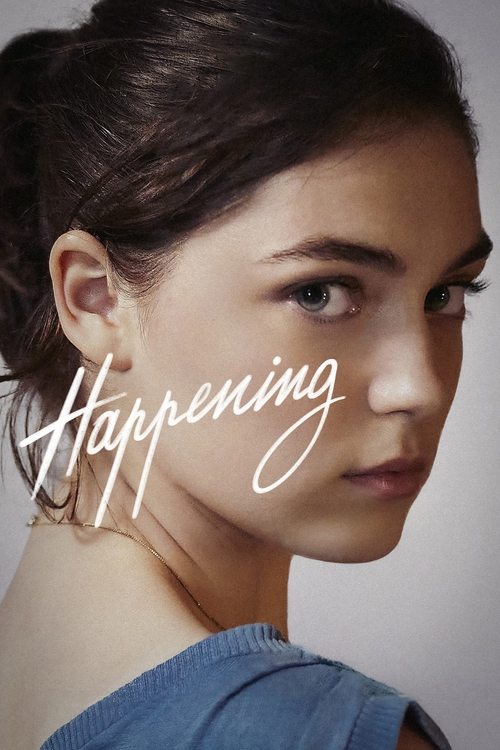
Happening
2021 · Audrey Diwan
For when you want to be gripped by something that matters — a challenge, not a comfort watch, and all the more powerful for it. Save it for a night when you can sit with it afterward.
What it's about
France, 1963, when abortion is illegal and unmentionable. Anne is a bright working-class literature student with exams approaching and a real future in sight — until she discovers she's pregnant, and watches that future start to close, week by week. With shame, judgment, and prison all in play, she resolves to end the pregnancy by whatever means she can find.
The experience
It plays like a thriller with a body instead of a bomb — the clock of the pregnancy ticks through chapter titles, and the tension becomes almost physical. Unflinching in a few key moments, it's gripping rather than grim, but it will leave you shaken.
Performances
Anamaria Vartolomei carries nearly every frame as Anne, playing desperation with a hard, determined intelligence — you watch her think her way through an impossible situation rather than simply suffer it.
The craft
Audrey Diwan strips the period film of period comfort: no vintage gloss, no editorializing score, just a boxy near-square frame that walls Anne in while the world around her blurs into rumor and closed doors. The camera stays punishingly close, and chapter titles count the weeks like a clock nobody can stop. Its intensity lands even on a small screen, but the tight framing is immersive in a theater.
Why it matters
Adapted from Annie Ernaux's memoir, it won the Golden Lion at Venice in 2021 — a year before Ernaux won the Nobel — and arrived with uncanny timing as abortion rights returned to the center of public argument.
Audrey Diwan's adaptation of Annie Ernaux's memoir of a clandestine abortion in pre-legalization France won the Golden Lion at Venice in 2021 — a year before Ernaux herself took the Nobel. Diwan strips the period film of period comfort: no vintage postcard gloss, no editorializing score, just Anamaria Vartolomei's Anne, a working-class literature student whose whole future narrows week by week. The camera stays punishingly close, in a boxy near-square frame that walls her in, the background dissolving so the world becomes rumor, judgment, and closed doors. Chapter titles count the weeks like a clock nobody can stop. What makes the film extraordinary is its refusal of both melodrama and discretion — Diwan films the body's ordeal with a directness that had festival audiences flinching, yet the tone is closer to a thriller than a tract, urgency compounding scene by scene. It arrived, uncannily, just before Roe fell, and screened with a charge few period dramas ever carry. But its real subject is older and larger: intelligence itself as the thing at stake, a mind fighting for the right to its own life.
A Deleuzian reading
A card appears on screen: how many weeks.
The full Deleuzian reading of Happening →
Reception
It won the Golden Lion at Venice 2021 (from Bong Joon-ho's jury) yet arrived in the US quietly in spring 2022 — then the Roe v. Wade reversal and Annie Ernaux's Nobel Prize months later turned a modest arthouse release into essential, urgent viewing.
How Happening was received, from release to now →
Influences: the films it descends from and the films it influenced
- 4 Months, 3 Weeks and 2 Days (2007) — The template Diwan tightens: an illegal-abortion procedural told in near-real-time with unadorned long takes and zero non-diegetic score, dread built from logistics rather than music.
- Cléo from 5 to 7 (1962) — Structures a woman's wait for a medical verdict as a chaptered, ticking real-time clock — the exact time-stamped countdown device Happening uses to mark each week of pregnancy.
- The Passion of Joan of Arc (1928) — Pioneered the sustained claustrophobic close-up that pins a young woman's ordeal to her face alone, letting interiority carry the drama without cutaways.
- Rosetta (1999) — Handheld camera welded to the nape and shoulders of a working-class girl in bodily distress, scoreless and breathless — the following-proximity grammar Diwan adopts for Anne.
- Mouchette (1967) — Austere, non-editorializing treatment of a young woman's physical humiliation and ordeal, refusing sentiment so the body's plight registers without authorial cushioning.
- Jeanne Dielman, 23 quai du Commerce (1975) — Boxy, unflinching durational framing of female bodily labor from a woman's gaze — the feminist formal lineage of confinement-through-aspect-ratio Happening extends.
- Wanda (1970) — Grainy 16mm intimacy trailing a drifting, imperiled woman with no score and no judgment, foundational to the female-authored ordeal-realist mode.
- Two Days, One Night (2014) — Builds an escalating deadline structure — a woman driven through a gauntlet against a hard clock — the ticking-clock architecture Happening chapters by weeks.
- Never Rarely Sometimes Always (2020) — A contemporary abortion-journey procedural rendered in intimate handheld realism that refuses score and moralizing, prizing bodily logistics and a young woman's resolve.
- Blue Is the Warmest Color (2013) — Sustains tactile extreme close-ups on a young woman's face and skin in natural light, the bodily, pore-level intimacy Diwan trains on Vartolomei.
- One Sings, the Other Doesn't (1977) — First-person procedural focus on a woman claiming her body under a criminalizing law, pushing the docudrama urgency of Varda's Bobigny-trial thread toward visceral subjectivity.
- Story of Women (1988) — A French illegal-abortion drama that treats the female body as political territory through clinical, close, unsentimental framing directly descended from Chabrol's refusal to aestheticize suffering.
- Saint Omer (2022) — Extends the mode of static, restrained scrutiny of a woman whose intelligence and testimony are on trial, withholding score and judgment so the viewer must weigh her directly.
- Son of Saul (2015) — Locks a boxy 1.37 frame and shallow focus onto the protagonist so surrounding chaos blurs, generating claustrophobic close-up urgency identical in method to Diwan's.
- Portrait of a Lady on Fire (2019) — Female-authored period drama with a near-scoreless soundscape and painterly restraint, staging an abortion without melodrama — the same anti-editorializing intimacy.
- Ida (2013) — Uses the revived Academy ratio to box a young woman inside the frame, turning aspect ratio itself into an instrument of confinement and period austerity.
- Fish Tank (2009) — Marries the 1.37 Academy frame to handheld proximity on a working-class teenage girl's body and desire, the boxy-intimate combination Happening deploys.
- First Reformed (2017) — Deploys the 1.37 ratio to trap its protagonist in ascetic, scoreless dread, demonstrating the same use of narrow framing plus silence to concentrate an ordeal.
- The Girl with the Needle (2024) — Diwan's close-third-person restraint tracking a female protagonist navigating illegal abortion in historical France — the camera as ethical witness to bodily jeopardy under institutional violence, the descent structured through social systems rather than antagonists — is the closest French formal parallel in the strand of European historical films centered on women's bodies under structural evil.
- Love Letters (2025) — Contemporary French realism that dramatizes a woman navigating a legal/administrative gauntlet with clinical restraint rather than melodramatic swelling.
Similar films
- 4 Months, 3 Weeks and 2 Days (2007) — influence & lineage
- Portrait of a Lady on Fire (2019) — influence & lineage
- Never Rarely Sometimes Always (2020) — influence & lineage
- Story of Women (1988) — shared sensibility
- Belén (2025) — shared sensibility
- Lingui, the Sacred Bonds (2021) — shared sensibility
- Sound of Falling (2025) — shared sensibility
- A Place for Her (2026) — shared sensibility