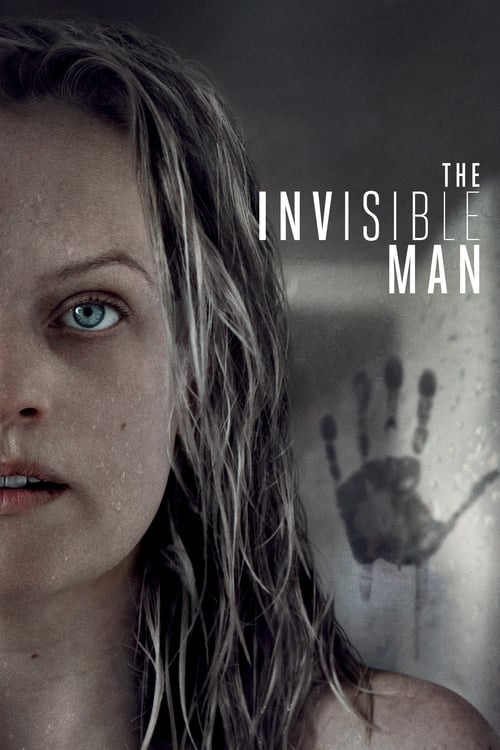
The Invisible Man
2020 · Leigh Whannell
When you're craving a real scare that also has a brain — a white-knuckle watch that leaves you rattled and a little furious. Best with the lights off and your phone away.
What it's about
Cecilia escapes a controlling, violent relationship with a wealthy optics engineer — and then he's reported dead, leaving her his fortune. When impossible things start happening around her, she becomes convinced he's found a way to keep hunting her without being seen, and that no one will believe a word of it.
The experience
Relentlessly tense — it weaponizes empty rooms and quiet hallways so that nothing on screen becomes the scariest thing in the frame. You spend two hours scanning corners, and the dread is laced with real anger on Cecilia's behalf.
Performances
Elisabeth Moss carries the entire film, often acting opposite literally nothing, and makes terror, exhaustion, and defiance read in every scene. It's a full-body performance that turns a genre premise into a character study.
The craft
Leigh Whannell's camera keeps drifting to vacant corners and holding there, daring you to find the threat, and the sound design makes silence itself menacing. Made lean and low-budget, it wrings more suspense from framing than most films get from effects — a great case for good speakers and zero distractions.
Why it matters
A huge word-of-mouth hit that proved the classic movie monsters could be reborn as intimate, grounded horror, and it set the template for the genre's wave of abuse-and-gaslighting thrillers.
Snapshot
A tautly constructed psychological horror-thriller that reclaims H.G. Wells's century-old invisible-man conceit as a vehicle for exploring intimate partner abuse, gaslighting, and the epistemological crisis of the unbelieved woman. Where Universal's classical monster cycle centered the monster's subjectivity, Whannell radically inverts the premise: the invisible man never speaks, never explains himself, and barely registers as a character in his own right. The film belongs entirely to his victim, Cecilia Kass (Elisabeth Moss), whose terror is amplified precisely because the threat cannot be seen, measured, or confirmed by anyone around her. Released in late February 2020, days before COVID-19 lockdowns collapsed North American theatrical exhibition, the film nonetheless became one of the year's commercial and critical successes — a vindication of Blumhouse Productions' micro-budget, auteur-driven model for reviving dormant IP.
Industry & production
The Invisible Man arrives at the intersection of two institutional crises. Universal Pictures had announced its "Dark Universe" in 2017, a would-be Marvel-style interconnected franchise built around classic monster properties — Dracula, the Mummy, Frankenstein's monster. The launch vehicle, Alex Kurtzman's The Mummy (2017) starring Tom Cruise, was both a critical failure and a commercial disappointment, and the shared-universe concept was quietly abandoned before a second film could be made. The question of what to do with Universal's monster library remained open.
Jason Blum, founder of Blumhouse Productions and architect of the contemporary microbudget horror economy (Paranormal Activity, Get Out, Halloween), proposed an alternative: offer the monster IP to individual filmmakers with the freedom to treat it as personal, low-overhead genre cinema rather than franchise scaffolding. The resulting deal gave directors creative latitude in exchange for tight budget ceilings. Leigh Whannell was assigned The Invisible Man; his approach — stripping the property down to a single psychologically coherent premise, relocating the action to recognizable domestic and institutional spaces, and centering a female protagonist — proved to be exactly the kind of tonal recalibration the monster's commercial viability needed.
The production budget has been reported at approximately $7 million, consistent with Blumhouse's working model. The film was shot primarily in and around Sydney, Australia, Whannell's home country, with Australian tax incentives contributing to the economics of the production. Its worldwide gross exceeded $140 million before theatrical exhibition collapsed in mid-March 2020, making it one of the most profitable films of its budget tier released that year.
Technology
The film's central technological conceit — an optical camouflage suit constructed from a matrix of miniaturized cameras and corresponding display panels, allowing the wearer to project the scene behind them onto their front surface — is presented as near-future plausible rather than fantastical. Whannell deliberately avoids extended exposition of the suit's mechanics, allowing the technology to remain legible as an extrapolation of existing materials science and computer vision research without anchoring it to any specific real-world development.
The suit's practical realization on set required coordinated work between the production's visual effects team and the film's physical performers. Oliver Jackson-Cohen, who plays the antagonist Adrian Griffin, wore a body suit with visual reference markers for much of the shoot, with digital erasure applied in post-production. A secondary approach involved staging scenes around genuinely empty space — with blocking choreographed so that set dressing, furniture, and the movements of other cast members respond to a presence that was never physically there. This technique, forcing the audience to track negative space rather than a visible body, is one of the film's most formally demanding choices and distinguishes it from invisible-man films that rely on optical tricks, camera perspective illusions, or comedic physical gags.
Technique
Cinematography
Stefan Duscio, an Australian cinematographer who had previously collaborated with Whannell on Upgrade (2018), brings a cool, institutional palette — pale blues, clinical whites, the flat brightness of modern interior design — that doubles as formal expression of surveillance. The image is consistently clean and high-resolution, denying the visual noise or desaturated grain that horror cinema often uses to signal dread. Instead, the threat is embedded in what should be reassuringly ordinary space.
Duscio and Whannell deploy sustained wide shots and slow, searching pans of empty rooms — a technique that forces the viewer to scan the frame for disturbances, small shifts in light, the barely perceptible compression of a carpet fiber, the displacement of air. These extended shots of apparently unoccupied space constitute the film's most formally original contribution to the grammar of screen horror: fear generated not by what is shown but by the act of looking for what isn't. The camera frequently lingers past the point where a conventional shot would cut, dwelling on hallways, ceiling corners, and background space until the audience's anxiety becomes indistinguishable from Cecilia's paranoia.
Editing
Andy Canny's editing is disciplined in its refusal of conventional genre rhythms. Jump scares exist, but they are used sparingly and often subverted — the cut that arrives exactly where the audience expects a shock frequently reveals nothing; the attack that does materialize often comes a beat later, after the viewer has relaxed. This withholding and displacement of catharsis keeps the audience in an approximation of Cecilia's psychological state: never quite certain when to flinch, never quite able to trust the evidence of the image.
The film's pacing in its first act is deliberately deliberate. Cecilia's escape from Adrian's modernist cliff-top house — conducted in wordless real time, every sound a potential trigger — establishes an attention economy the rest of the film sustains: slowness as dread, the extended shot as instrument of suffering.
Mise-en-scène / staging
Whannell's staging is consistently organized around the margins of the frame. Characters are placed in foreground while background space remains deep and legible; conversations are frequently staged so that one or more characters partially exit the frame, leaving blank screen territory that the viewer unconsciously monitors. The modern architectural interiors — glass walls, open-plan layouts, precise domestic order — become threatening precisely because they offer nowhere to hide: Cecilia is always visible, always exposed, in spaces designed for transparency that have been weaponized against her.
The film shows acute awareness of its predecessor, John Carpenter's Halloween (1978), in its use of the wide-angle lens to embed menace in the periphery of apparently safe domestic spaces. It also draws on the tradition of what Carol Clover termed the "stalker film" while systematically dismantling its conventions: the threat here is not a stranger but an intimate, and the institutional spaces Cecilia passes through — a hospital, a police station, a law firm — are not rescuers but additional environments of disbelief.
Sound
Benjamin Wallfisch's score is built primarily from sustained string clusters and carefully timed silences. Rather than a thematic approach tied to character, the music functions as a barometer of dread, rising and subsiding in ways that frequently mismatch what is visible on screen — music that implies presence in empty rooms, silence that refuses to offer relief when a threat ought to be confirmed. The score avoids conventional horror orchestration in favor of textures that feel less like "movie music" than like tinnitus, a sonic correlate of Cecilia's traumatized nervous system.
Sound design is equally rigorous. The servos and micro-actuators of the suit, where they appear at all, are rendered as almost subliminal — felt in the room tone rather than clearly located in space. Ambient sound is used with unusual care to differentiate the textures of inhabited and apparently empty space, training the audience's ear as well as its eye.
Performance
Elisabeth Moss's performance is the film's irreplaceable structural element. Drawing on a decade of high-pressure television work — notably seven seasons of Mad Men and multiple seasons of The Handmaid's Tale — Moss brings a performer's command of interiority and micro-expression to a role that requires her to carry enormous scenes against nothing, responding to a threat she cannot see and that the film declines to show. Her physical vocabulary is that of someone whose body has internalized long-term trauma: hypervigilance expressed through posture, the way her gaze moves in rooms, the specific quality of stillness that reads as active listening for danger.
The role requires Moss to sustain two simultaneous registers — Cecilia's genuine experience of the threat and Cecilia's performance of sanity for the skeptical people around her — and the film depends on the audience being able to read both. Oliver Jackson-Cohen's contribution is necessarily minimal in visible terms; much of his work is communicated through other actors' reactions.
Narrative & dramatic mode
The film operates as a conspiracy thriller from a single, internally consistent perspective that may or may not be reliable. Structurally, it is close to Gaslight (1944, George Cukor) and Roman Polanski's Rosemary's Baby (1968): a woman whose perceptions are systematically denied by the institutional and domestic world around her, fighting to maintain epistemic ground in the face of organized manipulation. Like Rosemary's Baby, the film offers the audience slightly more certainty than it offers its protagonist — we see enough to believe her — but sustains ambiguity long enough to implicate the viewer in the doubt she faces.
The narrative's deliberate withholding of Adrian's perspective is both a political and a formal choice. Giving him interiority would transform the film into a study of obsession or pathology; keeping him opaque makes the film a study of victimhood and the structural conditions that enable abuse.
Genre & cycle
The film belongs to the cycle of socially conscious or "elevated" horror that crystallized in North American genre cinema in the mid-2010s, associated with Jordan Peele (Get Out, 2017; Us, 2019), Ari Aster (Hereditary, 2018; Midsommar, 2019), and Robert Eggers (The Witch, 2015). These films share a commitment to using genre mechanics as vessels for legible social or psychological critique, and a resistance to pure visceral spectacle in favor of sustained dread.
Within this cycle, The Invisible Man is distinctive for its basis in licensed IP and its explicitly domestic-abuse subject matter — connecting it less to art-house prestige horror than to a parallel tradition of feminist horror and the "woman in jeopardy" thriller, a lineage running through Wait Until Dark (1967), Sleeping with the Enemy (1991), and the thriller subgenre sometimes described as the "gaslight film."
Authorship & method
Leigh Whannell entered the industry as a screenwriter, co-writing Saw (2004) with James Wan and scripting the Insidious franchise. His directorial career began with Insidious: Chapter 3 (2015), but his first fully personal directorial statement was Upgrade (2018), a science fiction action film also shot with Stefan Duscio in Australia, which demonstrated his interest in technological determinism and bodily autonomy. The Invisible Man represents a significant formal maturation: where Upgrade was kinetic and genre-propulsive, The Invisible Man is patient, space-conscious, and psychologically precise.
Whannell adapted H.G. Wells's 1897 novel himself, retaining only the central conceit of optical invisibility and discarding virtually everything else — the villain's origin, the novel's social satire, its English setting, and its narrative point of view. The result is less an adaptation of Wells than a use of Wells's premise as a chassis for a contemporary domestic horror narrative.
Duscio's collaboration with Whannell across two films suggests a working relationship of unusual continuity for microbudget production, with a shared visual vocabulary developing between them. Wallfisch, whose other credits include It (2017) and Blade Runner 2049 (2017), brings experience scoring large-scale genre productions to a film operating at a fraction of that scale.
Movement / national cinema
The film occupies an interesting national position. Whannell is Australian; Duscio is Australian; the film was shot in Sydney; and several of the supporting cast are Australian performers. Yet it is financed, produced, and distributed by American companies (Blumhouse / Universal) and makes no effort to locate itself culturally in Australia — the setting is ambiguously American. It belongs, in production terms, to the substantial tradition of American genre films that use Australia as a production location for economic reasons while maintaining American cultural address, a practice with roots in the late 1970s and 1980s. Whether it constitutes "Australian cinema" in any meaningful sense is a question the film itself forecloses.
Era / period
The film is unmistakably a product of the post-#MeToo cultural moment. Released in February 2020, it arrives at a point when questions of institutional disbelief, the testimonial credibility of women, and the mechanisms by which abusive men maintain control over their victims had moved from marginal to central in public discourse. The film's premise — a woman's accurate perception of threat is treated as delusional by everyone around her — is the structural definition of gaslighting as the term is now commonly used, and the film is plainly aware of its own allegorical valence.
This cultural timing is essential to the film's reception: a story that reads as paranoid fantasy is simultaneously readable as naturalistic account. The suit is a literalization of something — coercive control, enforced invisibility, the abuse that leaves no marks — that does not require literalization to be real.
Themes
The film's dominant concern is visibility as power: who is seen, who is believed, and who controls the terms of perception. Cecilia's suffering is precisely that her experience is accurate and her testimony is untrusted. The invisible man's suit is not merely a weapon but a mechanism of epistemological domination — he can be everywhere in her world while she cannot prove his presence to anyone else.
Secondary themes include the weaponization of technology by intimate abusers; the institutional inadequacy of legal, medical, and law-enforcement systems in protecting domestic abuse survivors; and the specific horror of hypervigilance — the way long-term abuse reorganizes a person's sensory and cognitive attention. The film is also, at a structural level, about looking and the limits of visual evidence: it turns the conventions of the horror film's seeing-is-believing logic against itself.
Reception, canon & influence
Critical reception was strongly positive. Reviewers consistently praised Moss's performance, Whannell's formal control, and the film's willingness to center psychological realism within genre mechanics. Several critics identified it as one of the more intellectually serious horror films of its moment. The film holds a high approval rating on Rotten Tomatoes, though precise figures change over time.
Influences on the film. The most direct precursor is James Whale's The Invisible Man (1933), itself adapted from Wells, which Whannell's film systematically inverts — Whale's film is organized around Claude Rains's invisible man as protagonist and comic villain; Whannell's refuses him any interiority. George Cukor's Gaslight (1944) is the template for the film's psychological architecture. Roman Polanski's Rosemary's Baby (1968) is the primary model for the "woman whose perceptions are denied by institutional and domestic consensus" narrative. Alfred Hitchcock's grammar of paranoid looking — the deep-focus frame organized around potential threat, the slow pan that may or may not discover something — is pervasive. John Carpenter's Halloween (1978) underlies the use of wide-angle lenses and domestic-space staging. Jordan Peele's Get Out (2017) is the immediate cultural precedent for genre cinema organized around legible social critique.
Legacy and forward influence. The film's most durable contribution may be its formal solution to the problem of representing invisible threat: the sustained wide shot of empty space, the slow pan that refuses to find its object, the camera that dwells on what isn't there. These techniques — and the discipline required to commit to them over the length of a feature — represent a genuine addition to the horror film's toolkit. The film has been widely discussed in the context of abuse-allegory horror and contributed to the consolidation of that subgenre's critical legitimacy. It also demonstrated, alongside Halloween (2018) and Blumhouse's other IP revivals, that dormant monster properties could sustain serious artistic treatment without franchise scaffolding — a lesson that has continued to shape how studios approach legacy horror IP in subsequent years.
A Deleuzian reading
Watch the corner of the room.
The full Deleuzian reading of The Invisible Man →
Reception
A critical and box-office hit ($144M on a $7M budget) in February 2020, it became one of the last big theatrical successes before COVID shut cinemas down — and Universal's rush to put it on premium VOD weeks later made it an accidental landmark in the death of the theatrical window. It's since settled in as one of the defining horror films of the decade.
How The Invisible Man was received, from release to now →
Influences: the films it descends from and the films it influenced
- The Invisible Man (1933) — Whannell's film is a structural inversion of Whale's protagonist schema: where Whale's camera grants Claude Rains interiority and dark comedic presence, Whannell strips the invisible man of all POV access, making antagonist opacity a formal rather than merely narrative principle.
- Gaslight (1944) — The film's psychological architecture is derived directly from Cukor's template: a controlling partner dismantles a woman's perception of reality by manipulating the domestic environment, with the camera adopting her increasingly destabilized POV as the primary epistemological position.
- Rear Window (1954) — Hitchcock's grammar of paranoid looking — the protagonist surveilling space for evidence of threat that institutional authority dismisses, with slow pans across negative space that may or may not contain the suspected danger — structures Whannell's entire camera methodology.
- Repulsion (1965) — Polanski establishes the formal principle of domestic space as subjective horror: the apartment becomes threatening through Deneuve's perception alone, with empty corridors and walls that seem to breathe — the direct template for Whannell's negative-space staging in ordinary rooms.
- Rosemary's Baby (1968) — The narrative architecture of institutional consensus weaponized against a single woman's perception — doctors, neighbors, and domestic intimates all complicit in denying her experience — is the structural model for Cecilia's systematic isolation from every potential witness.
- Halloween (1978) — Carpenter's use of wide-angle lenses to expand peripheral threat zones in ordinary domestic interiors — making every room's edge a potential concealment site — is the direct formal precedent for Whannell and Duscio's negative-space-pan vocabulary.
- Funny Games (1997) — Haneke formalized catharsis-withholding as a political editing technique: by systematically denying genre release valves and reversing a revenge moment via remote control, he weaponized audience expectation — a structural principle Whannell's editing inherits and redirects toward feminist ends.
- The Others (2001) — Amenábar builds sustained dread through ambient room tone and withheld revelation rather than monster display — footsteps, breathing, temperature change — establishing the textural-score-plus-sound-design approach that Wallfisch and Whannell systematize as their primary atmospheric carrier.
- Caché (2005) — Haneke's sustained wide shots of empty space — footage that may or may not contain a hidden observer — formalize the anxiety of the undetected watcher; these are the direct formal precursor to Whannell's held empty-room takes where the threat's presence or absence cannot be verified.
- Upgrade (2018) — Whannell and Duscio's first full collaboration — same director-cinematographer pairing, same Australian microbudget production context — develops the shared visual vocabulary of wide-angle staging and institutional color palette that The Invisible Man then disciplines into its more patient, space-conscious formal system.
- Insidious (2011) — Whannell's directorial extension of his own Insidious craft, built on holding the camera on charged empty negative space so the audience polices the frame for an unseen presence.
- Split (2017) — Blumhouse Universal-monster reboot built on the same withholding device — the camera pans off the actor to an empty corner and simply holds, making negative space itself the monster.
- The Babadook (2014) — Kent's film preceded Whannell's in establishing that domestic-abuse allegory could sustain genre horror through a single unreliable maternal POV without conventional monster payoff, providing critical legitimacy for the subgenre's central formal conceit that The Invisible Man then consolidated.
- It Follows (2014) — Mitchell's wide-angle surveillance aesthetics — slow pans searching for a threat only the protagonist perceives, in ordinary institutional and suburban spaces — directly anticipate Whannell's negative-space-pan vocabulary and the discipline required to hold empty frames as primary horror delivery.
- Get Out (2017) — Peele's film is the immediate cultural template for elevated horror organized around legible social critique: both films use genre mechanics to externalize a specific form of systemic victimization while maintaining the psychological interiority required for the single-POV structure to generate political rather than merely visceral horror.
- Hereditary (2018) — Aster's film established deep-background staging as a core elevated horror technique — the peripheral frame as the primary site of dread, the camera holding on domestic space until the background becomes menacing — a formal grammar Whannell's film extends to the specific problem of invisible rather than merely unseen threat.
- Blink Twice (2024) — A tech-mogul abuser whose victim is systematically disbelieved — gaslighting thriller that foregrounds the contested reliability of a woman's perception as its structure.
Similar films
- The Invisible Man (1933) — influence & lineage
- Hereditary (2018) — influence & lineage
- The Babadook (2014) — influence & lineage
- Upgrade (2018) — influence & lineage
- Gaslight (1944) — influence & lineage
- Halloween (1978) — influence & lineage · same viewing thread
- A Quiet Place (2018) — same viewing thread
- [REC] (2007) — same viewing thread
All the films related to The Invisible Man →
Watch it with: curated runs of related films
- Nowhere Left to Hide — Watch these when you want pure primal terror — ordinary people cornered by something relentless, from open water to a silent farmhouse to a stairwell in Barcelona.