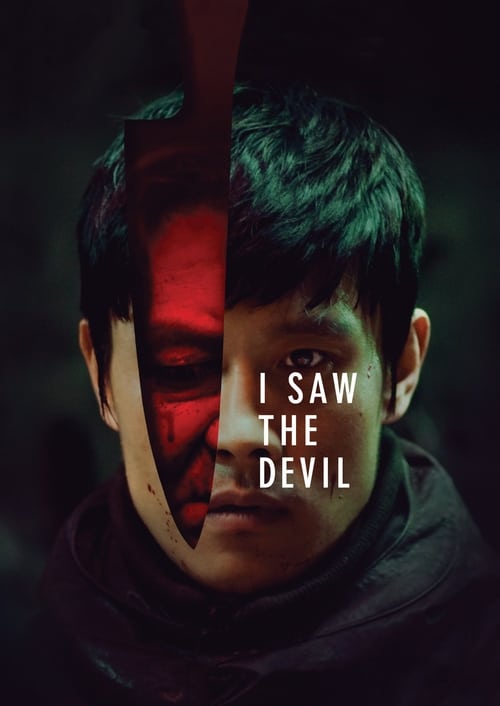
I Saw the Devil
2010 · Kim Jee-woon
For when you want to be pushed — a film for a strong stomach and a night when you're up for something confrontational rather than comforting. Absolutely not a casual watch; absolutely unforgettable if you're ready for it.
What it's about
When a sadistic serial killer murders his fiancée, secret agent Soo-hyeon refuses to hand the case to the police. Instead he hunts the man down himself — and rather than ending it, he plants a tracker on the killer and begins a game of capture, punishment, and release, determined to make the monster feel every ounce of what he inflicted. The question the film keeps turning over: what does that make the hunter?
The experience
Ferocious and genuinely punishing — this is extreme cinema, graphically violent and morally queasy by design, executed with such control that you can't look away. It doesn't offer the catharsis revenge movies promise; it makes you sit with the cost, and it lingers for days.
Performances
Choi Min-sik is terrifying as the killer — feral, unpredictable, weirdly funny — while Lee Byung-hun plays the avenger as a man freezing over from the inside. Watching these two circle each other is the film's dark engine.
The craft
Kim Jee-woon directs carnage with an elegance that's almost perverse: fluid camerawork, immaculate compositions, and one already-legendary fight staged inside a moving taxi. The craft is precisely the point — beauty and brutality wired together so you feel implicated in watching.
Why it matters
A landmark of the Korean thriller wave that pushed the revenge film to its logical extreme, cementing Korean cinema's international reputation for genre filmmaking with real moral weight.
Snapshot
A vengeance thriller that systematically dismantles the satisfactions it appears to promise. Kim Jee-woon's I Saw the Devil (악마를 보았다, Angmareul boatda) follows NIS field agent Kim Soo-hyeon (Lee Byung-hun) as he hunts the serial killer Jang Kyung-chul (Choi Min-sik), who murdered his fiancée on a snowbound road outside Seoul. Rather than reporting Kyung-chul's location to the police upon finding him, Soo-hyeon implants a GPS-enabled capsule in the killer's body and initiates a cycle of capture and release — subjecting Kyung-chul to escalating violence, tracking his movements between attacks, and intervening only to prolong the suffering. The strategy transfers the logic of predation from the monster to the avenger. The film is an extreme-cinema statement on grief, masculine rage, and the ethical catastrophe of private justice, executed with a formal precision that refuses to let its audience off the moral hook.
Industry & production
I Saw the Devil was produced by Peppermint & Company and distributed in South Korea by Showbox, during a period when Korean genre cinema commanded consistent attention on the international festival circuit and in art-house markets globally. The script, by Park Hoon-jung — who would subsequently write the crime films New World (2013) and contribute to The Wailing (2016) — circulated within the industry before Kim Jee-woon attached himself as director. The pairing of Lee Byung-hun and Choi Min-sik was itself a cultural event: Choi had played the avenging everyman in Park Chan-wook's Oldboy (2003), and his casting here as the irredeemable killer against a physically formidable Byung-hun created an immediate intertextual charge for Korean audiences who understood the inversion.
The film's path to Korean cinemas was not smooth. The Korea Media Rating Board (KMRB) initially declined to classify the film — a process that functions as a de facto ban — citing the graphic nature of its violence. Kim Jee-woon made cuts to the theatrical release before the film received its 18+ (Restricted) rating. The resulting institutional friction became part of the film's public identity, reinforcing its reputation for transgression before most audiences had seen it, and lending the controversy a quality that the film itself earns.
Technology
The film was shot on 35mm photochemical film, a choice that gives the image physical weight and grain consistent with the film's tactile approach to violence. Cinematographer Lee Mogae employed wide-angle lenses in cramped interior spaces — vehicles, stairwells, domestic interiors — to preserve spatial context during action sequences while distorting peripheral geometry in ways that heighten unease. The film's palette of cold blues, institutional fluorescent greens, and arterial reds is achieved principally through location selection and practical lighting rather than aggressive digital color grading, an approach that makes its beauty feel earned and dangerous rather than designed. The most demanding technical sequence — the ambush conducted inside a moving taxi — required actual operation on real roads with the camera embedded in the confined space alongside the performers.
Technique
Cinematography
Lee Mogae's approach on I Saw the Devil is characterized by an almost perverse investment in spatial legibility during sequences of extreme violence. Where much extreme cinema obscures or fragments its most difficult images through rapid cutting or disorienting framing, Lee frequently holds wide, stable, or steadily tracking shots that force the viewer to inhabit the full geography of violence rather than glimpse it in edited fragments. The taxi sequence is the fullest demonstration: three bodies struggle in an actual moving vehicle, the camera sharing the space without offering the escape of the cut-away, and the spatial pressure becomes visceral in a way that montage alone cannot produce. Elsewhere, long lenses compress distance during outdoor pursuit sequences, while the domestic spaces of the final act are rendered with the suffocating closeness of a home-invasion film. The aesthetic argument is consistent: the camera bears witness rather than adjudicates.
Editing
The editing structure enforces the film's central formal gambit — a revenge narrative organized not around a single climactic confrontation but around a series of escalating cycles. Each turn of catch-and-release advances Soo-hyeon's moral degradation while paradoxically demonstrating Kyung-chul's resilience and adaptability. The rhythm counterpoints the methodical deliberateness of Soo-hyeon's surveillance against the sudden, opportunistic eruptions of Kyung-chul's violence against new victims who were not part of Soo-hyeon's calculus. The film runs approximately 141 minutes in its director's cut, and that duration is structurally load-bearing: the audience, like Soo-hyeon, must endure the accumulated cost of the chosen strategy without the compression that would make it tolerable.
Mise-en-scène / staging
Kim Jee-woon stages violence as architecture the audience must navigate rather than spectacle at which they can safely gaze. The sequence in which Kyung-chul arrives at the safe house of Tae-ju, a second killer with his own captive, layers predator against predator in a spatially complex interior that refuses any simple moral axis — here, Soo-hyeon's intervention to protect one of Tae-ju's victims arrives at a scene of compounded horror that his own strategy has failed to prevent. The staging of Soo-hyeon's combat interventions draws on action cinema tradition: his movements are efficient, trained, and militarily precise, and this formal elegance makes his escalating brutality more, not less, disturbing. The film consistently presents violence as labor — the effort is shown, the aftermath is shown, and neither is aestheticized into painlessness.
Sound
Composer Mowg (Park Moo-kyung) provides a score remarkable as much for its absences as for its presence. Extended passages of the film's most extreme violence play without musical accompaniment, leaving sound design — impacts, breathing, wind, the mundane environment — to carry the full affective weight. When music arrives, it tends toward sparse, keening strings that signal grief and moral wound rather than dramatic urgency. The opening sequence, in which Joo-yeon is murdered during a blizzard while waiting for roadside assistance, uses the blanketing sound of snow and wind to create a loneliness that the subsequent revenge campaign can never retroactively address. The sound design throughout is calibrated around irreversibility: the sounds of physical damage are unglamorous, functional, and cumulative in a way designed to deny pleasure.
Performance
The two central performances are organized around a systematic inversion of audience expectation. Lee Byung-hun, known internationally as a charismatic action lead through his earlier Kim Jee-woon collaboration A Bittersweet Life (2005), suppresses warmth and presence in favor of an interior that progressively empties. By the final act, Soo-hyeon's face has become a mask of controlled fury, and Byung-hun plays the character's moral vacancy without the compensating heroism that the genre conventionally supplies. Choi Min-sik performs Kyung-chul as a creature of pure appetite and adaptive cunning: the performance contains no legible interiority, no reconstructable backstory that solicits sympathy, only the animal intelligence of a predator recalculating after each setback. Choi reportedly received the Grand Bell Award (Daejong Film Award) for Best Actor for the performance. The counterpoint between Byung-hun's progressive hollowing and Choi's unchanging predatory density is the film's primary dramatic engine.
Narrative & dramatic mode
The film belongs to the tradition of crime narratives organized around obsessive identification between hunter and hunted, but its structural contribution is to render this identification literal and progressive rather than merely psychological. Soo-hyeon does not gradually discover that he is becoming like Kyung-chul — the moment he chose private violence over institutional justice, the transformation was already underway. Park Hoon-jung's screenplay structures this as a series of loops rather than a linear arc: each cycle of release and re-capture is more costly than the last, measured not only in Kyung-chul's interim victims but in what Soo-hyeon is willing to do and to know about himself. The GPS device is the screenplay's central ethical instrument: by choosing surveillance over intervention, Soo-hyeon becomes responsible for the violence he watches. The film's ending refuses cathartic resolution without offering tragic transcendence in its place — there is no moral remainder that redeems the method.
Genre & cycle
I Saw the Devil sits at the intersection of several genre traditions without fully inhabiting any of them. It draws on the serial killer procedural developed in Hollywood through Manhunter (1986) and The Silence of the Lambs (1991) and refined through David Fincher's Se7en (1995); it inherits the vigilante revenge film from the Death Wish (1974) lineage; it absorbs the extreme body-horror aesthetics associated with the New French Extremity — particularly Pascal Laugier's Martyrs (2008), which arrived two years earlier with a comparably serious interest in sustained suffering as an ethical rather than merely visceral proposition. Within Korean cinema it is embedded in a specific cycle of morally ambiguous crime films that includes Park Chan-wook's Vengeance Trilogy (2002–2005), Bong Joon-ho's Memories of Murder (2003), and Na Hong-jin's The Chaser (2008). What it does that none of these templates fully anticipate is to route all of these concerns through a structural critique of the revenge film as a wish-fulfillment form. It is an anti-genre film that is simultaneously and inescapably of its genre.
Authorship & method
Kim Jee-woon is among the most formally variable directors to emerge from the Korean New Wave. Working across horror (A Tale of Two Sisters, 2003), neo-noir (A Bittersweet Life, 2005), spaghetti-Western pastiche (The Good, the Bad, the Weird, 2008), extreme thriller (I Saw the Devil, 2010), and American studio action (The Last Stand, 2013), his authorship operates less through recurring thematic obsession than through consistent formal ambition and a willingness to inhabit genre conventions in order to test their structural and moral limits. I Saw the Devil is the fullest expression of this tendency: every generic pleasure the film invokes — the competent hero, the legible villain, the escalating confrontation — is recruited in the service of a critique of the pleasure itself.
Writer Park Hoon-jung contributed a screenplay of ruthless internal logic: the script's most disturbing quality is its refusal to stop, its insistence on following the consequences of Soo-hyeon's initial choice to their natural and catastrophic terminus. Cinematographer Lee Mogae calibrated his visual approach to the film's ethical stakes, treating spatial legibility during violence as a form of moral accountability. Mowg's scoring strategy — systematic withdrawal of musical comfort, the measured use of grief-register strings — works as a consistent counter-argument to the genre satisfactions the film simultaneously invokes. The collaboration is unusually unified in its shared refusal to allow audience relief.
Movement / national cinema
I Saw the Devil is a product of the Korean New Wave, the period of creative and commercial expansion in South Korean film running roughly from the late 1990s through the mid-2010s, defined by formal ambition, generic hybridity, and consistent engagement with South Korean historical and social traumas rendered through genre idiom. The film arrives near the crest of this wave, following the international canonization of Park Chan-wook and Bong Joon-ho and just after Na Hong-jin's The Chaser established the physically grueling serial killer thriller as a viable Korean form. It draws on Korean cinema's comfort with extended running times, its tolerance for tonal complexity between genre registers, and its tradition of locating institutional failure — the police, the surveillance state, the legal system — as the background condition that makes private violence both comprehensible and catastrophic.
The film also participates in a specifically Korean engagement with the male body under extreme duress as a bearer of political and social meaning, a current that runs from the historical trauma narratives of the prestige period through the body-horror of the extreme genre cycle. Soo-hyeon's willingness to suffer as well as to inflict — the film makes explicit that his strategy requires absorbing as much damage as it delivers — places his body in a line of Korean cinematic male subjects whose physical suffering signifies something beyond individual psychology.
Era / period
The film belongs to a moment — roughly 2005–2015 — in which international festival and art-house audiences were prepared to receive formally ambitious genre cinema from outside the Hollywood/European axis, and when Korean cinema had developed the institutional infrastructure (international sales operations, reliable festival relationships, co-production networks) to deliver such films consistently to those audiences. It is also a product of a specific post-Oldboy global appetite for Korean extreme cinema, a reception context that created commercial and critical incentives for Korean filmmakers to engage with extreme subject matter while applying the formal rigor associated with art cinema. I Saw the Devil occupies this position with more self-consciousness than most: the casting of Choi Min-sik is a direct acknowledgment that the film understands itself to be arriving in a context that Oldboy created, and that the audience's memory of Oldboy is a resource the new film intends to spend.
Themes
The film's central preoccupation is the cost of vengeance as a moral and psychological project: not the cost of being unable to avenge but the cost of succeeding. Where most revenge narratives treat the avenger's adoption of the killer's methods as a necessary tactical sacrifice — the hero descends into darkness to purge it — I Saw the Devil insists that the adoption is genuine self-destruction, not accommodation. Soo-hyeon does not become a temporary monster in service of restoration; he becomes a permanent one, and the film's final images refuse the cathartic release that would allow that fact to be set aside.
Adjacent themes include the failure of grief to find adequate expression in institutional forms; the relationship between surveillance and complicity (watching Kyung-chul attack is, the film argues, a form of participation); the adaptability and resilience of evil in the face of a rationalized counter-strategy; and the limits of masculine agency as a response to loss. The film has a structural problem with its female characters — they function primarily as provocations to Soo-hyeon's psychological crisis rather than as subjects in their own right — a dimension that critical accounts have noted without resolving, since it is partly built into the genre tradition the film inhabits and partly a consequence of its own narrowed focus.
Reception, canon & influence
Influences on the film. The most immediate Korean predecessor is Na Hong-jin's The Chaser (2008), which established the mobile, physically unsparing serial killer thriller as a Korean genre form and demonstrated that audiences would reward extended unglamorized violence when embedded in morally serious narratives. Park Chan-wook's Vengeance Trilogy established the moral corruption of the avenger as a legitimate concern of Korean genre filmmaking, and the casting of Choi Min-sik is a direct citation of that lineage — Oldboy's avenging everyman reprised as the irredeemable predator the avenger pursues. Internationally, the film absorbs the procedural architecture of Manhunter and The Silence of the Lambs, the nihilist moral logic of Se7en, and the extreme body-horror seriousness of the New French Extremity, particularly Martyrs (2008), the closest formal analog for its treatment of suffering as an ethical rather than merely sensational proposition. Kim Jee-woon's own A Bittersweet Life (2005) established the template for Lee Byung-hun's performance mode: the controlled, physically precise protagonist whose elegance conceals and eventually discloses a capacity for savage violence.
Critical reception. The film performed well theatrically in Korea and received strong notices on the international festival circuit, where it was recognized as a significant generic and formal achievement. The censorship controversy shaped Korean critical reception without diminishing the film's ultimate standing. Choi Min-sik's performance drew particular attention and reportedly earned him the Grand Bell Award for Best Actor. The film has since been consistently cited in Korean and international critical retrospectives as a capstone work of the Korean extreme cinema cycle and a reference point for discussions of the revenge thriller as a moral form.
Legacy. I Saw the Devil has become one of the most cited films in the post-Oldboy Korean extreme canon, placed regularly alongside Oldboy, Memories of Murder, and The Wailing as exemplars of the national cinema's international moment. Its structural argument — the revenge film as a form that produces the condition it claims to remedy — has been absorbed into the critical vocabulary used to discuss the genre, and the film appears with consistent prominence in syllabi treating genre, national cinema, and extreme film. Its international reputation has grown steadily through home video and streaming distribution, particularly in markets where Korean cinema reached mass audiences only later in the decade, and the film now operates as a canonical text for viewers whose introduction to Korean cinema came through Parasite (2019) and who are working backward through the tradition that made it possible.
A Deleuzian reading
Start with the snow.
The full Deleuzian reading of I Saw the Devil →
Reception
On release it was so extreme that Korea's ratings board twice slapped it with a 'restricted' rating, and Western critics split between 'masterful' and 'torture porn' — now it's settled comfortably into the canon as one of the defining Korean revenge thrillers of its era.
How I Saw the Devil was received, from release to now →
Influences: the films it descends from and the films it influenced
- The Chaser (2008) — Established the mobile, physically unglamorized serial-killer chase thriller as a Korean genre form; its cyclical structure of a pursuer repeatedly losing and regaining his quarry directly templates I Saw the Devil's catch-and-release editing logic, and its demonstration that Korean audiences would reward extended, unglamorized violence in a morally serious frame gave the film its generic license.
- Oldboy (2003) — The casting of Choi Min-sik as the irredeemable predator is a formal citation — his iconic presence as Oldboy's avenging everyman is inverted here to poison any sympathy extended to the villain, conscripting genre memory as a moral device that immediately destabilizes the audience's sympathy economy.
- Sympathy for Mr. Vengeance (2002) — Established wide-angle, detached staging of violence as unglamorous physical labor — Park's observational camera refuses to choreograph or glamorize killing, a formal grammar I Saw the Devil inherits and intensifies so that murder reads as effortful, undignified, and finally self-defeating work.
- A Bittersweet Life (2005) — Established Lee Byung-hun's performance template as the physically precise protagonist whose controlled elegance conceals and eventually discloses savage violence — Kim imports this character-performance model directly, giving I Saw the Devil its protagonist before the film begins.
- Manhunter (1986) — The procedural grammar of an investigator who must psychologically inhabit the predator's perspective to track him — Mann's wide, surveillance-style compositions staging obsessive tracking are a direct formal precedent for I Saw the Devil's GPS-monitoring structure, which literalizes the Manhunter investigator's dangerous perceptual merging.
- The Silence of the Lambs (1991) — Contributed the layered predator-space staging — the killer's environment as an extension of predatory psychology — and the performance mode of predatory opacity that rewards the protagonist's scrutiny with information he cannot act on to stop the killing, the dynamic I Saw the Devil's catch-and-release structure runs on repeat.
- Se7en (1995) — The anti-cathartic resolution structure — a finale that refuses the protagonist's satisfaction and implicates him in the catastrophe he sought to prevent — is the narrative template I Saw the Devil radicalizes by distributing the moral corruption across the full running time rather than concentrating it at the climax.
- Martyrs (2008) — The closest formal analog for I Saw the Devil's treatment of prolonged violence as an ethical rather than sensational proposition — Laugier's sustained witness shots during suffering, without score or editorial relief, establish the formal vocabulary for refusing to let the audience aestheticize what it is watching, a grammar I Saw the Devil directly inherits.
- Irréversible (2002) — The sustained, unsegmented wide shot during violence — refusing editorial cutting to manage audience affect — establishes the New French Extremity formal syntax I Saw the Devil inherits for its assault sequences; duration rather than spectacle becomes the mechanism of viewer implication.
- Man Bites Dog (1992) — Established surveillance-as-complicity as a narrative-formal device — the film crew's continued recording of murders implicates them and the audience in the violence they observe without preventing, the structural precursor to I Saw the Devil's GPS-tracking conceit where witnessing without intervening becomes indistinguishable from participation.
- Heat (1995) — Mann's wide, geometrically precise staging of violence as professional labor performed by men with specialized expertise — action as methodical work rather than choreographed spectacle — is the formal precedent for I Saw the Devil's depiction of killing as effortful, unglamorous physical practice conducted by two men whose competence the film never fetishizes.
- Memories of Murder (2003) — Bong's procedural staging of investigators whose methods progressively compromise their integrity — using long observational takes through crime environments to track moral deterioration — establishes a Korean grammar of moral-procedural cinema that I Saw the Devil darkens by following the investigator past ethical compromise to complete hollowing.
- The Wailing (2016) — Extends I Saw the Devil's anti-cathartic resolution logic and protagonist-hollowing arc — Na constructs another investigation whose pursuit of the threat destroys the investigator's moral footing and culminates in a finale that refuses interpretive closure, consolidating the Korean genre vocabulary I Saw the Devil established into a fully theological register.
- Blue Ruin (2013) — Saulnier applies I Saw the Devil's violence-as-labor formal grammar to American indie genre filmmaking — staging confrontations as exhausting, materially consequential, physically deteriorating work, and tracking the progressive hollowing of the vigilante avenger through unglamorized bodily consequence rather than psychological interiority.
- Confession of Murder (2012) — Develops charisma redirected as menace in a serial-killer antagonist who weaponizes surface charm as a tactical instrument — the performance mode Park Si-hoo's confessor adapts — and treats extended action sequences as moral arguments rather than pure spectacle.
- Memoir of a Murderer (2017) — Establishes the structural template of detective-criminal role inversion within Korean genre: the investigator adopts his quarry's methods until pursuer and pursued become morally interchangeable; Memoir extends this structure to the limiting case where protagonist and antagonist may be the same person.
- The Gangster, the Cop, the Devil (2019) — Introduced the 'revel figure' serial killer who engineers his own pursuit as pleasure and engineers moral contamination in his pursuer; Akinjeon's killer-who-controls-the-dynamic device and the inversion of investigator/prey positions are borrowed from this film.
- The Pig, the Snake and the Pigeon (2023) — Three-act tonal segmentation across incompatible registers — procedural thriller, body horror, tragicomedy — where each section refuses the genre coherence the prior section established, the structural model for Wong's Buddhist three-poisons segmentation.
- Night in Paradise (2020) — Park's screenwriting formation here — frank, unbeautiful violence staged without catharsis or stylistic relish — directly seeds the film's refusal to let bloodshed deliver pleasure.
- Kill (2024) — Builds the revenge-mirror antagonist Kill's second half runs on: the avenger's escalating method is framed identically to the killer's, and the confined-vehicle melee (the 360° taxi fight) shows how to shoot a brawl inside a moving box without losing spatial sense.
- Prisoners (2013) — The surveillance-as-complicity structure — Villeneuve positions the audience as voyeurs to a vigilante's escalating torture using sustained, uncut observation rather than editorial fragmentation, forcing a complicity structurally parallel to I Saw the Devil's GPS-monitoring device where the audience witnesses murders it cannot prevent.
- The Yellow Sea (2010) — Kim's same-year film shares The Yellow Sea's commitment to extended-duration, unglamorous action with realistic bodily-impact sound design and a compounding-disasters structure that refuses cathartic genre resolution.
- The Man from Nowhere (2010) — Produced simultaneously, the film deploys the identical desaturated nocturnal steel-blue palette to frame brutality as morally evacuated — both films represent Korean genre cinema using color temperature to refuse the expressive-lighting conventions of the preceding decade at the same production moment.
- Asura: The City of Madness (2016) — Sibling in the nihilist wing of extreme Korean cinema — sustained moral vacuum and contamination of the avenger by what he fights, the no-redemption register Asura shares.
- Confessions (2010) — Contemporaneous Korean revenge thriller built on meticulous, escalating personal vengeance and clinically stylized cruelty — the same craft of methodical payback.
Similar films
- A Bittersweet Life (2005) — influence & lineage · same viewing thread · often watched together
- Sympathy for Mr. Vengeance (2002) — influence & lineage · same viewing thread
- The Wailing (2016) — influence & lineage · often watched together
- Oldboy (2003) — influence & lineage
- Memories of Murder (2003) — influence & lineage
- The Chaser (2008) — influence & lineage
- Lady Vengeance (2005) — same viewing thread
- The Gangster, the Cop, the Devil (2019) — same viewing thread
All the films related to I Saw the Devil →
Watch it with: curated runs of related films
- Elegant Savagery — A run of sleek, merciless thrillers where vengeance arrives in tailored suits and is paid in broken bone — watch these when you want beauty and brutality in the same frame.