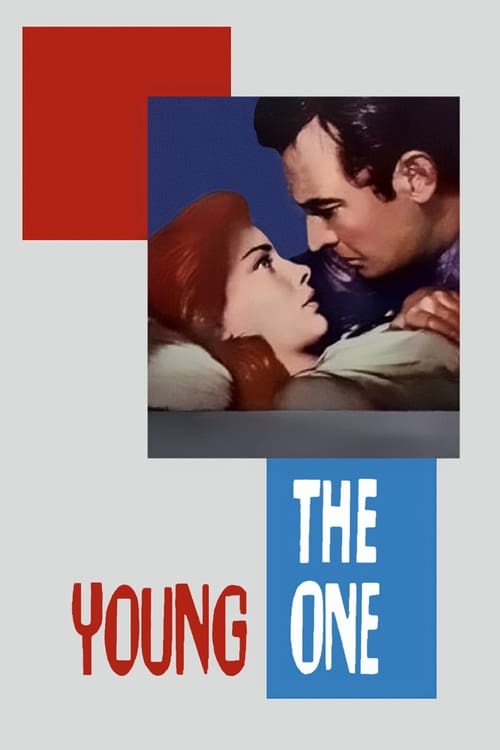
The Young One
1960 · Luis Buñuel
For when you want a film that provokes and complicates rather than comforts — something to argue about afterward. Definitely a challenge pick, not an easy evening.
What it's about
A Black jazz clarinetist, fleeing a false accusation and a lynch mob on the mainland, lands his boat on an isolated game-preserve island in the American South. The island holds only two other people: Miller, the bigoted warden who rules the place, and Evvie, a recently orphaned adolescent girl in his charge — and the warden's attentions toward her are as disturbing as his hatred of the stranger. Three people, one island, and every kind of moral line under pressure.
The experience
Tense, uncomfortable, and deliberately so — it refuses to sort its characters into simple heroes and monsters, which makes it far more unsettling than a straightforward message picture. It's lean and stripped-down, and it gets under your skin.
The craft
One of only two films Luis Buñuel ever made in English, it's a taut chamber piece that wrings sustained menace from a single location and a tiny cast. Buñuel's cool, unblinking direction strips away sentimentality, treating racism and predation with a moral clarity that never turns preachy.
Why it matters
Long overlooked and even sold under a lurid exploitation retitle, it has been rediscovered as a fascinating hinge in Buñuel's career, made just before his great international breakthrough — and as one of the era's most unflinching American-set films about race.
Snapshot
The Young One (Spanish: La Joven; also circulated in exploitation-market prints under the lurid retitle Island of Shame) is a chamber drama of racism, desire, and moral contamination set on an isolated coastal island of the American South. It is one of only two films Luis Buñuel directed in the English language — the other being The Adventures of Robinson Crusoe (1954) — and it stands as a curious hinge in his career, made in Mexico immediately after Nazarín (1959) and just before the international breakthrough of Viridiana (1961). The premise is deceptively simple: Traver, a Black jazz clarinetist fleeing a false rape accusation and a lynch mob on the mainland, takes refuge on a game preserve inhabited only by the bigoted warden Miller, a recently orphaned adolescent girl named Evvie (Evalyn), and, intermittently, a visiting clergyman and a viciously racist outsider. Out of this handful of figures Buñuel constructs a taut, morally unstable parable in which nobody is innocent and nobody is wholly damned. For decades the film was among the hardest of Buñuel's works to see and one of the least discussed; restoration and reissue have since restored it to view, though it remains a minor entry beside the surrounding masterpieces.
Industry & production
The film was a Mexican production, shot in Mexico despite its emphatically North American setting, and produced through Producciones Olmeca with George P. Werker as producer. This arrangement reflects the material conditions of Buñuel's career at the time: after emigrating to Mexico in the late 1940s, he had rebuilt himself inside a commercial Mexican studio system, turning out melodramas and genre pictures on tight schedules and modest budgets while smuggling in his own preoccupations. The Young One was made in that economy — fast, cheap, contained — but with English dialogue and a nominally American subject aimed at a broader export market and at the festival circuit.
The screenplay was written by Buñuel together with Hugo Butler, an American screenwriter who had been blacklisted in Hollywood during the McCarthy era and was working in Mexican exile; Butler was a recurring Buñuel collaborator in this period. Their script adapts "Travelin' Man," a short story by the American writer-naturalist Peter Matthiessen. The choice of an American source and an American racial subject, filtered through two exiles working outside the U.S. industry, is itself part of the film's meaning: it is an outsider's cold-eyed look at American racism, unencumbered by Hollywood's Production Code sentimentality about race.
Technology
The Young One was shot on 35mm black-and-white film. Its technological register is conservative and functional rather than showy — no color, no widescreen spectacle — consistent with a modestly budgeted Mexican studio production of 1960 and with Buñuel's lifelong indifference to technical ostentation. What the film does exploit is the expressive range of monochrome photography in the hands of a master craftsman (see Cinematography), and the contained logistics of a near-single-location shoot, which allowed a small production to concentrate its resources. I do not have a reliable record of the exact aspect ratio or stock used, and would rather flag that gap than assert a figure.
Technique
Cinematography
The cinematography is by Gabriel Figueroa, the towering figure of Mexican cinema's golden age and one of Buñuel's most important Mexican collaborators (they also worked together on Nazarín, The Exterminating Angel, and Simon of the Desert, among others). Figueroa was celebrated for luminous, sculptural black-and-white images — dramatic skies, deep focus, monumental compositions — and The Young One channels that command of monochrome toward the humid, enclosed world of the island. The camera favors a lucid, unfussy classical découpage: the visual style is far more restrained than Figueroa's most baroque work, in keeping with Buñuel's preference for a plain, almost documentary directness that lets the moral tensions play without decorative distraction. The natural setting — marsh, shoreline, scrubby woods, the warden's shack — is rendered with a tactile clarity that grounds the film's charged psychology in physical place.
Editing
The editing follows Buñuel's characteristic economy: clean, unshowy cutting that serves narrative legibility and dramatic pressure rather than calling attention to itself. Buñuel's Mexican films were generally cut by Carlos Savage, his regular editor of the period, and the film's construction bears the hallmarks of that collaboration — efficient scene transitions, an unhurried but never slack rhythm, and a refusal of the emphatic montage effects that a more sensational treatment of the material might have invited. (I flag that the specific editing credit should be verified against the film's titles rather than taken on my assertion.)
Mise-en-scène / staging
The film is essentially a chamber piece staged within a single confined environment, and Buñuel exploits that confinement to force his characters into proximity and collision. The island functions as a moral pressure-cooker in the tradition of the isolated-microcosm setting Buñuel would push to its extreme in The Exterminating Angel. Space is organized around the warden's shack and its surroundings; blocking repeatedly places the fugitive Traver, the predatory Miller, and the child Evvie in shifting triangulations of threat, dependency, and desire. Objects and small domestic details — food, the girl's clothing, a bed, weapons — carry weight, in Buñuel's typically materialist manner, without being underlined as symbols.
Sound
The film uses sound sparingly and pointedly. Music enters diegetically through Traver's identity as a jazz clarinetist, and the soundtrack draws on the idiom of American spiritual and folk song appropriate to its Southern milieu; the use of a spiritual foregrounds the film's concern with sin, judgment, and hypocrisy. I do not have a confident record of the composer or of the specific performers of the film's songs, and I will not invent an attribution — this is a genuinely thin spot in the accessible documentation, and the credits themselves are the proper source.
Performance
The performances are pitched toward restraint and moral ambiguity rather than melodrama. Zachary Scott — a Hollywood actor best known for Mildred Pierce (1945) and Jean Renoir's The Southerner (1945), here near the end of his career — plays Miller, the game warden, as a man whose racism and whose sexual appetite for the underage Evvie are presented without the softening of villain-signaling; his refusal to make Miller a simple monster is central to the film's disquiet. Bernie Hamilton (later widely recognized as Captain Dobey on television's Starsky & Hutch) plays Traver with a wary dignity that never tips into saintliness. Key Meersman plays Evvie, the adolescent girl, in a role of considerable difficulty given the material. Claudio Brook — a Buñuel regular thereafter (The Exterminating Angel, Simon of the Desert) — appears as the visiting clergyman, and Crahan Denton plays the bigoted outsider Jackson. The ensemble sustains the film's key tonal achievement: characters who are neither heroes nor villains but shifting compounds of decency and rot.
Narrative & dramatic mode
Dramatically the film is a compressed, unity-of-place moral fable, closer to a filmed chamber play than to conventional suspense cinema, though it borrows the skeleton of a fugitive-on-the-run thriller. Its distinctive mode is what one might call Buñuelian anti-melodrama: the material — a false rape charge, a lynch mob, a child endangered by an older man — is the stuff of lurid exploitation, but Buñuel systematically drains it of easy affect. There are no reassuring identifications on offer. The Black victim of racial injustice is not idealized; the racist warden is granted moments of something like tenderness and even a rough capacity for change; the man of God is compromised and ineffectual. The narrative advances less through plot mechanics than through a series of moral reversals that leave the viewer without a stable footing — the signature Buñuel effect of ethical vertigo.
Genre & cycle
The film sits athwart several genres without settling into any: it has the frame of a social-problem picture about American racism, the enclosed tension of an island thriller, and the transgressive charge of a film about the sexual endangerment of a minor. In the American context of 1960 it belongs, uneasily, to the cycle of postwar liberal race-issue films, but it stands apart from that cycle precisely by refusing its consolations — where Hollywood's problem pictures sought moral clarity and uplift, Buñuel delivers ambiguity and complicity. Within Buñuel's own body of work it belongs to a recurring "microcosm" cycle of stories set in sealed spaces where a small society reveals its cruelties.
Authorship & method
The Young One is unmistakably a Buñuel film beneath its atypical English-language, quasi-American surface. His method here is the one he honed across his Mexican period: work quickly and cheaply inside genre, keep the camera style plain and legible, and let subversion operate at the level of theme, characterization, and moral structure rather than surface flamboyance. The absence of overt surrealism — the film contains little of the dream-logic of Un Chien Andalou or L'Âge d'Or — is itself characteristic of the Mexican Buñuel, whose radicalism in these years is ethical and social more than formal.
His key collaborators anchor the film's quality. Co-writer Hugo Butler, a blacklisted American, supplied fluency in American idiom and, presumably, sharpened the racial specificity of the adaptation of Peter Matthiessen's story. Cinematographer Gabriel Figueroa brought the authority of Mexican golden-age monochrome. Actor Claudio Brook began here a fruitful association with the director. The composer and editor credits, as noted above, I would rather leave to verification against the titles than assert on memory.
Movement / national cinema
The film occupies an unusual national-cinema position: it is a product of the Mexican film industry — financed, crewed (Figueroa), and shot in Mexico — yet it addresses an American subject in English and premiered on the European festival circuit. It thus belongs simultaneously to the story of Mexican cinema's golden age (through Figueroa and the studio economy that produced it) and to the transnational, exilic strand of Buñuel's career, in which a Spanish émigré, working in Mexico with blacklisted American collaborators, turned an outsider's gaze on the United States. It is not a work of any organized film movement; it is the product of a diaspora of exiles.
Era / period
Made in 1960, the film sits at the threshold of a transformative decade for both its subject and its maker. Thematically it anticipates the intensifying American civil rights struggle without belonging to any single moment of it; its portrait of Southern racism and mob violence would gain resonance across the years that followed. In Buñuel's career the timing is pivotal: The Young One falls between Nazarín and Viridiana, the latter of which (1961) would win the Palme d'Or, provoke a scandal in Franco's Spain, and relaunch Buñuel as a major international auteur. Viewed in that light, The Young One is a transitional work — the last of his relatively obscure late-Mexican pictures before international fame.
Themes
The film's governing theme is the impossibility of moral innocence. Racism is its overt subject — the reflexive brutality of the warden, the lynch-mob machinery of the mainland, the casual dehumanization of Traver — but Buñuel refuses to isolate that evil in convenient monsters. Bigotry coexists with kindness within the same person; the victim of one injustice can be an agent of another. Bound up with the racial theme is the film's frank and deeply uncomfortable treatment of the sexual endangerment of a child: Miller's appetite for the adolescent Evvie stages the corruption of innocence as a central concern, and the film's willingness to look at this without either titillation or easy condemnation is what most unsettled its early audiences. Religion recurs, as always in Buñuel, in the figure of the compromised clergyman — faith presented as institutionally impotent against real cruelty. Underlying all of it is Buñuel's abiding anti-Manichaeism: the conviction that human beings are mixtures, and that cinema's job is to hold that mixture in view rather than resolve it.
Reception, canon & influence
The Young One had a difficult reception and a long obscurity. It screened in competition at the 1960 Cannes Film Festival, where it drew serious critical attention on the Continent; I would flag that specific festival prizes attributed to it should be confirmed against the record rather than asserted here. In the United States its reception was notably hostile and confused: some critics, misreading Buñuel's refusal to sentimentalize his Black protagonist, accused the film itself of racism — a misreading that helped bury it commercially, as did the exploitation retitling (Island of Shame) under which it sometimes circulated. For many years it was among the least-seen of Buñuel's films; its critical rehabilitation came later, aided by restoration and reissue, and it is now generally regarded as a flawed but genuinely provocative minor Buñuel rather than a negligible one.
Influences on the film (backward): Its most direct debts are literary and biographical — Peter Matthiessen's source story, the American racial reality it dramatizes, and the sensibility of its exiled collaborators. Formally it draws on Buñuel's own established microcosm-drama instincts and on Figueroa's Mexican golden-age monochrome tradition.
Legacy (forward): Its clearest line of influence runs inward, into Buñuel's own subsequent work: the sealed-island moral laboratory looks directly ahead to the trapped dinner guests of The Exterminating Angel (1962), and Claudio Brook's collaboration with the director continued through that film and Simon of the Desert. More broadly, The Young One stands as an early instance of a race-in-America drama that rejects the liberal problem-picture's demand for a blameless victim and a legible villain — an anti-consolatory approach to racial subject matter whose refusal of moral comfort has aged into looking prescient. Its wider influence on later cinema is modest and diffuse rather than traceable to specific descendants; its lasting significance is chiefly as a revealing, uncompromising outlier within the career of one of cinema's great moralists.
A Deleuzian reading
A man running from a lynch mob brings his clarinet.
The full Deleuzian reading of The Young One →
Reception
Attacked from all sides in 1960 — Buñuel recalled a Harlem paper writing he ought to be hung upside down from a lamppost — and a total flop, it's now hailed as one of the most unflinching films about American racism of its era, decades ahead of its time.
How The Young One was received, from release to now →
How to watch The Young One: what to notice on a first viewing
- Listen for Traver's clarinet threaded through the film. The music comes through him, played and diegetic, a working musician's sound rather than a score cueing you on how to feel. He gets a trade and an instrument, not a halo, which is the whole method in one detail.
- Notice how plain and unglamorous the island looks. Figueroa channels his sculptural monochrome toward a humid, enclosed island, rendered with tactile, almost documentary clarity rather than his more baroque style. The setting stays a real, physical place, not a backdrop dressed up for melodrama.
- Watch which ordinary objects the camera keeps returning to. Food, the girl's clothing, a bed, and weapons recur without ever being singled out or explained, present matter-of-factly scene after scene. These objects carry weight the dialogue never once spells out for you.
- Watch for any moment Miller reads as a cartoon villain. Scott plays him with no relish and no sneer, moments that could look like real tenderness sitting right alongside real cruelty. You can't file him away as simply bad, which is the most unsettling thing about him.
- Watch how the three of them keep rearranging in a room. Blocking repeatedly places Traver, Miller, and Evvie in shifting triangles of threat, dependency, and desire, never settling into one fixed configuration. The geometry between them keeps changing who looks vulnerable and who looks dangerous.
The whole guide to watching The Young One, with the keys for a rewatch →
Influences: the films it descends from and the films it influenced
- Robinson Crusoe (1954) — Buñuel's first English-language, color-genre project establishes the isolated-island microcosm shot with plain classical découpage — the sealed moral laboratory and lean genre economy that The Young One transplants to a coastal shooting preserve.
- Los Olvidados (1950) — The template of Buñuel's Mexican method — Figueroa's hard monochrome kept legible and unshowy while radicalism lives in the refusal to sentimentalize marginalized characters — is exactly the register The Young One works in.
- Nazarín (1959) — Immediately prior Buñuel–Figueroa collaboration whose luminous but austere black-and-white and its protagonist-as-tested-moral-experiment carry directly into the following film.
- María Candelaria (1943) — Fernández–Figueroa founded the Mexican golden-age monochrome idiom — low horizons, sculpted skies, deep-focus rural naturalism — that is the specific photographic tradition Figueroa brings to The Young One's island.
- The Southerner (1945) — Zachary Scott's earlier lead in a Renoir chamber of rural hardship models the morally ambiguous Southern-man performance Buñuel casts him to complicate rather than resolve.
- Intruder in the Dust (1949) — A rare pre-1960 race drama that withholds the blameless victim and legible villain, prefiguring The Young One's anti-consolatory refusal of the liberal problem-picture's moral bookkeeping.
- Key Largo (1948) — A single-location siege built entirely on classical découpage of trapped antagonists in confined interiors — the staging grammar of the chamber-under-pressure that The Young One inherits.
- L'Âge d'Or (1930) — Establishes the authorial signature of subverting a conventional narrative from within its own moral logic — the ethical detonation, here relocated from surrealist form to plain social realism.
- Viridiana (1961) — The very next film extends the moral-reversal technique — a protagonist's virtue exposed as untenable inside an enclosed household — pursuing the same impossibility-of-innocence thesis in conventional dramatic dress.
- The Exterminating Angel (1962) — The dossier's own forward line: the sealed-island moral laboratory becomes the trapped dinner party, the microcosm-drama device pushed from social realism into overt allegory.
- Simon of the Desert (1965) — Continues the Claudio Brook–Buñuel collaboration begun here, again isolating a single tested figure in a bare microcosm to strip moral certainty.
- Straw Dogs (1971) — Extends the invaded isolated microcosm into siege, staging violence so that no party retains clean moral standing — the anti-melodrama refusal of a legible villain carried forward.
- Dogville (2003) — Strips the sealed-community moral laboratory to its bones as an anti-consolatory American parable, pursuing Buñuel's impossibility-of-innocence by systematically corrupting every apparent innocent.
- The Night of the Iguana (1964) — Figueroa's monochrome again photographs a single tropical location as a pressure-cooker chamber of morally compromised strangers — the same cinematographer applying the same enclosed-microcosm lighting a few years on.
- To Kill a Mockingbird (1962) — The contemporaneous social-problem race film built on the blameless victim and noble defender — the exact consolatory model The Young One's moral-reversal structure was designed to withhold.
Similar films
- The Young and the Damned (1950) — influence & lineage
- L'Âge d'or (1930) — influence & lineage
- The Exterminating Angel (1962) — influence & lineage
- Nazarín (1959) — influence & lineage
- Diary of a Chambermaid (1964) — shared sensibility
- Viridiana (1962) — shared sensibility
- Tristana (1970) — shared sensibility
- Belle de Jour (1967) — shared sensibility