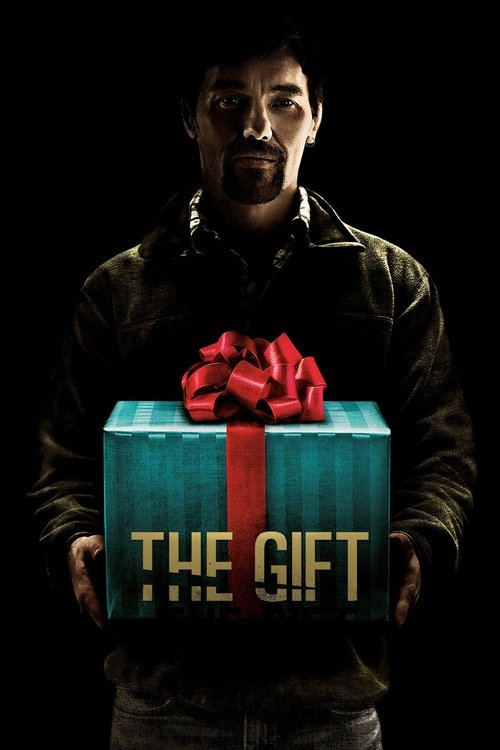
The Gift
2015 · Joel Edgerton
For a night when you want a grown-up thriller that gets under your skin instead of just making you jump — one you'll be arguing about with whoever watched it with you. More unsettling than comforting.
What it's about
Simon and Robyn, a married couple riding a career move from Chicago to Los Angeles, are settling into a glassy suburban house when they bump into Gordo, an awkward acquaintance from Simon's high school days. Gordo starts leaving gifts on their doorstep and inviting himself into their lives, and his attentions curdle from odd to unnerving. What begins as a stranger-at-the-door thriller slowly becomes a question about who in this marriage you should actually be worried about.
The experience
A slow-tightening watch — quiet, controlled, built on dread rather than jolts, with a few expertly placed scares. It keeps shifting your sympathies until you're not sure whose side you're on, and it leaves a bruise that lingers after the credits.
Performances
Jason Bateman is the revelation, using his nice-guy sitcom charm as a mask that keeps slipping; Rebecca Hall grounds the film as a woman slowly realizing what she married; and Joel Edgerton makes Gordo pitiable and frightening at once.
The craft
Edgerton, writing and directing his first feature, shows remarkable restraint — long quiet takes, a house of glass walls that makes the couple feel permanently watched, and scares earned through framing rather than noise. The sound design does a lot of the work; a dark room and decent speakers pay off.
Why it matters
A sleeper hit that announced Edgerton as a director and proved the mid-budget adult thriller could still thrive in the 2010s, often cited for flipping the home-invasion formula on its moral head.
Snapshot
The Gift is Joel Edgerton's first feature as director. He also wrote it, produced it, and plays its unsettling third lead. On the surface it is a domestic suspense thriller: a prosperous couple, Simon (Jason Bateman) and Robyn (Rebecca Hall), move from Chicago back to Simon's home turf of greater Los Angeles. There they are befriended, and then pressed upon, by Gordon "Gordo" Mosley (Edgerton), a socially awkward former schoolmate who starts leaving presents on their doorstep. The film sets itself up as a "stranger threatens the home" story, the kind familiar from late-1980s and early-1990s Hollywood, and then gradually turns it inside out. The threat comes to look less like an invasion than a reckoning, and the husband, not the outsider, becomes the moral problem at the film's centre. It ends on a deliberately cruel note of uncertainty. Made cheaply under the Blumhouse model and released as the first film from the new distributor STX Entertainment, it was a solid commercial and critical success. It confirmed Edgerton, already established as an actor and screenwriter, as a director with a controlled, patient style suited to moral suspense.
Industry & production
The Gift came out of a meeting point between Australian independent filmmaking and the American micro-budget genre system. Edgerton had been part of Blue-Tongue Films, the loose Sydney-based collective whose members included his brother Nash Edgerton, David Michôd and Luke Doolan. Through Blue-Tongue he had co-written The Square (2008, directed by Nash) and contributed to the story of Michôd's The Rover (2014). He also wrote Felony (2013), a police drama about guilt and cover-up. The Gift was his move to directing a feature, though it was set and shot in the United States with American and British leads.
The film was produced by Jason Blum's Blumhouse Productions alongside Edgerton and Rebecca Yeldham. Blumhouse's model of low budgets, contained locations, a small cast and back-end participation for talent suited a script built around a single house and three central characters. The reported budget was around $5 million, small even by Blumhouse standards for a non-horror title. Distribution went to STX Entertainment, then a newly launched studio, and The Gift was its first theatrical release, in August 2015. It earned several times its cost worldwide (trade reporting put the total in the region of $59 million). That made it an early proof of concept for STX's strategy of mid-budget, star-driven adult films, and part of the evidence that Blumhouse could succeed outside straight horror.
Shooting took place in and around Los Angeles. Much of the action is confined to the couple's newly bought modernist house in the hills. Detailed public documentation of the shoot, such as its length and specific locations, is fairly thin beyond press-tour interviews.
Technology
Nothing about the film's technology is pioneering. It was shot digitally, in line with the low-budget genre production of the mid-2010s, and finished for standard theatrical and home release. What matters technologically is how it uses its location. The house's floor-to-ceiling glass walls are the film's main device, turning domestic architecture into a surveillance apparatus. Within the story, recording technology also carries weight. Video and camera footage become instruments of revenge and doubt in the last act, and that ties the film to a broader 2000s–2010s interest in images as evidence. Michael Haneke's Caché (2005) is the obvious art-cinema precedent. This is a thematic use of technology rather than a technical innovation.
Technique
Cinematography
Edgerton worked with the Spanish cinematographer Eduard Grau, known for the polished, controlled images of Tom Ford's A Single Man (2009) and the confined virtuosity of Rodrigo Cortés's Buried (2010). Grau favours cool, clean, evenly composed frames that match the couple's tasteful, curated life. The camera often stands back. It holds characters in wide or medium-wide shots within large panes of glass, so the edges of the frame and the dark exteriors beyond the windows become places of possible threat. Viewers are trained to scan the background, and this produces anxiety without much visible incident. Movement is generally slow and deliberate: gliding moves through the house, and night exteriors that make the hillside setting feel exposed rather than private. The clarity of the images works against the moral murk of the story. Everything is visible, and very little is known.
Editing
Luke Doolan edited the film. He is a Blue-Tongue collaborator whose short Miracle Fish was Oscar-nominated. The cutting is patient, and it lets awkward social scenes run long enough to become uncomfortable. That is central to the early Gordo sequences, where the suspense is social embarrassment before it is physical danger. The film rations conventional shock effects. One of its most discussed moments is a jump scare, and the general restraint around it makes it land harder. The structure releases information in measured steps. Each revelation about Simon's past is placed to shift audience sympathy just as the threat from Gordo seems to grow.
Mise-en-scène / staging
The house is the film's main staging tool: open-plan, glass-walled, newly furnished, with a koi pond. It is a showroom of upper-middle-class success, and it leaves its occupants permanently on view. Edgerton stages Robyn alone in it a great deal. She works from home, and the film notes that she has recently been through a pregnancy loss and earlier depended on pills. The space becomes a register of her isolation and growing suspicion. Gordo's gifts (wine, fish for the pond, small acts of household repair) intrude into this carefully arranged space, and each object changes the moral temperature. A key set piece is the dinner at Gordo's own house, which turns out to be not what it seems. It reverses the home-invasion setup by making the couple the guests in someone else's possibly false domestic space.
Sound
The score is by Danny Bensi and Saunder Jurriaans, a duo known for spare, textural work on American independent films. It is restrained and atmospheric and avoids the stinger-heavy conventions of the stalker thriller. Much of the film's tension rests on ambient domestic quiet: the hum of a large, mostly empty house, night sounds outside, the silence after an awkward line of dialogue. Sound design picks out small intrusions, such as a doorbell, a noise outside, or a pet's absence, as the minor ruptures that build the film's dread.
Performance
The casting is the film's main strategy of misdirection. In 2015 Jason Bateman was closely associated with Arrested Development and a run of studio comedies, where he usually played the reasonable straight man surrounded by chaos. The Gift uses that persona against itself. Simon's easy charm and quick sarcasm at first read as the ordinary defensiveness of a husband pestered by an oddball. Later they become legible as the habits of a lifelong bully. Critics widely singled out the performance as a revelation and a sharp turn against type. Rebecca Hall's Robyn is the film's point of view and its moral conscience. Her performance traces a slow move from polite discomfort to doubt about her husband to estrangement. Edgerton plays Gordo with a halting, over-earnest manner that keeps the audience unsure whether he is pitiable, dangerous, or both. The ambiguity rests heavily on the actor.
Narrative & dramatic mode
The film works by structured reversal. Its first act follows the stalker template: a lingering stranger, unwanted gifts, unease, a confrontation in which Simon warns Gordo off. The second act brings in a conciliatory letter from Gordo. It also starts the revelation that in high school Simon spread a damaging rumour about him, with devastating consequences for Gordo's life. From there Robyn's investigation into the past becomes the main line of the story. In a parallel plot, Simon is shown undermining a workplace rival to get a promotion, which confirms that the cruelty was a pattern rather than a one-off adolescent act.
The dramatic mode is moral suspense more than thriller action. The central question shifts from "what will Gordo do?" to "who is Simon?" The ending deliberately keeps a key fact undecidable: Gordo suggests he may have violated Robyn and may be the father of her newborn child. Both Simon and the audience are left inside a punishment made of uncertainty. Many reviewers called this ending provocative. Some admired its severity, and others were troubled that Robyn's body and child are used as the instrument of a revenge between two men. That objection has become an important part of how the film is discussed.
Genre & cycle
The Gift consciously recalls the "yuppie in peril" or "interloper" thriller cycle of the late 1980s and early 1990s: Fatal Attraction (1987), Pacific Heights (1990), Cape Fear (1991), The Hand That Rocks the Cradle (1992), Unlawful Entry (1992), Single White Female (1992). Those films usually cast an outsider as a pathological threat to a prosperous household. Edgerton uses the cycle's grammar of gifts, surveillance, boundary violations and a vulnerable wife at home, then questions its assumptions. The intruder has a real grievance, and the household's prosperity rests on old cruelty.
It also belongs to the wider Blumhouse output of the 2010s, which mostly meant contained horror (Paranormal Activity, Insidious, The Purge, Sinister). The Gift was one of the company's adult-oriented, non-supernatural thrillers. It helped show that the low-budget, high-concept model could carry character-driven suspense.
Authorship & method
Edgerton wrote, directed, produced and acted, which makes The Gift clearly an authored work. Its preoccupations echo his earlier writing. The Square and Felony also turn on guilt, concealment, and how small moral compromises grow. In interviews at release, Edgerton described the film as a story about bullying and about whether people change. He also said he wanted to take a well-worn genre premise and use it to examine audience sympathy. Beyond those broad statements, the record of his process (drafts, development history) is not extensively documented.
Key collaborators:
- Eduard Grau (cinematography): cool, precise, architecturally aware images.
- Luke Doolan (editing): a Blue-Tongue colleague, giving the film continuity with the Australian collective's work.
- Danny Bensi and Saunder Jurriaans (music): a minimal, atmospheric score.
- Jason Blum / Blumhouse (production): the economic framework that made a small, contained thriller possible.
Edgerton followed The Gift with Boy Erased (2018). That film is a drama about gay conversion therapy rather than a thriller, but it shares an interest in institutional and interpersonal cruelty and its lasting harm.
Movement / national cinema
The film is set in America and was financed in America, but it is a product of the Australian talent pipeline. During the 2000s and 2010s, Australian actors, writers and directors moved into Hollywood in significant numbers. Blue-Tongue Films is especially relevant: alongside The Square and Michôd's Animal Kingdom (2010), the collective helped form a strand of Australian crime and suspense marked by moral seriousness, slow-building dread and interest in the ethics of violence. The Gift carries that sensibility into an American suburban setting. It is not usually classed within a national "new wave," and it is better described as a transnational genre film by an Australian filmmaker working inside the American independent system.
Era / period
The Gift belongs to the mid-2010s, a period of shrinking studio investment in mid-budget adult drama. Into that space came new or reorganised distributors (STX, A24, Blumhouse's growing slate) and the beginnings of streaming-era production. Its success came alongside other small, adult-oriented genre successes of the time.
Culturally, the film reached audiences at a moment of rising public attention to bullying, including its long psychological after-effects and its online forms. Its concern with how a rumour can destroy a reputation, and its picture of a corporate world rewarding manipulation, fit the anxieties of that period. Viewed after 2017, its depiction of male power, deceit and the use of a woman's body in a conflict between men reads in light of later public debates about sexual violence and accountability. That is a later critical frame, not something the film was explicitly addressing on release.
Themes
- The past returning. The film's central idea is that buried wrongs do not stay buried. Simon thinks his adolescent cruelty is behind him; Gordo's arrival proves otherwise.
- Bullying and its lifelong effects. The film treats bullying as an act with lasting, measurable damage to a life, not a passing cruelty.
- Masculinity and dominance. Simon's charm, competitiveness and readiness to destroy rivals, at school and at work, are shown as a continuous pattern of male power.
- Surveillance and visibility. The glass house, the gifts left as signs of presence, and the final use of recorded images make watching and being watched a constant condition.
- The unknowability of intimates. Robyn's real discovery is not Gordo but her husband. The film is finally about how little one spouse may know of the other.
- Revenge and its costs. The ending raises hard questions about whether Gordo's retaliation is justice, and about the woman whose life becomes collateral in it.
Reception, canon & influence
Critical reception. The Gift was well received. Critics praised Edgerton's assured direction for a first feature, his willingness to subvert genre expectations, and especially Bateman's dark turn against type. Rebecca Hall's grounding performance was also widely noted. The ending split reviewers. Some called it a bold, unsettling payoff, and others found its handling of Robyn exploitative or troubling. Edgerton received a Directors Guild of America nomination for outstanding directing of a first-time feature film. The film's commercial performance, many times its budget, made it a notable sleeper success of summer 2015.
Influences on the film (backward). The most direct line runs to the interloper thrillers of 1987–1992 listed above, whose premise The Gift inverts. Many critics compared it with Haneke's Caché, which also uses an anonymous campaign of unsettling messages to expose a prosperous man's buried childhood wrongdoing. Hitchcock's tradition of suspense in bourgeois domestic settings is a more general background. The film's moral seriousness and restraint also link it to the Blue-Tongue Australian crime films that shaped Edgerton's career.
Legacy (forward). The Gift established Edgerton as a director and opened the way to Boy Erased. It was an early marker for STX and part of Blumhouse's spread beyond supernatural horror into adult suspense. It also contributed to a broader 2010s revival of moral-revenge and domestic-suspense thrillers that question their genre's sympathies. Attributing specific later films directly to its influence would be speculative. Its lasting reputation is as a smart, well-crafted genre exercise and a showcase for Bateman's dramatic range, and its contested ending is still discussed among viewers and critics.
Influences: the films it descends from and the films it influenced
- Caché (2005) — Its structure of anonymous packages (tapes and childlike drawings) that slowly expose a prosperous man's lie about a childhood wrong is the model for Gordo's escalating gifts and Simon's exposed school-bullying past, and so is its refusal to settle who is victim and who is persecutor.
- Lost Highway (1997) — Unsigned objects left on the doorstep make a couple's modernist, glass-heavy house feel watched, and that is the same idea behind The Gift's open-plan Los Angeles house, staged as a vitrine that someone outside can see into.
- Pacific Heights (1990) — It sets the yuppie-in-peril template The Gift deliberately inverts: a stranger who seems socially polite works his way into a young couple's newly bought home and their money, and the plot hinges on how much the couple tolerates out of good manners.
- Unlawful Entry (1992) — A helpful outsider's favours to an affluent couple slowly become a form of possession, which is the pattern of unwanted kindness Gordo's wine, koi and window repairs repeat. Edgerton's film then turns the audience's sympathy toward the outsider.
- Cape Fear (1991) — The figure stalking the family returns because of a real wrong committed by the respectable husband. Scorsese uses this to turn the audience against the man it is supposed to protect, which is the same sympathy reversal The Gift builds around Simon.
- Straw Dogs (1971) — It treats a marriage and a remote house as a contest between men's dominance rituals, with the wife's body as the contested ground, and that is the source of the film's most contested element, Gordo's ambiguous final claim on Robyn.
- A Single Man (2009) — Eduard Grau's cool, symmetrical framing of a mid-century glass house as both showcase and trap is the visual language he carried into The Gift's transparent house, with its wide frames in which empty background space keeps viewers watching for an intruder.
- Lantana (2001) — This Australian adult thriller builds unease out of marital suspicion and withheld information rather than violence, the restrained moral-noir register Edgerton absorbed and moved into an American genre film.
- The Square (2008) — It is a Blue-Tongue thriller written by Joel Edgerton in which one small concealed transgression grows into disaster, the same structure of compounding guilt that drives the second half of The Gift once Simon starts lying.
- Felony (2013) — In this script by Edgerton, a respected man's cover-up of his own wrongdoing gradually turns the audience against him. It is the immediate rehearsal for the Simon character and for The Gift's moral design.
- Get Out (2017) — It extends the move Blumhouse made with The Gift away from supernatural horror into adult thrillers, building dread from strained hospitality and social etiquette before rationing out a small number of shocks.
- The Killing of a Sacred Deer (2017) — An awkward outsider with a real grievance attaches himself through gifts and visits to a successful professional whose past negligence he holds responsible. The film's growing suspicion of its own protagonist mirrors the interloper's revenge for a buried wrong in The Gift.
- Burning (2018) — It refuses to confirm the crime it implies and leaves both the class grievance and the guilt formally undecidable. That approach takes the unanswerable question at the end of The Gift (is the baby Gordo's?) and stretches it across a whole film.
- Boy Erased (2018) — On his next film, Edgerton again cast himself as a quietly menacing authority figure and reunited with Eduard Grau for restrained, institutionally cold framing, carrying The Gift's study of lasting harm from cruelty in one's youth into drama.
- Us (2019) — An affluent family's holiday home is invaded by doubles who embody a wrong committed in childhood, and a final twist recasts the heroine as the original aggressor. This is the Blumhouse-scale version of The Gift's move of revealing that the victim was once the bully.
- Animal Kingdom (2010) — Luke Doolan's cutting for the Blue-Tongue collective, with unhurried scenes held so threat comes from tone and pause rather than incident, is the editing approach he brought to The Gift's long, menacing dinner-table scenes.
- Gone Girl (2014) — A suburban marriage thriller that discloses information in stages so the husband's likeability falls apart over the running time. It was a direct peer in the mid-2010s revival of domestic thrillers that question where the audience's sympathy lies.
- The Invitation (2015) — It was released the same year and generates suspense almost entirely from extended social awkwardness at a dinner party in a house of glass, where politeness stops guests from naming the threat, exactly the strategy behind The Gift's scenes with Gordo.
Similar films
- Us (2019) — influence & lineage · same viewing thread
- The Killing of a Sacred Deer (2017) — influence & lineage · same viewing thread
- Caché (2005) — influence & lineage
- The Invitation (2016) — same viewing thread
- Goodnight Mommy (2015) — same viewing thread
- Bring Her Back (2025) — same viewing thread
- Sleep (2023) — same viewing thread
- You're Next (2013) — same viewing thread
All the films related to The Gift →
Watch it with: curated runs of related films
- Whatever's Wearing That Face — A run of horror-thrillers where the real terror is that you can't trust what a person appears to be — a double, a shapeshifter, a smiling stranger, the one you desire.