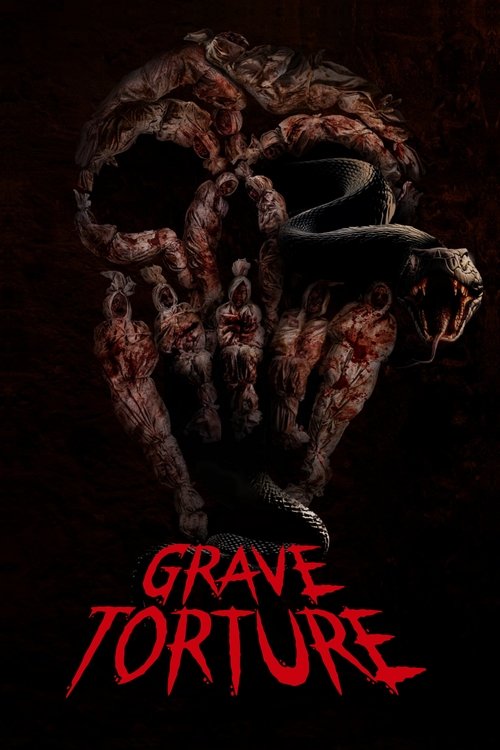
Grave Torture
2024 · Joko Anwar
When you want a horror film to chew on for days — one that uses the genre to ask real questions about faith, doubt, and punishment. This is the thinking end of horror: challenging, heavy, and not the pick for a casual scare night.
What it's about
As a child, Sita loses her parents to an act of religious violence and grows up failed by everyone meant to protect her. As an adult she becomes a hard skeptic with one fixation: to prove that the torment of the grave — the punishment of the soul after burial, a doctrine she was raised to fear — is a lie. Her plan is as literal as it is reckless: find a dying sinner, and go into the grave with recording equipment.
The experience
Less a scare-delivery machine than a mounting existential dread — it moves like a drama about grief and institutional betrayal before tightening into genuinely disturbing horror. It leaves you unsettled in a way that outlasts the runtime, because the fear it works on is the question of what, if anything, comes after.
The craft
Anwar structures the film across decades of one woman's life, with patient, controlled direction and sound design that makes burial itself — earth, enclosure, what might be breathing in the dark — the central sensory terror. The imagery of graves and bodies is stark and deliberate rather than gratuitous.
Why it matters
A major Indonesian release that pushed the country's horror boom into more serious thematic territory, showing the genre could interrogate religious doctrine rather than just borrow its imagery.
Snapshot
Grave Torture (Indonesian: Siksa Kubur) is Joko Anwar's horror film about religious doubt. It takes a doctrine that is widely taught in Indonesian Muslim life, siksa kubur or adhab al-qabr, the punishment of the soul in the grave before Judgment Day, and builds a story around a woman who sets out to prove it false. Sita's parents are killed in an act of religious violence when she is a child. Her brother Adil and the institutions meant to protect them fail her. She grows into a skeptic who plans to go into the grave of a dying sinner with recording equipment, to show that nothing happens there.
The film's question is whether disbelief can be tested empirically, and what it costs to try. Anwar treats the doctrine as more than a folk scare. It is part of the moral imagination of a society, used to frighten children into obedience and to justify violence. The film was released in Indonesia during the Lebaran (Eid al-Fitr) holiday of April 2024, the most commercially important window of the domestic calendar. It was one of the most closely watched Indonesian releases of the year, both as a successor to Anwar's Satan's Slaves films and as a test of how far a mainstream genre film could go in questioning doctrine.
Industry & production
The film comes out of the commercial revival of Indonesian horror that Anwar helped start with Satan's Slaves (Pengabdi Setan, 2017). That film was a remake of the 1980 Rapi Films classic. Its domestic success, and its international circulation through festivals and streaming, showed local producers that well-made horror could draw very large audiences. In the years after, horror became the dominant genre in Indonesian theatrical production by number of titles.
Grave Torture was developed through Come and See Pictures, the production company associated with Anwar and producer Tia Hasibuan. Anwar said publicly that the idea had been with him for many years before it went into production. The available English-language record gives no detailed account of the budget or the full financing structure, so this dossier does not estimate either.
The Lebaran release placed the film in direct competition with other major domestic titles at the busiest point of the box-office year. Contemporary Indonesian trade coverage reported it among the leading domestic performers of 2024, with admissions in the millions. Exact figures vary between sources and are not given here. The film later reached audiences outside Indonesia through international distribution and streaming. That pattern now follows most of Anwar's work: strong domestic theatrical exposure first, then global platform circulation.
Technology
The film was shot digitally. It belongs to a generation of Indonesian productions that have closed much of the technical gap with regional and international genre cinema through digital acquisition, modern grading, and better post-production facilities in Jakarta. Its most notable technical work is in the grave sequences. These combine practical sets, prosthetic and makeup effects, and digital compositing to build an underground space that becomes more impossible as the film goes on.
Anwar has generally preferred practical, tactile effects over purely digital ones. Satan's Slaves and Impetigore both rely heavily on physical makeup and built environments, and Grave Torture follows that approach in its bodily horror. The film's interest in recording devices also matters at the level of story. Sita's plan depends on technology that can capture evidence: cameras and audio equipment placed in the grave. The film's horror comes partly from what happens when that empirical apparatus meets something that will not be measured.
Technique
Cinematography
Anwar's films usually use classical, carefully composed framing over handheld chaos, and Grave Torture follows that pattern. The camera tends to hold still and let dread build inside the frame. Faces are placed against deep shadow, and corridors and rooms are composed so the viewer searches the dark edges of the image. The early, childhood sections are shot with a period warmth that recalls the look of Satan's Slaves. The later sections set in the care home and the grave become colder and more enclosed.
The grave material moves away from realism into a more expressionist register. Earth, darkness, and confinement are presented less as a physical location and more as a spiritual one. Anwar has worked most often with cinematographer Ical Tanjung. Published credits should be checked for the director of photography on this specific production; this dossier does not assert the attribution.
Editing
Much of the film's structure is made in the cut. Its time-jump from childhood trauma to adult obsession sets up a cause-and-effect frame. The final act then breaks that frame into layered, possibly hallucinatory sequences. The cutting there deliberately unsettles the viewer's sense of what is real, what is dreamed, and what is happening after death.
Anwar's editing style generally favors patience over jump-scare punctuation, and this film still saves its sharpest cuts for moments of physical shock. The editor credit is not discussed here in detail because reliable English-language documentation is limited.
Mise-en-scène / staging
The production design turns religious institutions into places of threat. Key settings include the Islamic boarding school (pesantren) where the orphaned children are sent, the residential care home where adult Sita works, and the grave itself. Each one is meant to be a place of shelter, instruction, or rest, and the film reverses each of those functions.
The care home is staged with institutional bareness. It is a place for bodies near death, and that gives the story's central premise a constant physical presence. Anwar uses quiet, mundane spaces for horror, as he did with the family home in Satan's Slaves. Ordinary domestic and devotional objects take on a charge of menace. The grave sequences then abandon that grounded staging for a space of nightmare logic, where architecture, depth, and duration stop behaving normally.
Sound
Sound design is central to the film's suspense. The genre has trained Indonesian audiences to listen for religious sound as a register of both comfort and dread: the call to prayer, Qur'anic recitation, and funeral rites. Grave Torture uses that charged soundscape in the same way. The grave sequences depend heavily on muffled, pressured, enclosed sound to suggest burial.
The plot also depends on audio recording. Sita's experiment is partly an attempt to hear whether anything happens in the grave. That gives the soundtrack a self-aware role: what the microphone picks up, or fails to pick up, matters to the story. Anwar's earlier horror films used scores by Aghi Narottama, Bemby Gusti, and Tony Merle. The composer credits for this film should be checked against the official credits; they are not asserted here.
Performance
Faradina Mufti plays the adult Sita and carries the film. The role asks for a sustained, closed-off intensity: a woman whose rationalism is also armor against grief and abuse. Reza Rahadian, one of the most prominent Indonesian actors of his generation, plays the adult Adil, whose damage takes a different form from his sister's. Widuri Puteri and Muzakki Ramdhan play the siblings as children and set up the trauma that drives the adult narrative.
The cast also includes two veterans of Indonesian cinema, Christine Hakim and Slamet Rahardjo. Their presence is a form of generational continuity: actors associated with the art cinema of earlier decades appear in a genre film by one of the industry's leading contemporary auteurs. Rahardjo's role, an elderly man whose death becomes the focus of Sita's experiment, is central to the film's moral design.
Narrative & dramatic mode
The film is built as a theological thriller turned into a metaphysical horror film. The first section shows the origin of Sita's unbelief. Her parents die in an act of violence carried out by someone who has absorbed a frightened, punitive form of faith. The second section follows the siblings into a religious boarding school, where institutional care hides abuse. The third follows adult Sita's plan. She identifies a man whose sins, by the logic of the doctrine, should guarantee torment, and she arranges to be present in his grave to record that nothing happens.
The dramatic mode is ironic and sharply ambiguous. The film sets up a test of a doctrine and then refuses the comfort of a clear result in either direction. Its final movement can be read as literal punishment, as psychological collapse, or as an allegory for the way trauma imprisons the living. Much of the critical discussion has focused on this ending: whether it supports, undermines, or deliberately suspends the doctrine Sita sets out to disprove.
The film is not the conventional moralizing tale that much Indonesian religious horror resembles. In that tradition, sin is punished and piety restores order. It is also not a simple secular debunking. Its real subject is the way fear-based religion produces both violence and its own rebels, and it leaves the final question open.
Genre & cycle
Grave Torture belongs to the large cycle of Indonesian religious horror that grew after 2017. That cycle drew on Islamic eschatology, ritual, and folk belief in films ranging from commercial exploitation to more ambitious work. Nearby titles include films built on prayer and possession (Makmum, 2019), exorcism (Qodrat, 2022), and the hugely popular folk-horror of KKN di Desa Penari (2022).
The 2023 film Siksa Neraka (Hell Torture, dir. Anggy Umbara) is a particularly close comparison. It adapted the tradition of Indonesian religious comics that depicted the punishments of hell in graphic detail. Those inexpensive illustrated tracts circulated widely in the New Order era and are part of the popular-culture background Grave Torture draws on. Many Indonesians first met the imagery of afterlife torment as children through such pamphlets and through sermons.
Where much of the cycle uses that imagery for shock and moral warning, Anwar's film looks at the imagery itself: who uses it, on whom, and to what end. In that sense it is both inside the cycle and a commentary on it. It also connects to a wider international strand of "elevated" or art-house horror built around grief and trauma. The film's commercial positioning, however, is firmly that of a mainstream national release.
Authorship & method
Joko Anwar (b. 1976, Medan) started as a film journalist and critic before becoming a screenwriter, first on Nia Dinata's Arisan! (2003). He then directed his own features: Joni's Promise (2005), the noir-inflected Dead Time: Kala (2007), The Forbidden Door (2009), Modus Anomali (2012), and A Copy of My Mind (2015). Satan's Slaves (2017) made him the leading commercial auteur of Indonesian genre cinema. He followed it with Gundala (2019), Impetigore (2019), and Satan's Slaves 2: Communion (2022), and he created the Netflix anthology series Joko Anwar's Nightmares and Daydreams (2024).
Anwar wrote Grave Torture as well as directing it, which is typical of his method. Recurring traits of his work all appear here: an interest in family as a site of inherited damage; a willingness to put social and political critique inside genre; a cinephile's attention to classical composition; and a commitment to Indonesian settings and specifics rather than generic imitations of Hollywood.
Anwar's major productions draw on a recurring circle of collaborators. Ical Tanjung shot several of his films. Aghi Narottama, Bemby Gusti, and Tony Merle composed for several, and producer Tia Hasibuan has worked closely with him. Credits for this specific film should be confirmed against the official record; this dossier does not assign individual department credits where the sourcing is uncertain.
Movement / national cinema
The film is part of what is often called the post-Reformasi growth of Indonesian cinema. After the end of the Suharto New Order in 1998, a new generation of filmmakers rebuilt a national industry that had nearly collapsed in the 1990s. Horror played a crucial role, first in a wave of cheap, sensational productions in the 2000s. In the late 2010s it moved toward more carefully made films that could compete with imports for domestic audiences.
The film also continues the national horror tradition of the 1970s and 1980s. That tradition included Rapi Films, director Sisworo Gautama Putra, and the screen persona of Suzzanna. Its films often combined folk belief with Islamic resolution: a figure of religious authority defeated the supernatural threat in the final act. Anwar's work is deeply aware of that heritage. Satan's Slaves remade one of its key titles.
Grave Torture reverses the old formula. Religious authority is no longer the reliable rescuer. Institutions, teachers, and believers are among the sources of harm. In a country with the world's largest Muslim population, where religious representation in popular media is sensitive, this is significant. The film shows how far a commercial horror production could go in critically examining religious practice while still reaching a mass domestic audience.
Era / period
The film's 2024 release came during a period of heightened public debate in Indonesia about religious conservatism, the place of religion in public life, and the legacy of violent extremism. The country experienced terrorist attacks in the 2000s and 2010s, including bombings carried out in the name of religion. The film's opening act of violence draws on that national memory without being tied to a specific documented event. This dossier does not claim it depicts any particular attack.
The film's flashback structure also lets it look back at the late twentieth century. That was the era of the New Order and of the pamphlets, sermons, and children's instruction through which the imagery of siksa kubur reached the generation now in adulthood. As a production, it belongs to the post-pandemic recovery of theatrical moviegoing in Indonesia, when domestic horror titles led the return of audiences to cinemas. It also belongs to the period when streaming platforms became important secondary outlets for Indonesian films abroad.
Themes
Doubt as a response to trauma. Sita's skepticism is not presented as neutral reasoning. It is a wound turned into a mission. The film suggests her need to disprove the doctrine is as consuming as other people's need to believe it.
Fear-based religion and its products. The film draws a line from the punitive teaching of afterlife torment to violence in the world. A faith built on terror produces perpetrators, victims, and rebels. The doctrine itself is not simply dismissed. The film is concerned with how it is taught and used.
Institutional betrayal. The boarding school and the care home are institutions of care that contain abuse. Through them the film ties its metaphysical question to concrete human harm: the worst torments in the story may be inflicted by the living.
Justice and punishment. The film raises an uncomfortable moral question. If the doctrine is false, do the guilty go unpunished? Sita's experiment centers on a man whose sins seem to call for punishment, so her disbelief has to deal with her own desire for justice.
Siblings and inherited damage. Sita and Adil respond to the same catastrophe in different ways. Their bond, and how it changes, carries the film's emotional line, which is typical of Anwar's interest in families as structures of shared trauma.
The limits of evidence. The plan to record the grave dramatizes a modern faith in empirical proof. The film's refusal to provide a clean answer is its final thematic statement: the question cannot be settled on the terms the protagonist chose.
Reception, canon & influence
Critical reception. On release in Indonesia, the film drew strong audiences and wide discussion, including debate over its religious content and its ambiguous ending. Some viewers and commentators praised its seriousness and its willingness to question doctrine. Others argued over whether the ending finally affirmed the doctrine of grave punishment. International genre critics generally saw it as a confident, ambitious continuation of Anwar's horror work. Some reviews singled out its grave sequences and its thematic boldness, and some found its structure uneven. Specific awards and nominations, including at the Indonesian Film Festival (Festival Film Indonesia), should be checked against official records; none are claimed here.
Influences (backward). The film draws on Islamic eschatology and the popular forms that taught it to Indonesians, especially the illustrated religious tracts of the New Order era. It also draws on the national horror canon of Rapi Films and Sisworo Gautama Putra, and on Anwar's own earlier films, especially the family-trauma structure of the Satan's Slaves films. More broadly, it shares ground with international horror films about grief and inherited damage, and with the long tradition of films about people who try to measure the supernatural with instruments. These are affinities of method and theme, not documented direct sources.
Legacy (forward). It is too early to judge the film's long-term influence fully. In the short term, it shows that a high-profile Indonesian release can treat religious doctrine as a subject of inquiry rather than only as a mechanism of fear or resolution, and that such a film can succeed in the most commercial release window of the year. It sits alongside Siksa Neraka and the wider religious-horror cycle as a reference point for how the genre handles faith. Within Anwar's career, it marks a further move toward explicitly philosophical horror, which continues in his subsequent work. For Sightlines, its main lines of influence run back to New Order religious imagery and the Rapi Films horror tradition, and forward to the critical, self-questioning strain of 2020s Indonesian religious horror.
Influences: the films it descends from and the films it influenced
- Satan's Slaves (1980) — Rapi Films' template of the burial-ground set piece and the kyai who restores order through recitation is the doctrinal-resolution structure that Grave Torture sets up and then deliberately withholds.
- Beranak dalam Kubur (1971) — It started the Suzzanna-era Indonesian grave-horror image of the tomb as a place of physical, bodily punishment, which Anwar turns into his expressionist grave interiors.
- The Queen of Black Magic (1981) — Rapi Films' heavy use of practical gore and prosthetics for divine or occult retribution is the effects vocabulary Grave Torture updates for its tortured-body tableaux.
- Vampyr (1932) — Dreyer's subjective coffin-POV sequence, with the camera looking up from inside the grave as the lid is fixed and the procession moves, is the source of Anwar's camera placed inside the grave.
- Ordet (1955) — Long static compositions put a doctrinal claim on trial in front of skeptical observers, and Grave Torture also stages faith as something waiting for empirical proof.
- The Seventh Seal (1957) — The Knight's demand for physical proof of God, staged in emblematic medieval-tract tableaux, anticipates Sita's empirical campaign against siksa kubur and Anwar's use of religious-illustration iconography.
- The Legend of Hell House (1973) — A rationalist brings a machine to measure and disprove the supernatural, the same dramaturgy as Sita's plan to plant a recording device in a sinner's grave.
- The Exorcist (1973) — Clinical procedure runs out before the supernatural is admitted, and religious ritual is shown as both resolution and horror; Anwar copies this structure of a medical or empirical test giving way to theological terror.
- The Vanishing (1988) — A protagonist driven to know what happens inside the grave ends up buried by that curiosity, and Sluizer's lighter-lit coffin finale is the model for Grave Torture's trap of knowledge.
- Satan's Slaves (2017) — Anwar's remake established his locked-off, deep-staged period compositions and a family-trauma setup in which religious devotion fails to protect, the formal base Grave Torture is built on.
- Impetigore (2019) — A childhood trauma prologue leads into an adult heroine investigating an inherited curse, the time-jump structure Grave Torture repeats with Sita and Adil.
- Satan's Slaves 2: Communion (2022) — Its institutional building recast as a ritual trap, with the call to prayer and funeral rites used as cues for dread, comes directly before Grave Torture's inverted pesantren and its religious soundscape.
- Qodrat (2022) — An ustadz protagonist whose faith is put in crisis by personal loss shows the post-Satan's Slaves cycle treating clerical authority as fallible, the critical strain Grave Torture takes furthest.
- Buried (2010) — A whole film confined to a coffin, with diegetic light sources (lighter, phone) as the only illumination, sets the working grammar for Anwar's lighting of grave space.
- Hereditary (2018) — Composed, symmetrical dread framing and grief passed down as a supernatural mechanism run parallel to Anwar's generational-damage structure and its shock prosthetics.
- Saint Maud (2019) — It leaves open whether religious experience is real or a psychic wound, using hallucinatory subjective inserts, the same ambiguity Grave Torture keeps going into its contested ending.
- The Medium (2021) — This Southeast Asian religious horror makes the recording apparatus the test of belief, as Grave Torture's diegetic recorder does: the camera crew's footage is evidence and is undone by what it captures.
- Siksa Neraka (2023) — It turns the New Order illustrated religious tract's catalogue of punishments directly into prosthetic set pieces, the literal-didactic pole that Grave Torture interrogates rather than endorses.
Similar films
- Impetigore (2019) — influence & lineage
- Satan's Slaves (2017) — influence & lineage
- The Medium (2021) — influence & lineage
- Exhuma (2024) — shared sensibility
- Noroi: The Curse (2005) — shared sensibility
- Evil Dead Burn (2026) — shared sensibility
- Ju-on: The Grudge (2002) — shared sensibility
- Incantation (2022) — shared sensibility