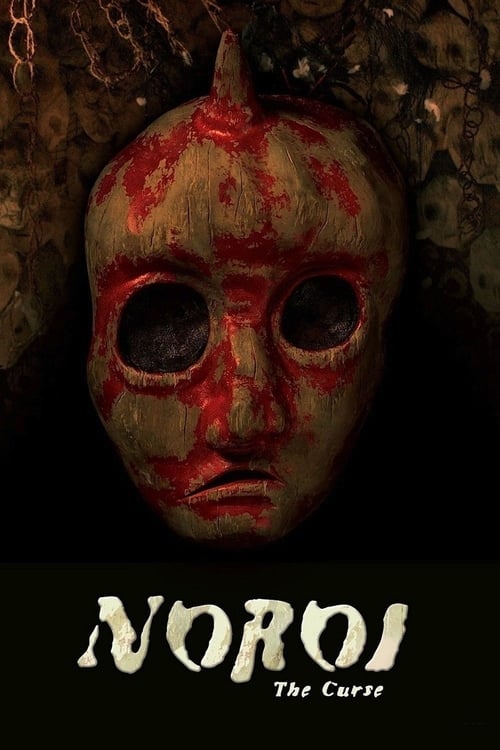
Noroi: The Curse
2005 · Koji Shiraishi
When you want to play detective with something evil — a long, immersive night where you lean in, connect the clues, and regret it. For viewers who like their horror earned, not jump-scared.
What it's about
A paranormal journalist named Masafumi Kobayashi has vanished, his house burned, and what's left is his final unfinished documentary. It pieces together seemingly unrelated cases — a neighbor who hears a baby that isn't there, a psychic child, a TV actress, a man who wraps himself in tinfoil — all slowly converging on a drowned village and an ancient demon called Kagutaba, once held in check by a local rite.
The experience
A slow, absorbing burn: for long stretches it plays like a true-crime documentary you can't stop pulling at, and then the threads knot together and the dread becomes suffocating. It rewards patience with some of the most genuinely frightening images in found-footage horror.
The craft
Shiraishi's mockumentary construction is the star: camcorder footage, variety-show clips, news reports and interviews are stitched together so convincingly that the fiction keeps feeling like evidence. The deliberately degraded video and ambient sound make the scares feel found rather than staged — headphones and a dark room do it justice.
Why it matters
Barely released outside Japan for years, it became a word-of-mouth legend among horror fans and is now routinely cited as one of the best found-footage films ever made, proof the format could sustain a dense two-hour mystery.
Snapshot
Noroi: The Curse (ノロイ) is a Japanese found-footage horror film. It presents itself as the last documentary by Masafumi Kobayashi, a fictional journalist who investigates the paranormal. An opening title tells us that Kobayashi has disappeared, that his house has burned down, and that his wife was found dead in the ruins. What follows is his unfinished film, Noroi, assembled from his own camcorder footage, clips from television variety shows, news reports and interviews. The case starts with neighbours complaining about a woman and the sound of a crying baby. It spreads to a child with psychic abilities, a television actress, an unstable psychic who wraps himself in tinfoil, and finally a village flooded by a dam, where a ritual once kept a demon called Kagutaba in check.
The film runs about two hours. That is long for found footage, and the length matters: the dread comes from scattered pieces slowly adding up, not from shocks. It was largely ignored at release and outside Japan it circulated mainly on home video. Since then it has built one of the strongest cult reputations of any 2000s J-horror film, and online horror communities often call it among the most frightening found-footage films ever made. It is also the foundation of Shiraishi's long career in mock-documentary horror.
Industry & production
Noroi comes from the late phase of the J-horror boom. After Ringu (1998) and Ju-on (theatrical films 2002–2003) succeeded at home and abroad, Japanese studios and video labels made a great many low- and mid-budget horror films for theatres, DVD and television. Shiraishi had been working in this world, including on Ju-rei: The Uncanny (2004), a cheap, fragmented, video-shot ghost film. Noroi got a small theatrical release in Japan in 2005, and its life after that depended mostly on DVD.
Detailed records of the budget, schedule and production company are thin in English-language sources, and this dossier does not guess at them. What the film itself makes plain is how it was made: on video, with a small crew, using real Japanese television personalities playing themselves alongside unknown actors. That mix comes straight from the economics of the time, when horror could be made cheaply and sold on concept and atmosphere rather than stars or effects.
Technology
The film was shot on consumer- and prosumer-grade digital video. In-story, this is Kobayashi's handheld camcorder and the gear of his cameraman, Miyajima. Shiraishi also builds a convincing archive of other formats around that footage:
- broadcast variety-show segments with on-screen captions, studio graphics and laugh-track editing;
- news footage;
- low-grade surveillance and home video;
- infrared night-vision shots.
Each format is a different "witness" with its own way of recording and its own blind spots. The film's few digital effects are kept deliberately small: brief flickers, ghostly figures half-visible in the grain, and a late, shocking glimpse of the supernatural that is cut so quickly the eye can hardly hold it. That restraint makes the effects look like the camera's own artefacts rather than something added later.
Technique
Cinematography
The camera is always there for a reason inside the story: someone is holding it to record evidence. Shots are handheld and often badly framed. They show what an investigator would point at, not what a horror director would set up for maximum fear. As a result, the most important images often appear at the edge of the frame or behind the subject being interviewed, and the viewer has to search for them. The night-vision passages near the end, including a long walk through woodland toward the source of the curse, use the flattening and loss of detail of that format to make space feel uncertain.
Editing
The editing does most of the work in Noroi. The film takes the form of a finished, narrated documentary, with Kobayashi's voiceover, dated intertitles and on-screen explanatory text. So the viewer is watching both raw footage and an argument someone built from it. The early sections seem unrelated: a noise complaint, a TV segment about a psychic girl, an actress's strange reaction on a shrine visit. The edit then gradually reveals connections between them, through repeated sounds, a recurring symbol, a shared place and a family name. This mirrors what investigators actually do. Before the film's final turn, the viewer is assembling the pattern alongside Kobayashi, and that complicity is what makes the ending land so hard.
Mise-en-scène / staging
The settings are ordinary Japanese places: suburban houses, small apartments, TV studios, rural roads, a dam reservoir. The horror is put into them through small out-of-place details. Most memorable is the home of the psychic Mitsuo Hori, whose walls and body are covered in tinfoil. The image is comic and disturbing at the same time, and it sums up the film's tone. Pigeons appear in large numbers at moments of crisis. The folklore material is presented through period-style footage of the Kagutaba ritual, which gives the curse an invented but plausible ethnographic history.
Sound
Sound carries much of the fear. Early complaints about a baby crying in an apartment with no baby set a pattern: the film gives sounds before it gives explanations. Audio recordings are played back and studied as evidence. Kobayashi's calm narration provides a steady, journalistic surface for the dread to work beneath. There is no conventional horror score telling the audience how to react, which adds to the documentary effect.
Performance
Shiraishi mixes non-professional-style acting with real celebrities playing themselves. Actress Marika Matsumoto and the comedy duo Ungirls (Angāruzu) appear in variety-show segments. This blurs fiction and media reality much as Japanese paranormal TV did. Jin Muraki plays Kobayashi as a composed, slightly withdrawn investigator rather than a horror hero. Satoru Jitsunashi's Hori is the film's most memorable performance: unpredictable, absurd, then frightening. His character, who swings between seeming a crank and seeming the only person who sees clearly, sits at the heart of how the film sustains both readings. Rio Kanno plays Kana, the child psychic, whose growing involvement gives the second half its stakes.
Narrative & dramatic mode
The film is a "posthumous document": we know from the start that its author is gone, so the story moves toward a catastrophe we already know is coming. Suspense is not about whether disaster will happen but about how the pieces lead there. Its structure is like an investigation or a procedural, made of many short cases that slowly come together, similar to a true-crime or occult-mystery TV special. This is the kind of mystery where solving it is itself the danger: the more Kobayashi understands, the closer he and his family get to the curse. By the final tapes, the documentary's frame (narration, captions, a sense of order) breaks down into raw footage, and the audience is left with the material Kobayashi never finished shaping.
Genre & cycle
Noroi combines three traditions:
1. Found footage / mock-documentary. After The Blair Witch Project (1999) it became an international mode. Noroi came out before the format's big Western revival with Paranormal Activity (2007) and [REC] (2007). 2. J-horror. It shares the cycle's interest in curses passed between people, in technology as a carrier of the supernatural, and in vengeful forces rooted in Japanese folk belief. 3. Japanese "real" horror video. Shot-on-video series such as Honto ni Atta! Noroi no Video (from 1999) presented supposedly real viewer-submitted ghost footage. Noroi borrows their low-grade look and their claim to be true.
It also parodies and copies Japanese paranormal television, the psychic-focused variety specials that were a staple of broadcast schedules. Few found-footage films are so specific to their own national media culture.
Authorship & method
Koji Shiraishi directed the film and co-wrote it with Naoyuki Yokota. Noroi turned what Shiraishi had begun exploring in Ju-rei into a method he would return to for the rest of his career. It rests on three ideas: the fake document, the investigator-host, and the mixing of comedy and the ridiculous with real dread. He went back to it explicitly in Occult (2009) and in the long-running direct-to-video series Senritsu Kaiki File Kowasugi! (from 2012), in which a hot-headed director and his crew chase supernatural cases. He also made more conventional and more extreme genre films, among them Carved (Kuchisake-onna, 2007), the notorious Grotesque (2009), Cult (2013) and the crossover Sadako vs. Kayako (2016).
English-language records of the cinematographer, editor and sound team are thin. Because the film presents its footage as the work of its fictional crew, the real crew is less visible in its reputation than usual. This dossier does not attribute those credits without better sources.
Movement / national cinema
Noroi belongs to the J-horror movement but sits at an odd angle to its best-known works. Directors such as Hideo Nakata, Takashi Shimizu and Kiyoshi Kurosawa refined an elegant, controlled, often bleak style. Shiraishi chose a deliberately low, televisual look that relates more to Japan's video culture than to its art-house cinema. That choice sharpens what J-horror does best: it relocates horror into the media people actually live with, such as tapes, phones and broadcasts. Japanese folk religion is also central. The local deity, the village ritual and the site flooded by modern infrastructure all reflect a theme common in postwar Japanese culture: rural traditions destroyed by development, and buried things refusing to stay buried.
Era / period
The film appeared as the J-horror boom was fading at home. Hollywood remakes such as The Ring (2002) and The Grudge (2004) were taking over the international audience for Japanese ghost films. It also came out just before cheap HD video and online video sharing changed how footage worked as proof. In a sense it is one of the last great films of the camcorder era: the DV look still read as raw and authentic, and the paranormal variety-TV format it imitates was still widely recognised.
Themes
- The investigator undone by the investigation. Gathering evidence draws Kobayashi into the curse. Knowledge spreads danger, much like Ringu's cursed videotape.
- Media and belief. By mimicking variety TV, the film asks how paranormal claims are turned into entertainment, and then makes the entertainment itself the channel the horror comes through.
- Modernity's buried past. The flooded village and abandoned ritual suggest that development has not destroyed the old forces, only cut off the ways people once contained them.
- Madness and clear sight. Hori, the tinfoil-wrapped psychic, holds open the question of whether the people who seem mad are the only ones who see the truth.
- Inheritance and contagion. The curse moves through families, children and places. Responsibility and harm pass down in ways no individual chose.
Reception, canon & influence
Critical reception. On release Noroi drew little critical attention in Japan or abroad. It came late in a crowded cycle, and its found-footage format had no prestige then. Its reputation grew afterward, through import DVDs, fan subtitles and online recommendations. In English-language horror communities it has become a standard "deep cut" title and is often ranked among the scariest found-footage films. Its scarcity added to its mystique: for years it was hard to see legally outside Japan. That cult reputation is well documented in fan and critical writing. Quantitative box-office or sales figures are not reliably available in English-language sources, and this dossier gives none.
Influences on the film (backward).
- The Blair Witch Project (1999) established the posthumous-footage premise and the use of folklore.
- Japanese shot-on-video "real ghost" series such as Honto ni Atta! Noroi no Video supplied the low-grade look and the claim of truth.
- Paranormal TV variety specials supplied much of its form and texture.
- Ringu and Ju-on provided the J-horror template of a curse that spreads between people and lives in technology and places.
- Japanese folk religion and local festival traditions supplied the mythology of the deity and the ritual. The film invents its own specific myth on top of that background.
Legacy (forward).
- Within Shiraishi's own work, Noroi led directly to Occult and the Kowasugi! series, making the mock-documentary his signature.
- More widely, it is often cited as a forerunner of Asian folk-horror found footage. Critics and audiences regularly compared Kevin Ko's Taiwanese Incantation (2022) to it. Banjong Pisanthanakun's The Medium (2021), a Thai–Korean co-production, follows a similar documentary-crew investigation of local spirit belief.
- Its slow, archival, pattern-building approach also anticipates online "analog horror," which assembles fake tapes, broadcasts and documents into puzzle-like narratives. Noroi is a frequent touchstone in discussions of that form.
Its lasting achievement is to show that found footage could be built by editing an archive rather than relying on a single camera. Its fear depends on the audience slowly connecting the evidence, which is exactly what the film suggests is the dangerous act.
Influences: the films it descends from and the films it influenced
- Cannibal Holocaust (1980) — Established the frame of an investigator screening a dead crew's recovered reels, so the horror comes from how the footage is assembled and shown after the fact, which is the posthumous-document structure Noroi uses around Kobayashi's lost tapes.
- Ghostwatch (1992) — Used real TV presenters as themselves inside a fake paranormal broadcast to borrow the authority of live television, the variety-show device Noroi repeats with Japanese TV personalities and its staged psychic segments.
- Honto ni Atta Kowai Hanashi (1991) — A shot-on-video 'true ghost story' anthology written by Chiaki Konaka, whose understated, half-seen ghosts on cheap video set the low-grade realism and truth claim that Noroi adapts to documentary form.
- The Last Broadcast (1998) — Built a fake documentary by having a narrator re-edit recovered video, cable-access clips and interviews about a crew that vanished, an early example of found footage as archival assembly rather than one continuous camera.
- Ringu (1998) — Made watching and investigating a recording the way a curse spreads, so studying the evidence becomes the danger, the 'knowledge as contagion' logic that Noroi's archive inherits.
- The Blair Witch Project (1999) — Its premise of a crew's posthumous footage, built on invented local folklore and edited from consumer-camera material with offscreen sound, is the direct template behind Noroi's opening title card and its folk myth.
- Ju-on: The Curse (2000) — This direct-to-video J-horror breaks its story into non-chronological, character-titled segments that only connect in retrospect, the pattern-building structure Noroi applies to its archive of tapes.
- Ju-on: The Grudge (2002) — Extends Ju-on's mosaic of victims tied by a single curse into faux-documentary video fragments. Shiraishi later fused the two franchises in Sadako vs. Kayako.
- Occult (2009) — Shiraishi brings back the investigator-director-on-camera mock documentary, including himself as the filmmaker, interviews with witnesses and DV footage that grows more irrational, with a mass stabbing in place of Noroi's curse.
- Shirome (2010) — Puts the real idol group Momoiro Clover, playing themselves, into a staged variety-show ghost hunt, extending Noroi's use of real TV personalities to blur the line with genuine broadcast.
- Senritsu Kaiki File Kowasugi! (2012) — Turns Noroi's mixed method into an ongoing direct-to-video series: an abrasive director-host and his crew investigate viewer-submitted cursed videos, mixing slapstick with genuine DV dread.
- Gonjiam: Haunted Asylum (2018) — Moves the East Asian paranormal-broadcast format to a livestream, with a crew of hosts and multiple body cameras and night-vision rigs, carrying Noroi's variety-TV ghost-hunt texture into the internet era.
- The Medium (2021) — Follows a documentary crew filming a local spirit-worship lineage until the possession overtakes the production, the same folk-religion investigation that falls apart through its own crew as in Noroi's Kagutaba story.
- Incantation (2022) — Spreads a village deity's curse through DV footage of a forbidden ritual and pulls the viewer into it through direct address, taking Noroi's drowned-village folk religion and 'knowledge as contagion' to their limit.
- Late Night with the Devil (2023) — Presents itself as a recovered master tape of a 1970s talk show with a parapsychology segment, using the conventions of paranormal TV with a host, a psychic and a skeptic the way Noroi does.
- [REC] (2007) — Runs a faux-documentary investigation crew whose recorded footage accretes toward a supernatural/possession reveal, the paranormal-mockumentary escalation [REC] ends on.
- Ju-rei: The Uncanny (2004) — Shiraishi's own shot-on-DV test run tells a contagious curse in reverse-numbered chapters on bare consumer video, working out the low-budget, cold, fragmentary method Noroi then develops into a full mock documentary.
- Lake Mungo (2008) — Builds a fake TV documentary from home video, phone footage and interviews, and its key clue is hidden inside material the audience has already seen, the same slow, archive-based buildup to a reveal as Noroi.
- The Bay (2012) — Assembles a whole disaster from leaked consumer, surveillance, news and webcam footage under a narrator's guidance, the same multi-source editing that Noroi used to move found footage away from a single camera.
- Séance (2004) — It takes the true-ghost-story video tradition behind Séance's ghosts and stretches it to feature length, building horror from figures caught casually at the edge of documentary footage.
- Sweet Home (1989) — A documentary video crew investigates a buried folk curse, a found-footage version of Sweet Home's TV crew uncovering a hidden past.
Similar films
- The Medium (2021) — influence & lineage
- Incantation (2022) — influence & lineage
- Gonjiam: Haunted Asylum (2018) — influence & lineage
- The Blair Witch Project (1999) — influence & lineage
- Ring (1998) — same viewing thread
- Séance (2004) — same viewing thread
- Pulse (2001) — same viewing thread
- Chime (2024) — same viewing thread
All the films related to Noroi: The Curse →
Watch it with: curated runs of related films
- Screens That Swallow You — A run of films where the screen — a pirate broadcast, a haunted website, a monitor, a late-night monster-of-the-week show — stops being a window and becomes a doorway that pulls the watcher bodily through into unreality.