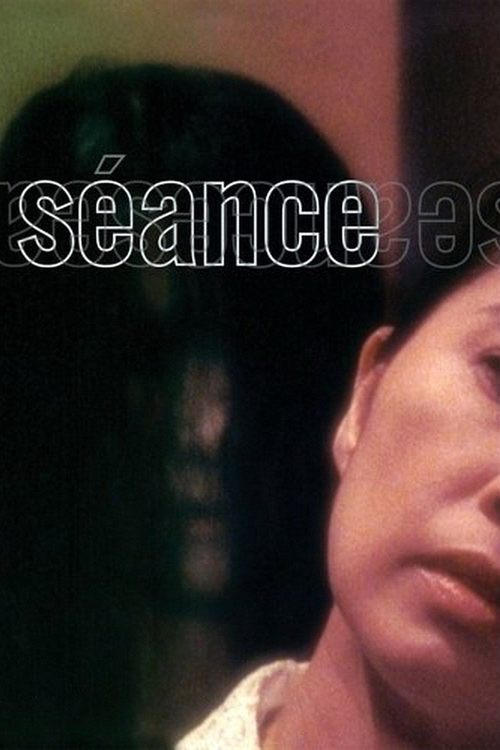
Séance
2004 · Kiyoshi Kurosawa
The J-horror master's prolific late run (Cloud at Venice, the Serpent's Path self-remake) fuels a "finally getting his flowers in the West" appreciation cycle among genre cinephiles.
When you want something quietly devastating rather than loud — a thoughtful, uneasy night for viewers who like their horror braided with guilt and ordinary human weakness.
What it's about
A suburban couple — she a waitress with real but unwanted psychic sensitivity, he a sound recordist — stumble into contact with a kidnapped girl. Instead of going straight to the police, they see a chance: she could 'discover' the child as a psychic consultant and finally be taken seriously. It's a small, almost reasonable lie, and the film follows what a small lie does to two ordinary people.
The experience
A slow tightening of the stomach — part marital drama, part crime story, part ghost film, all held at a hushed, deliberate pace. The horror arrives not in shocks but in the growing weight of what the couple can't undo.
Performances
Kōji Yakusho and Jun Fubuki play the couple with painful believability — two decent, frustrated people talking themselves into the wrong thing one plausible step at a time.
The craft
Made for television, but unmistakably Kurosawa: long takes, domestic spaces that turn subtly wrong, and dread conjured from lamplight and silence rather than effects. The husband's work recording sound effects threads an eerie audio texture through the whole film.
Why it matters
A reimagining of the British classic Séance on a Wet Afternoon that bends it toward the ghost story, it's become a favorite of Kurosawa devotees — proof his unease survives even a TV budget.
Snapshot
Séance (Japanese title Kōrei, roughly "summoning of spirits") is Kiyoshi Kurosawa's made-for-television adaptation of Mark McShane's 1961 novel Séance on a Wet Afternoon, which Bryan Forbes had already filmed in Britain in 1964 with Kim Stanley and Richard Attenborough. The 2004 date used by TMDB and some English-language catalogues reflects the film's later international circulation. The production itself belongs to the end of Kurosawa's most productive period, around 1999–2000, when he also made Charisma, Barren Illusion and Pulse (Kairo). It was made for the Kansai TV network and is usually dated to 2000 in Japanese filmographies.
Kōji Yakusho and Jun Fubuki play Katsuhiko and Junko Satō, a suburban couple. Junko has real but unwanted psychic sensitivity and works as a waitress; Katsuhiko records sound effects for television. A kidnapped schoolgirl escapes her abductor and hides in one of Katsuhiko's equipment cases during an outdoor recording session. The couple don't hand her over. Instead they decide to let Junko "find" her through clairvoyance and so prove her gift to the police and the public. The plan goes wrong, the girl dies, and the dead begin to come back.
McShane and Forbes built a psychological crime story about a fraudulent medium. Kurosawa turns it into a ghost film in which the medium is genuine and that is exactly her problem. Despite its small budget, the film is widely seen as one of the clearest statements of his ideas about how a ghost should look on screen.
Industry & production
The film was commissioned for Japanese television. Kurosawa had worked across television, V-cinema (direct-to-video features) and low-budget theatrical production since the late 1980s. In the late 1990s, network and video money still let directors with festival reputations make genre pictures quickly and cheaply. Kansai TV produced Séance as a television feature, and it was later shown at international festivals and released on home video abroad. That later circulation is where the 2004 dating comes from. Detailed figures on budget, shooting schedule and ratings are not well documented in English-language sources, and none are given here.
Making the film for television shaped it. The cast is small, most of it is shot in modest domestic interiors and ordinary public places, and the running time sits close to a broadcast slot. Kurosawa had already shown in Cure (1997) and the V-cinema Serpent's Path and Eyes of the Spider (both 1998) that tight means could produce austere, controlled films rather than compromised ones. Séance follows the same pattern. Casting Yakusho, Kurosawa's regular lead since Cure, gave the production a star whose restraint suited the material, and the cast also included Tsuyoshi Kusanagi, a member of the pop group SMAP, a choice common in Japanese television of the period.
Technology
Séance was made with ordinary professional equipment of its time and has no technical innovations to its name. Its main technological interest is in the story. Katsuhiko is a sound-effects recordist, and his microphones, field recorders, cases and studio work are central to the plot. The girl hides in one of his equipment boxes. The film keeps returning to his craft: how sounds are recorded and built, how a "real" sound is made out of something else. That sits alongside Junko's psychic perception as a second way of picking up what isn't visibly there. In a filmography that includes Pulse, with its haunted internet, this interest in recording technology as a channel for the uncanny fits a wider pattern.
The ghosts themselves are made with very few special effects. Most are actors placed in the frame, lit and blocked so that they look wrong. This low-tech method was deliberate and central to Kurosawa's ideas about horror (see Technique and Authorship & method).
Technique
Cinematography
The images are typical of Kurosawa's style around 2000: medium and long shots, long takes, a camera that watches from a distance, and dull, cool light in domestic spaces. The cinematographer's name and contribution are not well covered in the English-language literature I can confirm, so I won't name one. The ghost scenes are the important part. The dead are shown in sharp focus and at full visibility, often in the middle or far distance, standing still or moving oddly. The best-known figure is a woman in a red dress who appears in an ordinary public setting. Nothing about the photography marks her as supernatural: no blur, no distortion, no sting on the soundtrack. The frame simply carries on, and the horror comes from the fact that the camera records her the same way it records everything else.
Editing
The cutting is unhurried and holds shots longer than conventional horror usually does. Scares are seldom built on montage. Instead the film often holds a shot while the viewer slowly notices something in it. Kurosawa also uses cuts to unsettle the sense of space: a figure appears in a space we thought was empty, or a reverse shot shows something the earlier framing seemed to rule out. The editor's credit is not established in sources available to me.
Mise-en-scène / staging
The settings are aggressively ordinary: a small suburban house, a restaurant, a police station, a university office, wooded land on the edge of the city. Kurosawa often stages people at a distance from each other within the frame, with walls and doorways separating them. That fits a marriage built on quiet accommodation. Plastic sheeting, half-curtained windows and dim back rooms, which recur across his work of this period, turn up here as well. The equipment case plays several roles. It is a prop and a hiding place, and in effect it becomes a coffin. It makes concrete the idea of a life stored away out of sight.
The ghosts are placed in ways that bend normal staging rules. They stand too still, keep the wrong distance, or face slightly the wrong way. Kurosawa has described this approach in interviews, and it is the film's signature.
Sound
Because Katsuhiko is a sound recordist, the soundtrack partly tells the story. Wind, footsteps, rustling and room tone are things the characters themselves listen to closely. Kurosawa uses long silences and low ambient sound in place of a loud horror score. The composer is not something I can confirm from reliable sources. The effect is close to Cure and Pulse: dread comes from what is missing and from dull, mechanical background noise more than from emphatic music.
Performance
Jun Fubuki plays Junko as someone exhausted by her gift. She is apologetic, withdrawn and quietly desperate for some recognition outside her life of waitressing and consultations. Her ambition is small and believable, which is why the plan to fake a rescue makes emotional sense. Yakusho plays Katsuhiko with the plain decency and passivity he brought to Kurosawa's detectives and drifters. He goes along with the plan out of loyalty, and his gradual moral collapse comes through in small hesitations and averted looks. The acting is restrained throughout, which keeps the supernatural material grounded in an ordinary marriage.
Narrative & dramatic mode
The story follows McShane's structure: a childless couple, a kidnapping turned to the wife's purposes, a planned "psychic" discovery, and the collapse of the plan. Kurosawa changes two key things. In McShane and Forbes the kidnapping is planned, the medium's gift is doubtful, and the story is a study of delusion and control. In Kurosawa the girl arrives by accident, and Junko's gift is real. That moves the moral weight. The couple's crime is a decision not to act, then a cover-up, then a death that is partly accidental. The dead girl's return isn't a sign of madness. It is a fact the film treats as plainly as anything else in its world.
The mode is domestic tragedy shading into supernatural horror. Kurosawa avoids both police-procedural suspense and the conventions of a haunted-house film. Scenes are built around waiting, misunderstanding, and the slow growth of guilt. There is also a strand involving the couple's own spectral doubles, which echoes Kurosawa's Doppelganger (2003). The ending stays ambiguous and unresolved, as Kurosawa's endings usually do, and doesn't sum things up morally.
Genre & cycle
Séance belongs to the wave of Japanese horror around the turn of the millennium, usually called J-horror. It was set off by Hideo Nakata's Ring (1998) and the earlier straight-to-video "true ghost story" series. The cycle's characteristic features are long-haired female ghosts, a contemporary urban setting, curses carried by media, and an emphasis on the uncanny over gore. Séance shares the cycle's restraint and its realism about how ghosts look, but it is more literary and character-driven than most of its peers. It is also an adaptation of a British crime novel, and so it crosses into the psychic-detective and kidnapping-thriller genres that the Forbes film helped define.
Within Kurosawa's own work, Séance sits between Cure, a serial-killer film shading into the metaphysical, and Pulse, an apocalyptic ghost film. It anticipates Retribution (Sakebi, 2006), whose ghost is also a woman in a red dress who appears as plainly as a living person and who also embodies guilt the main characters have pushed out of mind.
Authorship & method
Kurosawa (b. 1955, no relation to Akira Kurosawa) came from 8mm amateur filmmaking at Rikkyo University, where he studied under the critic Shigehiko Hasumi. He went on to work in pink film and V-cinema before his international breakthrough with Cure. Hasumi's influence shows in Kurosawa's interest in how cinema represents things and in his debts to American genre directors, especially Tobe Hooper and the classical Hollywood B-film.
Kurosawa adapted Séance himself. Accounts of any co-writers or other script contributors are not consistent enough in sources I can verify to name them. The key creative choice, making the medium genuine, is his. It ties the film to ideas he worked out over these years about how a ghost should look. Kurosawa took part in the small circle of J-horror filmmakers and writers, including Chiaki Konaka, Hiroshi Takahashi and Norio Tsuruta. Their shared position, roughly put, was that a convincing film ghost should be shown plainly and undramatically, as if in a found photograph or a "real" amateur video: still, a little wrong in posture or placement, and simply present. Kurosawa has spoken and written about the idea that the frightening ghost is the one that looks like an ordinary person who shouldn't be there. Séance is one of the cleanest examples of that approach.
Yakusho is Kurosawa's most important acting collaborator of the period, appearing in Cure, Charisma, Séance, Doppelganger, Retribution and Tokyo Sonata (2008). Across these films Yakusho is the director's everyman, an ordinary man who becomes a vehicle for moral and metaphysical drift. For cinematography, music and editing, the documentation is thin, and this dossier makes no specific claims.
Movement / national cinema
Kurosawa belongs to the generation of Japanese directors who became prominent internationally in the 1990s, alongside Takeshi Kitano, Shinji Aoyama, Nobuhiro Suwa and Hirokazu Kore-eda. Many of them were formed outside the old studio system, in pink film, V-cinema, television and independent production. That generation is often called a Japanese new wave, and Hasumi taught several of its members. Its films tend toward long takes, distant framing and a sense of social drift and disconnection in post-bubble Japan.
Séance belongs to two worlds at once. It is a genre film made for television and part of the J-horror boom. It is also an auteur work that shares the art-cinema style of Kurosawa's festival films. That combination of commercial genre and an auteur's attention to form defines Kurosawa's career and much of his generation's.
Era / period
The film was made at the end of Japan's "lost decade" after the asset bubble burst. The 1995 Aum Shinrikyo sarin attack and the Kobe earthquake still hung over the culture. Commentators often link Kurosawa's films of this time, with their ruined suburbs, isolated people, quiet apocalypse and loss of social bonds, to that atmosphere. Séance works on a smaller domestic scale, but its picture of a childless suburban couple stuck in routine work, longing for a recognition that never comes, fits the period's concern with disconnection and stalled lives. Psychic television programmes and paranormal entertainment were also part of Japanese popular culture then, and Junko's hope for public validation draws on that media world.
Themes
- The cost of being seen. Junko's gift has brought her nothing but strain, and she wants it publicly recognised. Ordinary ambition, the wish to matter once, turns monstrous when it uses a child's suffering as material.
- Passivity as guilt. Katsuhiko's going-along, the couple's postponements, and the decision not to call the police form a moral chain in which no single act seems wicked, yet together they cause a death. Kurosawa is more interested in this gradual complicity than in deliberate evil.
- The dead as plain fact. The ghosts aren't metaphors the film explains away. They are present, visible and unexplained. Guilt and the supernatural can't be separated: the dead come back because something was done to them and pushed aside.
- Recording and perception. Sound recording and psychic sensitivity run in parallel. Both pick up what is beyond ordinary perception, and both raise the question of whether what is captured is real or constructed.
- Doubling and the self. Both partners meet their own doubles, a motif Kurosawa took further in Doppelganger. It suggests the self is split by what it has done or refused to see.
- Marriage as a closed system. The couple's loyalty is real and tender, and it also seals them off from the outside world. Their closeness is what makes the crime possible.
Reception, canon & influence
Critical reception. As a television film, Séance got little press coverage on first broadcast in Japan. Its reputation grew through festival screenings and home video, and especially through Western interest in Kurosawa after Cure and Pulse. English-language critics who covered it generally rated it as a minor but important Kurosawa work, praising the restraint of the ghost scenes and the performances by Fubuki and Yakusho. Its standing comes more from critics and cinephiles than from wide distribution. Specific review quotations aren't reproduced here because they can't be reliably attributed.
Influences on the film (backward). The main source is McShane's Séance on a Wet Afternoon (1961) and Forbes's 1964 film, whose central premise Kurosawa keeps while changing its meaning. Kurosawa's ideas about showing ghosts came from his exchanges with the J-horror writer-directors of the 1990s and from the "true ghost story" video tradition. His sense of genre owes much to American horror and B-cinema, which he has often named as an influence, and his formal precision reflects Hasumi's teaching.
Legacy (forward). Séance is a test case for the Kurosawa ghost: a figure in full view, without distortion, horrifying because it looks so normal. The red-dressed apparition anticipates the central ghost of Retribution, and the doubles prefigure Doppelganger. More broadly, the film shows that the J-horror method could carry adult moral drama rather than just scares, a lesson visible in later art-horror that deals with guilt and the domestic. In criticism, Séance is regularly cited alongside Cure, Pulse and Retribution as part of Kurosawa's body of horror work. It is also one of the more striking cases of a Japanese director reworking a British literary source, and the comparison between the McShane/Forbes and Kurosawa versions is a useful study in how the same premise means different things in different cultures and genres.
Influences: the films it descends from and the films it influenced
- Séance on a Wet Afternoon (1964) — Kurosawa keeps the plot the source film is built on: a medium and her passive husband stage a child's kidnapping so she can 'solve' it psychically. He then makes her powers genuine, so the husband's quiet going-along becomes guilt rather than a con.
- The Innocents (1961) — Miss Jessel standing still across the lake in daylight, undistorted and simply there, is the model that the Konaka–Takahashi circle cited for the plain-sight ghost Séance uses throughout.
- The Haunting (1963) — Kurosawa has often named it as a key horror touchstone. It builds dread in a domestic setting from sound and the empty frame instead of effects, and Séance works the same way with ambient silence.
- Honto ni Atta Kowai Hanashi (1991) — This V-cinema 'true ghost story' video shows ghosts as still, slightly misplaced figures caught on flat, amateur-looking footage. That look became the J-horror grammar Séance borrows for its apparitions.
- Don't Look Up (Joyū-rei) (1996) — Hiroshi Takahashi's script makes the ghost a figure who simply appears in a film-within-a-film, ordinary and in the wrong place. It is an early statement of the ghost theory Séance later applies to a domestic thriller.
- The Conversation (1974) — Its sound-recordist protagonist, whose detached professional listening turns into moral complicity, prefigures Séance's sound-effects man. In both films the act of recording ties passivity to guilt.
- Blow Out (1981) — A sound recordist gathering ambient sound in the field captures evidence of a crime by accident. Séance repeats the setup when Sato's recording trip pulls the kidnapped girl into his life.
- Cure (1997) — Cure sets the template Séance reuses: distant, fixed long takes in which violence or wrongness sits in the middle of the frame without cutting in, and Koji Yakusho as the ordinary man worn down by events.
- Pulse (Kairo) (2001) — Its ghost walking toward camera with a subtly wrong gait, a Konaka-inspired idea, is the direct precursor of Séance's apparitions, which frighten through posture and placement rather than makeup.
- Retribution (Sakebi) (2006) — Its red-dressed woman, shown full-figure and perfectly still in long shot, directly develops Séance's red-dress apparition. Yakusho again plays a man whose forgotten passivity becomes guilt.
- Lake Mungo (2008) — The ghost is found by re-examining home video and photos, a still figure standing where it shouldn't, and the dead girl sees her own double. This is the plain-sight, recorded-ghost theory carried into mock-documentary.
- Journey to the Shore (2015) — Kurosawa pushes the plain-sight ghost to the point where the dead husband looks no different from the living, filmed in calm long takes with no visual marker of the supernatural.
- Personal Shopper (2016) — A genuine medium is shown matter-of-factly, and apparitions are held in quiet, distant takes inside ordinary houses. It reuses the Kurosawa inversion: psychic gifts are real, and grief and guilt are what drive the drama.
- Ringu (1998) — Takahashi's other key script ties ghostly presence to recorded media and builds on held, delayed discovery, the same circle of theory Séance draws from.
- Ju-on: The Grudge (2002) — Shimizu, Kurosawa's former student, put ghosts plainly into lit domestic rooms, in corners and on stairs. It is the same plain-sight method, applied to the ordinary home just as Séance applies it to the couple's house.
- Doppelganger (2003) — Made the year before Séance with Yakusho, it stages the double as a physically ordinary second self, often in split-screen. Séance's ghostly double of the medium uses the same deadpan doubling.
- Noroi: The Curse (2005) — It takes the true-ghost-story video tradition behind Séance's ghosts and stretches it to feature length, building horror from figures caught casually at the edge of documentary footage.
- Berberian Sound Studio (2012) — A timid sound-effects technician whose craft involves him in horror he passively goes along with echoes Sato's profession. Strickland favors sound design and ambience over showing anything on screen.
Similar films
- Noroi: The Curse (2005) — influence & lineage · same viewing thread
- Cure (1997) — influence & lineage · same viewing thread
- Ju-on: The Grudge (2002) — influence & lineage
- The Haunting (1963) — influence & lineage
- Creepy (2016) — same viewing thread
- Retribution (2007) — same viewing thread
- Chime (2024) — same viewing thread
- Pulse (2001) — same viewing thread
All the films related to Séance →
Watch it with: curated runs of related films
- Screens That Swallow You — A run of films where the screen — a pirate broadcast, a haunted website, a monitor, a late-night monster-of-the-week show — stops being a window and becomes a doorway that pulls the watcher bodily through into unreality.
- Doubles, Dreams, and Dissolving Selves — Watch these when you want the floor to give way — dream machines, hypnotists, doppelgängers, and haunted houses where perception and identity quietly come undone.