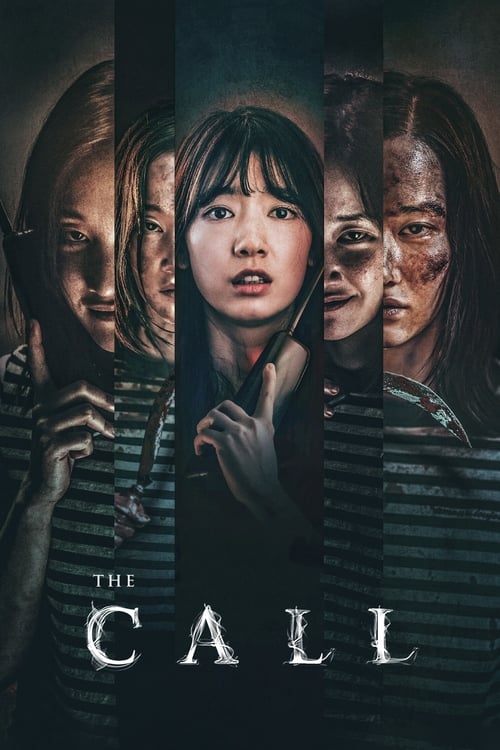
The Call
2020 · Lee Chung-hyun
For a night when you want a smart, vicious thriller that keeps you guessing — pure adrenaline with a brain, best watched in one sitting with the lights low. This is challenge, not comfort: it goes dark and stays there.
What it's about
In 2019, a young woman returns to her family's isolated rural house and finds an old cordless phone that connects her to another woman living in the same house in 1999 — twenty years in the past. The two become friends across the line, and each realizes the other can rewrite her fate: one wants to undo a childhood tragedy, the other wants out of a brutal home. Then the calls turn into something far more dangerous, a cat-and-mouse game played across two decades where every change in the past ripples instantly into the present.
The experience
A slow-burn setup that snaps into relentless, white-knuckle tension — the time-paradox rules keep shifting the ground under you, and the film escalates with real cruelty and momentum. It's the kind of thriller where you watch the present literally rewrite itself and feel the floor drop.
Performances
Jeon Jong-seo is the reason to watch — her turn as the woman on the 1999 end of the line is gleeful, feral, and genuinely frightening, one of the great unhinged villain performances in recent Korean cinema. Park Shin-hye grounds the film as her increasingly desperate opponent.
The craft
Lee Chung-hyun's debut feature is strikingly confident: the two time periods are shot with distinct textures, and the editing makes cause-and-effect across twenty years land with a jolt — a change in 1999 visibly warps 2019 mid-scene. The phone-call staging turns two women in two kitchens into a full-blown action thriller.
Why it matters
A breakout Netflix release that announced both its first-time director and confirmed Jeon Jong-seo as a major talent after Burning, becoming one of the most-watched Korean thrillers of its moment internationally.
Snapshot
The Call (Korean title Kol) is a South Korean psychological thriller with a time-paradox premise, and Lee Chung-hyun's first feature. In 2019, Kim Seo-yeon (Park Shin-hye) comes back to her family's rural house while her mother is in hospital. She finds an old cordless phone, and through it she reaches Oh Young-sook (Jeon Jong-seo), a young woman living in the same house in 1999. Young-sook is kept there by a shamanic foster mother who abuses her. The two women become friends across the twenty years. Each sees a chance to change her own past: Seo-yeon wants to prevent the fire that killed her father, and Young-sook wants to escape her captor. Once Seo-yeon's past is rewritten, it becomes clear that Young-sook is a serial killer. The friendship then turns into a hostage situation conducted down a phone line, where every act in 1999 immediately changes the house, the bodies and the memories of 2019.
The film was meant for Korean cinemas in March 2020. The COVID-19 pandemic stopped that release, and it went out worldwide on Netflix in late November 2020. It is a good example of the year when Korean genre films lost their theatrical launch and found a global audience on streaming. Most critics regarded Jeon Jong-seo's performance as its main achievement, and the film made her a leading genre actress.
Industry & production
The Call came out of the commercial Korean film industry at a time when well-made mid-budget genre pictures were its standard export. It is an adaptation of The Caller (2011), a British–Puerto Rican thriller directed by Matthew Parkhill. That film also has a woman in an apartment receiving calls from a disturbed woman in the past who can change the present. Lee's version keeps the basic mechanism. It changes the cast of characters, the setting and the moral structure: two women of roughly the same age, a Korean rural house, and a story about both women trying to save themselves. Distribution was through Next Entertainment World (NEW), one of the major Korean distributor-investors. The available sources list Yong Film as a production company, but the full financing and producing credits are not well documented in English, and this account does not try to reconstruct them.
The release history matters most. The film was ready for theatres in spring 2020. Covid-19 had arrived in South Korea in early 2020, and the theatrical release was postponed and then dropped. Netflix acquired the global rights and premiered the film in November 2020. Other Korean titles that year followed a similar path, most notably Time to Hunt, which also went to Netflix after its theatrical release was cancelled. Because of this, the film never had a Korean box-office run of the usual kind, so no box-office figure exists to cite. Its first audience was a global streaming audience, mostly watching with subtitles or dubbing.
Technology
The film's technology is the telephone. A corded or cordless landline phone ties the plot to a fixed place: two women in the same house, linked by the house rather than by personal devices. The 2019 scenes have mobile phones, but the plot depends on the old handset, which works almost like an object in a ghost story. The 1999 setting is the last year before mobile phones became universal in Korea, and the film uses that period's technology (a Seo Taiji cassette, broadcast television, a landline) to mark it.
Digital post-production is important to how the film looks. Its best-known effect is the "rewrite" shot. When Young-sook changes something in 1999, the 2019 house changes in front of Seo-yeon: wallpaper peels and grows back, rooms decay or come back to life, and furniture and stains appear and disappear in continuous moving shots. These are done with visual effects and practical set changes combined. The details of the VFX vendors and methods are not well documented in English-language sources.
Technique
Cinematography
The film separates its two time periods with colour. The 2019 scenes start out cold, muted and empty, matching the house's neglect and Seo-yeon's grief. The 1999 scenes are warmer, often lit by lamps, and have a closed-in, domestic feel that slowly becomes oppressive. As the timelines start to bleed into each other, the camera often moves around the same room in a single take while the decade changes around it. This visual device is the film's main formal idea: the house is one space with two times layered on top of each other. Lee tends to use slow push-ins and close framing on faces held to a phone. Since much of the drama is two people on a call, a great deal rests on reaction shots and on the actors' hands, mouths and eyes. The cinematographer's name is not given here because I cannot confirm it reliably.
Editing
The editing alternates between 1999 and 2019 in the manner of a phone conversation. Early on this works like ordinary shot/reverse-shot. As the threat grows, the cutting turns into a kind of suspense built between periods: Young-sook acts in the past, and the cut forward shows what that act has done in the present, often to a body. The film's sense of cause and effect depends on these cuts being instant. There is no delay between the change in the past and its result. The final act speeds this alternation up. The film also adds a coda inside the end credits that reverses its apparent resolution, and this coda became one of the most discussed things about it.
Mise-en-scène / staging
The house is the main character, and how it is designed is central to the film. It is a two-storey rural home with a hidden basement, which links to the strawberry-farming area around it. The production design has to show the same rooms as a 1999 shaman's household and as a 2019 family home that has fallen apart. Objects from the two periods carry the story: shamanic ritual items, Seo Taiji fan materials, a hidden room behind a wall, a diary. The staging also repeatedly uses walls and floors as barriers, with characters on opposite sides of a partition, which fits the film's broader idea of people kept apart by time while sharing one space. Violence is mostly kept brief and blunt rather than drawn out. What frightens is the knowledge that someone is about to be harmed somewhere outside the frame and in another decade.
Sound
Sound design is especially important because the phone call is the main narrative device. Ringing, line static, breathing, and the mismatch between a voice on the line and the room the listener is standing in are all used for suspense. A ringing phone is the film's repeated signal of threat. Music fills out the genre register with low drones and percussive stingers during the violent turns. The score is credited to the composer working under the name Dalpalan, a regular figure in Korean genre scoring. I would treat that credit as needing confirmation against the film's own credits. Seo Taiji's music is part of the 1999 sound world, and it ties Young-sook to a specific generational fandom of the late 1990s.
Performance
The film is best remembered for its performances, and above all for Jeon Jong-seo. She had made her screen debut in Lee Chang-dong's Burning (2018), where she gave a quiet, enigmatic supporting performance. As Young-sook she does the opposite. She starts vulnerable and playful, a captive teenager full of delight at having a friend, and she becomes a killer with a reckless, gleeful freedom: laughing, pacing, taunting down the phone, physically loose and unpredictable. Critics regularly described the role as her breakout and compared the volume and abandon of the performance with Burning.
Park Shin-hye, mainly known as a television star and romantic lead, plays the more reactive role. Seo-yeon has to grieve, then hope, then feel growing panic and complicity, and much of this happens while she listens. Her performance is often described as the film's anchor, the steady pole against Jeon's volatility. The supporting cast plays the two mothers. Kim Sung-ryoung plays Seo-yeon's mother, and Lee El plays Young-sook's foster mother, the shaman. The film sets these two maternal figures against each other, one who protects and one who imprisons. Oh Jung-se and Park Ho-san appear in supporting roles in the two timelines.
Narrative & dramatic mode
The story moves through three phases. The first is uncanny discovery: a voice from the past, a series of tests that prove the link is real, and friendship. The second is wish-fulfilment: Seo-yeon asks Young-sook to prevent her father's death, it works, and the present is transformed into a happy family life. The third is horror: Young-sook's own story comes out, she kills her foster mother and others, and because Seo-yeon now has a life she cannot bear to lose, Young-sook can control her through threats to that life.
The film's dramatic engine is an uneven bargain built on its time mechanism. The past can change the present, but the present can only use knowledge. Young-sook can physically act on Seo-yeon's family in 1999. Seo-yeon can only advise, warn, or keep quiet about what the future holds, including what she learns about Young-sook's own fate. The two women become captor and captive in turn, and the information that passes between them works as both a weapon and a debt.
The film does not settle its paradox logic neatly. Viewers and reviewers commonly pointed out that the rules can feel loose, especially in the final act and the mid-credits coda. Admirers tend to describe this as nightmare logic rather than puzzle logic. The tone is pulp and escalating, a thriller and not a time-travel puzzle film.
Genre & cycle
The Call belongs to an established international cycle of stories about communication across time. Notable examples are Frequency (2000, a ham radio linking a son and his dead father), the Korean film Il Mare (2000, letters exchanged through a seaside mailbox across two years), and its American remake The Lake House (2006). Its direct source, The Caller (2011), had already turned this romantic or sentimental device into horror. On Korean television, tvN's Signal (2016) had made a time-crossing walkie-talkie the basis of a crime procedural. The Call combines these lines: Il Mare's yearning across time, Frequency's rescue of a dead father, and the threat of The Caller.
It is also part of the Korean thriller tradition of the 2000s and 2010s, which deals in serial killers, cruel domestic spaces and morally compromised protagonists, and it draws on Korean shamanism (mudang ritual) of the kind used in occult horror. The film's specific variation is to centre two women, one as the victim and survivor and the other as the predator, in a genre usually built around male detectives and male killers.
Authorship & method
Lee Chung-hyun came to The Call after his short film Bargain (2015), a tense, twisty crime short about a transaction that goes wrong. It was widely seen at festivals and online, and it established his reputation for compact suspense and abrupt reversals. The Call is his debut feature. He wrote the adaptation as well as directing it, and it shows the habits seen in his short: a confined setting, escalation built from small transactions, and a liking for late reversals.
His collaboration with Jeon Jong-seo became central to his career. The two later worked together again on the Netflix action thriller Ballerina (2023), and they are known to be partners off screen. Seen together, the films suggest a director making a particular kind of female-led violent genre cinema for a streaming context.
The available record on his other key collaborators (cinematographer, editor, composer) is thin in English sources. Beyond the likely score credit noted above, this dossier does not name them, because it cannot confirm them.
Movement / national cinema
The Call is a product of the mature commercial Korean industry rather than of an art-cinema movement. The "Korean New Wave" generation (Park Chan-wook, Bong Joon-ho, Kim Jee-woon, Na Hong-jin) had made the dark, twisting genre film a national speciality and a recognised export brand by the 2010s. Lee is part of a younger generation that inherited that brand and its expectations: violent reversals, unstable sympathies, class and family as pressure points, and high technical polish.
The film's release coincided with a turning point for Korean screen culture. Parasite had won the Academy Award for Best Picture in February 2020. Within the next year, Netflix's Korean films and series became a global distribution channel, culminating in Squid Game in 2021. The Call is one of the films that tested this channel at the start of the pandemic. It also illustrates how the line between Korean film and television stars was dissolving: Park Shin-hye was mainly a K-drama star, and Jeon Jong-seo came from art cinema.
Era / period
The film is dated twice over. One layer is its 1999 setting, which it presents with nostalgic texture: Y2K-era technology, broadcast TV, and Seo Taiji fandom. Seo Taiji and Boys had transformed Korean popular music in the 1990s, and Seo Taiji's solo career continued around the turn of the millennium. The film uses this fandom to give Young-sook a recognisable adolescent identity, which makes her later turn more disturbing. The second layer is its production and release era, 2019–2020. That period was marked by the pandemic's disruption of theatrical exhibition and the rise of streaming-first release. The film's own claustrophobia, two women each confined to a house and connected only by a line, was widely noted as matching the lockdown conditions under which audiences first watched it. That match is an accident of timing and was not the filmmakers' intention.
Themes
The past as something you can bargain with. The film treats the past as open to negotiation rather than fixed, and it treats that openness as a curse. Seo-yeon's wish to undo her grief gives a monster power over her.
Two women as mirror images. Seo-yeon and Young-sook are both daughters harmed by a household. One has lost a father and blames her mother. The other is imprisoned by a mother figure. Their friendship is based on shared wounds, and the film asks whether escaping a household's violence leads to recovery or to repeating it.
Mothers. The film sets up a protective birth mother and a punishing shaman foster mother, the first linked to love and guilt and the second to ritual and control. Much of its emotional structure rests on what is owed to the maternal figure and how it gets repaid.
The house as an archive. The home stores layered time. Hidden rooms, buried evidence and changed walls make the house the physical record of every decision, and it is literally rebuilt by acts of violence.
Complicity. Seo-yeon keeps the knowledge of Young-sook's fate to herself, and her decisions about what to say and what not to say make her a participant in the violence rather than its innocent target.
Reception, canon & influence
Critical reception. The Netflix release brought the film a large international audience and generally positive reviews. Critics most often praised its premise, its craft as a suspense machine, its visual transitions between timelines, and above all Jeon Jong-seo's performance. The most common criticisms concerned how loose its time-paradox rules are, its escalating plausibility problems in the final act, and the mid-credits twist, which some felt was more a provocation than a payoff. In Korea, Jeon's performance received awards attention in the 2021 season. The full list of honours should be checked against Korean award records, and it is not reconstructed here.
Influences on the film (backward). The direct source is Matthew Parkhill's The Caller (2011). More widely, the film draws on the time-communication cycle (Frequency, Il Mare, Signal), Korean serial-killer and domestic-horror thrillers, and the shamanic horror tradition in Korean cinema. Jeon's performance has a clear link, through contrast, to her debut in Lee Chang-dong's Burning (2018).
Legacy (forward). The Call's effects are most visible in careers and in distribution. The film established Jeon Jong-seo as a leading genre actress, and she went on to lead roles including Ballerina (2023, again with Lee Chung-hyun) and other projects in Korea and abroad. It turned Lee from a well-regarded short filmmaker into a feature director with a Netflix relationship. It is also one of the 2020 test cases, along with Time to Hunt and others, showing that a Korean genre film without a theatrical release could reach a worldwide audience on streaming. That model shaped Korean genre production over the following years. Its influence on later films and their stylistic choices, beyond these institutional and career effects, is hard to document precisely and should not be overstated.
Influences: the films it descends from and the films it influenced
- The Caller (2011) — The direct source. A landline links a woman in an apartment to a volatile female caller in the past, and every change the caller makes in the past is shown as a physical rewrite of the present-day room. The Call adapts this structure and turns it into a two-way hostage bargain.
- Frequency (2000) — It set the cross-temporal cause-and-effect cut: an action in the past is followed at once by a cut to its result appearing in the present (the scorched desk, the changed photographs). The Call relies on this grammar for its rewrite shots.
- Il Mare (2000) — The Korean template for a single dwelling shared across two time periods, with a mailbox as the medium. It treats the house as one stage that two occupants share across the years, and The Call turns that idea toward horror.
- Ditto (2000) — A Korean film in which a ham radio connects two students across decades. It establishes the local form of time-crossing communication built on period nostalgia, which The Call inverts by turning a sentimental connection into predation.
- Sorry, Wrong Number (1948) — It built suspense around a woman trapped in a house whose only link to danger is the telephone. Overheard calls work as threat signals, and the ringing phone stands in for the killer.
- When a Stranger Calls (1979) — Its opening turns the ringing landline into a standalone dread device, timing each ring and pause to tighten the screws on a woman alone at home, which is how The Call uses its cordless phone.
- The Housemaid (1960) — It is the founding Korean domestic horror film. It stages the two-storey house and its staircase as a vertical arena where a female intruder's violence plays out, and The Call's house returns to that layout.
- The Chaser (2008) — It defined the modern Korean serial-killer thriller as relentless pursuit centred on a private house used as a kill site, along with its near-misses and its refusal of rescue.
- The Wailing (2016) — Its long, percussive mudang exorcism sequence re-established the gut ritual as a staged horror set piece in mainstream Korean genre cinema. The Call's shamanic rite on the young Young-sook draws directly on that model.
- Bargain (2015) — Lee's own short. A single negotiation escalates through small transactional reversals in a confined room, the same engine as Young-sook trading information for survival over the phone.
- Burning (2018) — Jeon Jong-seo's debut uses a withheld, opaque presence. The Call deliberately inverts this into a manic, kinetic performance, and that contrast defines her screen persona.
- Forgotten (2017) — Builds directly on the Korean domestic thriller's dual temporal logic by making the two timelines simultaneous rather than retrospective, with retroactive coherence as the payoff — the formal architecture Forgotten helped consolidate in the genre now becomes the premise.
- Ballerina (2023) — Lee and Jeon carry The Call's female-led violence and its bold colour coding into a neon revenge film. It extends the director's streaming-era genre style.
- Ditto (2022) — It remakes the radio-across-time premise with exactly The Call's 1999/present split. It uses Y2K-era period design and differently graded timelines to mark which decade the audience is in.
- The Lake House (2006) — The Hollywood remake of Il Mare. It stages the glass house itself as the shared space in two time periods and shows letters changing the present on cue, a device The Call uses for violence.
- The Black Phone (2022) — A disconnected landline carries voices from another time (the dead victims) to a captive in a house. Each call's information changes the outcome, the same device The Call uses.
- Déjà Vu (2006) — A message sent back a few days alters a killer's actions, and the film cuts straight to the rewritten present. This is cross-time messaging as a thriller mechanism, in the same register as The Call's middle act.
Similar films
- The Chaser (2008) — influence & lineage · same viewing thread
- Burning (2018) — influence & lineage
- A Tale of Two Sisters (2003) — same viewing thread
- Parasite (2019) — same viewing thread
- Memories of Murder (2003) — same viewing thread
- Oldboy (2003) — same viewing thread
- Memoir of a Murderer (2017) — same viewing thread
- Exhuma (2024) — same viewing thread
All the films related to The Call →
Watch it with: curated runs of related films
- New Korean Cinema — Watch these in a run and you feel one national cinema flip between monster movie, revenge thriller, gothic horror, and slow-burn procedural without ever loosening its grip on class, history, and family.