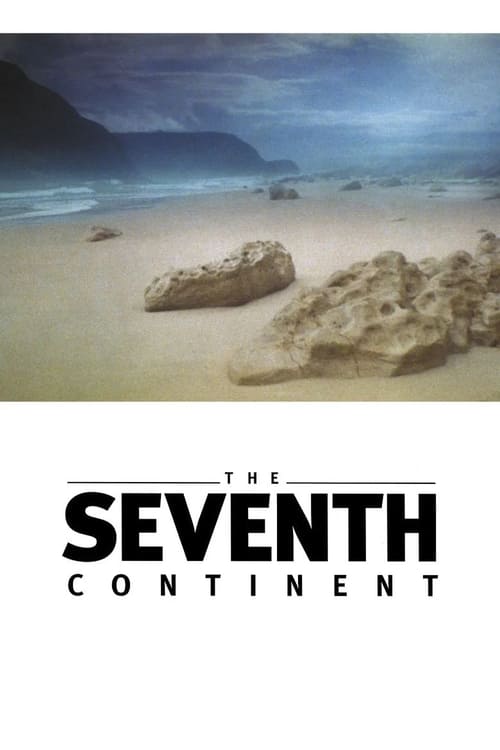
The Seventh Continent
1989 · Michael Haneke
For when you want to be shaken, not entertained — a film to chew on for days and argue about after. This is the opposite of comfort viewing; save it for when you're ready to sit with something bleak and unblinking.
What it's about
An ordinary, well-off family in an Austrian city — an engineer, an optometrist, their young daughter — moves through three years of alarm clocks, commutes, supermarket checkouts, and polite dinners. On the surface nothing is wrong. But the routine has a hollowness that grows harder to ignore, and the family is quietly preparing a decision that the film withholds until it can no longer be avoided.
The experience
Cold, precise, and genuinely disturbing — not through violence you see coming but through the slow accumulation of ordinary details that start to feel like a trap. It's a film that gets under your skin and stays there; the final stretch is among the most unnerving in modern cinema.
The craft
Haneke builds the film from fragments — hands, objects, transactions, often with faces cut out of frame entirely — so daily life becomes an assembly line you watch with growing dread. The rigor is total: flat sound, clinical framing, no score to tell you how to feel. It rewards a quiet room and zero distractions.
Why it matters
Haneke's first cinema feature announced one of Europe's most uncompromising directors, and its icy dissection of middle-class comfort set the template for everything he made afterward.
Snapshot
The Seventh Continent (Der siebente Kontinent) is Michael Haneke's first theatrical feature, made when the director was already in his late forties after two decades of work in Austrian and German television. It chronicles three years in the life of a prosperous, unremarkable middle-class family in an Austrian city — Georg, an engineer; his wife Anna, an optometrist; and their young daughter Eva — who, after a procession of ordinary days, methodically dismantle their household, destroy their possessions, and take their own lives. The film is built almost entirely from the surfaces of routine: alarm clocks, breakfast tables, supermarket conveyor belts, the interior of a car wash. Its most notorious passage shows the family systematically wrecking everything they own and flushing a large sum of cash down the toilet, an image that scandalized early audiences more than the deaths themselves. The film announces, in fully formed terms, the rigor, the moral seriousness, and the diagnostic coldness that would define Haneke's cinema for the next thirty years. It is the opening panel of what Haneke himself came to call the "Trilogy of Emotional Glaciation."
Industry & production
The film was produced by Wega Film, the Vienna company run by Veit Heiduschka, who would become Haneke's long-term producer and back nearly all of his Austrian-period work. It was an Austrian production, modest in budget and scale, drawing on the support structures of Austrian film funding and the Austrian state broadcaster ORF, with which Haneke had a long professional relationship from his television years. The exact financing figures are not something I can state with confidence, and I will not invent them; what is clear from the production's profile is that this was a small, controlled, domestically financed feature rather than an international co-production.
The project's origin is well documented in Haneke's own accounts: he based the film on a real case he had encountered — a seemingly contented bourgeois family who destroyed their belongings and killed themselves without leaving any psychological explanation. Haneke was reportedly struck precisely by the absence of a legible motive, and he built the film around refusing to supply one. The decision to make a debut feature out of such intractable material, and to do so in a deliberately austere, anti-dramatic register, was an unusually self-assured move for a first-time feature director, and it reflects the maturity Haneke brought from television rather than the experimentation of a novice.
The film premiered in 1989 and circulated through the European festival system, where it established Haneke's name among critics. It is commonly cited as having screened at Cannes that year; I am confident of its 1989 festival emergence and its strong critical reception on the circuit, though I would not want to overstate the precise sidebar or the specific prizes without firmer recall.
Technology
The Seventh Continent was shot photochemically on 35mm, in the standard professional format of late-1980s European art cinema, and exhibited as a celluloid print. There is nothing technologically experimental in the apparatus; Haneke's radicalism is entirely a matter of how conventional tools are deployed. The film's power comes from an aesthetics of restriction — fixed framings, hard cuts to black, an unmanipulated soundscape — rather than from any novel camera or post-production technology. If anything, the film is a demonstration that the most disturbing effects can be produced by withholding the expressive resources the medium makes available, rather than by adding to them.
Technique
Cinematography
The photography is credited to Anton Peschke, who shot several of Haneke's early features. The visual method is the film's signature: a camera that observes rather than dramatizes. Haneke and Peschke favor static, frontal, often eye-level or downward compositions, with the human figures frequently cut off by the frame or subordinated to objects. The film opens and repeatedly returns to fragments — hands, a faucet, a cereal bowl, the mechanism of the family car passing through a car wash — so that the world is presented as an inventory of things and gestures rather than a space inhabited by psychologically rounded people. Faces are withheld; for long stretches we see the parents only partially, or from behind. The lighting is flat and unglamorous, the palette muted toward grays, blues, and the sterile whites of appliances and tiled surfaces. This decoupling of image from interiority — the refusal to let us read emotion off a face — is the formal engine of the film's dread.
Editing
The editing, credited to Marie Homolkova, is the film's most aggressive formal element. The film proceeds in short, discrete shots separated by hard cuts to black, a device that imposes a rhythm of interruption and erasure across the entire running time. These black intervals function almost musically, as rests, and they progressively strip away conventional continuity, denying the viewer the smooth flow that would naturalize the family's behavior. The film is also organized into three large temporal blocks — successive years — which structure the narrative as repetition with mounting deviation. The cutting refuses establishing logic and emotional cueing; we are given events in fragments and made to assemble, or fail to assemble, their meaning. The destruction sequence late in the film is edited with the same detached, procedural patience as the breakfast scenes, which is precisely what makes it unbearable.
Mise-en-scène / staging
Haneke's staging is built on routine and repetition. The same actions — waking, washing, eating, driving, shopping — recur across the film's years with small, ominous variations. The domestic interiors are clean, ordered, anonymously modern; the supermarket, the bank, the car all read as nodes in a closed circuit of consumption and labor. The famous car-wash shots, with water sheeting over the windshield, become a recurring motif of enclosure and blankness. Within this environment Haneke stages behavior with clinical exactness, letting the duration of mundane acts accumulate weight. When the family begins its work of destruction, the mise-en-scène does not change register; the same composed, frontal observation is applied to the smashing of furniture and the tearing of clothes, so that annihilation is presented as merely another household task.
Sound
The soundtrack is overwhelmingly diegetic and unsentimental: the hum of appliances, traffic, television, the mechanical noises of the car wash and the household. Haneke pointedly refuses the consoling, interpretive function of a non-diegetic score; there is no orchestral music telling us how to feel. Music enters chiefly as something within the world — radio and pop sources — which sharpens the sense of an emotional vacuum rather than filling it. (The film makes notable use of a contemporary pop song heard diegetically; I recall its presence as a deliberately incongruous element but won't attribute a specific title with false precision.) The soundscape's banality is itself the point: terror is lodged in the ordinary acoustic texture of bourgeois life.
Performance
The performances are deliberately undemonstrative. The principal adults are played by Birgit Doll (Anna) and Dieter Berner (Georg), with the child Eva played by a young performer (Leni Tanzer, per the standard credits). Haneke directs the actors away from psychological display: they perform routine more than they perform feeling, and the film withholds the cathartic breakdowns or explanatory speeches that conventional drama would demand. The effect is of people sleepwalking with terrible deliberation. The restraint is essential to the film's refusal of explanation — the actors give us behavior without a readable inner life, leaving the spectator to confront the opacity of the act.
Narrative & dramatic mode
The film's dramatic mode is anti-dramatic by design. It substitutes accretion for plot: a near-plotless first two-thirds of repeated routine, building an almost intolerable sense of suspended meaning, followed by the methodical catastrophe. Haneke withholds backstory, motive, and resolution. There is no detective, no diagnosis, no note that satisfactorily explains the family's choice. The narration is elliptical and fragmentary, organized around objects and intervals of black rather than around causal chains. This is a cinema of refusal — refusal of identification, of catharsis, of the reassurance that suffering can be understood. The closest the film comes to an interior voice is a letter the parents write to relatives, but it explains nothing essential. The "seventh continent" of the title — evoked in the daughter's imagination and in recurring images of a shorefront — functions as the only metaphorical opening, a vision of escape that is also, unmistakably, a figure for death.
Genre & cycle
Nominally a drama, the film resists genre. It can be read as a horror film without a monster, a procedural without a crime to solve, a domestic melodrama drained of melodrama. It belongs most clearly to a cycle of Haneke's own making: it is the first installment of the Glaciation Trilogy (sometimes the "Trilogy of Emotional Glaciation"), completed by Benny's Video (1992) and 71 Fragments of a Chronology of Chance (1994). The three films share a diagnosis of affluent late-twentieth-century Europe as emotionally frozen, mediated, and prone to sudden, inexplicable violence. Within that cycle, The Seventh Continent establishes the foundational terms; the later films extend the analysis toward media spectatorship and toward random social violence.
Authorship & method
The Seventh Continent is the inaugural statement of one of European cinema's most identifiable authorial signatures. Haneke wrote the screenplay (drawn from the real case), and the film already contains the core of his method: the fragmentary structure, the static frontal camera, the suppression of music and psychological explanation, the implication of the spectator in acts of looking, and the moral interrogation of bourgeois comfort and complicity. His key collaborators here would recur across his Austrian period — producer Veit Heiduschka and Wega Film as the production home, cinematographer Anton Peschke for the early features, and editor Marie Homolkova. Haneke's authorship is best understood as a method of withholding: he organizes his collaborators' craft toward subtraction — removing the cues, the music, the explanatory scenes that mainstream cinema relies on — so that the viewer is left without the customary supports and forced into an active, uneasy reckoning. This is the program that would culminate in Funny Games, Caché, The White Ribbon, and Amour.
Movement / national cinema
The film is a landmark of the revival of Austrian art cinema in the late twentieth century. Austrian feature production had long been overshadowed by German cinema and by Austria's own avant-garde and documentary traditions; Haneke, emerging from a substantial television career, brought a rigorous feature-film sensibility that helped reposition Austrian cinema on the international festival map, alongside and ahead of figures such as Ulrich Seidl. The film's sensibility is recognizably Austrian in its cold scrutiny of bourgeois propriety and its inheritance of a critical, even misanthropic strain in Austrian arts — a lineage often associated with writers like Thomas Bernhard and Elfriede Jelinek, whose work Haneke would later adapt. It is also legible within a broader European modernist tradition of the alienation film, descending from Antonioni and Bresson.
Era / period
Made at the very end of the 1980s, the film is a document of late-Cold-War Western European prosperity on the eve of the continent's transformation. Its subject is the affluent consumer society of the period — the supermarket, the automobile, the bank account, the household of appliances — and the spiritual emptiness Haneke perceives at its center. The film's anxieties about consumption, routine, and emotional anesthesia are precisely those of its moment, and they anticipate the 1990s discourse on alienation and mediated experience that Haneke himself would pursue. It belongs to the period in which European art cinema was reasserting moral and formal seriousness against the dominance of commercial entertainment.
Themes
The film's governing theme is the emotional glaciation of comfortable modern life — the way affluence and routine can hollow out the capacity for feeling until annihilation seems like the only available act of will. Closely bound to this is consumerism and the reduction of human existence to objects and transactions, made literal in the film's relentless attention to commodities and in the climactic destruction of property. The flushing of money is the film's most provocative thesis: that the deliberate destruction of value offends bourgeois sensibility more profoundly than the destruction of a family, exposing a society's true hierarchy of horrors. Other central themes include the opacity of motive and the limits of explanation; the family as a sealed, self-consuming unit; escape and death figured through the imagined "seventh continent"; and complicity — the implication that the comfortable order the film depicts is itself implicated in the catastrophe. Running beneath all of these is Haneke's career-long preoccupation with spectatorship and the ethics of looking.
Reception, canon & influence
On its festival appearance the film was recognized as a startling, fully achieved debut, and it quickly established Haneke as a major new voice in European cinema, though it also divided viewers and provoked walkouts and discomfort — reactions Haneke regarded as integral to its purpose. Over time it has been firmly canonized as the origin point of his oeuvre and as a key text of late-twentieth-century Austrian and European art cinema, routinely revisited in retrospectives and in the critical literature on Haneke once his international breakthrough arrived with Funny Games (1997) and his Cannes triumphs with The Piano Teacher, Caché, The White Ribbon, and Amour.
Looking backward, the influences on the film are those of European modernism: Bresson's elliptical materialism and use of fragmented gesture and hands; Antonioni's studies of bourgeois alienation; and the Austrian literary tradition of corrosive social critique. Its anti-musical, observational austerity also resonates with structuralist and avant-garde practices. Looking forward, the film's legacy is first of all internal — it set the template for Haneke's entire subsequent career and for the Glaciation Trilogy. More broadly, its clinical long-take observation, its refusal of explanation and catharsis, and its implication of the spectator fed into the so-called "slow cinema" and European hard-realist tendencies of the following decades, and its diagnostic coldness toward middle-class life can be felt across art cinema that takes the surfaces of ordinary affluence as a site of horror. For a debut feature, its forward influence is remarkably large, chiefly because it launched a body of work that reshaped the prestige European art film.
A Deleuzian reading
Water sheets across the windshield.
The full Deleuzian reading of The Seventh Continent →
Reception
It screened at Cannes in 1989 to a stunned, divided reception — this was an unknown 47-year-old Austrian TV director serving glacial despair — and has since been canonized as one of the great feature debuts, the opening salvo of Haneke's 'glaciation trilogy'.
How The Seventh Continent was received, from release to now →
Influences: the films it descends from and the films it influenced
- Au Hasard Balthazar (1966) — Bresson's elliptical materialism — cutting to fragmented hands, objects and gestures rather than faces and reactions — is the editing grammar Haneke adopts to render action without psychology.
- L'Argent (1983) — Bresson's late framing of money changing hands and the mechanics of bourgeois transaction as cold, denarrativized chains of cause-and-effect prefigures Haneke's clinical anatomy of consumer routine (the bank, the supermarket, the cash).
- L'Eclisse (1962) — Antonioni's evacuation of dramatic incident in favor of architectural alienation — letting empty surfaces and objects outlast the human figures — models Haneke's study of bourgeois affect as a void.
- Jeanne Dielman, 23 quai du Commerce (1975) — Akerman's static frontal camera holding on domestic routine in real time, building dread through repetition of household chores until a final eruption, is the structural template for Seventh Continent's repeated daily-ritual blocks.
- Woyzeck (1979) — Haneke inherits the flat clinical lighting, long-take theatrical pacing, and minimal intercutting of the NGK observational mode — applying the same forensic distance from psychological interiority that defines Woyzeck's approach to watching social mechanism produce human destruction from within the everyday.
- The Exterminating Angel (1962) — Haneke's flat, uninflected camera observes bourgeois domestic ritual within a single household with the same anthropological detachment Buñuel applies to his trapped party — refusing editorial affect while the social surface disintegrates.
- Mouchette (1967) — Haneke adopts Bresson's fragmentary framing of hands and objects plus amplified isolated sound to render bourgeois despair without dramatized emotion.
- Jeanne Dielman, 23, quai du Commerce, 1080 Bruxelles (1976) — Builds dread from durational, fixed-frame repetition of a family's banal domestic routines — an explicit inheritance of Jeanne's accumulation of task-time and deviation from pattern.
- Benny's Video (1992) — Second Glaciation Trilogy entry that extends the static frontal observation and mediated, screen-bound gaze, locating violence in the emotional anesthesia of an affluent Austrian household.
- 71 Fragments of a Chronology of Chance (1994) — Closes the Glaciation Trilogy by literalizing the fragmentary structure — discrete shards of unconnected lives converging on a sudden act of violence, with hard cuts to black as connective punctuation.
- Funny Games (1997) — Carries forward the method of withholding and implication of the spectator, suppressing music and catharsis while turning the act of looking back on the audience as complicity.
- Caché (2005) — Extends the static frontal surveillance frame and the refusal of explanation — the unattributed gaze of the fixed camera made into the film's central moral device.
- The White Ribbon (2009) — Applies the anti-psychological performance and diegetic-only austerity to a historical canvas, withholding causal explanation for cruelty within an ordered bourgeois community.
- The Son (2002) — Inherits the Bressonian withholding of faces and explanation — backs of heads, fragmented labor, no music — extending hard-realist observation of work and gesture without psychological access.
- Toni Erdmann (2016) — Carries the deadpan, unscored observation of corporate-bourgeois routine and emotional glaciation, sustaining long anti-dramatic takes that locate dread in the surfaces of professional affluence.
- 4 Months, 3 Weeks and 2 Days (2007) — Extends the clinical long-take observation and refusal of catharsis into the hard-realist new-wave register, withholding score and explanatory scaffolding so ordinary procedure becomes horror.
- Amour (2012) — Distills the method of withholding to a single bourgeois apartment, using static frontal framing and diegetic-only sound to observe decline and a final mercy without explanatory or sentimental cues.
- The Piano Teacher (2001) — Haneke and cinematographer Christian Berger first develop their diagnostic framing system here — frontal static camera, harsh interior lighting that reveals rather than flatters, long takes without emotional punctuation — establishing the visual grammar The Piano Teacher inherits and extends.
- Dogtooth (2009) — Haneke's static medium-wide household framings and suppression of psychological explanation establish the bourgeois-autopsy visual grammar — domestic objects shot with clinical neutrality, no reaction shots privileging emotional response — that Lanthimos's fixed-tripod interior compositions directly inherit.
- Happiness (1998) — Models the clinical, static, frontal framing and extended durations that observe bourgeois cruelty without editorial cue, the affectless surface Maryse Alberti's cinematography supplies.
- The Mirror (1975) — Shares the fragmentary, associative montage that withholds connective tissue, forcing the viewer to assemble meaning from elliptical domestic shards.
- Dogville (2003) — Shares the diagnostic coldness toward community and the structural device of routine-and-repetition staged with anti-dramatic distance, indicting bourgeois complicity through schematic observation.
- Import/Export (2007) — Continues the Austrian art-cinema revival's static frontal tableaux and clinical coldness toward consumer and bodily routine, framing affluence and its underside as horror without a monster.
- The Turin Horse (2011) — Shares the slow-cinema lineage of repeated daily rituals (dressing, eating, the well) filmed in austere, music-stripped long takes as a structural march toward extinction.
- Violent Cop (1989) — Haneke independently applies Bressonian ellipsis in the same year — cutting away from decisive actions, refusing cathartic release, using near-silence ambient sound to mark the ordinariness of destruction — running as an exact formal parallel to Kitano's method without cross-influence, both drawing from the same Bresson grammar.
- Decalogue I (1989) — Haneke's clinical, withholding staging of a middle-class family's domestic catastrophe in cold framing and diegetic-ambient sound parallels Dekalog's strategy of staging the largest questions on the smallest domestic stage.
- Kisapmata (1981) — A family murder-suicide built from static, fragmented compositions of household objects and routine, with all explanatory interiority withheld — the European continuation of Kisapmata's decision to film the domestic mechanism rather than the psychology driving it.
Similar films
- Funny Games (1997) — influence & lineage
- The White Ribbon (2009) — influence & lineage
- Amour (2012) — influence & lineage
- Caché (2005) — influence & lineage
- L'Eclisse (1962) — influence & lineage
- L'Argent (1983) — influence & lineage
- Funny Games (2008) — shared sensibility
- The Zone of Interest (2023) — shared sensibility
All the films related to The Seventh Continent →