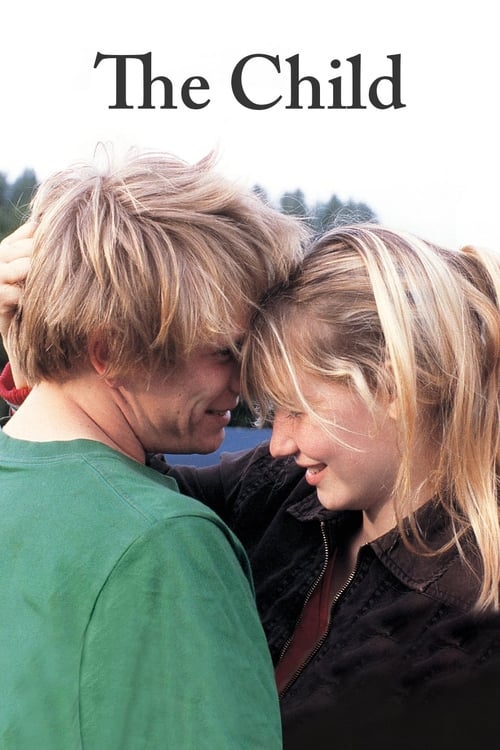
The Child
2005 · Luc Dardenne
For when you want cinema that's honest to the bone — a short, intense film that earns its emotion without a drop of sentimentality. Demanding but deeply humane; you come out moved, not crushed.
What it's about
In a bleak post-industrial Belgian city, twenty-year-old Bruno lives by petty theft and quick deals, and his eighteen-year-old girlfriend Sonia has just given birth to their son. Sonia wants him to grow up and provide; Bruno treats everything in his life — objects, money, obligations — as something to trade. The film follows what happens when that instinct collides with fatherhood.
The experience
Stripped-down and gripping, shot close on faces and bodies in constant motion, with no score to tell you what to feel. It builds to a moral tension as clenching as any thriller, and its final minutes land with quiet, devastating force.
Performances
Jérémie Renier is remarkable as Bruno, playing a young man who is genuinely likable and genuinely appalling at once, and Déborah François makes Sonia's fury and love equally believable.
The craft
The Dardenne brothers work with handheld cameras that shadow their characters through streets and stairwells, natural sound, and no music at all — a rigor that makes every choice feel witnessed rather than staged. Its physicality peaks in a river-bank sequence of almost unbearable suspense.
Why it matters
It won the Palme d'Or at Cannes in 2005, confirming the Dardennes among the very few two-time winners and cementing their style as the dominant grammar of European social realism.
Snapshot
The Child (L'Enfant) is a Belgian drama directed by Jean-Pierre and Luc Dardenne — credited here to Luc, though, as with all their fiction features, it is the work of both brothers in equal authorship. It follows Bruno (Jérémie Renier), a twenty-year-old petty thief living hand-to-mouth in the post-industrial city of Seraing, and Sonia (Déborah François), the eighteen-year-old mother of their newborn son, Jimmy. In the film's pivotal act, Bruno sells the baby on the black market for adoption, almost casually, treating the infant as one more piece of fungible merchandise; the remainder of the film tracks the consequences of that act and Bruno's halting, incomplete movement toward recognizing what he has done. Premiering in competition at the 2005 Cannes Film Festival, The Child won the Palme d'Or — making the Dardennes only the third filmmakers (and the first since the festival's modern era) to take the top prize twice, having won previously for Rosetta in 1999. The title's "child" is deliberately ambiguous: it names both the infant who is sold and Bruno himself, an emotionally arrested young man who must, over the course of the story, begin to grow up. The film is exemplary of the Dardennes' mature style — a tense, handheld, near-documentary realism organized around a single moral fault line — and is widely regarded as one of the central works of European art cinema in the 2000s.
Industry & production
The Child was produced by the Dardennes' own company, Les Films du Fleuve, based in Liège, in coproduction with the French outfit Archipel 35 (producer Denis Freyd), a configuration that had become the brothers' standard model and that reflects the broader Franco-Belgian system of pooled public subsidy, broadcaster investment, and tax-incentive financing on which much European art cinema depends. The Dardennes occupy an unusual position in that ecosystem: having begun in documentary in the 1970s and produced other directors' work through their company, they exercise a degree of control over their own films — script, casting, location, schedule — that few directors at any budget level enjoy. The film was shot, as is their long practice, in and around Seraing and the Liège conurbation, the deindustrialized Walloon region where the brothers grew up and which functions across their filmography as a consistent moral and physical geography. Budgets for the Dardennes' films of this period were modest by international standards, and the production economics were inseparable from the aesthetic: small crews, real locations, available light, and long rehearsal periods rather than expensive coverage. Cannes selection and the Palme d'Or substantially shaped the film's commercial life, securing international art-house distribution (in the United States through Sony Pictures Classics) and festival circulation that a film of this scale and subject would not otherwise have commanded. Precise budget and box-office figures are not something I can state reliably here, and I will not invent them; what is securely established is that the film operated within the low-budget, subsidy-and-festival economy typical of the brothers' work.
Technology
Technologically, The Child belongs to the tail end of the Dardennes' photochemical period: it was shot on 35mm film, the format the brothers used for their fiction features of this era, rather than on the digital systems they would adopt later. The choice matters less as a question of image "quality" than of working method — the camera is a lightweight, handheld instrument used for long, mobile takes, and the production's technological footprint is deliberately minimal. There are no elaborate lighting rigs, no cranes, no Steadicam smoothing; the apparatus is kept small enough to follow an actor at a near-jog through real streets, stairwells, and riverbanks. Sound was recorded on location, and the film carries no added musical score, so the "technology" of the soundtrack is essentially that of careful field recording and mixing rather than scoring or sweetening. In this sense the film's technical signature is one of subtraction: the available tools are used to erase the marks of cinema's machinery rather than to display them.
Technique
Cinematography
The cinematography is by Alain Marcoen, the Dardennes' regular director of photography, whose handheld camera is among the most recognizable instruments in contemporary European film. The camera stays close to Bruno — often behind or beside him, framing the back of his neck and shoulders — so that the viewer is bound to his physical movement through the city without being granted privileged knowledge of his interior. Shots are long and roving, with focus and reframing happening live; the image breathes, lurches, and corrects itself the way a human observer would. Marcoen works largely in available and naturalistic light, favoring the flat grays of Seraing's overcast skies and the institutional surfaces of stairwells, shelters, and police interiors. The effect is not "ugly" so much as un-beautified: the camera refuses the consolations of composed, painterly framing, and the absence of establishing shots keeps the spectator inside the immediacy of action rather than above it in a position of overview.
Editing
Marie-Hélène Dozo, the brothers' longtime editor, cuts the film to sustain duration and tension rather than to accelerate. Scenes run long, and the editing tends to hold on physical process — Bruno carrying the baby, negotiating a sale, fleeing on a stolen scooter — so that consequences accrue in something close to real time. There is little cross-cutting and almost no parallel montage; the film stays with one continuous line of action, which intensifies the sense that we are trapped alongside Bruno in the unfolding present. The famous late sequences — a chase, a near-drowning on the river, a final confrontation in a visiting room — derive their force precisely from the editing's patience, its refusal to relieve pressure with a reaction shot or a reassuring cutaway.
Mise-en-scène / staging
The staging is built around bodies in motion through actual spaces. The Dardennes block their scenes physically, choreographing entrances, exits, and pursuits with great precision while making the result look spontaneous. Props and locations carry moral weight: the river Meuse, the cardboard shelter where Bruno sleeps, the anonymous apartment landing where the baby changes hands, the visiting room of the film's conclusion. The infant Jimmy is treated, in the staging, almost as an object passed from hand to hand — a bundle, a transaction — which is exactly the moral perception the film wants to expose and then overturn. Color, decor, and costume are unglamorous and contemporary; nothing in the frame announces itself as symbolic, yet the accumulated physical detail of the deindustrialized city does the work of social analysis without a word of exposition.
Sound
The soundtrack is, characteristically, free of non-diegetic music. There is no score to cue emotion or signal meaning; what we hear is the ambient sound of the city — traffic, water, footsteps, the cry of the baby, the idling of a stolen scooter. This austerity is one of the brothers' defining choices and it places enormous interpretive responsibility on the viewer, who is never told how to feel. The withholding of music also makes the few intense physical sounds — a child's wail, the rush of the river, breath after a chase — register with documentary starkness.
Performance
The performances are central to the film's achievement. Jérémie Renier, who had played the boy in the Dardennes' La Promesse (1996) as a teenager, returns as Bruno and gives a performance of unsettling lightness: his Bruno is charming, restless, and morally weightless, a man who sells his child the way he might fence a stolen camera, and Renier resists every temptation to signal guilt or self-awareness too early. Déborah François, in her screen debut as Sonia, conveys a wounded vitality and a capacity for moral judgment that the film withholds from Bruno. Both performances are shaped by the Dardennes' method of extensive rehearsal and many takes, which produces an unforced, behavioral naturalism — acting that reads less as "performance" than as observed conduct.
Narrative & dramatic mode
The Child operates in a mode of moral realism descended from the European humanist tradition but stripped of its sentimentality. The narrative is linear, present-tense, and tightly causal: a single transgression sets off a chain of consequences, and the drama lies in whether and how its protagonist will come to feel the act he has committed. The Dardennes deliberately refuse psychological backstory and explanatory motive; we are not told why Bruno is as he is, only shown what he does. This restraint produces a quasi-parabolic structure — a fall, a reckoning, and an ambiguous gesture toward grace — that critics have repeatedly linked to a secularized religious or ethical sensibility. The film's climax is not an action but an emotion: a sudden, overwhelming breakdown that arrives without warning and that the film treats as the true event toward which everything has been moving.
Genre & cycle
Nominally a drama, the film belongs to the broader category of social realism and to the specific cycle of Dardenne films that share a city (Seraing), a moral preoccupation (responsibility, debt, the worth of a human being), and a method. It can be read as part of an informal sequence running through La Promesse, Rosetta, The Son (Le Fils, 2002), and on to The Silence of Lorna, The Kid with a Bike, and Two Days, One Night — films that function less as a franchise than as a sustained ethical inquiry conducted with the same tools across two decades. Within world cinema it sits alongside the work of other realist filmmakers of the period, but the Dardennes' particular combination of handheld immediacy and parable-like moral structure is distinctive enough to constitute something close to a genre of its own.
Authorship & method
The defining fact of authorship is that The Child is the work of two directors, Jean-Pierre and Luc Dardenne, who write, direct, and produce jointly and have done so since the 1970s, beginning in documentary before turning to fiction. Their method is unusually consistent: scripts written by the brothers, long location rehearsals, small crews, real settings in their native Walloon region, handheld camerawork, and the rejection of non-diegetic music. Key collaborators recur across the filmography and are integral to the style — cinematographer Alain Marcoen and editor Marie-Hélène Dozo both shaped the look and rhythm of The Child, and Jérémie Renier's presence links the film back to the brothers' breakthrough La Promesse. On the question of a composer there is little to say, because there is deliberately no score; the "music" of a Dardenne film is its environmental sound. The brothers have articulated their concerns in essayistic and interview form — Luc Dardenne in particular has published notebooks reflecting on their ethics of the image — and their cinema is frequently discussed in relation to a philosophy of the face and of responsibility for the other, though I would not want to overstate any single direct influence on the film without firmer grounding.
Movement / national cinema
The Child is a touchstone of contemporary Belgian cinema and, more broadly, of the Francophone European art film. The Dardennes are the most internationally celebrated figures in Walloon (French-speaking Belgian) filmmaking, and their work has given that small national cinema a visibility out of all proportion to its size. Stylistically the brothers are heirs to a documentary and social-realist lineage — their early training in non-fiction is everywhere visible — and their films are routinely placed within a transnational realist tendency that includes the British social realism of Ken Loach and a wider current of observational, location-based filmmaking. Yet the specificity of Seraing, its closed factories and its working poor, grounds the films firmly in a Belgian post-industrial reality.
Era / period
The film is a product of the mid-2000s, a moment when European art cinema was both internationally vital and increasingly dependent on the festival circuit for its economic and critical life. Its subject — a young, precarious, semi-employed underclass living at the margins of a deindustrialized European economy — speaks directly to the period's anxieties about work, welfare, and social abandonment, themes the Dardennes had already made central in Rosetta, whose impact reportedly fed into Belgian labor debate. The Child captures a Europe of black-market transactions and improvised survival that is unmistakably of its decade.
Themes
The film's governing theme is responsibility — the question of what it means to be answerable for another human life, and the long, painful distance a person may have to travel before that answerability becomes real to him. Bound up with this are themes of commodification (the literal sale of a child as the film's central obscenity), of immaturity and arrested development (the "child" of the title is Bruno as much as the baby), and of poverty as a condition that warps moral perception without excusing it. The Dardennes are careful never to reduce Bruno to a victim of circumstance; the film insists simultaneously on the deforming pressure of his poverty and on his genuine moral agency. Recurrent across the brothers' work, and present here, is a movement toward an ambiguous, hard-won grace — a final emotional rupture that suggests the possibility of redemption without guaranteeing it.
Reception, canon & influence
Critically, The Child was received as a major work on its premiere, crowned by the 2005 Palme d'Or, which confirmed the Dardennes' standing as among the most important filmmakers in world cinema and made them rare two-time winners of the prize. Reviews in the international press were strongly favorable, praising the film's moral seriousness, the precision of its handheld style, and the performances of Renier and François; the consensus placed it within the brothers' run of acclaimed films of the late 1990s and 2000s rather than as a sharp departure from them. Looking backward, the influences on the film are best understood as the Dardennes' own documentary roots and the broader European humanist-realist tradition; one can also point to the brothers' avowed ethical preoccupations as shaping the material, though I would treat any single literary or philosophical source with caution absent firm citation. Looking forward, the film's legacy is bound up with the larger influence of the Dardenne style — the close handheld camera trained on a single body, the refusal of score, the parable of moral consequence — which became one of the most imitated idioms in international art cinema of the 2000s and 2010s, visible in the work of numerous younger realist directors. Within the brothers' own filmography, The Child stands as a central pillar, and its reuniting with Jérémie Renier deepened the sense of Seraing as a continuous moral world revisited from film to film. Its place in the canon of contemporary European cinema is secure.
A Deleuzian reading
The camera is behind his neck.
The full Deleuzian reading of The Child →
Reception
Won the Palme d'Or at Cannes 2005 — the Dardennes' second after Rosetta, putting them in the tiny two-Palme club — and while some grumbled at the time that Cannes was just rewarding the brothers on autopilot, it's since settled in as one of the defining films of 2000s realism.
How The Child was received, from release to now →
Influences: the films it descends from and the films it influenced
- Pickpocket (1959) — The Dardennes inherit Bresson's parable of moral consequence built from fragmentary close shots of hands and objects (the stolen wallet, the cash) rather than faces, treating gesture as the engine of ethical drama.
- L'Argent (1983) — Bresson's chain of cause-and-effect launched by passed money, with flat affectless performance and no psychological underscoring, is the direct model for The Child's traceable economy of a sold infant.
- Bicycle Thieves (1948) — Neorealist practice of shooting nonprofessional-feeling bodies in real working-class streets with available light, structuring the film as a single desperate errand across a city, prefigures Bruno's scrounging through Seraing.
- Germany Year Zero (1948) — Rossellini's location-shot postwar ruin centered on a child's moral catastrophe, observed without melodramatic scoring, establishes the humanist-realist grammar the Dardennes refine.
- L'Enfance nue (1968) — Pialat's raw behavioral naturalism around an abandoned/fostered child, with ruptured continuity and unsentimental observation, is the French template for the Dardennes' refusal of explanatory psychology.
- Kes (1969) — The film's avowed Loach debt: regional working-class milieu, semi-improvised behavioral performance, and dramatized social precarity treated with documentary plainness rather than genre uplift.
- La Promesse (1996) — The brothers' own breakthrough that first fused close handheld camera trained on Jérémie Renier's body with a son's moral reckoning, the method The Child reprises with the same actor.
- Rosetta (1999) — Immediate stylistic sibling — Alain Marcoen's camera glued to a single protagonist's nape and shoulders, no establishing shots, no score, the body navigating economic survival in real time.
- Ordet (1955) — The Dardennes carry forward Dreyer's spiritual realism: grace dramatized through restrained, behavior-level observation and withheld expression rather than dialogue or score.
- The Kid with a Bike (2011) — Direct continuation reusing the moral-parable structure and choreographed-realist staging, again centered on a child and questions of who claims responsibility for him.
- 4 Months, 3 Weeks and 2 Days (2007) — Romanian New Wave extension of the Dardenne idiom — extended handheld long takes, available light, no non-diegetic music, and a single tense moral transaction tracked through one day.
- Fish Tank (2009) — Carries the Loach-via-Dardenne lineage forward with close handheld pursuit of a young protagonist, available-light estate locations, and behavioral naturalism over plot.
- Chop Shop (2007) — Explicitly Dardenne-modeled — a street kid hustling in a real working district, shot handheld with nonprofessional performers and a parable of survival and care, no score.
- A Separation (2011) — Adopts the moral-realist engine of an ethical lapse cascading into consequence, staged with restless handheld coverage, location sound, and a pointed absence of underscoring.
- Good Time (2017) — Takes the camera-on-the-nape propulsion of a desperate man's overnight scramble and intensifies it, retaining the handheld single-body pursuit and morally compromised brother-figure premise.
- Prince of Broadway (2010) — Direct precedent for the film's central premise — a young father who treats an infant as a transactable object within his hustle before the child's physical demands rewrite him — and for an ending that cuts on emotion rather than on resolution.
- The Son (2002) — Same Marcoen/Dozo handheld-and-long-take idiom built entirely around following a working body, with a withheld parable of responsibility and forgiveness staged through props and labor.
- The Death of Mr. Lăzărescu (2005) — Shares the real-time observational handheld following of one body through an institutional ordeal, with diegetic-only sound and refusal of dramatic scoring.
- Wendy and Lucy (2008) — American minimalist realism that strips melodrama to a single precarious figure and a morally charged object (a lost dog, a shoplifted item), observed without score in long patient takes.
- Young Mothers (2025) — Pairs young, unready parenthood with the same diegetic-only soundscape and following-from-behind pursuit, making moral responsibility a matter of bodily action through real streets.
- Nobody Knows (2004) — Withholds moral commentary and scoring while observing young people mishandling the care of a child, trusting accumulated behavioral detail to carry the ethical weight.
Similar films
- Young Mothers (2025) — influence & lineage
- The Kid with a Bike (2011) — influence & lineage
- La Promesse (1996) — influence & lineage
- Rosetta (1999) — influence & lineage
- L'Argent (1983) — influence & lineage
- Pickpocket (1959) — influence & lineage
- Bicycle Thieves (1948) — influence & lineage
- The 400 Blows (1959) — shared sensibility
All the films related to The Child →