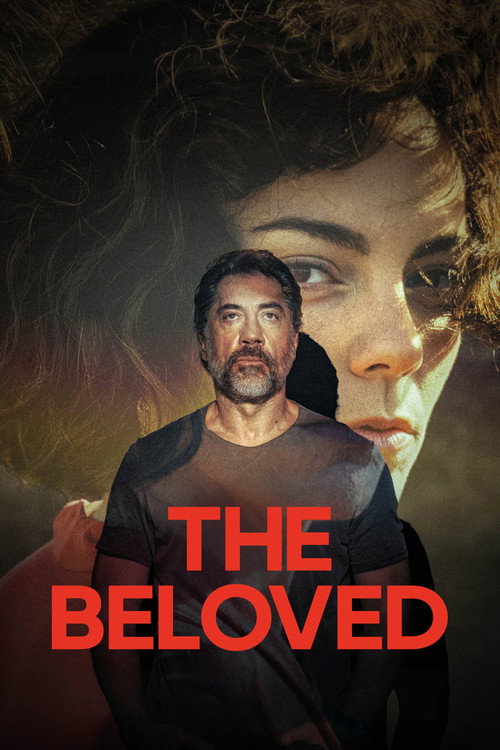
The Beloved
2026 · Rodrigo Sorogoyen
For when you want a grown-up drama about family — the kind you watch closely and carry into conversations about your own parents. Emotionally demanding rather than cozy, but deeply human.
What it's about
Esteban Martínez is a legendary film director — famous for his movies and infamous for a past of violence and excess. For his new project he offers a role to his daughter Emilia, a struggling actress he's been estranged from for years, framing it as a favor to her stalled career. Living and working together on set forces a closeness they haven't had in years — and reopens every wound that never healed.
The experience
Intimate and simmering — a father-daughter reckoning staged inside the pressure cooker of a film shoot, where every scene they play is also a scene between them. It's tense in the way family dinners can be tense: charged silences, old grievances, and the constant question of whether the offer of love is real or another performance.
The craft
Rodrigo Sorogoyen, known for tense films set in public arenas of power, turns to the most enclosed arena he's tackled: a film set, which is a workplace, a family, and a hierarchy all at once. The film-within-a-film structure lets him blur where directing ends and domination begins.
Why it matters
A notable turn inward for one of Spain's most acclaimed directors — from institutional power struggles to the charismatic, ruinous patriarch, examined inside the very industry that mythologizes such men.
Snapshot
A father who is also a director casts his daughter, who is also an actress, and the set becomes the room in which two people finally have to look at each other. On the evidence of its logline, The Beloved is Rodrigo Sorogoyen's move from the public arenas his cinema has favoured — the police station, the party headquarters, the Galician hamlet — into the most enclosed arena of all: a film crew, which is a workplace, a family, and a hierarchy at once. Esteban Martínez is a legend "for his films and for his past marked by violence and excess"; Emilia's career has stalled; the offer of a role is made "under the pretext" of help. The premise sets an old Spanish subject — the charismatic, ruinous patriarch — inside the apparatus that historically mythologised him.
A caution that governs this dossier: the verifiable record for this film is thin. Cast, crew assignments, financing structure, festival itinerary, and critical response are not established fact available to me, and nothing of the sort is asserted below. What can be documented is the body of work, the working unit, and the historical lines the premise runs along; where this account reasons forward from those, it says so.
Industry & production
Sorogoyen arrives at this project as one of the two or three most commercially and institutionally secure directors in Spain. The trajectory is unusually clean: Stockholm (2013), made on crowdfunded money and a two-hander's logic; Que Dios nos perdone (2016), which took the screenplay prize at San Sebastián; El reino (2018), which swept seven Goyas including best director and original screenplay; the short Madre (2017), nominated for the Academy Award for live-action short; its feature expansion (Venice, Horizons, 2019); the Movistar Plus+ series Antidisturbios (2020); As bestas (2022), which premiered at Cannes outside the competition, won nine Goyas including best film and best director, and took the César for best foreign film; and the ten-part Los años nuevos (2024), again for Movistar Plus+.
That record matters industrially because it makes Sorogoyen one of the few Spanish directors who can finance a difficult subject at scale. The apparatus behind the recent features has combined the director's own Caballo Films with larger partners — Arcadia Motion Pictures among them on As bestas — plus television money (Movistar Plus+, Atresmedia Cine in earlier cases), regional subsidy, ICAA support, and, since As bestas, genuine French co-production interest via Le Pacte. Whether that exact configuration returns here is not something I can confirm. What is structurally likely is the shape: a mid-budget European auteur production, majority Spanish, with a distributor prepared to treat a festival premiere as the marketing event.
The subject carries a specific industrial charge. A film about a revered director's violence, made by a revered director inside an industry that has had its own reckonings — Spain's cinema and theatre sectors have processed several high-profile abuse allegations over the past decade — is a film the industry finances knowing it will be read as self-description. That is not a scandal; it is the condition of the genre.
Technology
Sorogoyen's unit works in digital capture, and the choice has been functional rather than neutral: the long, unbroken, heavily choreographed take that is the signature of this cinema is a technological artefact as much as a stylistic one. Madre's short version is built as a single continuous take; El reino opens on a restaurant sequence that moves through a crowded room without cutting; the first episode of Antidisturbios sustains a riot in near-unbroken motion. None of this is practicable on magazine-length film stock. It depends on large-capacity digital recording, lightweight stabilised rigs and gimbals, high-sensitivity sensors that permit practical and available light in real interiors, and multitrack radio-mic capture that lets a dozen overlapping voices be separated in post.
A film set inside a film shoot poses a second technological question: the picture has to hold two visual registers, the film being made and the making of it, and keep them legible as different orders of reality. The standard solutions are format and lens — a different aspect ratio, a different glass, a different grade for the film-within-the-film — and the reason to expect care here is that Sorogoyen's work has consistently used texture to mark register. How this production actually resolves it is not on the record.
Technique
Cinematography
The established collaborator is Álex de Pablo, who shot Que Dios nos perdone, El reino, Madre, Antidisturbios, and As bestas. The house style is a handheld camera that is neither documentary-shaky nor invisible: it holds close on faces at conversational distance, moves with bodies through architecture, and refuses the reverse-angle cutting pattern that would let a scene settle. In As bestas, the great bar confrontations are shot so that the frame cannot escape the room. Applied to a film set — a space that is itself full of cameras, marks, and sightlines — that method would have an obvious dividend: the difference between the way the fictional production looks at Emilia and the way Sorogoyen's camera does becomes the film's central formal proposition.
Editing
Alberto del Campo has cut the recent features. The pattern is a paradox that Sorogoyen's films keep working: extremely long takes inside extremely aggressive overall compression. El reino is a thriller assembled at a pace that borders on panic, built from sequences that individually refuse to cut. The tension in the method is between the take, which grants an actor time and traps them in it, and the structure, which gives no scene more than it needs. A chamber drama across a shoot's duration would invert the usual proportion — fewer locations, more duration per scene — and the editorial question becomes when to release a scene rather than how to accelerate it.
Mise-en-scène / staging
This is the core competence. Sorogoyen and Isabel Peña write group scenes — dinners, meetings, interrogations, negotiations — in which power is distributed and redistributed by who speaks over whom, and the staging then makes that legible in space: a table, a doorway, a car. The recurring structure is a person who controls a room by charm until charm fails. A film set is that structure made literal, with the additional cruelty that a director's authority over an actor is contractual and publicly legitimate. The pretext in the synopsis — a role offered as help — is a staging problem before it is a thematic one: every note given on set is simultaneously professional instruction and paternal coercion, and the mise-en-scène has to keep both readings alive in the same shot.
Sound
Sound has been unusually prominent in this filmography: overlapping, unbeautified dialogue tracks; rooms with their own acoustic personality; and Olivier Arson's scores, which on El reino and As bestas function less as accompaniment than as pressure — electronic, percussive, arriving as a physical presence. A film about a film would have a further resource in the sounds of production itself: the set's own silences, "action" and "cut" as speech acts that reorganise reality, the boom operator's presence as a witness in frame.
Performance
Sorogoyen's directorial reputation rests substantially on performance. Roberto Álamo and Antonio de la Torre in Que Dios nos perdone, de la Torre and Bárbara Lennie in El reino, Marta Nieto in Madre, Luis Zahera and Diego Anido against Denis Ménochet and Marina Foïs in As bestas — the method favours long takes, real overlap, and actors permitted to be unattractive. The Esteban/Emilia pairing demands a particular kind of casting: a performer who can carry an audience's affection for a monster, and one who can play stalledness — the specific humiliation of talent that has not been believed in — without playing victimhood. The casting is not on the record.
Narrative & dramatic mode
The synopsis describes a chamber drama with a built-in clock: a shoot has a start date, a wrap, and a schedule that forces proximity. That is the same engine as As bestas, where a neighbour dispute could not be walked away from because the parties shared a valley. Here the confinement is contractual. The dramatic mode is closer to the domestic tragedy than to the thriller: the question is not what will happen but what will be said, and the plot's likely function is to keep raising the cost of saying it.
Two structural traps come with the premise, and how a film handles them is the measure of its seriousness. The first is the confession scene — the moment the past is finally articulated — which can collapse a whole film into a monologue. The second is the film-within-a-film as psychological diagram, where the fiction being shot conveniently rhymes with the life. Sorogoyen and Peña's scripts have generally resisted tidy resolution: El reino ends in an act of speech whose consequences are withheld, As bestas transfers its second half to a wholly different protagonist. The expectation of structural nerve is founded; the outcome is not documented.
Genre & cycle
The Beloved sits at the intersection of three live cycles.
The first is the film-about-filmmaking, a form as old as its subject: 8½, Day for Night, Opening Night, Irma Vep. Its recent Spanish instances are notably elegiac rather than celebratory — Almodóvar's Dolor y gloria (2019) and Víctor Erice's Cerrar los ojos (2023), both about directors confronting what filmmaking cost.
The second is the post-2017 reckoning with the charismatic abuser and the institution that housed him: Kitty Green's The Assistant (2019), Todd Field's Tár (2022), Todd Haynes's May December (2023). What distinguishes the better films in this cycle is that they refuse the tribunal structure and stay inside the ambivalence of people who loved the person in question.
The third is Sorogoyen's own cycle, which has been a sustained study of male violence and the systems that license it: the misogynist killer of Que Dios nos perdone, the corruption of El reino, the police unit of Antidisturbios, the rural masculinity of As bestas. The Beloved reads as the continuation of that project into the one institution the director belongs to.
Authorship & method
The decisive fact of this authorship is that it is a partnership. Isabel Peña has co-written every significant Sorogoyen project since Stockholm, and it is misleading to discuss the films' moral architecture as a single person's. The working unit around them has been stable enough to be called a company: Álex de Pablo on camera, Alberto del Campo cutting, Olivier Arson scoring — Arson's El reino score took a Goya, and the As bestas music is part of why that film's dread is physical. Sorogoyen's Caballo Films has functioned as the production base. Whether that unit is intact on this project is not established.
The method, as far as it can be described from the work: scripts developed over long periods with heavy research into a documented milieu; blocking rehearsed so that long takes are possible; dialogue written to be spoken over; a refusal to supply the audience with a character to be safely on the side of. The last is the trait that makes the premise plausible as a Sorogoyen film — As bestas is constructed so that the antagonists' grievance is comprehensible, and a film about a violent legend made without that generosity would be a lesser thing.
Movement / national cinema
Spanish cinema of the 2020s has been in a phase of unusual strength and unusual breadth: Carla Simón (Verano 1993, Alcarràs, Romería), Jonás Trueba, Pilar Palomero, Alauda Ruiz de Azúa, Elena López Riera, Estibaliz Urresola, alongside established figures in Almodóvar, Isabel Coixet, Alberto Rodríguez and the late return of Erice. Several currents converge on this film's subject. One is the generation of Spanish filmmakers examining their parents — Simón's work in particular has made the reconstruction of a father a formal problem rather than a therapeutic one. Another is the self-reflexive strand in which Spanish film keeps examining its own memory and complicity.
There is also an industrial-national dimension: the Movistar Plus+ and Netflix España investment of the last decade created a pipeline in which film directors made ambitious serial work and returned to features with enlarged means. Sorogoyen is the clearest beneficiary and the clearest example.
Era / period
The film belongs to a moment in which the authority of the auteur is simultaneously at its commercial peak and under its most sustained ethical scrutiny. European art cinema still sells on a director's name; that same name-based system has been the mechanism by which abuse went unexamined. A 2026 film about a "legend" whose legend includes violence is legible only against a decade of public argument about separating art from artist, and against a labour shift — intimacy coordination, conduct protocols, changed rehearsal practice — that has altered what a film set physically is. A father directing a daughter is, in 2026, a situation with procedures attached, which gives the premise a contemporary specificity it would not have had in 1975.
Themes
Inheritance as debt. Emilia has inherited a name, an industry, and an injury, and the three cannot be separated. The stalled career is not incidental: it is the condition that makes the offer accepted.
Help as control. The synopsis names the mechanism precisely — a role offered "under the pretext" of assistance. This is the film's ethical centre, and Sorogoyen's work has repeatedly turned on the moment generosity is revealed as leverage.
Proximity without intimacy. Living together on set produces closeness that is scheduled rather than chosen, and reopens wounds precisely because it is not safety.
The myth's maintenance. A legend is not a fact but a piece of collective labour, sustained by critics, producers, colleagues, and family. Sorogoyen's films consistently locate wrongdoing in systems rather than individuals; the likely target here is the apparatus of reverence itself.
Whether art excuses anything. The oldest question in the room, and the one most likely to be left unanswered — which, given this filmography, would be the honest choice.
Reception, canon & influence
No verified critical reception, festival result, or commercial performance for The Beloved is available to me, and inventing any would defeat the purpose of this dossier. What can be said is where the film enters, and what it is answerable to.
Backward. The influences that press on this premise are specific. Bergman is unavoidable — Autumn Sonata (1978) is the founding text of the artist-parent/child reckoning, and Bergman's own biography made that subject permanently double. Cassavetes's Opening Night supplies the model for a set as a place of controlled breakdown, and the Cassavetes–Rowlands practice is the benchmark for filming a person you live with. Truffaut's Day for Night established the shoot as a self-contained society. Domestically, Almodóvar's Dolor y gloria and Erice's Cerrar los ojos are the two recent Spanish films that a father-director drama must answer, both of them concerned with an old director's accounting. And Saura's Cría cuervos remains the Spanish template for the child's-eye interrogation of a ruinous father. Within Sorogoyen's own work, As bestas is the immediate precursor for its patient construction of a conflict that neither party can leave.
Forward. Influence cannot be assessed on a film this new, and any claim to the contrary would be fabrication. What is reasonable to note is the position the film occupies. If it succeeds, it does so as an instance of the post-#MeToo authorship film made from inside the tradition it examines, rather than as journalism about it — a harder proposition than the tribunal drama, and one with fewer good models. The measure that will eventually be applied is whether The Beloved extends the line running from Autumn Sonata through Tár, in which the charismatic artist is neither excused nor flattened into a case, or whether it settles for the safer film in which a daughter is given a speech and an audience is given permission. Sorogoyen and Peña's record argues for the former. The record on this film does not yet exist.
Reception
Fresh out of Competition at Cannes 2026, where it landed some of Javier Bardem's best notices in years — far too new for a reappraisal arc, but it arrived billed as Sorogoyen's most intimate film after the thrillers.
How The Beloved was received, from release to now →
Influences: the films it descends from and the films it influenced
- Autumn Sonata (1978) — Nykvist holds the daughter's accusation in sustained close-up while the mother is kept out of frame, denying the reaction shot that would let the audience distribute blame — the founding instance of the refused reverse angle in an artist-parent reckoning.
- Opening Night (1977) — Rehearsal, performance and offstage life are shot with identical handheld coverage and takes are allowed to run past the actor's composure, establishing the set as a site of controlled breakdown rather than a backstage subject.
- Day for Night (1973) — The production schedule itself supplies dramatic structure — call sheets, crew rank, days remaining — making the shoot a self-contained society with its own clock, the template for the seed's shoot-clock chamber design.
- Cría cuervos (1976) — The indictment of a ruinous father is routed entirely through a child's watching and withheld from adult verdict, the Spanish template for the daughter's-eye interrogation the seed inherits.
- The Son (2002) — Handheld camera locked at a fixed conversational distance — close to the neck and shoulders, establishing wide refused — is the working grammar of the seed's cinematography.
- The Celebration (1998) — Handheld group staging around a dinner table in which authority migrates between speakers inside a single unbroken scene, and a ceremony is converted into a tribunal without leaving the room.
- Stockholm (2013) — The Sorogoyen–Peña partnership's founding two-hander: a sealed chamber with a night's clock, written so the audience is already complicit in a charming man's appeal before it is permitted to withdraw.
- El reino (2018) — Olivier Arson's Goya-winning score is used as physical pressure rather than commentary while handheld pursuit tracks crowded rooms of overlapping dialogue in which power shifts mid-sentence.
- Madre (2019) — The unbroken opening take (developed from the 2017 short) traps its performers in a scene with no cut to relieve them — the actor-entrapment mechanism the seed builds a whole structure around.
- As bestas (2022) — The confinement engine: a conflict neither party can exit, staged in long rehearsed takes (the bar confrontations) with Arson scoring dread as atmosphere, and the antagonists' grievance made fully comprehensible.
- Pain and Glory (2019) — Almodóvar makes a director's own biography the material and casts collaborators as versions of themselves, setting the terms any Spanish film about an aging filmmaker's accounting must now meet.
- Close Your Eyes (2023) — Conversations are sustained at unfashionable length in static two-shots and the film ends on a projection whose outcome is never confirmed — the immediate Spanish precedent for withheld resolution around an old director.
- Tár (2022) — The long unbroken dialogue scene (the Juilliard master class) lets the charismatic artist be brilliant and indefensible within the same take, refusing the cut that would let an audience choose a verdict.
- The Assistant (2019) — A film company's hierarchy is read from the bottom of a single working day with the abuser kept entirely offscreen, so power is legible only through deference, phone protocol and room-clearing.
- Anatomy of a Fall (2023) — An extended recorded marital argument is replayed as evidence rather than dramatized as truth, and a child's testimony is left to carry a verdict the film declines to confirm.
- The Souvenir (2019) — Hogg withholds the counter-shot and holds a fixed frame on the person being managed, so manipulation registers as duration and framing rather than as dialogue the audience is told to distrust.
- Alcarràs (2022) — Ensemble blocking with continuously overlapping family dialogue and no character positioned as the audience's ally — the Spanish 2020s practice of distributing sympathy across a group scene instead of assigning it.
Similar films
- The Beasts (2022) — influence & lineage
- Pain and Glory (2019) — influence & lineage
- Close Your Eyes (2023) — influence & lineage
- Anatomy of a Fall (2023) — influence & lineage · same viewing thread
- Sentimental Value (2025) — same viewing thread
- Fjord (2026) — same viewing thread
- Deaf (2025) — same viewing thread
- Blue Heron (2026) — shared sensibility
All the films related to The Beloved →
Watch it with: curated runs of related films
- When the Family Comes Undone — Watch these when you want intimate, one-household dramas where love and grief are the same thing — a parent fading, a marriage on trial, a child at the center of the wreckage.