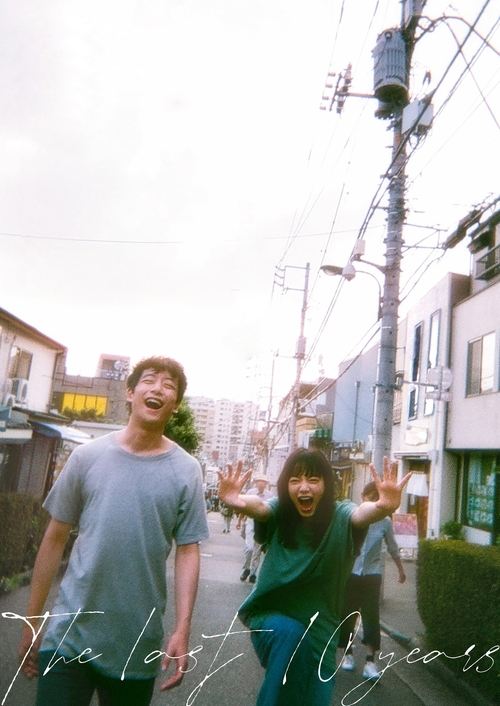
The Last 10 Years
2022 · Michihito Fujii
For when you need a good cry and want it delivered with sincerity rather than cynicism — a rainy-evening romance about loving what you can't keep. Comfort and heartbreak in the same package.
What it's about
At twenty, Matsuri learns an incurable illness gives her roughly ten years to live. She decides to spend them lightly — no grand ambitions, and above all no falling in love, since love would make leaving unbearable. Then, at a school reunion, she meets Kazuto, a young man adrift in his own way, and the resolution she built her remaining years around begins to give.
The experience
An unashamed tearjerker that earns its tears by taking its time — tender, seasonal, attentive to small ordinary happiness even as the clock runs. It aims straight for the heart and hits it; bring tissues, sincerely.
Performances
Nana Komatsu gives Matsuri a bright, guarded liveliness that makes her refusal of love feel like discipline rather than despair — the performance holds the film together.
The craft
Michihito Fujii directs with restraint unusual for the genre, marking time through changing seasons and letting quiet domestic scenes do the emotional work instead of speeches. The source novel is semi-autobiographical — its author died before the film was made — and that real-world weight gives the story an honesty most terminal-romance melodramas can't touch.
Why it matters
A major box-office success in Japan and one of the defining recent entries in the country's long 'pure love' melodrama tradition, introducing that tradition to a new international audience via streaming.
Snapshot
The Last 10 Years (Japanese title Yomei 10-nen, 余命10年) is a Japanese romantic drama directed by Michihito Fujii and released theatrically in Japan in 2022. It adapts the semi-autobiographical novel of the same name by Ruka Kosaka, the story of a young woman, Matsuri Takabayashi, who learns in her early twenties that an incurable illness leaves her roughly a decade to live and who resolves to hold herself apart from love — a resolve undone when she meets Kazuto Manabe. The film belongs squarely to the long-running Japanese tradition of the terminal-illness romance (the jun'ai, or "pure love," melodrama), and its emotional address is frankly, unashamedly lachrymose. What distinguishes the project is its authorship: Kosaka herself died before the novel's revised edition appeared, and the film was directed not by a specialist in weepies but by Fujii, a filmmaker better known at the time for politically charged and hard-edged social dramas. That collision — a genre built on catharsis handled by a director trained in restraint and reportage — is the most interesting thing about the picture and organizes much of what follows.
Industry & production
The film was produced within the mainstream Japanese studio-distribution system as a commercial theatrical release, mounted on the durable commercial logic of the illness-romance cycle: a pre-sold literary property, two bankable young leads, and a built-in audience for the "crying movie" (naki eiga). The source novel carried unusual real-world resonance — its author, Ruka Kosaka, wrote it while living with the kind of incurable condition the heroine faces, and she died in 2017, before a revised edition reached print. That biographical fact became part of the film's public identity and its marketing horizon, lending the adaptation a documentary weight that pure-fiction weepies lack.
Casting anchored the commercial calculus. Nana Komatsu, a prominent screen actress of her generation, plays Matsuri; Kentaro Sakaguchi plays Kazuto. Both are established leads whose presence signals the film's target demographic of younger, largely female audiences. Fujii came to the project as a rising director with critical prestige — his The Journalist had been a Japan Academy Prize success — so the production paired art-house credibility with genre commerciality. Beyond these broad contours, granular production data (budget, shooting schedule, precise distribution arrangements) is not something I can state reliably, and I will not invent figures; the film performed as a notable commercial release in Japan in 2022, but I will not attach box-office numbers I cannot verify.
Technology
The film was produced with the standard digital-cinematography workflow that governs contemporary mainstream Japanese features: digital capture, a color-graded digital intermediate, and theatrical DCP delivery. Nothing about the picture signals a technological experiment — it does not foreground large-format capture, virtual production, or novel image tools, and its ambitions lie in performance, light, and duration rather than in spectacle. What technology enables here is subtler: the naturalistic low-light and available-light aesthetic common to recent Japanese realist drama, and the fine tonal control that lets seasons and years pass as gradations of color and grain rather than as overt effects. I have no verified detail on the specific camera systems or lenses used, and will not fabricate them.
Technique
Cinematography
The film's visual grammar works in the register of contemporary Japanese naturalism — soft, motivated light; shallow focus that isolates faces; and a palette keyed to seasonal change, since the story's structuring device is the passage of years against a fixed, shrinking horizon. Cinematography in a project like this carries an unusual burden: it must make the ordinary look worth grieving. The camera tends to privilege intimate scale — two-shots, close attention to hands and glances, domestic and everyday spaces — rather than grand landscape, so that the tragedy registers as the loss of small, concrete life rather than of abstract futurity. Fujii's realist background is legible in the restraint of the coverage, which resists the over-emphatic push-ins that the genre often indulges. (Fujii has worked repeatedly with cinematographer Keisuke Imamura across his filmography; I believe that collaboration extends to this film, but I flag that attribution as one to verify rather than take as settled.)
Editing
The editing must solve the central formal problem announced by the title: how to dramatize a decade. The film is built as a time-lapse of a relationship and an illness, and the cut is the instrument that compresses years into a viewable arc while preserving the sense of accumulation and loss. This means the montage carries the tragic irony — every ellipsis moves the heroine closer to an ending the audience already knows — and the pacing must balance the slow, observational beats of the jun'ai mode against the forward pressure of the countdown. Where the record on the specific editor is concerned, I do not have a reliable credit to cite and will not invent one.
Mise-en-scène / staging
Staging leans on the iconography of everyday Japanese life — the school reunion that opens the central romance, domestic interiors, hospital spaces, seasonal exteriors — deployed so that the mundane accrues elegiac charge. The film's controlling idea, a young woman who has decided not to love, gives the staging a specific tension: early scenes must render withholding and self-protection as physical behavior, and the mise-en-scène tracks the gradual opening of that closed posture. Seasonal markers (cherry blossom, snow, the turning year) do double duty as calendar and as symbol, a convention of the genre that the film uses without apology.
Sound
As with most films in this cycle, the sound design and, above all, the score are load-bearing emotional machinery — the music cues the audience toward release and underlines the tragic structure. The genre's convention is a piano-and-strings idiom of restrained melody swelling at key beats, and a theme song positioned to become a chart presence and a marketing asset. I do not have verified attributions for the composer or the theme-song performer and will not fabricate them; readers should treat the specific music credits as a point to confirm.
Performance
Performance is the film's true medium. The role of Matsuri asks its lead to chart a physical decline across years while sustaining interiority and warmth — a demanding arc that must avoid both sentimentality and clinical detachment. Nana Komatsu's casting is central to the film's identity; the part is a showcase for controlled, embodied acting, where illness registers in breath, stamina, and stillness rather than in melodramatic display. Kentaro Sakaguchi's Kazuto functions as the audience's surrogate in loving and losing her, and the chemistry between the two leads is the mechanism on which the whole design depends. Fujii's directorial reputation rests substantially on his work with actors in a naturalistic key, and that emphasis is the film's strongest suit.
Narrative & dramatic mode
The narrative operates in the mode of foreknown tragedy: the ending is disclosed in the premise, so suspense is displaced from what happens to how it will feel when it does. This is the dramatic engine of the terminal-illness romance — dramatic irony sustained across the full runtime, with the audience holding knowledge the lovers cannot escape. The heroine's opening vow not to fall in love supplies the story's internal conflict and its structural irony: the resolution against love is what the plot exists to overturn, and the overturning is both the romance's fulfillment and the guarantee of its grief. The arc is therefore not a mystery but an elegy in advance, and the "ten years" of the title function as a countdown clock that gives ordinary scenes — a reunion, a first date, a shared season — the weight of last things.
Genre & cycle
The film sits within the Japanese jun'ai melodrama and, more specifically, the terminal-illness romance — a durable commercial cycle whose modern landmark is Crying Out Love in the Center of the World (2004) and which extends through numerous novel- and manga-derived weepies, up to and including Let Me Eat Your Pancreas (2017–18) in its live-action and animated forms. These films share a recognizable kit: a young couple, an incurable diagnosis, seasonal imagery, a tie-in theme song, and an address aimed at catharsis. The Last 10 Years is a late, self-aware entry in this cycle, differentiated by the authenticity claim of its source (a dying author writing near-autobiography) and by the reputational profile of its director. Its genre pleasures are exactly the cycle's conventions; its interest lies in the friction between those conventions and Fujii's realist sensibility.
Authorship & method
The film's most productive tension is authorial. Michihito Fujii (b. 1986) built his reputation on socially engaged, formally restrained work — most visibly The Journalist (2019), a political thriller that won major Japan Academy Prizes, and A Family (2021), a yakuza drama — associated with the Babel Label production milieu and a prolific, fast-moving career. He was not, in other words, a genre weepie specialist, and his taking on a jun'ai melodrama reads as a deliberate move to apply documentary-inflected naturalism to material usually handled in a broader emotional key. The method visible in his other films — patient observation, trust in actors, resistance to over-scoring the drama — is what he brings to a genre that ordinarily pushes hard on the audience.
The source author, Ruka Kosaka, is the film's other decisive authorial presence. Her novel's semi-autobiographical origin and her death before its revised publication are not incidental trivia but part of the work's meaning: the film adapts a text written from inside the experience it depicts. On the remaining key collaborators — screenwriter(s), cinematographer, composer, editor — I want to be scrupulous. I associate Fujii's visual work with cinematographer Keisuke Imamura and believe that partnership informs this film, but I flag it for verification; for the screenwriting, music, and editing credits I do not have attributions I can state with confidence, and I will not invent names, since fabricated crew credits would be exactly the kind of false authority a dossier must avoid.
Movement / national cinema
The film is a product of mainstream contemporary Japanese commercial cinema, and specifically of that industry's highly developed pipeline for adapting popular novels and manga into star-led theatrical romances. It is not avant-garde and does not belong to a self-declared movement; rather, it exemplifies the professionalized "media-mix" ecosystem in which literary property, casting, music tie-in, and theatrical release are integrated. At the same time, Fujii's presence connects it to a strand of younger Japanese directors who move fluidly between prestige social drama and commercial genre work, carrying naturalist technique across categories — a notable feature of the 2010s–2020s Japanese scene.
Era / period
Released in 2022, the film is fully of its moment: a post-2010s Japanese cinema shaped by streaming's rise, by the continued commercial dominance of adaptation, and by a generation of directors comfortable crossing between art-house and mainstream registers. The terminal-illness romance had by this point a decades-long lineage, so The Last 10 Years arrives as an inheritor working a well-worn form for audiences who know its rules. Its period signature is the pairing of that traditional genre with a contemporary, restrained realist aesthetic — an early-2020s sensibility applied to a template established in the 2000s.
Reception, canon & influence
On reception I will be careful. The film registered as a significant commercial romance release in Japan in 2022 and drew on the pre-existing popularity of its source and leads, but I do not have verified critical-consensus summaries, review-aggregate figures, or box-office totals to cite, and I will not manufacture them; the honest position is that the detailed reception record is something I cannot reproduce reliably here.
Influences on the film (backward): it draws directly on the modern Japanese terminal-illness romance cycle — the Sekachū lineage and its many successors, including the Let Me Eat Your Pancreas phenomenon — and on the broader jun'ai melodrama tradition; it also inherits, through Fujii, a naturalist, actor-centered method rooted in his social-realist work. The most singular influence is non-cinematic: the lived experience and near-autobiographical writing of Ruka Kosaka, which grounds the fiction in a real illness and a real death.
Legacy (forward): as a relatively recent film, its longer influence is not yet legible, and it would be premature — and unsupported — to claim it reshaped its genre. Its more secure significance is as a data point in two ongoing stories: the continued commercial vitality of the Japanese illness-romance, and the career of Michihito Fujii, whose ability to move between hard political drama and mass-market melodrama it demonstrates. Where the historical record on this film's downstream impact is genuinely thin, that thinness should be stated plainly rather than filled with invention.
Reception
A blockbuster weepie in Japan in 2022 — one of the year's biggest live-action hits — it then traveled abroad via streaming, where it graduated from 'local tearjerker' to an international guaranteed-cry favorite.
How The Last 10 Years was received, from release to now →
How to watch The Last 10 Years: what to notice on a first viewing
- Watch how close the camera stays on hands and glances rather than wide shots. Fujii favors intimate two-shots and small physical details over grand landscape throughout the film. Keeping the scale small makes the loss the film is building toward feel concrete, not abstract.
- Notice the seasonal markers as the film moves forward in time. Cherry blossoms, snow, and turning weather recur as the story advances through years. The seasons work as a calendar for a story that never announces how much time has passed in dialogue.
- Watch Matsuri's breath and stillness rather than her face for emotion. Komatsu registers illness through stamina and small physical restraint rather than overt display. The restrained performance keeps the film from tipping into the sentimentality the material invites.
- Notice Matsuri's posture in scenes before and after she meets Kazuto. Her early scenes show a closed, self-protective physical stance that gradually opens as the relationship develops. Her body, not her dialogue, tracks the vow against love slowly breaking down.
- Notice how quickly the film moves between one season and the next. The editing compresses years into a single arc through ellipsis, jumping forward while keeping a sense of accumulation. Each cut forward advances the countdown the premise establishes from the start.
The whole guide to watching The Last 10 Years, with the keys for a rewatch →
Influences: the films it descends from and the films it influenced
- Love and Death (1964) — Established the Japanese template of adapting a dying young woman's real letters/diary into weepie melodrama, the same autobiography-of-the-dying method that grounds Kosaka's near-autobiographical source.
- Love Story (1970) — The global terminal-illness-romance ur-text that front-loads the death so the entire courtship plays under dramatic irony — the foreknown-tragedy structure the seed inherits.
- Love Letter (1995) — Codified the available-light, shallow-focus naturalism and snow/season-as-clock imagery that became the visual grammar of Japanese jun'ai melodrama.
- All About Lily Chou-Chou (2001) — Pushed handheld, ambient-light naturalism and restrained youth performance into melodramatic material, the actor-trusting observational mode Fujii applies here.
- Crying Out Love, in the Center of the World (2004) — The foundational Sekachu text whose decade-straddling grief framing — present-day mourning intercut with a doomed teenage romance — is the direct structural parent named in the seed's Sekachu lineage.
- Be with You (2004) — Modeled the jun'ai discipline of underplaying loss with muted staging and a spare piano-and-strings score rather than pushing hard on the audience.
- Heavenly Forest (Tada, Kimi o Aishiteru) (2006) — Fused soft photographic naturalism with a late foreknown-death reveal, joining shallow-focus lyricism to concealed terminal fate.
- Nada Sou Sou (Tears for You) (2006) — Built its emotion around seasonal iconography and a recurring piano-strings theme as a mortality clock, the sound-and-staging device the seed reuses.
- A Walk to Remember (2002) — Runs the vow-against-love beat — a protagonist who refuses attachment because of a hidden terminal diagnosis — played through restrained rather than histrionic performance.
- Let Me Eat Your Pancreas (2017) — The immediate media-mix companion: a title-as-spoiler that fixes the death in advance and adapts a bestselling illness-romance novel across the same publishing-to-film pipeline.
- The Fault in Our Stars (2014) — Extends the same foreknown-mortality romance in which the countdown is stated up front and the couple bargains over whether to love knowing the loss is guaranteed.
- 5 Centimeters per Second (2007) — Uses cherry-blossom seasonal iconography and cross-year time-lapse editing set to an elegiac piano score to render distance and loss — the same seasonal-clock-plus-score craft in the media-mix mode.
- Boyhood (2014) — Sibling in the editing device of compressing roughly a decade into a single arc so the audience physically registers time and aging as the film's central formal move.
- One Day (2011) — Revisits the same relationship across many years toward a foreknown loss, using the time-lapse-across-years structure to make elapsed time itself the tragedy.
- The Journalist (2019) — Source of Fujii's documentary-inflected, actor-centered naturalism and resistance to over-scoring — the social-realist method he transplants into melodrama here.
- A Family (2021) — Fujii's immediately prior decade-spanning structure, tracking a life across years in discrete time-jumps, the same longitudinal editing logic applied to romance in the seed.
Similar films
- Drawing Closer (2024) — same viewing thread
- Even If This Love Disappears Tonight (2025) — same viewing thread
- 20th Century Girl (2022) — same viewing thread
- 18x2 Beyond Youthful Days (2024) — shared sensibility
- Memories of Matsuko (2006) — shared sensibility
- I Want to Eat Your Pancreas (2018) — shared sensibility
- Violet Evergarden: The Movie (2020) — shared sensibility
- Ikiru (1952) — shared sensibility
All the films related to The Last 10 Years →
Watch it with: curated runs of related films
- Love on Borrowed Time — A run of romances where the calendar is the antagonist — watch these back to back when you want to be wrecked, gently, and don't mind seeing the same shape (limited days, remembered love) rhyme across four countries.