Jacquot
1991 · Agnès Varda
For a gentle evening when you want to feel something real without being wrecked — especially if you love movies about why people fall in love with movies. Comfort with an ache in it.
What it's about
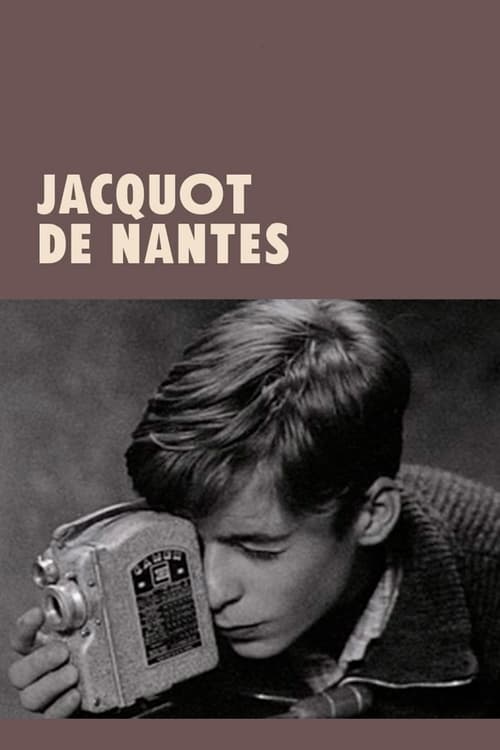
Agnès Varda reconstructs the boyhood of her husband, filmmaker Jacques Demy, in occupied 1940s Nantes — the family garage, puppet theaters, an attic where a kid shoots animation on a hand-cranked camera. She made it as Demy was dying, and she keeps breaking the childhood story open: cutting to the films those memories later became, and to close-ups of the aging Demy himself, filmed on a beach in his final months.
The experience
Tender and unhurried, warm rather than mournful — a film about a life ending that somehow feels full of beginnings. It sneaks up on you; the quiet devastation lands late and stays.
The craft
The structure is the marvel: black-and-white childhood scenes braided with bursts of the color musicals they seeded, and with Varda's astonishingly intimate close-ups of Demy's hair, eyes, and hands. It's a memoir, a study of how life turns into art, and a wife's act of looking, all at once.
Why it matters
One of cinema's great acts of love between two filmmakers — the film that fixed how Demy's story gets told, and a peak of Varda's lifelong blurring of documentary and fiction.
Agnès Varda made this portrait of her husband Jacques Demy as he was dying, and the tenderness of the circumstance is in every frame without ever curdling into elegy. Jacquot de Nantes, as it was released in France, reconstructs Demy's boyhood in occupied Nantes — the garage, the puppet theaters, the attic where he shot animation on a hand-cranked camera — casting three actors as the boy at different ages. But Varda keeps breaking the reconstruction open: a childhood incident cuts to the scene it later became in Lola or The Umbrellas of Cherbourg, and, most piercingly, to extreme close-ups of the aging Demy himself — his hair, his eyes, the skin of his hands — filmed on the beach in his final months. The film is thus three things braided: a memoir, a study of how life turns into art, and a wife's act of looking at her husband while she still can. Varda, the Left Bank's great essayist, called it his story told with her camera. Demy died before it was finished; the film ends where his began.
A Deleuzian reading
Start with the hair.
The full Deleuzian reading of Jacquot →
Reception
Premiered at Cannes in 1991 just months after Jacques Demy's death and was received as a tender act of mourning; its stature has only grown with Varda's late-life canonization, and it's now routinely called one of the greatest love letters ever put on film.
How Jacquot was received, from release to now →
Influences: the films it descends from and the films it influenced
- The Umbrellas of Cherbourg (1964) — Varda cuts directly from her staged reconstruction of young Jacquot's shoe-shop and garage childhood to Demy's own footage, using the film as the 'art' half of the life-into-art braid that shows where the umbrella shop and sung-through melody were sourced.
- Lola (1961) — Jacquot embeds clips of Demy's Nantes-set debut and restages the same real locations (the Passage Pommeraye arcade), proving the child's wanderings became the adult's mise-en-scène.
- Les Demoiselles de Rochefort (1967) — Varda quotes the fairground and dance numbers to trace them back to the traveling carnival and puppet theater that dazzled the boy, making the citation an argument about craft transmission.
- Cléo from 5 to 7 (1962) — Establishes Varda's own 'mortality-and-looking' method — a body scrutinized as it faces death — which Jacquot updates as extreme close-ups of the dying Demy's skin, hands, and eye between reconstructed scenes.
- The 400 Blows (1959) — The template of autobiographical childhood reconstruction in postwar France, rendered in observational black-and-white boyhood detail that Varda adopts for Jacquot's occupied-Nantes passages.
- Hiroshima mon amour (1959) — Pioneers the associative cut that dissolves present into remembered past, the editing grammar Varda uses to weld Demy's aged face to the child actor's reenacted memory.
- La Jetée (1962) — Left Bank memory-reconstruction essay film built from arrested images and voiceover, the tradition from which Varda draws the meditative, photo-like framing of remembered wartime Nantes.
- Amarcord (1973) — Reconstructs a provincial childhood under fascist occupation as affectionately staged tableaux of memory, a mode Jacquot echoes in its warm, episodic restaging of the Occupation years.
- That Obscure Object of Desire (1977) — Precedent for splitting a single character across multiple performers, the device Varda extends by casting three boys as Jacquot at successive ages.
- The World of Jacques Demy (1995) — Varda's direct companion piece, extending Jacquot's life-into-art method by intercutting Demy's films with testimony to complete the portrait of the collaborator-spouse.
- My Winnipeg (2007) — Reconstructs a personal childhood as staged 'memoir' shot in deliberately archaic, hand-cranked silent-era textures — the same fusion of period-technique fetish and re-enactment Varda uses for Jacquot's early-cinema wonder.
- I'm Not There (2007) — Radicalizes Jacquot's three-actors-one-role conceit by fracturing a single biographical subject across six performers to portray an artist's evolving self.
- The Beaches of Agnès (2008) — Turns Jacquot's essayistic braid and extreme-close-up intimacy inward as self-portrait, revisiting Demy's death and reusing the associative-cutting memoir grammar she built in 1991.
- Stories We Tell (2012) — A filmmaker reconstructs a family member's hidden life by seamlessly braiding staged reenactment with archival footage — the same life-into-art documentary hybrid Varda pioneered around Demy.
- Distant Voices, Still Lives (1988) — Contemporaneous braided memoir of a working-class WWII-era childhood built from composed, near-static tableaux and remembered song, sharing Jacquot's non-linear memory architecture.
- The Long Day Closes (1992) — Reconstructs a boy's cinema-worship as the engine of memory, mirroring Jacquot's thesis that a child's love of moving images becomes his adult craft.
Similar films
- Cléo from 5 to 7 (1962) — influence & lineage
- The Umbrellas of Cherbourg (1964) — influence & lineage
- Lola (1961) — influence & lineage
- Varda by Agnès (2019) — shared sensibility
- Amour (2012) — shared sensibility
- The Gleaners and I (2000) — shared sensibility
- Vagabond (1985) — shared sensibility
- Happiness (1965) — shared sensibility