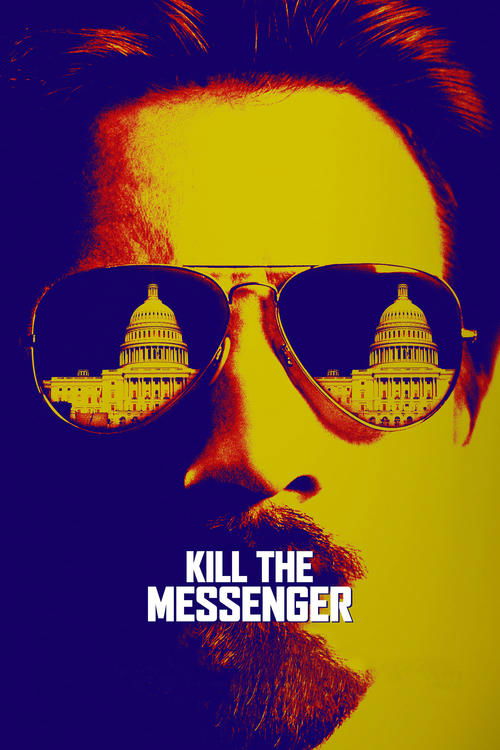
Kill the Messenger
2014 · Michael Cuesta
For when you want a based-on-a-true-story film that gets your blood up — pick it when you're in the mood for a smart, grown-up thriller and don't need a tidy, feel-good landing. More challenge than comfort.
What it's about
A reporter at a mid-sized California paper pulls a thread that leads somewhere enormous: evidence connecting CIA-backed rebels in Nicaragua to the cocaine that fed the crack epidemic in American cities. Based on the true story of journalist Gary Webb, the film follows the rush of breaking the biggest story of his life — and then what happens when the country's most powerful institutions, including other newspapers, turn their attention on him instead of the story.
The experience
The first half plays like a propulsive investigative thriller, all parking-garage meetings and mounting adrenaline; the second half curdles into something angrier and sadder as the walls close in. It leaves you unsettled and a little furious.
Performances
Jeremy Renner, who also co-produced, gives one of his best performances as Webb — cocky, wounded, and increasingly isolated, a man who can't stop being right at the worst possible cost.
The craft
Shot with a jittery, handheld urgency that suits the paranoia, the film builds its dread from phone calls, newsroom meetings, and men who politely suggest you stop asking questions. The writing trusts you to follow the reporting, and the tonal shift from triumph to siege is handled with real control.
Why it matters
It brought Gary Webb's buried story back into public argument years after his death, and it stands as one of the sharper recent entries in the tradition of films about journalism and institutional power.
Snapshot
Kill the Messenger is a journalism procedural that doubles as a tragedy of institutional abandonment. It dramatizes the case of Gary Webb, the San Jose Mercury News reporter whose 1996 "Dark Alliance" series argued that the CIA had tolerated, and effectively shielded, Nicaraguan Contra-linked drug traffickers whose cocaine helped seed the crack epidemic in Los Angeles — and who, after the nation's largest newspapers turned their fire on his reporting rather than on its subject, saw his career and reputation destroyed and, in 2004, died of gunshot wounds ruled a suicide. Adapted from journalist Nick Schou's book Kill the Messenger and from Webb's own Dark Alliance, the film stars and was co-produced by Jeremy Renner, and it splits cleanly into two movements: a propulsive first half in which a dogged regional reporter assembles an explosive story, and a darker second half in which the apparatus of official Washington and the prestige press combine — through smear, leak, and pack-journalism pile-on — to dismantle him. Its wager is that the most disturbing villainy in the story is not the covert operation Webb exposed but the ordinary mechanics of discrediting an inconvenient messenger.
Industry & production
The film is best understood as a star-driven passion project routed through the mid-budget adult-drama channel that was already narrowing by the mid-2010s. Jeremy Renner — then at the height of his post-Hurt Locker, post-Avengers visibility — developed and produced it through his company, The Combine, alongside Scott Stuber's Bluegrass Films; Renner's personal investment in the material is the reason the film exists in the form it does, and his decision to take the lead rather than a more commercial role is itself a marker of the project's intent. Focus Features distributed, placing the film squarely in the specialty-prestige lane: a fall release pitched at adult audiences and awards attention rather than at wide commercial returns.
The screenplay was written by Peter Landesman, himself a former investigative journalist for outlets including The New York Times Magazine — a biographical fact that matters, because Landesman built a brief screen career almost entirely on journalism-and-institutions material (Parkland, Concussion, Mark Felt). The adaptation draws on two sources at once, the outsider account (Schou's reconstruction of how the controversy "destroyed" Webb) and Webb's own first-person record, which gives the film both a procedural spine and a built-in argument about vindication.
The casting strategy was the familiar prestige-drama approach of surrounding a central star with a deep bench of recognizable character actors in small, sharply drawn roles: Rosemarie DeWitt as Webb's wife Sue; Mary Elizabeth Winstead, Oliver Platt, and Bruce Greenwood among the journalists and officials; Andy Garcia, Michael Sheen, Ray Liotta, Barry Pepper, Tim Blake Nelson, Robert Patrick, Michael K. Williams, Richard Schiff, and Paz Vega in supporting turns. The density of familiar faces in brief appearances is a production choice with a thematic payoff — it populates Webb's world with figures who each represent an institution (the paper, the agency, the prison system, the courts) closing around him.
Technology
The film's technological story is twofold, and the more interesting half lies inside the narrative rather than in the production. Kill the Messenger is partly about a pivotal moment in journalism's own technological history: the Mercury News did not merely print "Dark Alliance," it published supporting documents online, one of the early high-profile instances of a newspaper using the nascent web to let readers inspect a reporter's underlying evidence. The film registers this as both Webb's vindication tool and, ironically, part of his vulnerability — the same digital reach that amplified the story also amplified the backlash. As a production, the film is a conventionally captured mid-2010s drama; it makes no claim to technological novelty in its own making, and the relevant craft question is one of period reconstruction (mid-1990s California) rather than of new capture tools. I won't assert a specific capture format, as the record on that detail is thin.
Technique
Cinematography
The single most consequential craft decision is the hiring of Sean Bobbitt, the cinematographer most closely identified with Steve McQueen (Hunger, Shame, 12 Years a Slave) and known for an intimate, often handheld realism with an unusual tolerance for sustained, uncomfortable proximity to faces. Bobbitt's presence pulls the film away from the slick, cool register of the conspiracy thriller and toward the bodily, close-pressed observation of his art-cinema work. The camera tends to stay near Webb, mobile and reactive, so that the second-half disintegration is rendered less as plot than as something happening to a face and a posture. The palette favors a naturalistic, period-appropriate warmth and grain over glossy stylization, consistent with the film's claim to be reporting a true case rather than dressing it up.
Editing
Brian A. Kates edited the film, and the cut carries the structural burden of the two-movement design. The first half is built for momentum — the accumulation of sources, documents, and interviews assembled with the forward drive of the investigative procedural, a mode the film inherits from All the President's Men and its descendants. The second half deliberately decelerates and tightens, trading the pleasures of discovery for the claustrophobia of a man being cornered: the rhythm contracts around Webb as the external world (rival papers, anonymous calls, official denials) presses in. The film's effectiveness depends on the editing managing that tonal hinge without losing the audience, and the assembly's job is to make the collapse feel like the inevitable second act of the same story rather than a different film.
Mise-en-scène / staging
The staging works the contrast between two Americas of the mid-1990s: the lived-in, slightly shabby specificity of Webb's domestic and newsroom life — the suburban Sacramento home, the regional paper's offices, the modest car — set against the polished, intimidating spaces of federal power and the prestige press. Much of the drama is staged as conversation: interviews, editorial confrontations, phone calls, the wary exchanges with sources inside prisons and courtrooms. The film stages Webb's profession as legwork, emphasizing the unglamorous texture of reporting (knocking on doors, working the phones, reading documents) before the machinery of discreditation converts that legwork into liability. The domestic scenes carry the human stakes, grounding the abstraction of "reputation" in a marriage and a family.
Sound
Nathan Johnson — the composer behind Rian Johnson's Brick and Looper — scored the film, and his work leans toward tension and unease rather than triumphalism, supporting the slide from investigative thrill into paranoia and isolation. The sound design more broadly trades on the era's analog journalism textures (answering machines, landlines, the newsroom) and on the menace of the anonymous voice and the unexplained surveillance, the auditory signatures of a man no longer sure who is listening. The score functions as connective tissue across the tonal break rather than as emotional underlining.
Performance
The film is, finally, a performance vehicle, and Jeremy Renner's Gary Webb is its center of gravity. He plays Webb as a confident, even cocky working reporter in the first half — a man who relishes the chase and believes the truth will protect him — and then charts, in close and frequently wordless registers, the erosion of that confidence into anger, paranoia, and defeat. The arc is built less on speeches than on the gradual draining of swagger. Around him, the ensemble works in concentrated strokes: Rosemarie DeWitt gives the marriage its weight and its cost; the parade of officials, editors, and sources each register, in a scene or two, a different face of the institutions that variously use and abandon Webb. The performances are calibrated to the film's realist key — competence and compromise rather than grandeur.
Narrative & dramatic mode
Kill the Messenger operates in two successive dramatic modes welded together. The first is the classic investigative procedural: a reporter follows a thread, gathers documents and testimony, and assembles a story against resistance, with the audience invited to share the detective's pleasure of accumulation. The second is tragedy — specifically the tragedy of the truth-teller punished not for being wrong but for being inconvenient. The pivot between them is the film's structural signature, and it inverts the genre's usual catharsis: where the journalism thriller typically climaxes in publication-as-vindication, here publication is the midpoint, and what follows is the slow demonstration that exposure can destroy the exposer. The film's dramatic irony is bitter and sustained — the audience grasps that Webb's core reporting has substance even as the institutional world rules him discredited — and its emotional logic runs toward isolation rather than triumph.
Genre & cycle
The film sits in the lineage of the American journalism drama and the political conspiracy film, the tradition that runs from All the President's Men (1976) through The Insider (1999) and into the 2010s revival of the reporter-as-hero picture. It arrived in close proximity to that revival's flagship, Spotlight (2015), and belongs to a small cluster of mid-2010s films about journalists confronting powerful institutions — though Kill the Messenger is the genre's darker, more pessimistic variant, closer in spirit to The Insider's portrait of a whistleblower crushed than to Spotlight's collective triumph. It also descends from the paranoid 1970s conspiracy cinema (The Parallax View, Three Days of the Condor), inheriting that tradition's sense of an opaque state apparatus and its willingness to leave the audience uneasy. Within Landesman's own brief run of journalism-and-institutions films, it is the bleakest.
Authorship & method
The film is a case of distributed authorship in which no single figure fully dominates. Michael Cuesta directs; his background is instructive, combining an early indie sensibility (the unsettling, intimate L.I.E. and Twelve and Holding) with a long, distinguished run in prestige television, including formative work on Homeland, Dexter, and Six Feet Under. That TV pedigree — fluency with serialized character collapse and with politically charged, paranoid material — maps directly onto Kill the Messenger's two-movement structure and its patient anatomy of a man unraveling. Cuesta's method here is restraint: he keeps the camera on the human consequences and resists turning the conspiracy into spectacle.
The screenplay is the clearest authorial signature, Peter Landesman's journalist's-eye adaptation organizing the film around the credibility of reporting and the politics of discreditation — concerns that recur across his filmography. His key craft collaborators shape the film's texture decisively: cinematographer Sean Bobbitt, whose intimate realism keeps the film bodily and close; composer Nathan Johnson, whose score manages the tonal descent; and editor Brian A. Kates, whose cut welds procedural to tragedy. And the authorship is inseparable from Jeremy Renner's dual role as star and producer: the film exists because a major actor chose to spend his capital on it, and his performance is its organizing intelligence as much as any director's.
Movement / national cinema
The film is a mainstream American specialty release rather than a product of any school or movement. If it belongs to a tendency, it is the mid-2010s effort to keep the adult, issue-driven, mid-budget studio drama alive within an industry increasingly organized around franchises — the kind of socially serious filmmaking that companies like Focus Features and Participant Media were sustaining at the specialty end of the market. It is an American film about an American scandal, addressed to American debates about the state, the drug war, and the press, and it makes no claim to a transnational aesthetic despite the cross-border subject matter of the story it tells.
Era / period
The film looks back from 2014 to the mid-1990s, and that double dating matters. Its events belong to the post-Iran-Contra moment — the lingering aftermath of the 1980s covert wars in Central America — and to the specific media ecology of 1996, when a regional paper could break a national story and use the new internet to publish its evidence. But the film was made and received in the 2010s, an era of acute anxiety about the collapse of regional journalism, the consolidation of media authority, and the public's eroding trust in institutions — and it clearly addresses that present as much as its past. Its portrait of a national press closing ranks against a local reporter reads, from 2014, as a parable about who is permitted to define the record, and about the vulnerability of accountability journalism in a contracting industry.
Themes
The film's master theme is the destruction of the messenger: the idea that exposing a powerful institution's wrongdoing invites not correction but the discrediting of the exposer, and that the most effective censorship operates through reputation rather than suppression. Around it cluster several others. Pack journalism and the politics of credibility — the spectacle of the prestige press training its scrutiny on Webb's reporting rather than on the government conduct he reported — is the film's central, and most provocative, accusation. Institutional self-protection runs through every body Webb encounters, from the agency to his own newspaper, whose eventual retreat from the series is rendered as a wounding betrayal. The personal cost of truth-telling grounds the abstraction in a marriage, a family, and a man's mental and professional collapse. And beneath it all sits the historical wound the story exposes — the entanglement of covert foreign policy, the drug trade, and the communities devastated by crack — a subject the film insists was real even as Webb's specific claims were contested. The title encapsulates the thesis: the assault falls on the bearer of the news.
Reception, canon & influence
Critically, Kill the Messenger was received as a solid, well-acted, somewhat conventional entry in the journalism-drama genre, with broad praise for Renner's central performance and frequent observation that the film's craft, while assured, stayed within familiar genre lines — the second-half tragedy admired more than the first-half procedural. Reviewers consistently engaged with the underlying historical controversy, and the film became an occasion for renewed argument about Webb's legacy: the degree to which "Dark Alliance" overreached versus the degree to which the establishment press had unfairly piled on. Commercially it was a modest performer, consistent with its specialty positioning; I won't cite specific box-office figures, as I can't verify them precisely. It premiered on the fall-festival circuit ahead of its October 2014 release.
Looking backward, the film's lineage is clear: Schou's book and Webb's own Dark Alliance as documentary sources; the post-Watergate journalism thriller (All the President's Men) as procedural template; The Insider as the nearest tonal kin in its portrait of a truth-teller crushed; and the 1970s conspiracy cinema as genre ancestor. The real-world record behind it — including a later CIA Inspector General investigation that confirmed elements of the agency's awareness of Contra-linked traffickers — supplied the partial vindication the film leans on. Looking forward, its influence is best measured culturally rather than cinematically: the film became a significant vehicle for the rehabilitation of Gary Webb's reputation, introducing his case to a new audience and reframing him from discredited journalist to cautionary symbol of accountability reporting punished by power. It belongs to the mid-2010s resurgence of the journalist film that Spotlight would crown a year later, and it stands as that cycle's most pessimistic installment — a reminder that the genre's heroic arc has a tragic shadow, in which getting the story right is no protection at all.
A Deleuzian reading
Watch Gary Webb work a phone.
The full Deleuzian reading of Kill the Messenger →
Reception
Landed quietly in fall 2014 with respectful reviews and a tiny box office, then got retroactively folded into the journalism-movie canon when Spotlight's win a year later sent people looking for its scrappier, angrier cousin.
How Kill the Messenger was received, from release to now →
Influences: the films it descends from and the films it influenced
- All the President's Men (1976) — Establishes the procedural template Kill the Messenger inherits: reporting rendered as accretive legwork — phone calls, doorsteps, document chases — with institutional menace kept implied and offscreen rather than dramatized as spectacle.
- The Insider (1999) — Its nearest tonal kin: long, intimate handheld close-ups holding on a whistleblower's psychological erosion, charting a truth-teller crushed by institutional power exactly as Renner's arc-of-erosion is staged.
- The Parallax View (1974) — Supplies the lone-investigator-swallowed architecture — a reporter who pulls a thread and is engulfed — and the paranoid framing of individuals dwarfed by anonymous institutional space.
- Three Days of the Condor (1975) — Model of the everyman who discovers the state apparatus itself is the adversary, the conspiracy-thriller engine driving the film's second-movement turn toward isolation and threat.
- The Conversation (1974) — Pioneers the analog-surveillance sound design — tape hiss, recorded fragments, mechanical dread — that anticipates the film's analog-journalism textures and its tension-by-audio.
- Z (1969) — Defines the procedural-to-tragedy political-thriller structure where dogged investigation yields exposure but no justice, the dramatic-irony shape the film borrows wholesale.
- Good Night, and Good Luck (2005) — Uses period newsroom and broadcast hardware as moral atmosphere — the analog-media texture and reporter-as-institutional-conscience register the film echoes.
- Shattered Glass (2003) — Builds drama entirely from journalistic credibility and the mechanics of discreditation — the politics of who gets believed — which is Landesman's organizing concern here.
- Zodiac (2007) — The obsessive truth-seeker whose pursuit corrodes his career and family; a procedural that curdles into personal ruin, prefiguring Webb's domestic and professional collapse.
- Hunger (2008) — Where cinematographer Sean Bobbitt forged the bodily, close, handheld realism — keeping the camera on physical and human consequence — that he carries directly into this film's texture.
- Spotlight (2015) — Crowns the mid-2010s journalism-drama revival with the same accretive, conversation-driven procedural craft, but resolves in vindication where this film leaves only its tragic shadow.
- Mark Felt: The Man Who Brought Down the White House (2017) — Landesman returns to the source-leak and Watergate terrain, extending his restrained, insider's anatomy of how reporting and institutional retaliation collide.
- The Post (2017) — Extends the post-Watergate procedural lineage — the newsroom weighing publication against state pressure — as the optimistic counterweight to this film's pessimism.
- Dark Waters (2019) — Haynes's deliberately drab, consequences-on-the-body chronicle of a single truth-teller worn down by an institution mirrors the film's restraint and refusal of heroic catharsis.
- The Report (2019) — A restrained institutional procedural pitting a lone investigator against CIA cover-up, sustaining the procedural-to-frustration arc and the agency-accountability subject directly.
- The Place Beyond the Pines (2012) — Pairs Bobbitt's roaming handheld intimacy with a bisected two-movement structure, the same formal device welding two tonally distinct halves that Brian Kates's cut performs here.
- Concussion (2015) — Landesman again dramatizes a lone truth-teller discredited and ground down by a powerful institution, recycling his journalist's-eye focus on the politics of credibility.
- Truth (2015) — Release-year twin about journalists destroyed for a story the establishment pile-on discredits — the destruction-of-the-messenger and pack-journalism themes in near-identical key.
Similar films
- The Insider (1999) — influence & lineage
- The Report (2019) — influence & lineage
- The Parallax View (1974) — influence & lineage
- All the President's Men (1976) — influence & lineage
- Spotlight (2015) — influence & lineage
- The Conversation (1974) — influence & lineage
- Good Night, and Good Luck. (2005) — influence & lineage
- Three Days of the Condor (1975) — influence & lineage