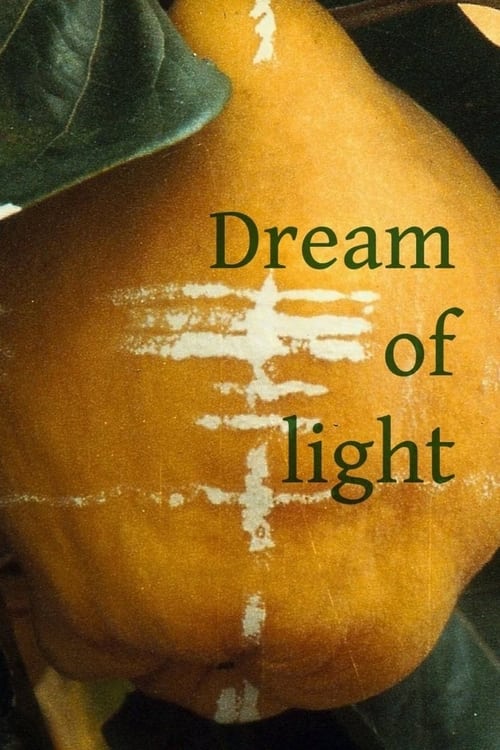
Dream of Light
1992 · Víctor Erice
For when you want stillness — a film to watch alone, unhurried, maybe on a rainy afternoon, and come away seeing ordinary light differently. Deep comfort for the patient; a stretch if you need plot.
What it's about
Over one Madrid autumn, the hyperrealist painter Antonio López García sets up an easel in his small back garden and tries to paint the quince tree he planted years before. The problem is that his subject won't hold still: the fruit swells and yellows, the light changes by the hour, rain interrupts. Erice simply watches, in something close to real time, an artist in patient pursuit of a moment that keeps moving.
The experience
Serene and absorbing in a way almost no other film is — it slows your pulse to the rhythm of daylight and weather. What sounds like nothing happening becomes gently suspenseful: will he catch the light before the season ends?
The craft
Erice turns documentary observation into something painterly itself: the film is as attentive to shifting sunlight, ripening fruit, and the sounds of the garden as López is. The measuring marks, plumb lines, and daily rituals of the painter's process become the film's structure — process as drama.
Why it matters
Erice's only feature-length documentary and one of the most revered films ever made about the act of painting, regularly cited as a summit of the art-documentary form.
Snapshot
Dream of Light — released in Spain as El Sol del membrillo ("The Quince Tree Sun") and circulated in English variously as The Quince Tree Sun and Dream of Light — is Víctor Erice's third feature and his only feature-length documentary. Over the autumn of 1990, Erice filmed his friend, the hyperrealist painter Antonio López García, as López set up in the small back patio of his Madrid house and attempted to paint a quince tree he had planted years before. The film watches, in something close to real time, the daily ritual of an artist chasing a subject that will not hold still: the fruit swells and yellows, the light shifts hour by hour and week by week, rain intervenes, and the quinces finally ripen past the moment López is trying to fix. He never finishes the oil. The film is at once a documentary of process, a meditation on the impossibility of arresting time, and a quiet self-portrait by a director famous for his silences and his scarcity of output. It premiered at the 1992 Cannes Film Festival, where it won the Jury Prize and the FIPRESCI Prize, and it has since become a touchstone for anyone interested in the border between documentary and fiction.
Industry & production
The film was produced in Spain by María Moreno (López's wife, herself a painter) and by companies associated with Erice's circle — the production is generally credited to María Moreno P.C. in collaboration with Igeldo Zine Produkzioak and support from Spanish public bodies of the period. Precise budget and box-office figures are not part of the reliable public record, and I will not invent them; like most of Erice's work, this was a small, artisanal production rather than a commercial venture. What matters industrially is the film's origin: it began not as a funded documentary commission but as a personal project between two old friends. Erice and López had known each other since their student days in 1950s Madrid, and the film grew out of that intimacy. Shooting took place over roughly two months in the autumn of 1990, dictated entirely by the biological calendar of the tree — the production could only exist during the weeks the quinces were ripening. This is a rare instance of a film's schedule being set by botany rather than by finance. The result runs a little over two and a quarter hours, a length that would be commercially unusual for a documentary about a man painting a tree, and which signals from the outset that the film is an art-house object made on its own terms.
Technology
Dream of Light was shot on 35mm color film, and the choice of medium is inseparable from the subject. The film is, at bottom, about the recording of light over time, and it enlists photochemical film — an emulsion that itself registers light — as an analog for López's canvas. Erice repeatedly stages the correspondence: the painter marks the changing position of sunlight on the fruit, and the camera records the same fugitive light falling on the same fruit. The film uses no exotic apparatus; its "technology" is largely the patience of long observation, static tripod-mounted setups, and available daylight supplemented as needed. One of its quietly radical technical gestures is the use of time itself as a recording instrument — the film returns to the tree across days and weeks, so that the accumulated footage becomes a time-lapse of ripening and decay, even where individual shots are not literally time-lapsed. Where the record of specific lenses or stocks is thin, I will not embellish; the important point is that Erice deliberately chose an old, chemical, light-based medium to document another old, light-based craft.
Technique
Cinematography
The cinematography is credited to Javier Aguirresarobe and Ángel Luis Fernández, both major figures in Spanish cinema. The visual grammar is one of restraint and duration: long, mostly locked-off takes; a palette of autumnal greens, ochres, and grays; and a persistent attention to the quality of natural light as it moves across the patio. The camera tends to hold López's own vantage — framing the tree roughly as he sees it — so that the viewer is enlisted into the act of looking that the painter is performing. Interiors of the house and studio are treated with a darker, Vermeer-like tonality, light entering from windows and pooling on surfaces. The compositions are painterly without being merely pretty; they are structured around the same problems of framing, perspective, and light that occupy López on his canvas. The film's cinematography is thus not decorative but argumentative: it advances the film's central claim that filming and painting are rival, kindred attempts to hold onto the visible.
Editing
Editing is credited to Juan Ignacio San Mateo, and the cutting is the film's most underrated achievement. The material is by nature undramatic — a man measuring, marking, and applying paint — and the editing's task is to shape weeks of repetitive labor into a rhythm that accumulates meaning. Cuts register the passage of days through incremental changes: a fruit slightly lower on its branch, a leaf gone, a new white reference mark on the canvas. The edit also modulates between registers — the documentary observation of the painting; the domestic life around it (workers renovating the house, visitors, the radio); and, near the end, a shift toward the oneiric. The pacing is patient to the point of provocation for some viewers, but the slowness is structural: it forces the audience into the durational experience of watching something ripen and fail to be captured.
Mise-en-scène / staging
Here the film complicates its own documentary status. Much of what we see is unstaged observation, but Erice openly organizes and, at moments, stages the profilmic world. López's practical methods become the film's mise-en-scène: he drives nails to mark where his feet must stand, hangs a plumb line, and paints small white reference marks directly on the leaves and fruit and on the ground so that the scene can be reconstructed day after day — an armature of control against nature's drift. The patio, with its scaffolding of markers, becomes a kind of set that the painter has built for himself and that Erice then re-frames. Polish workers renovating the house move through the background, grounding the aesthetic project in ordinary labor; a radio carries news of the world (the film was shot in the autumn of 1990, against the distant backdrop of the Gulf crisis). The staging continually juxtaposes the timeless act of art-making with the specific, dated texture of a particular season.
Sound
The soundtrack is predominantly diegetic and naturalistic: birdsong, rain, the city beyond the walls, the scrape of brush and the tap of the painter's tools, the Polish of the workers, snatches of radio. This near-documentary soundscape is punctuated by a spare original score by Pascal Gaigne, used sparingly so as not to sentimentalize the observation. Sound does crucial narrative work — the arrival of rain, heard before it is fully seen, is one of the film's turning points, the weather that defeats the oil painting. In the final movement the sound design turns inward, accompanying López's recounted dream. The restraint of the sound mix is of a piece with the film's whole ethic: it trusts the ambient world to speak.
Performance
There are no actors and no performances in the conventional sense; the "cast" is López, his wife María Moreno, the painter Enrique Gran (a friend from student days who visits and reminisces), the Polish workers, and others playing themselves. Yet the film is acutely aware that being filmed changes behavior, and part of its subject is precisely the self-consciousness of a man observed at intimate labor. López's presence — patient, absorbed, occasionally rueful — carries the film. The conversation between López and Gran about their youth and about the act of seeing supplies the closest thing to dialogue-driven scene work, and it functions almost as unscripted "performance" of memory and artistic doubt.
Narrative & dramatic mode
The film has almost no plot in the fictional sense, yet it is structured as a drama of process with a clear arc and a genuine reversal. The rising action is the painter's methodical construction of his system for capturing the tree; the complication is nature's refusal to cooperate — the fruit keeps ripening and shifting, the light keeps changing, the rain comes; the crisis is López's decision to abandon the oil painting; and the resolution turns inward and elegiac, as he shifts to a drawing and, finally, as the film moves into a dreamed image of the quinces fallen and rotting on the ground. The dramatic mode is observational and contemplative rather than expository — there is little voiceover explanation, no interviews to camera in the standard documentary manner, and no thesis stated aloud. Meaning accretes through repetition and duration. The film's quiet devastation is that its "hero" fails at his stated task, and that the failure is revealed to be the real subject: the painting was never really the point; the looking, and the passing of the season, were.
Genre & cycle
Dream of Light is a documentary, but one that belongs to the tradition of the process film and the artist-at-work film — a lineage that includes Henri-Georges Clouzot's The Mystery of Picasso (1956), where the act of creation is the drama. Erice's film pointedly rejects Clouzot's virtuosic spectacle in favor of duration and doubt. It also sits within the broader "hybrid" or "essayistic" documentary cycle — films that deliberately blur the line between recording and staging — and within a European art-cinema tradition of slow, contemplative filmmaking. Within Spanish cinema it is somewhat singular; there was no strong contemporaneous cycle of such painterly documentaries, which is part of why it stands out.
Authorship & method
The film is unmistakably an Erice work, and it deepens the concerns of his two earlier features. Erice (b. 1940) is one of world cinema's great miniaturists of output: The Spirit of the Beehive (1973), El Sur (1983), Dream of Light (1992), and then a three-decade gap before the fiction feature Close Your Eyes (2023), alongside shorter works and contributions to omnibus films. His signatures — the patient attention to light, the fascination with the act of looking, the meditation on time and mortality, the quiet — are all present here in documentary form. Crucially, the film is genuinely co-authored: the screenplay is credited to Erice together with Antonio López García, acknowledging that the film's structure emerged from the painter's own working method. The two men were longtime friends, and the film is as much López's self-examination as Erice's. Among key collaborators: cinematographers Javier Aguirresarobe and Ángel Luis Fernández; editor Juan Ignacio San Mateo; composer Pascal Gaigne; and producer María Moreno. López García himself — one of Spain's most celebrated realist painters, associated with a meticulous, observational figuration — is not merely a subject but a collaborator whose aesthetic the film both documents and mirrors.
Movement / national cinema
The film belongs to Spanish cinema of the early post-Franco, post-Movida period, but it stands apart from the era's more flamboyant currents (the Almodóvar-led exuberance of 1980s Spanish film). Erice is better understood as an heir to a contemplative, poetic strain of Spanish and European art cinema. Nationally, the film is rooted in a specifically Spanish tradition of realist painting — López García descends from a lineage of Spanish observational realism — and in the Castilian light and landscape of Madrid. Internationally, it aligns Erice with a European tradition of slow, philosophical cinema. It is worth noting plainly that Erice's smallness of output makes him hard to slot into any "movement"; he is closer to a school of one.
Era / period
Made and set in the autumn of 1990 and released in 1992, the film is a document of a very specific moment even as it reaches for the timeless. The radio broadcasts and the presence of Polish laborers root it in the Europe of 1990 — a continent in the aftermath of the fall of the Berlin Wall, with the Gulf crisis on the airwaves. Cinematically, it arrives at the tail end of the celluloid era and just before the digital transformation of documentary; its faith in duration, natural light, and 35mm places it firmly in an analog sensibility. It is also, historically, a late statement in Erice's active feature career before his long hiatus, which lends it in retrospect the quality of an artistic testament.
Themes
The film's central theme is the impossibility of arresting time — the painter, like the filmmaker, tries to fix a living, changing thing, and both are defeated by, and reconciled to, its impermanence. Closely bound to this is the theme of light: the Spanish title, The Quince Tree Sun, names the fugitive sunlight that López tries to pin down and that ultimately eludes him. Other threads include the relationship between art and mortality (the ripening and rotting fruit as a memento mori); the dignity and futility of labor, both the painter's and the workers'; friendship, memory, and the passage of a life (the reminiscences with Enrique Gran); and, reflexively, the kinship and rivalry between painting and cinema as competing arts of the visible. The film is finally about seeing itself — the discipline, humility, and loss involved in truly attending to the world.
Reception, canon & influence
Critically, Dream of Light was warmly received on the festival circuit and among serious critics, crowned by the Jury Prize and the FIPRESCI Prize at Cannes in 1992. It has grown in stature over the decades and is frequently cited as one of the finest films ever made about the creative process and among the essential works of the hybrid documentary. Backward influences on the film are legible: the tradition of the artist-process film (Clouzot's The Mystery of Picasso as a foil), the observational ethos of European art cinema, and — above all — the aesthetic of Antonio López García's own realist painting, which the film formally imitates. Erice's own prior features supply the deeper lineage, transposing their preoccupation with light and time into documentary. Its forward legacy lies chiefly in the domain of the contemplative and hybrid documentary: it is a recurrent reference point for filmmakers and critics thinking about slow cinema, the ethics of observation, and the porous border between fiction and nonfiction, and it helped secure Erice's international reputation as a major, if famously infrequent, artist. Beyond that broad influence, the specific chains of who-borrowed-what are not densely documented, and I will not overstate them; the film's most reliable legacy is as a canonized, much-admired model of how cinema can watch another art being made — and can make, out of a painter's failure, a quiet masterpiece.
Reception
It took the Jury Prize and the FIPRESCI prize at Cannes in 1992, then spent decades as a barely-distributed rumor passed between cinephiles; restorations and its Criterion Channel/repertory afterlife have since cemented it as maybe the greatest film ever made about the act of painting.
How Dream of Light was received, from release to now →
Influences: the films it descends from and the films it influenced
- The Mystery of Picasso (1956) — The template — and named foil — for filming an artist's creative act as the film's sole drama, though Clouzot's translucent-canvas showmanship is precisely what Erice inverts into patient, unmanipulated observation.
- The Spirit of the Beehive (1973) — Erice's own founding grammar of hushed rooms, a fixed contemplative gaze, and light treated as the true subject — here transposed intact from fiction into documentary.
- El Sur (1983) — Extends Erice's painterly, penumbral interiors and his structuring of narrative around the slow physics of daylight moving across a space.
- Jeanne Dielman, 23 quai du Commerce, 1080 Bruxelles (1975) — Establishes the locked-off, frontal, real-time frame that lets an unremarkable manual process accrue meaning purely through duration — Erice's method for the daily ritual of setting up the easel.
- Days of Heaven (1978) — Néstor Almendros's insistence on shooting only in available, low-angle 'magic hour' light — the same subordination of the schedule to the sun that structures López's race against the failing autumn light.
- Andrei Rublev (1966) — The long-take meditation on the artist's protracted struggle to create, treating the act of making as a spiritual labor measured against time and mortality.
- Louisiana Story (1948) — The observational-reconstruction ethic — real people re-enacting their own lives and labor before a patient camera — that underlies Erice's staging of López as 'himself.'
- Five Dedicated to Ozu (2003) — Reduces cinema to long, locked-off takes of nature and shifting light as pure durational contemplation, the aesthetic Dream of Light helped legitimize.
- In Vanda's Room (2000) — Durational, natural-light observation of non-actors reconstructing their own daily existence, extending Erice's ethics of watching a life/labor without dramatization.
- Rivers and Tides (2001) — An observational process-documentary of an artist (Goldsworthy) working with weather, impermanence and time — the direct heir to Erice's model of watching art made against nature's clock.
- Gerhard Richter Painting (2011) — Minimal-intervention studio observation of a painter's slow, revised process, the camera as patient witness to labor rather than illustrator of genius.
- National Gallery (2014) — Wiseman's fly-on-the-wall durational study of looking at and caring for paintings shares Erice's conviction that cinema can observe another art without narration or thesis.
- Portrait of a Lady on Fire (2019) — Stages the physical act of painting and the reciprocal painter-subject gaze in natural light, dramatizing the very looking-while-making that Erice documents.
- Close Your Eyes (2023) — Erice's own late return, extending Dream of Light's meditation on vision, memory and the fading of the image into a reflexive elegy on looking.
- Barry Lyndon (1975) — Composes each frame as an available-light realist canvas, the cinema-imitates-painting ambition that Dream of Light literalizes by mirroring López García's own figurative aesthetic.
- Close-Up (1990) — Contemporaneous experiment in the porous fiction/nonfiction border, using non-actors to reconstruct their own reality — the same hybrid-documentary logic Erice deploys.
- Sátántangó (1994) — A near-contemporary landmark of slow-cinema durational rhythm, extending the same faith that extreme long takes make time itself the film's real material.
Similar films
- Close Your Eyes (2023) — influence & lineage
- El Sur (1983) — influence & lineage
- The Spirit of the Beehive (1973) — influence & lineage
- Portrait of a Lady on Fire (2019) — influence & lineage
- Barry Lyndon (1975) — influence & lineage
- Satantango (1994) — influence & lineage
- Post Tenebras Lux (2012) — shared sensibility
- The Hypothesis of the Stolen Painting (1978) — shared sensibility