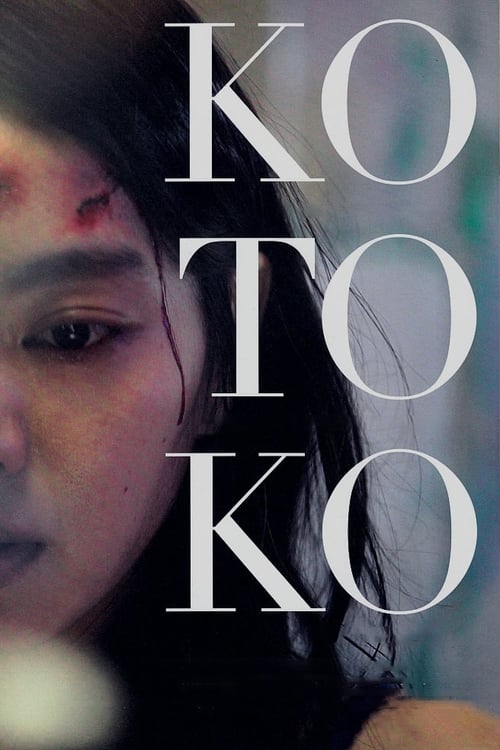
Kotoko
2011 · Shinya Tsukamoto
For when you want cinema that genuinely shakes you — not a fun scare but a serious, shattering one. Pure challenge, zero comfort; save it for a night you feel sturdy.
What it's about
A single mother's perception has split: the world appears to her doubled, every stranger showing up twice — once harmless, once murderous — and her fierce love for her infant son has become inseparable from terror. After a breakdown puts her under suspicion of abuse, her child is taken away, leaving her alone with a mind she can't trust. The Okinawan singer Cocco co-wrote the story from her own experience and plays the lead.
The experience
Harrowing and disorienting — the camera lurches and settles with her mind, so song, sunlight, and violence arrive with the same suddenness. It's tender and terrifying in the same breath, and it does not let you watch from a safe distance.
Performances
Cocco gives one of the most fearless performances in modern Japanese film — there's no visible seam between actress and character, and when she sings, the film briefly holds its breath.
The craft
Shinya Tsukamoto shoots almost entirely from inside her subjectivity, handheld and convulsive, so you experience her doubled world rather than observe it. Cocco's songs are woven through the terror, and the whiplash between beauty and dread is the whole design — harrowing material handled without a trace of exploitation. Watch it attentively, with good sound; it works on your nerves.
Why it matters
A landmark turn inward for Tsukamoto, the one-man industrial cinema behind Tetsuo: The Iron Man — his violent style repurposed as radical empathy, and one of the most respected portraits of mental illness in Japanese independent film.
Shinya Tsukamoto, the one-man industrial cinema of Tetsuo: The Iron Man, turns his convulsive handheld style inward for this collaboration with the Okinawan singer Cocco, who co-wrote the story from her own experience and gives one of the most fearless performances in modern Japanese film. She plays a single mother whose perception has split — the world appears to her doubled, every stranger both benign and murderous — and whose desperate love for her infant son becomes indistinguishable from terror. Tsukamoto shoots almost entirely from inside her subjectivity, the camera lurching and settling with her mind, so that song, sunlight, and violence arrive with equal suddenness. It is harrowing material handled without a trace of exploitation: the horror label fits only because no other word covers what maternal fear feels like from within. The director himself appears as a battered, patient novelist drawn into her orbit. Venice awarded it the top prize of the Orizzonti section in 2011 — recognition that Japan's great cinematic outsider had made his most human film.
A Deleuzian reading
A stranger comes toward her on the street.
The full Deleuzian reading of Kotoko →
Reception
It won the top prize in Venice's Orizzonti section in 2011, then promptly vanished into distribution limbo — over a decade later it's been steadily reclaimed by fans as one of Tsukamoto's very best, the devastating one hiding behind the Tetsuo reputation.
How Kotoko was received, from release to now →
Influences: the films it descends from and the films it influenced
- Tetsuo: The Iron Man (1989) — Tsukamoto's DIY 16mm handheld frenzy and stop-motion-adjacent staccato cutting invented the body-as-battleground aesthetic Kotoko redirects from metal fusion to psychological doubling.
- Bullet Ballet (1998) — Grainy monochrome handheld urban vertigo plus Tsukamoto casting himself as a man coming apart establishes the director-cameo-in-crisis method he reprises inside Kotoko.
- A Snake of June (2002) — His intimate blue-monochrome study of a woman's interior pressure builds the female-subject POV grammar Kotoko intensifies into full perceptual unreliability.
- Vital (2004) — Trades industrial noise for memory-fractured hallucination, the tonal bridge where Tsukamoto's rupture becomes psychological rather than mechanical.
- Repulsion (1965) — The template for subjective apartment horror: the camera adopts a disintegrating woman's perception so her hallucinated intrusions register as objective image, exactly Kotoko's doubled-vision device.
- A Woman Under the Influence (1974) — Handheld proximity to a mother's mental breakdown and an unguarded, near-documentary fearless lead performance—the raw register Cocco delivers.
- Possession (1981) — Maternal hysteria performed at full convulsive physical extremity (Adjani's subway breakdown), the body-thrown-against-walls acting mode Cocco channels.
- Jacob's Ladder (1990) — Editing that ruptures the real with split-second demonic inserts, making perception itself the unreliable narrator—the cut-based hallucination Kotoko systematizes.
- Tokyo Fist (1995) — Latest extension of the same total-authorship handheld method applied to a body in psychological crisis, self-harm staged with the identical percussive intimacy.
- mother! (2017) — Relentless close handheld locked to a woman's face while domestic space warps under maternal dread—extends Kotoko's claustrophobic interior-POV to feature length.
- The Babadook (2014) — Literalizes a single mother's mental illness as a domestic monster, running maternal fear and love-as-terror as the horror engine Kotoko pioneered.
- Hereditary (2018) — Inherited mental illness and maternal terror delivered through perceptual dread and a fearless unraveling lead performance in the Cocco lineage.
- Climax (2018) — Uses music as the trigger for collective perceptual rupture, camera and edit collapsing into derangement—the song-as-rupture principle Kotoko builds from Cocco's own songs.
- Fires on the Plain (2014) — Tsukamoto's continued handheld, self-starring sensory assault, carrying Kotoko's subjective bodily horror forward into wartime hallucination.
- Antichrist (2009) — Contemporaneous art-horror that renders maternal grief as handheld visceral body horror, sharing Kotoko's collapse of psychological pain into physical self-mutilation.
- Black Swan (2010) — Subjective camera welded to a performer whose art and psychosis merge, shooting self-harm and doubling hallucinations as literal fact—the same year, the same device.
- Enter the Void (2009) — Fully first-person subjective POV that dissolves the seam between what is seen and what is hallucinated, a maximalist cousin to Kotoko's interior-POV staging.
Similar films
- Possession (1981) — influence & lineage · same viewing thread
- Bullet Ballet (1998) — influence & lineage · often watched together
- Tetsuo: The Iron Man (1989) — influence & lineage
- Repulsion (1965) — influence & lineage
- Enter the Void (2010) — same viewing thread · often watched together
- Cure (1997) — same viewing thread
- Jacob's Ladder (1990) — influence & lineage · often watched together
- Climax (2018) — influence & lineage · often watched together
All the films related to Kotoko →
Watch it with: curated runs of related films
- Doubles, Dreams, and Dissolving Selves — Watch these when you want the floor to give way — dream machines, hypnotists, doppelgängers, and haunted houses where perception and identity quietly come undone.