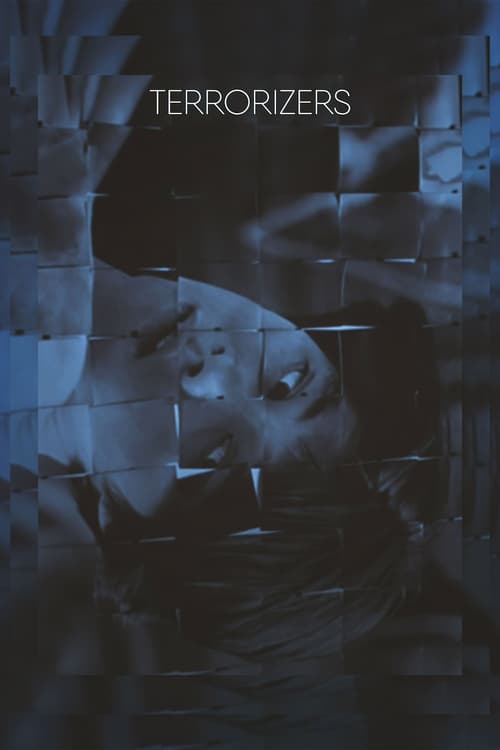
Terrorizers
1986 · Edward Yang
For when you want something to chew on — a slow-burn puzzle about urban loneliness rather than an easy night in. Definitely challenge, not comfort, and best when you're in the mood to pay close attention.
What it's about
In 1980s Taipei, a prank phone call quietly detonates several lives: a novelist stalled on her book, a doctor blind to his marriage's decay, a delinquent girl the police call the White Chick, and a rich kid who photographs her obsessively. Edward Yang braids these strangers together and lets chance do the work melodrama usually does, watching the city connect people only to damage them.
The experience
Cool, precise, and quietly unnerving — it holds you at a distance and still gets under your skin, and the ending will have you arguing with yourself for days. This is a film you study as much as feel.
The craft
Yang, a former computer engineer, plots his intersecting strands with an engineer's precision, and shoots Taipei as widescreen compositions of glass, concrete, and gas storage tanks — beautiful and pitiless at once. The framing does as much storytelling as the dialogue; it rewards a big screen and full attention.
Why it matters
The coldest, most modern film of the Taiwan New Cinema, its multi-strand structure anticipated decades of interlocking-lives storytelling and cemented Yang as one of the great chroniclers of city life.
The coldest and most modern film of the Taiwan New Cinema — Edward Yang's Taipei rendered as a lattice of strangers whose lives intersect through a prank phone call, a photograph, and an ambitious wife's unhappiness. A novelist stalled on her book, a doctor blind to his marriage's decay, a delinquent girl the police call the White Chick, a rich kid who photographs her obsessively: Yang braids them with an engineer's precision (he had been a computer engineer in Seattle before cinema reclaimed him), letting chance do the work melodrama usually does. Made between Taipei Story and A Brighter Summer Day, it distills his great subject — the city as a machine that manufactures loneliness — into widescreen compositions of glass, concrete, and gas storage tanks, beautiful and pitiless at once. Its multi-strand structure anticipated two decades of network narratives, and its famously ambiguous final movement still provokes arguments about what, exactly, we watched. The image that lingers: a wall-sized photographic portrait, assembled from taped-together enlargements, breathing in the wind from an open window.
A Deleuzian reading
A wall of photographs taped together at the seams, making one face the size of a room.
The full Deleuzian reading of Terrorizers →
Reception
Acclaimed at home from the start — it won Best Feature at the 1986 Golden Horse Awards — but like most of Edward Yang's work it was nearly impossible to actually see for decades; restoration and streaming finally let it climb from retrospective rumor to Letterboxd darling.
How Terrorizers was received, from release to now →
Influences: the films it descends from and the films it influenced
- Blow-Up (1966) — The blown-up photograph of the Eurasian girl pinned across the darkroom wall directly reworks Antonioni's photographer who enlarges prints until the image dissolves into grain and doubt — the enlarged still as an obsessional object that promises truth and withholds it.
- L'Eclisse (1962) — The architectural framing that pins tiny alienated figures against blank modernist façades, plus the 'dead time' compositions where the city keeps holding the frame after the characters have gone, is the grammar Yang transposes onto Taipei.
- Nashville (1975) — The mosaic of a dozen strangers whose lives are braided across a single city by proximity and accident — an ensemble structure with no central protagonist — is the network template Yang inherits and tightens.
- La Ronde (1950) — The daisy-chain architecture in which each stranger's story hands off to the next through a single point of contact is an early formal blueprint for chance-linked ensemble narrative.
- The Conversation (1974) — The surveillance-worker who reconstructs a crime from captured fragments — and whose obsessive re-reading of the evidence collapses into paranoid uncertainty — parallels Terrorizers' photographer piecing reality from images.
- That Day on the Beach (1983) — Yang's own earlier film already fractures chronology and threads multiple women's testimonies into a non-linear web — the ensemble-and-memory scaffolding he refines into Terrorizers' cross-cutting.
- A Brighter Summer Day (1991) — Yang extends the widescreen architectural framing and the sprawling stranger-ensemble into an epic, letting the same chance-and-violence logic play out across a whole social map of Taipei.
- Yi Yi (2000) — Yang's late masterwork returns to the photograph-as-motif through the boy who shoots the backs of people's heads to reveal what they cannot see — the camera-as-limited-witness idea seeded in Terrorizers.
- Chungking Express (1994) — Two loosely tethered stories of urban strangers grazing past each other in a claustrophobic city, with alienation rendered through cramped apartment framing and near-miss coincidence rather than plot.
- Vive L'Amour (1994) — Strangers unknowingly occupying the same empty Taipei apartment, isolation staged in long static wides of vacant architecture — Yang's urban-alienation compositions pushed to their silent extreme.
- Amores Perros (2000) — Uses a single violent chance event (a car crash) as the node that fuses three otherwise unconnected stranger-stories into one city portrait — the network-of-strangers-linked-by-accident structure Terrorizers helped codify.
- Magnolia (1999) — A large ensemble of strangers in one city bound together by coincidence and a shared undertow of despair, with chance elevated to an organizing formal principle.
- Code Unknown (2000) — A chain of city strangers set off by a single careless gesture, told in fragmented ellipses that refuse to resolve their causal links — the ambiguous, incompletely-connected network narrative.
- A Sun (2019) — Frames characters frontally inside the grids, windows and doorways of modern apartments, the architectural geometry of enclosure that Chung's boxed, symmetrical compositions extend.
- Rebels of the Neon God (1994) — The exact structural template of non-convergent parallel montage — Taipei lives cut against each other for a whole film while barely intersecting, contact registered as coincidence or damage rather than as plot convergence.
- Taipei Story (1985) — The immediately prior widescreen study of Taipei modernity — glass towers, reflected neon, marital erosion staged against corporate interiors — shares the exact architectural-alienation compositional language.
- The Time to Live and the Time to Die (1985) — The contemporaneous Taiwan New Cinema aesthetic of long-take observational distance and the static, deep-focus wide shot as the movement's shared house style.
- Blind Chance (1987) — A contemporaneous film built on branching, mutually exclusive outcomes hinging on a single chance moment — the same interest in the alternate-ending, fate-forking structure that Terrorizers deploys in its doubled finale.
- Days of Being Wild (1990) — Yang's dispersed narrative across disconnected Taipei figures — fragmented editing that withholds conventional causation between storylines, available light, characters whose paths intersect without resolution — represents a parallel Chinese-language second-wave development of the same formal solutions WKW pursued in Hong Kong.
- Dust in the Wind (1986) — Contemporaneous TNC experiment building meaning through elliptical, fragmented cross-cutting of coincidence rather than causal plotting — the movement's shared elliptical grammar in an urban register.
Similar films
- Taipei Story (1985) — influence & lineage
- Yi Yi (2000) — influence & lineage
- A Brighter Summer Day (1991) — influence & lineage
- That Day, on the Beach (1983) — influence & lineage
- Blow-Up (1966) — influence & lineage
- The Time to Live and the Time to Die (1985) — influence & lineage
- The Boys from Fengkuei (1983) — shared sensibility
- Rebels of the Neon God (1994) — shared sensibility