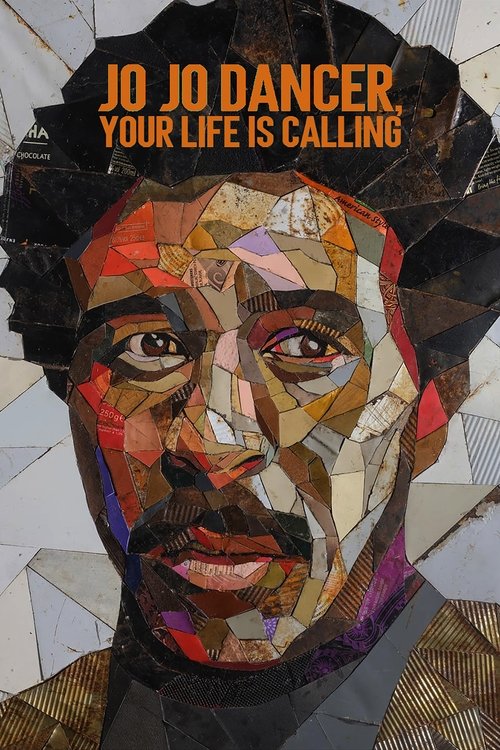
Jo Jo Dancer, Your Life Is Calling
1986 · Richard Pryor
For a night when you want something honest over something polished — a film to reach for when you're thinking about self-destruction, survival, and what fame costs. Emotionally heavy; not comfort viewing, but cathartic.
What it's about
Jo Jo Dancer is a Black stand-up comedian who rose from a childhood in a Midwestern brothel to arenas, fame, and the cocaine that came with it. After a drug-related accident leaves him severely burned and in a coma, his spirit steps out of his hospital bed and walks back through his own life — the clubs, the marriages, the triumphs, the wreckage — asking how he got here. Richard Pryor directs and stars, in a story that barely disguises his own.
The experience
Raw and uneven in a way that feels earned — it swings from genuinely funny club scenes to scenes of real pain, sometimes within a minute. Watching it feels like being trusted with a confession.
Performances
Richard Pryor plays Jo Jo at every stage of his rise and fall, and the closeness of the material to his own life — including his own 1980 burning — gives the performance a candor few star vehicles ever risk.
The craft
The only narrative feature Pryor ever directed, structured as a spirit's guided tour of its own life — a framing device that lets the film move freely between memory, fantasy, and hospital-room present. The stand-up sequences carry the charge of someone recreating his own act from the inside.
Why it matters
A singular document in American comedy: the greatest stand-up of his era turning the most public catastrophe of his life into a self-directed reckoning, six years after the fact.
Snapshot
Jo Jo Dancer, Your Life Is Calling is the only narrative feature Richard Pryor directed, and it is an autobiography that barely bothers to disguise itself. Jo Jo Dancer is a Black stand-up comedian, raised in a Midwestern brothel, who claws his way from strip-club emcee work to arenas and cocaine, and who — in the film's opening minutes — sets himself alight while freebasing. As his burned body lies in the hospital, his spirit steps out of it, addresses him in the second person, and walks him back through the life that brought him there. The device gives the film its title: your life is calling is a stage page, a summons to come out and be seen.
The film was released by Columbia in the spring of 1986, six years after Pryor's own catastrophic burning in 1980 — an event he had already turned into the most famous passage in Richard Pryor Live on the Sunset Strip (1982), and which he would later describe in his memoir Pryor Convictions (1995, with Todd Gold) as a suicide attempt. Jo Jo Dancer is thus a rare object: a major studio picture in which a top-ten box-office star uses his commercial leverage to stage a public inquest into his own near-death. It is uneven, sometimes conventional in its dramaturgy, and unmistakably the work of a man who could not stop telling the truth even when the machinery around him was built for something softer.
Industry & production
The film exists because of an anomaly in early-1980s Hollywood accounting. After Silver Streak (1976), Stir Crazy (1980), The Toy (1982) and Superman III (1983), Pryor was among the most bankable performers in American movies — a position no Black star had previously occupied with such consistency. In 1983 Columbia signed him to a long-term production arrangement, reported in the trades as a five-year, $40 million deal, under the banner Indigo Productions. The stated ambition was to open the studio pipeline to Black filmmakers and technicians.
Indigo's short life was contentious. Jim Brown, hired to run the company, departed within roughly a year amid public acrimony over hiring practices and creative control, and the dispute became a proxy argument about how seriously Hollywood meant its diversity promises. The detailed internal record here is thinner in the public literature than the episode's symbolic weight would suggest, and much of what circulates comes from partisan accounts given at the time; it should be read as contested. What is not contested is the outcome: Indigo produced no lasting slate, and Jo Jo Dancer stands as the deal's principal artifact.
The commercial logic was inverted from the start. Columbia was funding a hard-R drama about addiction, prostitution, paternal violence and attempted self-destruction from a star whose audience had been trained to expect Brewster's Millions (1985). Marketing could not resolve that contradiction, and the film underperformed relative to Pryor's comedies — precise grosses vary across sources and are not worth asserting here. Its release also fell weeks before Len Bias's death in June 1986 detonated the national crack panic and the punitive legislation that followed; a film asking Americans to sit inside a Black addict's interiority arrived at the exact moment the culture was deciding to stop doing that.
Pryor was diagnosed with multiple sclerosis in 1986. His subsequent work — Critical Condition (1987), Moving (1988), Harlem Nights and See No Evil, Hear No Evil (both 1989) — was increasingly shaped by declining health. Jo Jo Dancer is, in retrospect, the last film over which he exercised full authorship.
Technology
Technically the picture is a conventional mid-1980s studio production: 35mm spherical origination, 1.85:1, Dolby Stereo optical release prints. Its ambitions lie in period recreation rather than spectacle — a 1940s brothel parlor, postwar Midwestern streets, smoke-filled club rooms, the chrome-and-velour Vegas of the 1970s — all achieved through production design, costume and lighting rather than any effects innovation.
The one genuinely technical demand is the alter-ego conceit, which requires Pryor to share the frame with himself and requires the spirit to detach from the body. In 1986 that meant the standard pre-digital toolkit: locked-off camera with split-screen or matted composites, optical printing, and careful staging so that eyelines and blocking do the work the compositing cannot. The film uses the effect sparingly and unshowily, which is the right instinct — the device is dramatic rather than visual, and the more it announced itself the less it would mean. Burn makeup for the hospital passages is similarly restrained, keeping the injured body partly withheld rather than offered as spectacle.
Worth noting as context: Pryor's native medium by the mid-1980s was the concert film, a form built on multi-camera coverage of a single performing body — Live in Concert (1979), Live on the Sunset Strip (1982), Here and Now (1983). Jo Jo Dancer was his attempt to move from that apparatus to the full narrative-feature apparatus, and much of the film's friction comes from the transfer. Its home-video afterlife has been modest, with limited disc availability and little restoration attention, which has kept it out of circulation and contributed to its underdiscussion.
Technique
Cinematography
The film is credited to John A. Alonzo, ASC — the cameraman of Chinatown (1974), Norma Rae (1979) and Scarface (1983), and one of the few Mexican-American cinematographers of real standing in the era's studio system. Alonzo's contribution is legible in the tonal separation between registers: the hospital present is cool, clinical, laterally lit and largely static, while the recalled past is warmer, softer-edged and more mobile, with practical sources — lamps, marquees, spotlights — doing much of the modeling. The club and stage material leans on the hard-edged pool of the follow spot, which isolates the performer against blackness and makes the audience a felt absence rather than a visible mass.
This is not flashy photography, and it is not meant to be. Alonzo's discipline is that he does not aestheticize the brothel or the burn ward; the compositions stay at eye level, close to the actors, and the camera generally declines to comment.
Editing
Editing is credited to Donn Cambern, whose work on Easy Rider (1969) and The Last Picture Show (1971) made him fluent in exactly the elliptical, associative cutting this material needs. The film's structural problem is that it must move constantly between three planes — the dying body, the observing alter ego, and the remembered past — without letting the audience lose its footing. The solution is largely to trust the frame narrator: transitions are motivated by the alter ego's attention, so that memory arrives when he turns toward it. The rhythm is looser and more anecdotal in the childhood material and tightens sharply in the addiction sequences, where the cutting begins to strand Jo Jo in fragments.
Mise-en-scène / staging
The film's most persuasive staging is architectural. The brothel is presented as a working household — a place with a kitchen, chores, rules and a boy doing his homework in it — rather than as a den of vice. That refusal of lurid framing is the film's central moral decision, and it is executed through blocking: the child moves through the space casually, and the adults conduct business around him as labor.
Against that, the show-business spaces get progressively emptier. The early clubs are cramped, crowded, tactile; the later rooms are larger, colder, more mirrored, with Jo Jo more often alone in them. The physical arc from a full house to an empty suite does most of the work the dialogue does not have to.
Sound
Herbie Hancock composed the score, in the same year as his celebrated work on Bertrand Tavernier's 'Round Midnight. Hancock's writing here is jazz-rooted and generally reticent — piano and small-ensemble textures that shade scenes rather than drive them — with period-appropriate source music carrying much of the historical placement. The casting of singer Billy Eckstine in a supporting role and jazz vocalist Carmen McRae as the grandmother is itself a sonic decision: it grounds the film in an actual Black entertainment lineage rather than a recreated one.
The most important sound in the film, though, is Pryor's voice in two modes — the performed voice on the stage microphone and the unamplified voice of the alter ego. The film keeps asking which one is telling the truth.
Performance
Pryor plays both Jo Jo and his alter ego, and the distinction between the two readings is the film's finest achievement. Jo Jo is charm as armor: fast, deflecting, always working the room. The alter ego is quiet, exhausted, faintly contemptuous — a man who has heard all the material before. Pryor had already proven he could act outside comedy, most severely in Paul Schrader's Blue Collar (1978) and earlier in Lady Sings the Blues (1972), but here he is doing something harder: playing his own defense mechanism while simultaneously playing the person who sees through it.
The supporting company is strong and drawn substantially from Black stage, television and music. Debbie Allen and Paula Kelly bring dancer's precision to roles that could have been sketches; Scoey Mitchlll gives the father a plausible, unmelodramatic menace; Carmen McRae's grandmother supplies the film's only stable authority. Barbara Williams, Fay Hauser, Art Evans and Wings Hauser fill out the ensemble.
Narrative & dramatic mode
The film is a life review in the strict sense — the near-death panorama, dramatized as guided tour. Formally it belongs to the A Christmas Carol family (a spirit conducting a man through his own past toward a moral verdict) crossed with the modernist artistic self-reckoning of Fellini's 8½ (1963) and, most directly, Bob Fosse's All That Jazz (1979), where a self-destroying showman negotiates with death while his career replays.
Its distinguishing move is the second person. The alter ego does not narrate Jo Jo's life; he prosecutes it, to Jo Jo's face. That grammar turns the memory sequences into evidence and makes the framing story a genuine trial with a live verdict at stake — the coma is not suspense scaffolding but the actual question.
The mode is episodic and anecdotal, and this is where the film divides critics. Pryor's native form is the stand-up set, which advances by escalating routine rather than by dramatic causality, and Jo Jo Dancer often plays like a set given the furniture of a feature. The ending concedes as much: Jo Jo chooses to live, and the film's last movement returns him to a stage and a microphone, where a man simply tells an audience the truth. After ninety-odd minutes of conventional dramatization, the film arrives at the form Pryor had already perfected.
Genre & cycle
Jo Jo Dancer sits in the show-business confessional cycle that runs from Fosse's Lenny (1974) and All That Jazz through The Rose (1979), Coal Miner's Daughter (1980) and Sweet Dreams (1985), and forward into Bird (1988) and What's Love Got to Do with It (1993). Within that cycle it is unusual in two respects: the subject directs and stars, collapsing the distance the biopic normally provides; and the addiction is not treated as an aberration from the talent but as continuous with it — the same appetite that needs the room needs the pipe.
It also belongs to a smaller cycle of films about the comedian's interior darkness — Scorsese's The King of Comedy (1982) before it, Punchline (1988) after — where laughter is presented as a defense rather than a gift.
Authorship & method
The screenplay is credited to Pryor with Rocco Urbisci and Paul Mooney, and that trio is essentially Pryor's working brain. Mooney had been his closest writing collaborator since the early 1970s and was central to the construction of the persona that made the concert films; Urbisci was his television and concert-special collaborator, including on Richard Pryor: Here and Now (1983), Pryor's only prior directing credit. The film is therefore not a star's vanity assignment handed to hired writers but the same shop that built the stand-up, attempting a longer form.
As a director Pryor is competent, unmannered, and largely uninterested in style for its own sake — his attention is entirely on performance and on the accuracy of remembered spaces. He surrounded himself with senior craftspeople (Alonzo, Cambern, Hancock) and let them handle the grammar. Whether that constitutes a directorial vision or a well-managed act of self-exposure is the fair critical question, and the honest answer is that the film gives evidence for both.
Movement / national cinema
American, studio-financed, and essentially unaffiliated. Jo Jo Dancer has no movement to belong to, which is part of why it has been critically stranded. Its clearest ancestor is Gordon Parks's The Learning Tree (1969) — an autobiographical novel filmed by its author for a major studio, and the first studio feature directed by a Black American. Between them lies the blaxploitation cycle, Melvin Van Peebles's independent rupture, and the studio careers of directors like Michael Schultz, who had directed Pryor in Which Way Is Up? (1977) and Greased Lightning (1977).
Meanwhile, the L.A. Rebellion filmmakers — Charles Burnett, Julie Dash, Billy Woodberry — were pursuing Black interiority on microbudgets outside the industry entirely. Jo Jo Dancer attempts something adjacent from inside it, with a star's money. The timing is poignant: Spike Lee's She's Gotta Have It opened three months later, in August 1986, and the independent path it opened became the dominant route for Black authorship in American film. Pryor's studio-financed model did not reproduce itself.
Era / period
The film is a mid-1980s Hollywood object in a decade organized around high-concept, franchise, and the comedy star vehicle — the economy that had made Pryor rich and that had no template for what he wanted to do next. It is also a Reagan-era film about drugs made just before the political meaning of that subject hardened. And it arrives during the reordering of Black stardom: Bill Cosby's ascendant television respectability on one side, Eddie Murphy's Beverly Hills Cop box-office supremacy on the other, and Pryor — whose obscenity and woundedness fit neither model — in between.
Themes
The brothel is the film's foundation and its most radical gesture. Pryor's actual childhood in Peoria, Illinois, in a house run by his grandmother and worked by his mother, is documented in the biographical literature — Scott Saul's Becoming Richard Pryor (2014) is the fullest scholarly treatment — and the film refuses both euphemism and exposé. It presents sex work as the family business and the women who did it as the boy's caretakers, which produces the film's most complicated feeling: gratitude and shame arriving in the same frame.
From there the themes chain. The father, present and violent, teaches a masculinity Jo Jo spends the film failing to escape. The mask — the comic persona — begins as survival and becomes a prison. Crossover is examined with unusual precision in the sequences where Jo Jo sands down his act for white rooms and finds himself successful and hollowed out; the reclamation of his own voice is the film's true triumph, and it is placed well before the fire, which is to say it does not save him. And addiction is framed not as a moral failure but as a continuous appetite: for applause, for women, for anesthesia. The film ends by asking whether a man who has seen all of this still wants to be alive, and answers yes, without arguing that the answer is easy.
Reception, canon & influence
Reviews in 1986 were divided along a consistent fault line: near-universal respect for Pryor's candor and for the performance, alongside reservations that the film's dramaturgy was conventional and its episodes uneven — that Pryor the director had not found a form equal to Pryor the material. Sympathetic critics treated it as a genuine act of artistic risk; skeptical ones found it a filmed confession rather than a film. Commercially it did not connect with the audience that had bought tickets to Superman III.
Its subsequent critical literature is genuinely thin. The film is discussed more often inside Pryor biographies — Saul's, and David and Joe Henry's Furious Cool (2013) — and in the documentaries (Omit the Logic, 2013; I Am Richard Pryor, 2019) than in its own right, and it has not received the restoration-and-reappraisal treatment that has rescued comparable 1980s orphans. There is room for serious scholarship here.
Backward. The formal debts are to 8½ and All That Jazz for the death-vision architecture, to Lenny for the comedian-as-tragic-subject, and to the Dickensian moral tour for the alter ego. The dramatic debts are to Lady Sings the Blues and Blue Collar, which had established that Pryor could carry weight. The deepest debt, though, is to Pryor's own concert films, where the material — the grandmother, the fire, the addiction — was first shaped for an audience.
Forward. Its most direct descendant is Eddie Murphy's Harlem Nights (1989), the star-directs-himself Black studio picture in which Pryor himself acted. More substantively, the film established a template for the comedian's cinematic self-autopsy that Chris Rock — a lifelong and explicit Pryor partisan — took up in Top Five (2014), a film about a Black comedian, fame and sobriety that is legible as a direct answer. Its broader lineage runs into the tradition of Black autobiographical American cinema that follows: Crooklyn (1994), Eve's Bayou (1997), Antwone Fisher (2002), Moonlight (2016) — films in which a Black childhood is the subject rather than the backstory. And its own subject has proven curiously unfilmable since: a Richard Pryor biopic has been in and out of development for two decades, most publicly under Lee Daniels, without reaching the screen. That vacancy is itself an argument for the film. Pryor got there first, played both parts, and did not spare himself.
A Deleuzian reading
A boy sits at a kitchen table doing his homework.
The full Deleuzian reading of Jo Jo Dancer, Your Life Is Calling →
Reception
In 1986 it landed to mixed reviews and soft box office, with critics unsure whether Pryor's thinly-veiled self-portrait was brave or self-indulgent. It's since been reappraised as one of the rawest acts of self-examination a major star ever put on screen — the essential companion piece to the Pryor legend.
How Jo Jo Dancer, Your Life Is Calling was received, from release to now →
How to watch Jo Jo Dancer, Your Life Is Calling: what to notice on a first viewing
- Watch the stage light cut Jo Jo out of the blackness. The follow spot isolates the performer against pure black, so the audience becomes a felt absence rather than a visible crowd. The stage stops being a place and becomes a pocket of pure feeling.
- Watch the alter ego watch Jo Jo instead of helping him. Pryor plays a second, quiet version of himself who has already heard all the material and can only look on as the burned body decides whether to live. A man immobilized by his own burns has only watching left as a faculty.
- Watch the brothel staged as an ordinary working household. The film shows a kitchen, chores, and a boy doing homework, with the adults conducting business around him as labor rather than spectacle. Refusing to make the brothel lurid is the film's clearest moral decision, made entirely through blocking.
- Listen for two different voices telling the same story. The performed voice on the stage microphone plays against the unamplified voice of the alter ego, and the film keeps asking which one is telling the truth. Two voices for one man means you're always being asked to judge which self is honest.
- Watch the camera move more freely in the memories. The hospital present is shot largely static and cool, while the recalled past is warmer, softer-edged and mobile, following Jo Jo through remembered rooms. Camera movement alone tells you whether you're in the dying present or the living past.
The whole guide to watching Jo Jo Dancer, Your Life Is Calling, with the keys for a rewatch →
Influences: the films it descends from and the films it influenced
- 8½ (1963) — Supplies the crisis-vision architecture Pryor rebuilds wholesale: a stalled performer, immobilized by his own body and his handlers, walks his memory as a spectator while the remembered figures — women, mother, financiers — are staged as a procession he can watch but not alter.
- The Nutty Professor (1963) — The comedian-auteur directing himself into a split self, where the second persona is the seductive, self-destructive public act and the film's real subject is the star's diagnosis of his own performing personality — the exact structural bet Pryor doubles by putting Jo Jo and Alter Ego in optical composite.
- Easy Rider (1969) — Donn Cambern's flash-cut transition grammar — pre-lapping fragments of the next scene into the tail of the current one — is the editorial technique he brings to Jo Jo's slides between hospital present and remembered past.
- Sweet Sweetback's Baadasssss Song (1971) — Establishes the brothel-as-household staging Pryor reuses literally: a boy raised inside a working house where the women are family and labor at once, shot as domestic routine rather than as vice-den spectacle — plus the template of the Black star financing, directing and starring in his own exposure.
- Lady Sings the Blues (1972) — John A. Alonzo's own prior work on the Black showbiz addiction biopic — the amber-lit club interiors and the descent-into-junk sequence grammar — becomes the warm-past half of his cool-present/warm-past scheme here; Pryor, who played Piano Man in it, is now the subject rather than the sidekick.
- Lenny (1974) — Invents the comedian-as-tragic-subject grammar Pryor inherits: the act shot as a lone figure carved out of black by a follow spot, intercut against the life so that the routines function as testimony rather than as musical numbers.
- Blue Collar (1978) — Schrader's method of blocking Pryor into rooms where he cannot fall back on a routine — holding on him past the punchline until the anger underneath arrives — is the performance register Pryor directs himself into for the hospital and confrontation scenes.
- All That Jazz (1979) — The direct formal parent: a near-fatal medical event freezes the present into a hospital-and-limbo space where the artist reviews his life in conversation with a serene interlocutor, and the showbiz numbers are re-staged as evidence against him — Pryor converts Angelique into the Alter Ego and keeps the second-person address.
- Richard Pryor: Live on the Sunset Strip (1982) — The freebase-fire material is first shaped here as a stand-up bit with the lighter and the cookie speaking back to him; the feature re-stages that already-audience-tested routine as dramatic scene, so the concert film functions as the film's actual first draft.
- Richard Pryor: Here and Now (1983) — Pryor's only prior directing credit and his practical film school: covering a set with cameras that stay on the performer's body rather than cutting for laughs taught him the follow-spot isolation and unbroken-take instincts he carries into the fiction.
- Harlem Nights (1989) — The most literal inheritance — Murphy takes the star-directs-himself Black studio picture and casts Pryor in it, reusing the period club-and-brothel household as a working family unit and the practice of emptying showbiz rooms of extras to isolate the principals.
- Crooklyn (1994) — Adopts the premise that a Black childhood household is the subject and not the backstory, and makes memory a photographic condition — an overtly distorted, warmer lens regime marks the remembered stretch off from the present, the same optical bracketing Alonzo does with palette.
- Eve's Bayou (1997) — Extends Jo Jo's unreliable-witness structure: a retrospective first-person narration that re-enters scenes it may be getting wrong, with the flashbacks graded warm against a cooler framing present, so the film's form doubts its own narrator.
- Top Five (2014) — The explicit answer film — a Black comedian directs himself as a sober star being walked back through his worst nights by a needling interlocutor, converting Pryor's Alter Ego into a journalist and keeping the stand-up set as the load-bearing structure of the confession.
- Get on Up (2014) — Keeps Jo Jo's second-person device intact — the performer breaks frame to address the camera about his own life while the chronology shatters around him, so the biopic is narrated by the subject arguing with the version of himself being depicted.
- Round Midnight (1986) — Same-year twin in method: Herbie Hancock scoring on camera and jazz players cast as actors rather than mimed by them, so the music is generated by the bodies in frame — the identical jazz-lineage casting logic Pryor uses in his club and orchestra pit.
- Hollywood Shuffle (1987) — The other 1980s Black comedian's self-financed autopsy of his own industry, structured as a performer splitting into fantasy alter egos that critique the roles he takes — the same device of externalizing the compromised self as a second character who talks back.
- Bird (1988) — Builds a Black artist's biography backward from a near-death event as the organizing present tense, using pooled-light club interiors against darkness so the performance space reads as isolation rather than glamour.
Similar films
- All That Jazz (1979) — influence & lineage
- Lenny (1974) — influence & lineage
- Paris Is Burning (1991) — shared sensibility
- Take It All (1963) — shared sensibility
- Faces (1968) — shared sensibility
- Joker (2019) — shared sensibility
- On the Count of Three (2022) — shared sensibility
- Michael (2026) — shared sensibility
All the films related to Jo Jo Dancer, Your Life Is Calling →