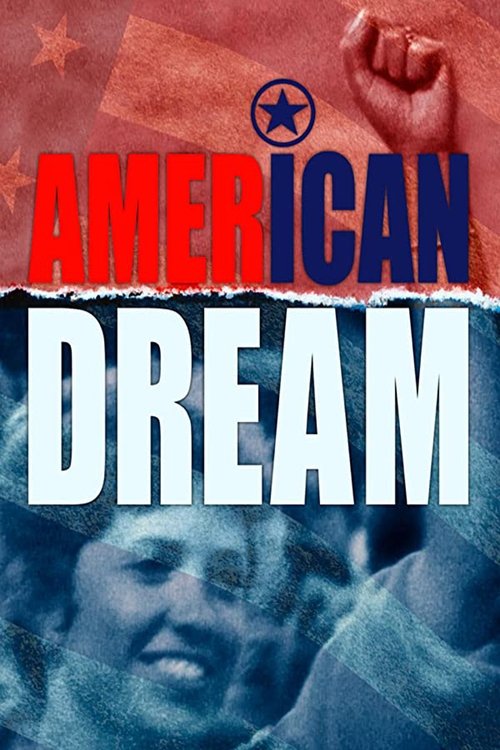
American Dream
1990 · Barbara Kopple
For when you want a documentary with real dramatic stakes — something true, morally complicated, and worth discussing for days. Choose it when you're up for having your sympathies pulled in three directions at once.
What it's about
When the Hormel meatpacking company cuts wages at its Austin, Minnesota plant during a profitable year, the local union walks out — against the advice of its own national leadership. Barbara Kopple's cameras stay inside the strike for years as it grinds on: families burn through savings, the union splits against itself, and neighbors cross picket lines while brothers stop speaking.
The experience
Gripping and increasingly heartbreaking — it plays like a tragedy you keep hoping will swerve, with the intimacy of being in the union hall as solidarity frays in real time. It makes you think hard about principle versus survival, and it doesn't hand you a villain.
The craft
Kopple's fly-on-the-wall access is extraordinary: strategy sessions, kitchen-table arguments, picket lines in Minnesota winter, all captured with the patience of someone who stayed for years. The editing builds it into a story with the momentum of fiction while never feeling shaped against the truth.
Why it matters
It won the Academy Award for Best Documentary and stands as a defining record of what happened to American labor in the 1980s — a companion and dark mirror to Kopple's own earlier landmark of strike filmmaking.
Snapshot
Barbara Kopple spent roughly five years inside a single labor dispute — the strike by Local P-9 of the United Food and Commercial Workers against the Geo. A. Hormel & Co. plant in Austin, Minnesota — and came out with a film that inverts the moral architecture of her own most famous work. Harlan County, USA (1976) had given American documentary a clean line of force: miners against a company, with gun thugs on one side and Hazel Dickens' voice on the other. American Dream takes the same observational apparatus into a fight where the antagonist keeps dissolving. Hormel cut hourly wages from $10.69 to $8.25 in 1984 during a profitable stretch; P-9 walked out on August 17, 1985, and hired the corporate-campaign strategist Ray Rogers to wage a publicity and financial-pressure war. Within a year the local was fighting its own international union at least as hard as it was fighting the company, brothers were crossing each other's picket lines, Governor Rudy Perpich had activated the National Guard to keep the plant running with replacement workers, and the UFCW had placed P-9 under trusteeship. Kopple filmed all of it and refused to hand the audience a hero.
The result is the rare labor documentary whose subject is defeat as a structural condition rather than a bad break — the moment in the mid-1980s when the postwar wage bargain in American heavy industry stopped being renegotiated and started being dismantled. It won the Academy Award for Best Documentary Feature at the 64th Academy Awards, making Kopple the first woman to win that category twice, and it swept the documentary prizes at Sundance. It is also, in the plainest sense, one of the saddest films of its decade.
Industry & production
American Dream was made the hard way, and its production history is inseparable from its form. Kopple began shooting near the strike's outset in 1985, moved into Austin, and kept crews in the field intermittently for years as the dispute metastasized. A shoot of that duration on film — with no broadcaster underwriting it in advance the way a BBC or ITVS commission might — meant chronic financing crises, and Kopple has spoken publicly over the years about the debt the film accumulated. Her company, Cabin Creek Films (named for the West Virginia hollow associated with Harlan County), absorbed the risk. The picture was completed and copyrighted around 1990, worked the festival circuit into 1991 — where it took the Grand Jury Prize, the Directing Award, and the Audience Award in the documentary competition at Sundance — and reached American theaters through a small specialty release in 1992, its Oscar win effectively serving as its marketing campaign. The Swiss producer Arthur Cohn, whose name recurs across Oscar-winning documentaries of the era, shares the producing credit; the precise division of financing responsibilities among the credited producers is not well documented in the public record, and I won't speculate.
The distribution lag matters. By the time general audiences could see it, the strike had been over for six years, the plant had long since been running with replacements, and the film had shifted genre without changing a frame — from dispatch to autopsy. It also arrived after Michael Moore's Roger & Me (1989) had shown that a deindustrialization documentary could be a commercial event, which shaped how American Dream was received far more than either filmmaker intended.
Technology
The film is a late, high artifact of the 16mm sync-sound documentary apparatus that direct cinema invented in the early 1960s and that video would displace within a decade of this film's release. Kopple shot on color 16mm reversal-era-successor negative stocks, with the lightweight crystal-sync bodies and quarter-inch Nagra recorders that were the professional standard for observational work in the period; the exact equipment list isn't reliably documented, so I'd rather describe the class of tools than name serial numbers. What matters is the constraint: ten-minute magazines, expensive stock, a two-person minimum crew, and the physical necessity of being close enough to hear.
That constraint is legible everywhere in the finished film. A five-year shoot at film costs produces an enormous but selective body of material — cameras roll on what someone judged, in the moment, to be about to matter. The consequence is a film with almost no filler and a permanent low hum of anticipation. Editing was done photochemically on flatbeds, years before nonlinear systems changed how much footage a documentary could plausibly digest, and the sheer labor of that reduction is one reason the picture took so long to finish. It was blown up to 35mm for theatrical exhibition. There is a further irony worth noting: the strike itself was fought partly through media, and the film records television crews at work — the same period in which lightweight video was making Kopple's own tools obsolete.
Technique
Cinematography
The camerawork is observational orthodoxy executed at a very high level: handheld, available light, long takes, shoulder-height, close enough to catch a muttered aside across a union hall table. The credited camera team included Kevin Keating, a Kopple regular, and Peter Gilbert, who would go on to shoot Hoop Dreams — a lineage that says something about where the long-form vérité craft of the 1990s came from. The dominant register is interior and fluorescent: kitchens, hotel conference rooms, the P-9 hall, negotiating sessions where the camera has to find its angles among seated men and coffee cups. Exteriors — the picket line, the plant gate, the snow — are used for punctuation rather than spectacle.
Crucially, the film is not shot for beauty. Where Harlan County had the visual gift of Appalachian landscape and nighttime confrontation, American Dream is set in flat winter light and drop-ceilinged rooms, and it doesn't try to make them lyrical. The camera's discipline is proximity: it earns access to faces at the exact moment those faces stop performing.
Editing
The editing is the film's authorship. Credited to Cathy Caplan, Thomas Haneke, and Lawrence Silk — the same three who share a co-directing credit with Kopple, a credit arrangement that itself acknowledges how much of the film was found in the cutting room — the structure compresses a year-plus of attritional dispute into a legible tragedy without falsifying its shape. Chronology is carried by sparse title cards rather than narration. The organizing move is cross-cutting between constituencies that never share a frame: the P-9 leadership and Rogers planning escalation; the UFCW international's negotiators calculating what can actually be won; Hormel management; and the strikers' households, where the arithmetic of a mortgage does its own quiet work. The film's rhythm is one of narrowing options. Each act's meetings have fewer people in them and more resignation.
Mise-en-scène / staging
Nothing is staged, but a great deal is placed. The film's controlling spatial idea is the meeting room as arena — the union hall with its folding chairs and hand-lettered signs, the hotel suite where the international lays out terms, the kitchen table where a family decides. Kopple lets the furniture argue: the rank-and-file spaces are crowded, warm, homemade; the institutional spaces are carpeted and depopulated. The plant gate is the film's only true public stage, and the Guard's arrival turns it into something closer to occupied territory.
Sound
There is no voice-of-God narration and no interviewer's voice steering the film toward a thesis. Nearly everything is direct sync sound, and the film's most valuable asset is intelligibility in rooms where several people are talking at once — the technical achievement that lets a viewer follow a negotiation. Michael Small, better known for the paranoid scores of Klute and The Parallax View, contributes music that is used sparingly and without uplift; it functions as elegy rather than propulsion. The absence of a rousing anthemic soundtrack is itself a statement, given how central Hazel Dickens' songs were to Harlan County's emotional address.
Performance
In a documentary, "performance" means self-presentation, and American Dream is unusually attentive to it. Ray Rogers performs constantly and knows it — a campaigner whose métier is the rally, the slogan, the press moment, and whose confidence reads as either inspiration or malpractice depending on the scene. Jim Guyette, P-9's president, presents as conviction under pressure, increasingly isolated. Lewie Anderson, the international's negotiator, gives the film its most uncomfortable performance: a man delivering actuarial bad news in the register of loyalty, cast by the local as a traitor and by the film as possibly correct. The rank-and-file members are the ones who stop performing, and those moments — a man explaining why he is going back in, a woman doing the household math — are where the film lands.
Narrative & dramatic mode
American Dream is built as classical tragedy with a documentary's evidentiary manners. The protagonist is a collective; the reversal is internal; the recognition scene is a family's. Its dramatic engine is not company-versus-worker but the fracture of solidarity into incompatible loyalties — local against international, roving pickets against sister locals in Ottumwa and Fremont who lost their own jobs supporting P-9, brother against brother. The film withholds the two consolations its genre usually offers: it will not certify the strike as noble futility, and it will not certify the international's caution as betrayal. That refusal is the whole moral design. What replaces the missing villain is a set of conditions — deregulation, the post-PATCO permissibility of permanent replacement workers, the collapse of pattern bargaining across the meatpacking industry — that no one in the frame can negotiate with.
Genre & cycle
It belongs to the American labor documentary, a line that runs through the radical film collectives of the 1930s, the blacklisted fiction of Salt of the Earth (1954), the 1970s wave of Harlan County, USA, Union Maids (1976), With Babies and Banners (1978), and The Wobblies (1979). It also belongs to a shorter, bleaker cycle specific to its moment: the deindustrialization film. Roger & Me is its twin and opposite — same subject, opposite method, satire and authorial presence against observation and authorial absence. Read together, the two films define the poles that American nonfiction would argue about for the next thirty years.
Authorship & method
Kopple's method is duration and trust. She began her career working at Maysles Films, absorbing direct cinema at its source, and her signature is not a camera style but a willingness to stay long enough that subjects forget to manage her. In Austin that meant living among the strikers, filming through the collapse, and — this is the harder part — continuing to film the people who crossed, who quit, who were wrong. Harlan County had made her a partisan filmmaker; American Dream is the work of someone who discovered that partisanship could not survive contact with the material.
The collaborative credit is unusually explicit. Caplan, Haneke, and Silk appear alongside Kopple as directors; Silk had cut Harlan County. Keating and Gilbert anchor the camera. Small provides the score. There is no screenwriter in the conventional sense; the writing happened at the flatbed.
Movement / national cinema
Squarely American direct cinema, at the end of that tradition's classical phase — Leacock, Pennebaker, the Maysles, Wiseman — but with a political commitment those filmmakers largely disclaimed. Kopple's contribution to the movement was to prove that observation and solidarity could coexist, and American Dream is where she tests that proposition to destruction. It is also, unmistakably, a Midwestern film: its subject is a company town, and its horizon is the town's.
Era / period
The film is a document of the Reagan-era restructuring of American labor. The 1981 PATCO firings had established that strikers could be permanently replaced; by 1985 meatpacking had shed its industry-wide pattern contracts and was competing on labor cost. Rogers' corporate-campaign tactic — pressuring a target's financial interlocks, in this case Hormel's banking relationships — had been developed in the J.P. Stevens textile campaign of the late 1970s, the fight that produced Norma Rae; in Austin it failed. The National Guard deployment in January 1986, the roving pickets, and the June 1986 trusteeship are the visible symptoms of a labor movement without leverage. Anyone wanting the documentary record beyond the film should consult the strike literature of the period, including Hardy Green's and Peter Rachleff's accounts, which argue the P-9-versus-international question far more explicitly than Kopple will.
Themes
The dignity of a wage as a claim about worth, not just income. Solidarity as something that must be continuously manufactured and can be broken from inside. The peculiar cruelty of a profitable employer demanding sacrifice. Family as the unit where macroeconomics is finally metabolized. And the title's irony, which the film earns rather than announces: the American dream here is not wealth but stability — a house, a plant, a town that stays — and the film watches it be repriced.
Reception, canon & influence
Critical reception was strong and largely admiring; the Sundance sweep and the Oscar established it immediately as a major work, and it consolidated Kopple's standing as the preeminent American documentarian of labor. The dissent came from the left, and it was substantive: some P-9 partisans and labor writers argued that by granting Anderson and the international a sympathetic hearing, the film ratified a defeatist reading of the strike and underweighted the rank-and-file democracy argument. Others held precisely the reverse — that Rogers is treated too gently. That the film sustains both complaints is the strongest evidence for what it was trying to do.
Backward, its inheritance is direct cinema's technology and ethics, the 1970s labor-doc wave, and Kopple's own Harlan County, USA, which American Dream functions as a bitter sequel to — the same camera fifteen years later, finding that the enemy has moved inside the house. Forward, its influence runs through the long-form observational documentaries of the 1990s and after, most directly via Peter Gilbert to Hoop Dreams (1994), and more broadly as the template for the multi-year embedded shoot as a serious form. Its deeper legacy is tonal: it licensed the American documentary to end in defeat without either despair or false uplift, and to treat institutional complexity as a subject rather than an obstacle. Its availability on home video has historically been patchy, which has kept it less canonically visible than Harlan County; on the evidence, it is the more difficult and probably the more durable film.
A Deleuzian reading
A man sits at a kitchen table and explains why he is going back into the plant.
The full Deleuzian reading of American Dream →
Reception
Acclaimed on release — it swept Sundance and won Kopple her second Best Documentary Oscar — but it's since settled into the role of the darker, more conflicted sibling of Harlan County U.S.A., increasingly reappraised as the tougher and more prescient of the two.
How American Dream was received, from release to now →
How to watch American Dream: what to notice on a first viewing
- Notice how close the camera sits inside crowded meeting rooms. Kopple's camera stays handheld and close, catching faces and muttered asides across union hall tables under plain fluorescent light. The proximity is the film's real technique, letting you see a face at the moment it stops performing.
- Notice how different the union hall looks from the hotel suite. The rank-and-file spaces are crowded and hand-lettered while the institutional rooms are carpeted and half empty, the furniture itself making an argument. You can read the balance of power in a scene just from what room it happens in.
- Listen for the absence of any narrator explaining what's happening. There is no voice-of-God narration anywhere in the film; everything you learn comes from direct sync sound in rooms full of talking people. You have to work out who's right the same way the people in the room did, without a guide.
- Notice how the film cuts between groups who never appear together. The editing moves between the local leadership, the international union, management, and strikers' kitchens, constituencies who are never shown sharing a single frame. The structure itself shows a dispute breaking into separate rooms that can't hear each other.
- Watch how aware Ray Rogers seems of being on camera. Rogers performs for the camera in nearly every scene, a campaigner whose craft is the rally and the slogan, in contrast to strikers who gradually stop performing at all. The contrast between who's performing and who isn't becomes its own kind of evidence.
The whole guide to watching American Dream, with the keys for a rewatch →
Influences: the films it descends from and the films it influenced
- Primary (1960) — Established the shoulder-mounted 16mm camera with crystal-sync location sound that lets a crew walk into a room mid-decision and keep rolling — the exact rig and access ethic Kopple's team uses to sit inside P-9 executive board meetings.
- Salesman (1969) — Kopple apprenticed at Maysles Films, and Zwerin's flatbed method here — building a narrative arc and moral ambiguity purely from unscripted sync footage, with no narrator to arbitrate — is the editorial procedure Cathy Caplan and Larry Silk apply to Austin.
- Harlan County, USA (1976) — The direct parent: same multi-year residency-with-the-strikers shooting model, same Kevin Keating camera, same union-hall meeting filmed as the dramatic arena — with Silk returning to cut, so American Dream is literally the same editing bench fifteen years on.
- Meat (1976) — Wiseman's observational anatomy of a beef plant — kill floor and disassembly line filmed as institutional process, intercut with the management and union offices that price that labor — is the structural precedent for Kopple's Hormel plant material and her refusal to editorialize over it.
- Hearts and Minds (1974) — Davis builds his argument by cross-cutting between constituencies who never share a frame, letting collision at the cut do the work narration would do — the identical device Kopple uses to intercut P-9, the UFCW international, Ray Rogers, and Hormel management.
- Finally Got the News (1970) — Shot shop-floor sync sound in which autoworkers deliver their own economic analysis on camera, removing the expert narrator from labor documentary — the precedent for Kopple treating strikers' self-presentation as the film's primary evidentiary layer.
- Union Maids (1976) — Anchor of the 1970s labor-doc wave that made rank-and-file testimony structurally sufficient — no host, no historian, no voice of god — establishing the genre grammar Kopple inherits and then complicates by also filming the people who cross the line.
- Salt of the Earth (1954) — Cast actual Mine-Mill strikers as themselves and staged the union vote as its central set piece, inventing the meeting-room-as-arena blocking — hands raised, floor speeches, the camera at member eye level — that Kopple shoots for real in Austin.
- Klute (1971) — Michael Small's sparse, dissonant motif scoring for institutional dread is developed here; American Dream imports that exact idiom, using elegiac minor-key cues over plant exteriors to score defeat without cueing blame at any individual.
- The War Room (1993) — Extends the embedded-institution model — strategy rooms, phone banks, internal disagreement caught in real time — proving Kopple's premise that the backstage meeting, not the public event, is where an organization reveals itself.
- Hoop Dreams (1994) — Direct transmission via cinematographer Peter Gilbert, who shot American Dream: the multi-year embedded shoot with title-card chronology marking elapsed seasons, and an ending that declines both triumph and despair.
- Startup.com (2001) — Films a venture's collapse over years from inside the room, staying with both parties as a working relationship fractures — Kopple's discipline of continuing to shoot the people who quit, cross, or turn out to have been wrong.
- The Overnighters (2014) — Observational, available-light shooting of a labor migration in which every constituency has a defensible position and the film ends in loss without assigning fault — the tonal license Kopple established for American nonfiction.
- American Factory (2019) — Cross-cuts shop floor, union organizers, and executive suites across a multi-year plant shoot with no narration, resolving on a defeated organizing drive — a near-direct formal restatement of American Dream's constituency editing and its unhappy ending.
- Final Offer (1985) — Put a sync-sound crew inside actual UAW–GM bargaining sessions and caucus rooms, treating contract negotiation as observable drama — the same wager Kopple makes that a table, a proposal, and a vote count are cinema.
- Who Killed Vincent Chin? (1987) — Grants extended, unmediated screen time to the party the audience is primed to condemn, so that judgment has to be assembled by the viewer from cross-cut testimony — the structural risk Kopple takes with Lewie Anderson and the international.
- Roger & Me (1989) — The contemporaneous counter-solution to the same deindustrialization material: first-person ironic voiceover and satiric juxtaposition, which throws into relief Kopple's choice to carry the identical subject with no narration and no locatable villain.
Similar films
- Hoop Dreams (1994) — influence & lineage
- El Norte (1983) — shared sensibility
- Kramer vs. Kramer (1979) — shared sensibility
- Fargo (1996) — shared sensibility
- Wendy and Lucy (2008) — shared sensibility
- The Grapes of Wrath (1940) — shared sensibility
- Boyhood (2014) — shared sensibility
- They Don't Wear Black Tie (1981) — shared sensibility