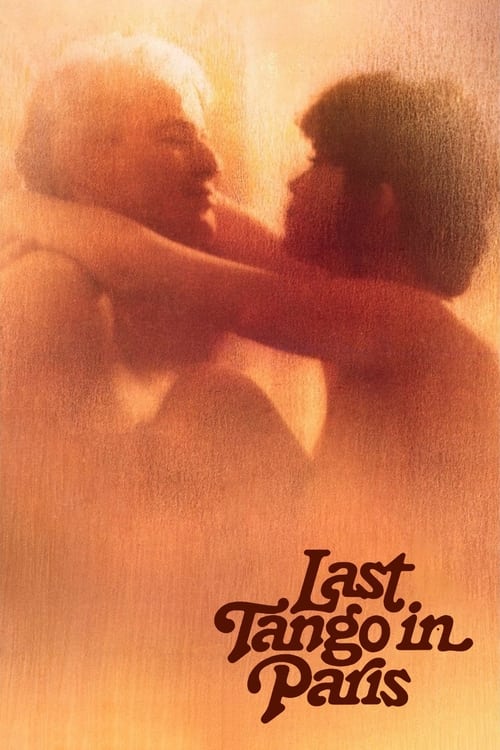
Last Tango in Paris
1972 · Bernardo Bertolucci
Only when you're ready for difficult, adult art cinema — a film to grapple with, not relax into. Save it for when you want to see acting pushed to its absolute limit and don't mind feeling wrecked afterward.
What it's about
A middle-aged American in Paris, reeling from his wife's sudden death, crosses paths with a young Frenchwoman — engaged to be married — in an empty apartment they've both come to view. They begin an anonymous affair on his one condition: no names, no histories, nothing from the world outside the room. What happens inside that apartment becomes a raw excavation of grief, desire, and the stories people tell to survive.
The experience
Heavy, raw, and confrontational — long, wounded monologues, sudden eruptions, and an atmosphere of autumnal desolation. It's demanding, sexually explicit, emotionally brutal viewing that leaves you drained rather than entertained.
Performances
Marlon Brando gives one of the most exposed performances of his career — improvisational, self-lacerating, drawing on what feels like his own life — and it's still studied as a high-water mark of screen acting. Maria Schneider holds her own opposite him under circumstances now understood to have cost her dearly.
The craft
Bernardo Bertolucci strips the story down to two people and an apartment, and Vittorio Storaro's cinematography bathes it in amber and gold — Paris in a haze of grief. Gato Barbieri's aching saxophone score is inseparable from the film's mood.
Why it matters
A scandal on release — censored, prosecuted, and debated worldwide — it redrew the line between art cinema and the mainstream and remains fiercely contested today, as the accounts of how Schneider was treated during production have permanently complicated its legacy.
Snapshot
Last Tango in Paris is the film with which Bernardo Bertolucci, not yet thirty-two, forced the international art cinema and the commercial mainstream into the same room and watched them recoil from one another. Its premise is austere to the point of abstraction: a middle-aged American, Paul (Marlon Brando), reeling from his wife's suicide, and a young Parisian woman, Jeanne (Maria Schneider), engaged to be married, meet by chance in an empty apartment they have both come to view, and embark on an anonymous, almost wordless sexual affair on the condition that they exchange no names and no biographies. From that chamber-piece conceit Bertolucci built a film that is at once a study of grief, an essay on sexuality and death, and a deliberate provocation aimed at the bourgeois containment of both. It arrived as a scandal — prosecuted for obscenity, championed by critics as a watershed, rated X, banned and ordered destroyed in its own country — and it has remained one ever since, though the terms of the scandal have shifted decisively. What once read as the era's most audacious treatment of carnality is now inseparable from the documented mistreatment of its young lead, and the dossier of Last Tango is today as much an ethics case as an aesthetic landmark. It is a major film precisely because both readings are true at once.
Industry & production
The picture was produced by Alberto Grimaldi, the Italian producer associated with Sergio Leone's Dollars films and with Pasolini, on a modest budget for its eventual cultural footprint. It was an Italian-French co-production, shot in Paris in the winter of 1971–72, with United Artists handling much of the international distribution. The decisive industrial fact of the production was the casting of Marlon Brando, then in the midst of the comeback that The Godfather (released earlier in 1972) would crown. Brando's participation transformed a European art film into a global event and gave Bertolucci access to a star of the first magnitude at the moment of his greatest renewed prestige; reports that Brando took a percentage of the gross rather than a large fixed fee are widely cited, and given the film's commercial success the arrangement is generally said to have rewarded him handsomely, though I would treat the precise figures with caution.
Commercially, Last Tango was a phenomenon — one of the highest-grossing films of its kind, propelled by the convergence of Brando's name, critical hosannas, and frank notoriety at the exact moment the loosening of censorship and the brief vogue for explicit cinema (the "porno chic" of 1972, the year of Deep Throat) had primed audiences. The legal history is central to the production's story: in Italy the film was seized and prosecuted for obscenity, and after appeals the Italian Supreme Court in the mid-1970s ordered prints destroyed and handed Bertolucci a suspended sentence and a temporary revocation of his civil rights, including the loss of his vote. A small number of prints survived, and the film was eventually rehabilitated in Italy. In the United States it carried the X rating then still usable by serious films, and it became a test case for where the line between art and obscenity would be drawn in the post–Production Code era.
Technology
Technologically the film is not a showcase of innovation so much as of refinement: 35mm photography, location shooting in a real Paris apartment and on its streets, with the celebrated control of color and light belonging to the chemistry of the lab and the discipline of the lighting as much as to any new device. What matters technically is the marriage of warm, low-key interior lighting to film stock and printing capable of holding deep amber and orange tonalities without losing the bodies inside them — an effect achieved by Vittorio Storaro's lighting and exposure choices rather than by a novel apparatus. The location work, including the famous opening beneath the elevated Métro at the Pont de Bir-Hakeim, depends on the relative mobility of early-1970s equipment and on a documentary willingness to let the city's noise and grain into an otherwise hermetic drama.
Technique
Cinematography
Storaro's photography is the film's most consciously authored surface, and its governing reference is explicitly pictorial. Bertolucci and Storaro took the paintings of Francis Bacon as a visual key — Bertolucci is widely reported to have sent Brando and Schneider, and certainly himself drew, to a Bacon exhibition — and two Bacon canvases appear over the opening credits. From Bacon comes the palette of bruised oranges, ochres and flesh tones, and the sense of figures isolated and contorted within bare, enclosing interiors. The empty apartment is shot as a Baconesque cell: warm, womb-like, sealed off from the cold blue daylight of the Paris exteriors, so that the film's two worlds — the anonymous interior of the affair and the named, social world outside — are separated as much by color temperature as by editing. The camera is fluid but not flamboyant, circling the actors, holding on Brando's face during the long monologues, letting the architecture press in.
Editing
The editing is by Franco "Kim" Arcalli, Bertolucci's crucial collaborator of this period, who also shared the screenplay credit. Arcalli's cutting sustains the film's unusual structure, which intercuts the timeless, de-historicized encounters in the apartment with Jeanne's "real" life — her childish filmmaker fiancé, her family, her engagement — and with glimpses of Paul's grief and his sordid hotel. The rhythm is patient, willing to dwell, and the contrast between the suspended time of the apartment and the forward-moving social time outside it is largely an achievement of the cutting.
Mise-en-scène / staging
The staging organizes itself around a single, near-empty set — the unfurnished flat — whose bareness becomes the film's central metaphor: a space deliberately stripped of history, names and furniture so that the relationship can exist outside society. Against it Bertolucci sets the cluttered, biographical worlds of Jeanne's bourgeois milieu and Paul's seedy hotel. The blocking repeatedly pits the aging male body against the young female one within these bare rooms, and the most notorious scene — the sodomy sequence in which Paul uses butter as a lubricant while delivering a monologue forcing Jeanne to repeat a litany against the family — is staged with a brutal frontality that the film's later history would render impossible to read as mere provocation.
Sound
Gato Barbieri's score is one of the most distinctive in early-1970s cinema: the Argentine tenor saxophonist supplies a hot, keening, tango-inflected jazz that pushes against the cool detachment of the imagery and lends the affair its feverish, mournful pulse. The music is as responsible as the cinematography for the film's emotional temperature. The dialogue, mostly English between the two leads with French in Jeanne's social scenes, foregrounds the language barrier as a theme; Brando's delivery, much of it improvised and reportedly read in part from cue cards rather than memorized, gives the sound of the film its halting, searching, lived-in quality.
Performance
Brando's Paul is routinely described as among the supreme screen performances and one of the fullest demonstrations of the Method's capacity for raw self-exposure. He improvised extensively, drawing the long autobiographical monologues — the drunken father, the farm, the mud, the memories of childhood — from material close to his own life, and the climactic address to his dead wife's body, a torrent of love and obscenity over her flowered coffin, is delivered with an emotional nakedness that Brando himself later said he found exploitative and vowed not to repeat with Bertolucci. Schneider, nineteen during filming and opposite a star nearly thirty years her senior, gives a performance of startling openness; its meaning, however, cannot now be separated from her later testimony about the conditions under which it was obtained (see Reception, canon & influence).
Narrative & dramatic mode
The dramatic mode is modernist melodrama drained of plot. The engine is not event but condition: two people agreeing to suspend identity, and the impossibility of sustaining such a suspension. The film withholds conventional exposition — we learn Paul's history only in fragments, Jeanne's mostly through her fiancé Tom's cinéma-vérité project about her — and structures itself as a series of meetings whose terms slowly erode. When Paul, late in the film, breaks the contract by telling Jeanne his name and pursuing her into the daylight world, the anonymous Eros that protected them collapses, and the film moves to its abrupt, fatal close. It is a tragedy of the inability to live without history, told in a register that fuses art-cinema interiority with the heightened emotional extremity of melodrama.
Genre & cycle
Nominally a drama-romance, Last Tango belongs more accurately to the early-1970s cycle of explicit, adult-oriented art films that exploited the collapse of the old censorship regimes. It sits at the intersection of European auteur cinema and the new commercial permissiveness, neither pornography nor conventional romance but a deliberate hybrid that used star power and frankness to smuggle a bleak, philosophical chamber drama into wide release. Its closest generic kin are the international "erotic art film" of the decade and the broader New Hollywood / European New Wave preoccupation with alienation and the body.
Authorship & method
Bertolucci is the film's clear author, and it arrives at a key hinge in his career, between the political modernism of The Conformist (1970) and the historical scale of 1900 (1976). A Marxist and a poet by formation, mentored by Pier Paolo Pasolini, Bertolucci brought to Last Tango an attempt to fuse psychoanalysis, sexuality and politics. His indispensable collaborators here are Vittorio Storaro, whose painterly cinematography began the long partnership that would run through Apocalypse Now and The Last Emperor; Franco Arcalli, co-writer and editor, who shaped both the script and its temporal structure; and Gato Barbieri, whose score is integral rather than decorative. The casting of Jean-Pierre Léaud as Tom, Jeanne's fiancé and an obsessive young filmmaker, is itself an authorial signature — Léaud being the face of the French New Wave, Truffaut's Antoine Doinel — and Bertolucci uses him to stage a half-affectionate, half-satirical commentary on the cinephile generation. Bertolucci's method depended heavily on improvisation with Brando, and on a directorial willingness to provoke real reactions from his actors that, in at least one notorious instance, crossed an ethical line he later defended in terms that have not aged well.
Movement / national cinema
The film is a product of Italian cinema's post-neorealist, politically engaged generation, made by a director steeped equally in Pasolini's Italy and in the French New Wave. It is not a "movement" film in the programmatic sense, but a synthesis: the modernist alienation of Antonioni (the sterile bourgeois interiors, the incommunicability between people), the cinephile self-consciousness of Godard and Truffaut (literalized in the Léaud subplot), and the bodily, transgressive materialism of Pasolini all feed into it. Shot in France with an American star for an Italian-French production, it is also emblematic of the deterritorialized, pan-European art cinema of the early 1970s.
Era / period
Last Tango is a quintessential artifact of 1972, a year that sits at the center of the great loosening: the MPAA ratings system had replaced the Production Code in 1968, New Hollywood was in full flower, and explicit sexuality was briefly both commercially viable and culturally debated at the highest level. The film captured the period's conviction that sexual candor was a frontier of artistic and political liberation — and, in retrospect, also its blind spots about power and consent. Its legal persecution in Italy marks it as a late battlefield of European film censorship, while its X rating and mainstream success mark the American moment when that battle was being lost by the censors.
Themes
The film's central theme is the attempt to escape the self through anonymous sexuality, and the discovery that identity, history and grief cannot be left at the door. Eros and Thanatos are bound together from the first: Paul enters the affair fresh from his wife's suicide, and the relationship is a way of fighting death with the body. Anonymity is the governing condition — the refusal of names is both the film's most radical idea and the thing that dooms it. Around this core cluster the bourgeois family as a structure to be raged against (the butter monologue is an obscene catechism against "the holy family"), the gulf between generations and nations (the aging American and the young European), the failure of language and communication, and the cinema itself as a way of capturing and falsifying a life (Tom's documentary about Jeanne). Grief, finally, underlies everything: the film is at bottom a study of a man trying, and failing, to mourn.
Reception, canon & influence
Critically the film detonated. Pauline Kael's review in The New Yorker, written after the New York Film Festival premiere in October 1972, became almost as famous as the film, comparing the occasion to the 1913 premiere of Stravinsky's Rite of Spring and declaring it a landmark that had altered the face of an art form — a piece of advocacy so extravagant it became part of the film's mythology. The film drew Academy Award nominations for Brando as Best Actor and Bertolucci as Best Director, and it has held a place in the canon of 1970s cinema and of screen acting ever since.
Its lines of influence run backward into painting and cinema alike: most explicitly into Francis Bacon, whose figures and palette Storaro and Bertolucci adopted as a visual program; into the modernist alienation of Antonioni and the transgressive materialism of Pasolini; and into the French New Wave, knowingly invoked through Léaud. Forward, it opened the door for explicit sexuality within serious art cinema, a path that runs through Oshima's In the Realm of the Senses (1976) and on to the frank European cinema of intimacy decades later; Brando's improvisatory, self-exposing performance became a reference point for screen acting.
But the film's most consequential modern legacy is ethical. Maria Schneider stated in interviews — notably in 2007 — that she felt humiliated and "a little raped" by the making of the butter scene; while the simulated assault was scripted, she said she had not been told in advance that butter would be used, and that Bertolucci and Brando had withheld it to capture a genuine reaction of degradation. Bertolucci, in remarks that resurfaced and went viral in 2016, confirmed that he had wanted her real humiliation rather than her acting, and expressed a guarded, much-criticized regret. (A widespread 2016 claim that the scene depicted an actual rape was a misreading; the act was simulated, the non-consent was about the undisclosed prop and the manipulation of a teenage actress.) Schneider, who struggled for years afterward and died in 2011, came to be seen as the film's casualty, and Last Tango is now routinely cited in the #MeToo era as a foundational case for the duty of care owed to performers and for the very existence of intimacy coordinators. The dossier of this film is therefore double: a monument of 1970s cinematic art, and a permanent caution about the cost at which such art was sometimes made.
A Deleuzian reading
Start with the room.
The full Deleuzian reading of Last Tango in Paris →
Reception
In 1972 it was the scandal-succès of the decade — X-rated, banned in Italy, and hailed by Pauline Kael as a breakthrough comparable to the premiere of 'The Rite of Spring'. Today it's discussed less as an erotic landmark than as a case study in what was done to Maria Schneider, and the reappraisal has run almost entirely in reverse.
How Last Tango in Paris was received, from release to now →
Influences: the films it descends from and the films it influenced
- L'Avventura (1960) — Antonioni's plotless architecture of dead time and emotional vacancy — characters drifting through rooms where exposition is withheld and mood replaces event — is the modernist grammar Bertolucci borrows for the apartment's narrative emptiness.
- The Conformist (1970) — Bertolucci and Storaro's immediately prior collaboration establishes the painterly low-key palette, expressionist colored-gel lighting, and the Arcalli intercut-dual-time structure that Last Tango carries directly forward.
- Accattone (1961) — Bertolucci's mentor Pasolini supplies the transgressive materialism — bodies, degradation, and a sub-proletarian frankness about sex and flesh treated as sacred subject — that licenses Last Tango's eroticism as serious art rather than exploitation.
- The 400 Blows (1959) — Jean-Pierre Léaud's Antoine Doinel persona is directly conscripted as Tom, so Last Tango's film-within-a-film cinephile subplot is a literal citation of the French New Wave's reflexive shooting style.
- Persona (1966) — Bergman's chamber drama of two psyches dissolving into each other in a single confined space, built on raw facial close-ups and withheld backstory, is the psychological-confinement model behind the empty-apartment two-hander.
- On the Waterfront (1954) — Brando's Method foundation under Kazan — the mumbled, improvised, self-exposing register of screen acting — is precisely what Bertolucci reactivates and pushes into autobiographical confession in the cue-card-free monologues.
- Stolen Kisses (1968) — Casts Léaud as a New Wave director filming his own fiancée, using the Doinel persona as a ready-made citation and cutting his hand-held, crew-cluttered register against Brando's naturalism.
- Apocalypse Now (1979) — Storaro carries the Last Tango program — Bacon-derived amber/blue color-temperature contrast and figures sculpted from low-key darkness — directly into Coppola's film, the partnership that began here reaching full scale.
- In the Realm of the Senses (1976) — Oshima extends Last Tango's central wager — unsimulated/explicit sexuality as the engine of a serious art film about an obsessive sealed-off couple — pushing the erotic art-film toward literal hardcore within an authored frame.
- The Dreamers (2003) — Bertolucci returns to the formula — a sealed apartment, a sexual triangle, explicit intimacy, and Léaud/New-Wave cinephilia as authorial signature — making it the explicit self-citation of Last Tango's method.
- Blue Is the Warmest Color (2013) — Kechiche inherits both halves of the legacy: the extended, frank intimacy as the dramatic core of an art film, and the now-notorious director-coercion controversy that made Last Tango the founding case for performer duty-of-care.
- Intimacy (2001) — Chéreau directly revives the premise of anonymous strangers meeting for wordless explicit sex in a bare flat, withholding names and biography, as the structure of a European cinema-of-intimacy.
- Last Tango's Bacon source — Three Studies / Two Figures register via Nicolas Roeg's Bad Timing (1980) — Roeg's later film extends the Last Tango template of an erotic obsession dissected through non-linear intercut editing and a clinically alienated, psychoanalytic treatment of a destructive couple.
- Stranger by the Lake (2013) — Guiraudie continues the single-location erotic art film built on anonymous encounters and withheld exposition, treating explicit sex as the rigorous formal subject of a serious authored work.
- Shame (2011) — Staged anonymous apartment sex as bourgeois self-annihilation with the exposed male body as the film's actual subject — the physically-bared leading-man role Fassbender directly inherits.
- Leaving Las Vegas (1995) — Built a doomed affair between two strangers inside borrowed, interstitial spaces through improvisatory intimacy, the staging logic of LLV's motels and bars.
- Babygirl (2024) — Chamber dynamic of anonymized dominance negotiated in a bare room, establishing the two-hander power-negotiation blocking Babygirl stages in hotel-suite encounters.
- Fat Girl (2001) — The film Breillat appeared in as a young actress, and the one that established the sex scene as a feature-length film's primary dramatic unit rather than punctuation — extended, verbal, negotiated, and shot in flat apartment daylight without score.
- Damage (1992) — Invents the unfurnished rented flat as an erotic stage — a bare, address-less room shot in flat daylight where the affair is contained and choreographed — which Damage reuses as the emptied London flat with the mattress on the floor.
- Don't Look Now (1973) — Roeg shares the early-'70s fusion of fractured intercut temporal editing with a frank, tender extended sex scene treated as character revelation rather than spectacle.
- The Mother and the Whore (1973) — Eustache, again starring Léaud, extends the plotless modernist melodrama of erotic talk — long improvised confessional monologues, withheld exposition, sex as endless verbal self-analysis — in the same post-New-Wave register.
- Cries and Whispers (1972) — Released the same year, it pursues the identical strategy of a saturated single-hue interior palette (Bergman's reds vs. Storaro's ambers) used as an emotional/psychoanalytic color program inside a closed domestic space.
- The Night Porter (1974) — The confined sadomasochistic two-hander sealed inside a single apartment, sharing Arcalli's editing and the same year's appetite for power enacted through sex in a sealed room.
- The Passenger (1975) — Contemporary Arcalli-edited, internationalized art film built around an American star (Brando) adrift in European space and identity — the same star-driven existential-drift template Carlo Ponti's production used with Nicholson.
Similar films
- The Mother and the Whore (1973) — influence & lineage
- In the Realm of the Senses (1976) — influence & lineage
- La Notte (1961) — shared sensibility
- The Night Porter (1974) — shared sensibility
- Irreversible (2002) — shared sensibility
- House of Pleasures (2011) — shared sensibility
- Possession (1981) — shared sensibility
- A Streetcar Named Desire (1951) — shared sensibility
All the films related to Last Tango in Paris →