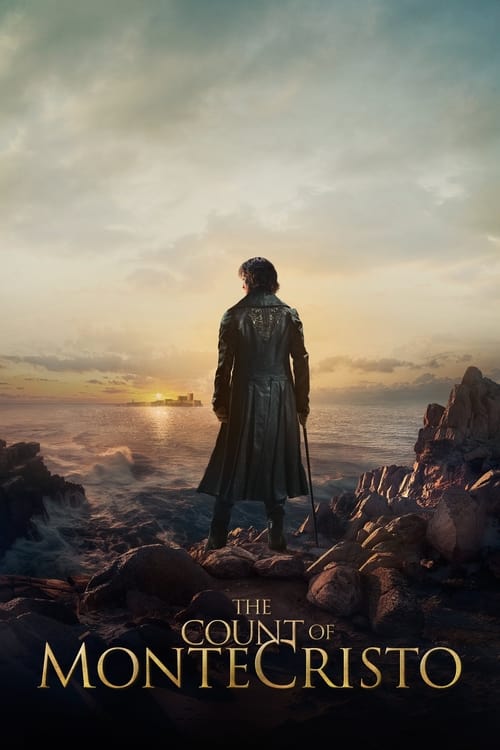
The Count of Monte Cristo
2024 · Alexandre de La Patellière
For a night when you want to sink into a big, old-fashioned epic — betrayal, disguises, sword-drawn justice — and come out the other side satisfied. Comfort viewing on a grand scale, best when you have a whole evening to give it.
What it's about
A young sailor in post-Napoleonic France is arrested on his wedding day for a crime he didn't commit, betrayed by men he trusted. After fourteen years locked in an island fortress prison, he escapes, comes into an immense hidden fortune, and reinvents himself as the mysterious Count of Monte Cristo — returning to Parisian society with one purpose: methodical, patient revenge on the three men who destroyed his life.
The experience
A grand, sweeping three hours that earns its length — it moves with the pull of a serialized novel, each chapter of the revenge tightening the screws. There's real romantic ache under the plotting, and the pleasure is watching a trap being built piece by piece.
Performances
Pierre Niney carries the film's transformation — boyish openness as young Edmond Dantès, then something cooler and more masklike as the Count, so you're always watching the wounded man underneath the disguise.
The craft
A heritage blockbuster made with genuine scale: period Marseille and Paris, the grim island prison, candlelit aristocratic interiors, all mounted with the confidence of a studio swinging big. The adaptation compresses a sprawling serial novel into a clean revenge engine without losing its romance. It rewards a big screen the way costume epics used to.
Why it matters
One of the defining commercial triumphs of French cinema in 2024, it premiered at Cannes and proved a homegrown, French-language epic could out-muscle Hollywood imports at the box office — reaffirming the swashbuckling literary adaptation as a living tradition rather than a museum piece.
Snapshot
Le Comte de Monte-Cristo is a large-scale French adaptation of Alexandre Dumas's 1844–46 serial novel, written and directed jointly by Matthieu Delaporte and Alexandre de La Patellière — a writing partnership here stepping up to co-direction. (The brief lists La Patellière alone; the established record is that the two share the directing credit, as they do the screenplay.) Running roughly three hours, the film stars Pierre Niney as Edmond Dantès, the young sailor imprisoned on false testimony who returns after fourteen years' incarceration as the enigmatic, immensely wealthy Count to dismantle the men who betrayed him. It premiered out of competition at the 2024 Cannes Film Festival and became one of the defining commercial successes of French cinema that year — a heritage blockbuster that consciously courts both prestige and popular spectacle. Its ambition is legible in every register: a fidelity-minded but heavily compressed screenplay, painterly widescreen photography, and a movie-star central performance built on transformation and restraint. It arrives as the third recent Dumas project from this creative circle, following the two-part Les Trois Mousquetaires (2023), and represents the moment its writers claimed authorship of the image as well as the page.
Industry & production
The film sits squarely within the contemporary French model for the prestige literary blockbuster: high-budget, star-anchored, and organized around a major studio's distribution muscle. It was produced by Dimitri Rassam's Chapter 2 in partnership with Pathé and the broadcaster M6 (through M6 Films), the same industrial constellation behind the recent Trois Mousquetaires diptych, with Pathé handling distribution — a lineage that made Monte-Cristo effectively the capstone of an ongoing Dumas cycle rather than a standalone bet. This is the French system's answer to the international costume tentpole: budgets substantial by domestic standards, a long shoot across historic locations, and a marketing campaign pitched at a broad family-and-adult audience rather than the arthouse.
Its commercial performance was among the strongest for a French production in 2024, drawing a very large theatrical audience at home and traveling well through international and festival distribution; precise admissions and gross figures are a matter of trade record, and I won't hazard exact numbers here beyond noting that the film was widely reported as one of the year's biggest domestic hits. The Cannes out-of-competition slot functioned as a prestige launchpad rather than an awards play, signaling the film's dual identity — a popular entertainment granted the imprimatur of the festival. The casting strategy paired a bankable lead (Niney, a César winner) with a deep bench of established French actors, spreading recognition across the ensemble in the manner of a well-funded studio production.
Technology
The film was captured digitally in widescreen and finished with the full contemporary toolkit of a large European production — a color pipeline geared toward rich, low-key period tonalities and digital effects deployed for scale rather than fantasy: prison, sea, escape, and the architecture of the Count's world. I don't have reliable confirmation of the specific camera and lens package, so I'll flag that as thin rather than invent a sensor or glass credit. What is clear from the finished image is a preference for controlled, naturalistic light sources and a large-format-looking depth and texture, consistent with a modern prestige costume drama that wants the density of oil paint without the artifice of over-processing. Visual effects serve continuity and environment — extending sets, populating period spaces, staging the maritime and carceral sequences — rather than announcing themselves, in keeping with the film's commitment to a grounded, tactile past.
Technique
Cinematography
The photography is credited to Nicolas Bolduc, the Canadian cinematographer whose earlier work includes collaborations with Denis Villeneuve. His images favor a chiaroscuro sensibility: candlelit and firelit interiors, deep shadow, and a restrained palette that lets faces and fabrics emerge from darkness. The Château d'If sequences trade in confinement and gray maritime light; the later Parisian and Marseille high-society scenes open into more expansive, gilded compositions, marking Dantès's ascent from prisoner to spectral aristocrat through a widening and warming of the frame. The widescreen format is used for both landscape grandeur and the isolation of a single figure within ornate space — a visual rhyme for a protagonist who is always, even in crowds, alone with his design.
Editing
The central editorial problem of any Monte-Cristo is time: Dumas's plot spans decades and a sprawling cast of interlocking revenge threads. The film compresses aggressively, using the fourteen-year imprisonment as a hinge — an ellipsis that transforms the boyish Dantès into the composed Count — and then sustaining a long, patient second and third act as the revenge machinery is assembled and sprung. The cutting must manage multiple concurrent schemes and disguises without losing the audience; the film leans on clear cause-and-effect staging and on Niney's shifts of identity as orienting landmarks. At three hours it accepts a deliberate, novelistic tempo rather than a propulsive one, trusting accumulation over acceleration.
Mise-en-scène / staging
Production and costume design do heavy narrative work. The film moves from the salt and stone of the Marseille waterfront and the prison island to the lacquered opulence of Restoration-era Parisian society, and the Count's self-fashioning is staged as a matter of surfaces — clothes, carriages, rooms, and masks. Historic French locations and built interiors give the film a lived-in density. The Count's own spaces are theatrical by design: Dantès stages his revenge as a series of orchestrated scenes, and the mise-en-scène foregrounds this, framing him as a director-figure within the fiction who arranges rooms and entrances for maximum effect.
Sound
The score is by Jérôme Rebotier, working in the sweeping symphonic idiom the genre expects — themes of longing, imprisonment, and vengeful grandeur that swell across the film's largest gestures while pulling back for its intimate betrayals. Sound design contrasts the deadened, dripping acoustics of the cell with the reverberant grandeur of ballrooms and the open air of the sea and coast, using the aural environment to track Dantès's movement between worlds.
Performance
Pierre Niney anchors the film with a performance built on a visible split: the open, ardent young Dantès of the opening and the cooled, watchful Count who returns — a man who has subordinated feeling to plan. Niney plays the Count's power as stillness and precision, letting old wounds surface only in controlled flickers. The ensemble surrounds him with the machinery of betrayal and consequence: Anaïs Demoustier as Mercédès, the lost love now married into the enemy camp; Bastien Bouillon, Laurent Lafitte, and Patrick Mille among the conspirators and their milieu; Anamaria Vartolomei as Haydée; and younger players carrying the revenge plot's second-generation strands. The performances are pitched to period register without tipping into stiffness — grand feeling held within decorum.
Narrative & dramatic mode
The film operates in the mode of the revenge melodrama, one of the most durable dramatic engines in popular fiction, and it honors the shape Dumas gave it: a wrong so complete that the wronged man must reconstitute himself as a new being to answer it. Structurally it is a two-movement design — the fall (betrayal, arrest, imprisonment, escape, the acquisition of fortune) and the return (the patient, multi-pronged unmaking of the guilty). The dramatic tension is less "will he succeed" than "what will vengeance cost him," a moral undertow the adaptation foregrounds through Mercédès and through the collateral damage to the innocent young people caught in the conspirators' orbit. The film adopts a fundamentally classical, cause-and-effect storytelling grammar, but its emotional argument is ambivalent: it lets the satisfaction of retribution curdle into a question about whether a life organized entirely around revenge can be a life at all.
The adaptation makes the standard compressions and reweightings any screen Monte-Cristo requires — pruning and combining Dumas's enormous cast and refocusing subplots — while preserving the spine of the disguises, the assumed identities, and the orchestrated reckonings. Where it diverges from the novel in the particulars, it does so in the service of a three-hour dramatic unity rather than serialized sprawl.
Genre & cycle
Monte-Cristo belongs to the heritage costume adventure — the swashbuckling literary spectacle — and specifically to the recent French revival of Dumas on screen. That revival is the immediate cycle: the Delaporte–La Patellière screenplays for Martin Bourboulon's two Trois Mousquetaires films (2023) reestablished the appetite for large-scale, star-driven French adaptations of nineteenth-century adventure fiction, and Monte-Cristo extends and deepens it, trading the ensemble camaraderie of the Musketeers for the darker, more interior register of the revenge tale. Within the longer history of the genre, the film joins a long international line of Monte-Cristo adaptations across a century of cinema and television — the story is one of the most frequently filmed in the medium's history — while distinguishing itself as a specifically French, prestige-budget reclamation of a French literary monument.
Authorship & method
The decisive authorial fact is the elevation of Matthieu Delaporte and Alexandre de La Patellière from screenwriters to writer-directors. The pair had built a reputation as adaptors and dramatists — most visibly with the Musketeers scripts — and here they take control of the mise-en-scène, shaping the film as both a page-to-screen compression and a directed spectacle. Their method is fidelity-with-focus: reverent toward the novel's architecture of betrayal and reckoning, but willing to cut deep to achieve a self-contained dramatic whole. Their key collaborators define the film's surface: cinematographer Nicolas Bolduc supplies the painterly, low-key light; composer Jérôme Rebotier the symphonic emotional scaffolding; and the design departments the tactile period world. The producing hand of Dimitri Rassam links the film to the broader Dumas project and to the industrial ambition of the French prestige blockbuster. Above all, the authorship is legible through Niney's casting and direction — a lead performance conceived as the film's controlling intelligence, mirroring the Count's own role as author of the plot within the story.
Movement / national cinema
The film is a flagship of contemporary mainstream French cinema's heritage strand — the cinéma du patrimoine updated for a global streaming-and-blockbuster era. It represents the industrial confidence of a national cinema reclaiming its own canonical literature at scale, positioning French production as capable of the kind of costume spectacle often associated with British and Hollywood prestige filmmaking. It is not an art-cinema project in the auteurist sense; it belongs instead to the popular-national tradition, where cultural patrimony (Dumas as a pillar of French letters) meets commercial entertainment. Its Cannes berth and its box-office scale together stake a claim that French popular cinema can be both culturally central and commercially dominant at home.
Era / period
The film is set across the early nineteenth century — the years following the Napoleonic upheavals into the Bourbon Restoration — the same milieu Dumas dramatized, where shifting political loyalties (Bonapartist versus royalist) supply the very machinery of Dantès's framing. The period is essential rather than decorative: the accusation that destroys Dantès turns on the era's political paranoia, and the society he later infiltrates is the newly consolidated Restoration elite, its fortunes and reputations freshly and anxiously made. The film uses the historical moment as a study in social mobility and its fragility — how quickly a man can be unmade, and how completely another can be invented.
Themes
At its core the film is about vengeance and its price — the transformation of a wronged, loving man into an instrument of retribution, and the question of what remains of the self after that transformation. Adjacent themes cluster around it: justice versus revenge (the law having failed Dantès, he becomes a private, godlike executor of it); identity and disguise (the Count as a fabricated self, a mask so complete it threatens to consume the man beneath); fortune and providence (wealth as the enabling condition of the revenge, and chance as the engine that gives and takes); and betrayal within intimacy (the conspirators are friends, rivals, and eventually family). The Mercédès thread carries the film's most searching theme — the irrecoverability of the past, and whether love can survive what revenge demands. The film's ambivalence toward its own catharsis is the mature center of its adaptation: it lets us want the reckoning while asking what it hollows out.
Reception, canon & influence
Critically, the film was received as a confident, handsomely mounted crowd-pleaser — praised for Niney's central performance, its production values, and its success in wrangling a vast novel into a coherent three-hour drama, with the usual reservations any prestige literary adaptation attracts about compression and length. Its Cannes premiere lent it prestige, and its domestic commercial performance marked it as a genuine popular phenomenon within French cinema of 2024. (I've kept specific figures and award outcomes out of this account where I can't verify them precisely; the trade and festival record holds the exact numbers.)
The influences on the film run backward through two channels. The first is textual: Dumas's novel itself and the century-long tradition of adapting it, against which any new version is implicitly measured. The second is industrial and immediate: the Delaporte–La Patellière Trois Mousquetaires films, which proved the viability of the large-scale French Dumas adaptation and directly enabled this one, and behind those the broader international costume-blockbuster grammar the film absorbs.
Its legacy, forward-looking, is best understood as consolidation. Monte-Cristo confirmed that French popular cinema could produce heritage spectacle at blockbuster scale and win a mass domestic audience — a demonstration likely to encourage further high-budget adaptations of the national literary canon and to reinforce the model of the writer-director prestige production within the French studio system. Because the film is recent, its downstream influence is still forming; what can be said firmly is that it functions as a keystone in the contemporary Dumas revival and as evidence of a French popular cinema newly willing to compete, on its own cultural terms, with the international costume tentpole.
A Deleuzian reading
The cell at the Château d'If has one kind of light: gray, maritime, unchanging.
The full Deleuzian reading of The Count of Monte Cristo →
Reception
Premiered out of competition at Cannes 2024 to a reported ~11-minute ovation, then became a genuine phenomenon in France — over 9.4 million admissions, cracking the country's top-20 most-attended French films. Abroad it was adopted almost instantly as the 'they still make them like this' three-hour epic, no reappraisal arc needed.
How The Count of Monte Cristo was received, from release to now →
How to watch The Count of Monte Cristo: what to notice on a first viewing
- Notice how much of each room stays in shadow. Nicolas Bolduc lights interiors with a narrow band of candle or firelight, letting faces and fabric surface out of deep dark. The prison scenes stay flat and gray; later rooms open into gold. You can read how closed or open Dantès's world is by how much light a room is given.
- Watch for the single cut that skips fourteen years. The film cuts directly from a young sailor entering his cell to a composed stranger walking out of it. Nothing in between is shown. The transformation exists only in the space of that cut. The years you don't see are what make everything that follows possible.
- Listen for the room's echo, not just its light. Sound design keeps the cell deadened and dripping, then opens into reverberant grandeur once the story reaches ballrooms and open air. The acoustics change worlds before anyone says where you are. You can tell which world you're in with your eyes closed.
- Look at how small he looks in the widest rooms. The widescreen frame swings between maritime vastness and tight, gilded interiors, but it keeps Niney solitary even inside a crowded room. The scale never lets him disappear into company. Even surrounded by people, the frame tells you he is working alone.
- Track the clothes, carriages, and rooms around him. Production and costume design carry the transformation instead of dialogue explaining it. The film moves from salt and stone at the waterfront to lacquered Parisian rooms, and his rank is written entirely in surfaces. Nobody tells you who he has become. The clothes and the rooms do.
The whole guide to watching The Count of Monte Cristo, with the keys for a rewatch →
Influences: the films it descends from and the films it influenced
- Les Trois Mousquetaires: D'Artagnan (2023) — Written by the same Delaporte–La Patellière team and produced by Dimitri Rassam, it built the large-scale French Dumas grammar — serialized two-part structure, muddy period realism — that directly enabled this film and their promotion to directors.
- Cyrano de Bergerac (1990) — The founding template of prestige cinéma du patrimoine literary adaptation: reverent compression of a canonical text, symphonic score as emotional scaffolding, and a virtuoso transformation lead (Depardieu) functioning as the film's controlling intelligence — the Niney casting logic in embryo.
- La Reine Margot (1994) — A Dumas-source costume drama whose low-key, candle-and-shadow chiaroscuro and blood-and-brocade tactility model the painterly period surface Bolduc supplies here.
- The Return of Martin Guerre (1982) — Cinéma du patrimoine study of assumed identity and self-fashioning surfaces, establishing disguise-as-plot-engine within a meticulously tactile period world.
- Barry Lyndon (1975) — Available-light, painterly chiaroscuro and widescreen tableau staging of a self-fashioning social climber across a two-movement rise-and-fall — the formal DNA of both the lensing and the structure.
- The Count of Monte Cristo (2002) — The immediate anglophone precursor that proved Dumas could be compressed into a single self-contained feature via the imprisonment-then-return two-movement revenge-melodrama arc.
- Le Comte de Monte-Cristo (1954) — The French star-vehicle tradition (Jean Marais) of the Count's serial disguises and aristocratic re-invention, the identity-and-disguise performance lineage this film inherits nationally.
- Germinal (1993) — Demonstrated the national literary canon could be mounted as blockbuster-scale heritage spectacle for a mass domestic audience — the industrial ambition Monte-Cristo consolidates.
- Ridicule (1996) — An ancien-régime drama of court surfaces where wit is weaponized and status is performed — the self-fashioning-surfaces and social-mask staging the Count deploys as author of his own plot.
- The Three Musketeers (1973) — Codified the swashbuckling Dumas-adaptation grammar — witty ensemble action, robust period texture, and the practice of splitting one novel into two features.
- The Duellists (1977) — A painterly, chiaroscuro-lit early-19th-century honor drama sustained across years through temporal ellipsis, prefiguring the widescreen period lensing and elliptical novelistic editing.
- Les Trois Mousquetaires: Milady (2023) — The second panel of the same Rassam/Dumas project, sharing the low-chroma chiaroscuro palette and the cliffhanger, chaptered novelistic tempo that carries a vast source across two movements.
- The Man in the Iron Mask (1998) — A Dumas-adjacent melodrama built on concealed identity and delayed reckoning, extending the same disguise-and-vengeance mechanics on international costume scale.
- Napoléon (2023) — A contemporary international costume tentpole using digital-widescreen VFX to scale a period canvas — precisely the grammar French popular cinema here sets out to match on its own cultural terms.
- Cyrano (2021) — A contemporary re-adaptation of the same national-canon pool foregrounding a transformation-performance lead and symphonic emotional scoring, a parallel revival of prestige literary spectacle.
Similar films
- Cyrano de Bergerac (1990) — influence & lineage
- Conclave (2024) — often watched together
- Barry Lyndon (1975) — influence & lineage · often watched together
- Dune: Part Two (2024) — often watched together
- Napoleon (2023) — often watched together
- Portrait of a Lady on Fire (2019) — often watched together
- De Gaulle: Liberté (2026) — shared sensibility
- Napoleon (1927) — shared sensibility