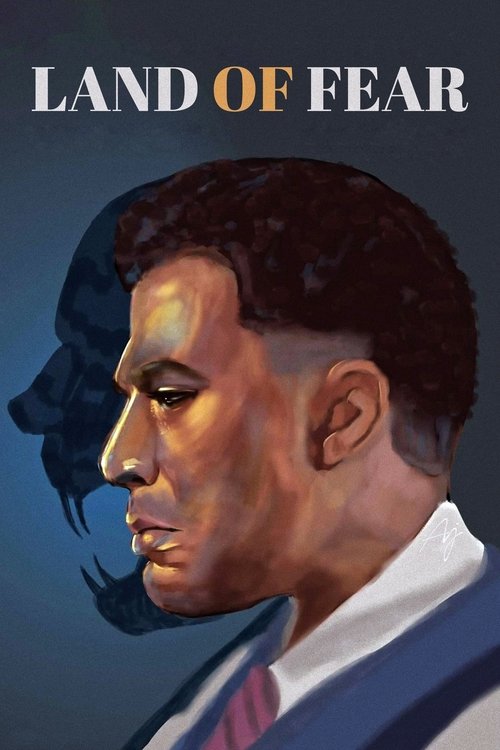
Land of Fear
2000 · Daoud Abdel Sayed
When you want a film to chew on for days — a serious, ambitious epic from outside the usual Hollywood orbit, for a night when you're curious rather than tired. Challenge, richly repaid.
What it's about
In late-1960s Egypt, a police officer is handed a mission with no end date: he is publicly disgraced, stripped of his name, and sent to disappear into the criminal underworld as an informant. Reborn under a new identity, he spends decades rising among smugglers and nightclub bosses, filing secret reports to superiors he never sees — until he begins to wonder whether anyone is still reading them, or whether the mission itself was ever real.
The experience
Slow-burning, novelistic, and quietly haunting — a crime saga that keeps deepening into a meditation on identity, power, and what's left of a man who has been undercover so long the cover may be all there is. It rewards patience with a genuine sense of a life unfolding.
Performances
Ahmed Zaki, one of the giants of Egyptian cinema, carries the entire span of the film — decades of a double life registered in his face, a performance of remarkable weight and stillness.
The craft
Daoud Abdel Sayed builds the crime story like a parable, letting genre scenes carry larger questions about authority and belief without ever announcing them. The decades-long structure is handled with unusual novelistic confidence.
Why it matters
Widely considered the summit of Abdel Sayed's career and one of the most ambitious Egyptian films of its era — a touchstone of serious Arab cinema that shows what the crime genre can hold.
Snapshot
Land of Fear (Ard el-Khof, released 15 March 2000) is widely regarded as the summit of Daoud Abdel Sayed's career and one of the most ambitious Egyptian films of its generation — a decades-spanning parable disguised as a crime drama. Its premise is deceptively simple: sometime in the late 1960s, a police officer named Yehia El-Menabbawi (Ahmed Zaki) is selected for an operation code-named "Land of Fear." He is publicly disgraced, formally dismissed from the force, and imprisoned on a bribery charge, all as cover for a permanent descent into the drug-trafficking underworld. Reborn under the alias "Adam," he is to burrow into that world and file secret reports to his superiors. Over some two decades he becomes a genuine power among smugglers and nightclub men — and slowly discovers that the mission may be a fiction, that his reports may never have reached anyone, and that the officer he once was may no longer exist. The film converts a spy-thriller engine into an existential and near-theological meditation on identity, obedience, and the impossibility of proving one's own innocence. Zaki, one of the towering actors of Arab cinema, gives one of his defining late performances; the film swept top honors at the Cairo International Film Festival and the Egyptian Film Critics' awards. It remains a touchstone of Egyptian art cinema and a work whose reputation has, if anything, grown in the decades since.
Industry & production
The film was produced by the Egyptian company Shea'a (شعاع) and written and directed by Daoud Abdel Sayed, who by 2000 was an established but never prolific auteur working at the more literary and allegorical edge of the commercial Egyptian industry. It arrived at a difficult moment for that industry: the 1990s had seen Egyptian production squeezed between television, satellite competition, and the rise of a broad, star-driven youth comedy that would dominate the following decade. Against that commercial current, Land of Fear was conspicuously an "auteur" project — long in gestation, philosophically dense, and built around a mature Ahmed Zaki rather than a young box-office draw.
Casting Zaki was itself a statement of intent. He and Abdel Sayed had already made Kit Kat (1991) together, one of the best-loved Egyptian films of its era, so Land of Fear reunited a trusted director-star pairing at the height of the actor's authority. Precise budget and box-office figures for the film are not reliably documented in the sources available to me, and I will not invent them; what the record does establish is that this was a prestige production whose ambitions were artistic rather than commercial, and whose validation came through festivals and critics rather than through reported grosses.
Technology
Land of Fear is a photochemical, 35mm production of its moment, conceived and finished on film in the years just before digital intermediate and digital acquisition began to reshape Egyptian production. Its technological signature is not novelty but control: a film whose long time-span — roughly twenty years of narrative — had to be rendered through analog craft in makeup, costume, set dressing, and lighting rather than through the digital de-aging or compositing that a later production might reach for. The passage of eras is carried by physical means. I have no reliable record of any unusual technical processes (special large-format work, optical experimentation) on the production, and rather than speculate I note that its achievement is one of classical means deployed with unusual discipline.
Technique
Cinematography
The cinematography is credited to Samir Bahzan. The film's visual project is to make an increasingly unstable interior world feel concrete, and its images tend toward a controlled, shadowed realism appropriate to a story that lives in nightclubs, back rooms, prisons, and the moral half-light of the underworld. Because the narrative spans decades and moves between the official world Yehia has abandoned and the criminal world he inhabits, the photography carries much of the burden of orientation — distinguishing eras and registers, and tracking a protagonist whose face is the film's principal landscape. The camera's attention to Zaki, the way it holds on a man performing a role within a role, is central to the film's meaning: we are watching surveillance and self-surveillance at once.
Editing
Adel Munir is credited with the montage. The editing faces a structural problem unusual for a crime film: it must compress twenty years without letting the audience lose the thread of a single consciousness. The cut has to move across long ellipses of time while sustaining the sense that this is one continuous, deteriorating identity. The film's mounting ambiguity — the growing suspicion that the mission is unreal — is an effect the editing must build patiently, withholding confirmation, so that the viewer arrives at Yehia's disorientation by inhabiting it rather than being told of it.
Mise-en-scène / staging
Abdel Sayed stages the film as a slow moral geography — the "land" of the title is at once literal (Egypt across changing regimes) and metaphysical (a territory of fear, suspicion, and unprovable identity). The underworld milieus — smuggling operations, nightclubs, the households of crime bosses — are dressed with the texture of lived reality, in keeping with the realist grounding of Abdel Sayed's generation, while the overall architecture bends toward parable. The recurring device of the unanswered report — messages sent into a void — is a staging idea as much as a plot one: it visualizes a man performing accountability to an audience that may not exist.
Sound
The score is by Rageh Daoud (also transliterated Ragueh/Rajeh Dawood), one of Abdel Sayed's important collaborators and a leading figure in Egyptian film and concert music. In a film so concerned with interiority and dread, music and sound design carry the affective undertow beneath the crime-story surface, marking the drift from procedural mission into existential unease. I do not have a shot-by-shot account of the sound work and will not fabricate one, but the composer's presence signals a scoring approach integrated with the film's serious, contemplative register rather than the punchy genre cues of a conventional thriller.
Performance
Ahmed Zaki's Yehia/"Adam" is the film's engine and its subject. Zaki (1949–2005) was among the most revered actors in Arab cinema — later entrusted with portraying both Gamal Abdel Nasser and Anwar Sadat on screen — and was famous for a total, immersive commitment to his roles. Land of Fear asks precisely for that: a performance of a man performing, in which the criminal mask gradually fuses with, and then replaces, the self beneath it. The supporting cast anchors the underworld and the vanishing official world around him: Farah as Farida, Yehia's wife; Sami El-Adl as the crime boss Saada El-Monzalawy; Ezzat Abou Ouf as the officer Omar El-Asyouti; and Hamdy Gheith as another figure of the criminal hierarchy. The Egyptian critics' award to Zaki as Best Actor confirms that contemporaries recognized this as one of his signal achievements.
Narrative & dramatic mode
The dramatic mode is philosophical parable wearing the clothes of a crime thriller. Its nearest structural cousin is the paranoid identity narrative — the deep-cover agent who forgets which side he is on — but Abdel Sayed pushes past genre into something Kafkaesque: the horror here is not being caught but being unverifiable, sending accounts of oneself to an authority that may never have been listening. The reborn name "Adam" gives the film its scriptural undertone, and the TMDB framing's mention of "biblical-level metaphors" points to this reading: a man exiled into a fallen "land of fear," bearing a knowledge he cannot communicate and a guilt he cannot dispel. The narrative is built on long duration and accumulating doubt rather than on twist-driven suspense; its climax is epistemological — the collapse of the certainty that there was ever a mission at all — rather than a shootout or an arrest.
Genre & cycle
Nominally Land of Fear sits in the Egyptian crime drama, a durable commercial category, and it draws on that cycle's iconography of smugglers, bosses, and undercover police. But it belongs more truly to the strand of Egyptian art cinema that uses genre as a vehicle for allegory. It is credited as being derived, very loosely, from the 1967 European film Johnny Banco — a debt that seems to extend to the initial premise of a man assuming a false life more than to any sustained resemblance; the film's tone and preoccupations are wholly Abdel Sayed's. Within his own body of work it extends a recurring interest in marginal men, false or dissolving identities, and characters adrift in a society whose rules have quietly stopped applying to them.
Authorship & method
Daoud Abdel Sayed (b. 1946) is one of the most distinctive authorial voices in modern Egyptian cinema. A graduate of the Higher Institute of Cinema who came up partly through documentary and worked in the orbit of the generation around Youssef Chahine, he is usually associated with the Egyptian "New Realism" that emerged in the 1980s alongside Mohamed Khan, Khairy Beshara, and Atef El-Tayeb. Yet Abdel Sayed always inclined more toward the allegorical and the reflective than his strictly realist peers, favoring characters who function simultaneously as social portraits and as metaphysical figures — the vagabonds of Al-Sa'aleek (1985), the blind protagonist of Kit Kat (1991), the disoriented everyman of Al-Bahth 'an Sayyid Marzuq (1991). As sole screenwriter and director of Land of Fear, he is unambiguously its author, and the film is often read as his most complete synthesis of realist texture and philosophical ambition. His key collaborators here — cinematographer Samir Bahzan, editor Adel Munir, composer Rageh Daoud, and above all Ahmed Zaki — realize a design that is recognizably his: patient, humane, and willing to let a genre premise open onto questions of faith and identity.
Movement / national cinema
The film is a landmark of Egyptian national cinema, the largest and historically most influential film industry in the Arab world. Abdel Sayed's roots lie in the 1980s realist renewal that pulled Egyptian cinema back toward the street, the ordinary citizen, and the social pressures of the late Sadat and early Mubarak years. Land of Fear represents that movement in its mature, self-questioning phase: two decades on, the realist project turns inward and allegorical, using a single undercover life to interrogate the state, the individual's relationship to authority, and the very possibility of an authentic self within an opaque system. Its festival success — including recognition as Best Arab Film at Cairo — situates it explicitly within a pan-Arab as well as Egyptian frame.
Era / period
Two time-frames matter. Within the story, the action begins in the late 1960s and runs across roughly twenty years, carrying the protagonist through the successive political eras of modern Egypt — the Nasserist late 1960s, the infitah (open-door) economic opening under Sadat in the 1970s, and into the Mubarak period. The undercover officer's rise inside a world of smuggling and easy money can be read against that backdrop of liberalization, new wealth, and blurred moral lines, without the film ever reducing itself to topical commentary. As an artifact, the film belongs to the very end of the 1990s and the threshold of the 2000s — completed in 1999, released in March 2000 — a hinge moment when Egyptian art cinema was increasingly marginalized by commercial youth comedy, which lends its seriousness a certain valedictory quality.
Themes
Its governing themes are identity and its dissolution; obedience to an authority that may be absent or indifferent; guilt that cannot be discharged because innocence cannot be proved; and exile — the "land of fear" as a condition rather than a place. The renaming of Yehia as "Adam" installs a scriptural frame of fall and banishment, and the motif of unanswered reports dramatizes a modern terror of unverifiability: the self as a message sent into silence. Around this core cluster the film's more social concerns — corruption, the temptations of wealth and power, the porousness of the line between enforcer and criminal — which Abdel Sayed treats as symptoms of the same deeper disorder. It is, finally, a film about the fragility of the boundary between who one pretends to be and who one is.
Reception, canon & influence
Critically, Land of Fear was received as a major work. It won the Silver Pyramid for Best Arab Film and an award for Best Direction at the 23rd Cairo International Film Festival, and took top prizes — Best Film, Best Director, and Best Actor for Ahmed Zaki — at the Egyptian Film Critics' festival, a strong consensus of contemporary esteem. It was reviewed internationally, including in the Western trade press, though sustained English-language critical writing on it remains comparatively thin, and I flag that as a genuine gap rather than filling it with invented assessments.
Looking backward, the film's influences are twofold: the loosely credited premise from the 1967 film Johnny Banco, and — more importantly — Abdel Sayed's own trajectory, from the documentary discipline of his training through the 1980s realist movement to the allegorical humanism of Kit Kat. The paranoid deep-cover narrative and its Kafkaesque handling place it in dialogue with a broader world tradition of identity-loss stories, though the treatment is thoroughly Egyptian.
Looking forward, its legacy rests on two pillars. First, it is now routinely cited among the finest Egyptian films of its period and a high point of Abdel Sayed's authorship, a fixture of retrospectives and cinephile canon-making (it has continued to circulate through festival and cultural-institution screenings). Second, it stands as one of the essential late performances of Ahmed Zaki, whose death in 2005 gave his final major roles an added weight in Egyptian memory; Land of Fear is central to the case for his standing as one of Arab cinema's greatest actors. Its direct influence on subsequent filmmakers is harder to document with precision, and I will not overstate it — but as a demonstration that a serious, philosophical art cinema remained possible within the Egyptian industry at the turn of the millennium, its exemplary value has been considerable.
Sources: Arabic Wikipedia — أرض الخوف (فلم)), Variety review, Daoud Abdel Sayed — Wikipedia, elCinema — أرض الخوف, TMDB — Land of Fear.
Reception
It arrived as a prestige item — three prizes at the 1999 Cairo International Film Festival, including Best Arabic Film — but was never a mainstream smash; since then it's been steadily canonized, landing on the Dubai International Film Festival's list of the 100 greatest Arab films and now routinely called Daoud Abdel Sayed's masterpiece.
How Land of Fear was received, from release to now →
Influences: the films it descends from and the films it influenced
- Johnny Banco (1967) — The loosely credited premise source: its picaresque of a man who inhabits a windfall borrowed identity supplies the plot armature Abdel Sayed inverts from comic wish-fulfillment into paranoid deep-cover dissolution.
- The Trial (1962) — Model for staging the Kafkaesque as cinema — a protagonist prosecuted by an unnameable authority, denied any means to verify the charge or his own standing, rendered through disorienting architecture and shadow.
- The Passenger (1975) — The prototype of the identity-swap that curdles into fatal unverifiability, where a man's assumed cover consumes the self and no one — including the viewer — can any longer confirm who he is.
- Al-Ard (The Land) (1969) — Abdel Sayed came up as an assistant in Chahine's orbit on this production; its fusion of dense location realism with charged, near-allegorical framing is the schooling behind his own realist-plus-parable grammar.
- Cairo Station (Bab el Hadid) (1958) — Foundational text for Egyptian psychological realism — location shooting of working Cairo married to a protagonist's mental derangement, shot in the shadowed, high-contrast register Land of Fear inherits.
- Bicycle Thieves (1948) — The neorealist method — real streets, an everyman's odyssey through an indifferent city, drama built from social texture — that Egyptian New Realism (and Abdel Sayed) adapted to Infitah-era Cairo.
- Al-Sa'aleek (The Vagabonds) (1985) — Abdel Sayed's own template of the marginal figure who is simultaneously a precise social portrait and a metaphysical cipher — the double register he intensifies in the undercover man of Land of Fear.
- The Search for Sayed Marzouk (1991) — His direct precursor in the Kafkaesque night-journey mode: a bewildered everyman drifts through an unreadable, faintly surreal Cairo whose logic keeps receding, prefiguring the film's parable-of-disorientation structure.
- Kit Kat (1991) — Where Abdel Sayed perfected the blind-perception conceit — narrating a world the protagonist cannot fully verify — and the humane, patient tonal control he brings to the identity-loss material here.
- A Citizen, a Detective and a Thief (2001) — His immediately following film sustains the crime-drama-as-ironic-parable register — genre premise opened onto questions of morality and social role — that Land of Fear crystallized.
- Messages from the Sea (2010) — Carries forward his contemplative-parable authorship: a near-silent protagonist reads an opaque world through observation and faith, the reflective humanism and moral-geography staging matured from Land of Fear.
- Heliopolis (2009) — Part of the millennial Egyptian art-cinema Land of Fear helped keep possible — episodic, contemplative realism using the city as moral geography and refusing genre resolution in favor of drift and parable.
- The Bus Driver (Sawaq al-Otobis) (1982) — A charter film of Egyptian New Realism: its bitter anatomy of Infitah economic collapse and moral erosion is the movement grammar Land of Fear extends from social critique into metaphysical parable.
- Wife of an Important Man (1988) — Ahmed Zaki's earlier study of a state-security officer whose professional paranoia metastasizes into total psychic collapse — the exact deep-state-identity-unraveling performance craft he deepens for Abdel Sayed.
- Nasser 56 (1996) — The apex of Zaki's immersive-total method — a full physical and vocal dissolving of the self into another man — the same actorly self-erasure Land of Fear turns inward as its very subject.
- Donnie Brasco (1997) — A near-contemporary of the deep-cover craft: the undercover agent whose fabricated persona overtakes the real one until loyalty, name, and self become indistinguishable — dramatized through slow behavioral saturation rather than plot mechanics.
- Infernal Affairs (2002) — Extends the same craft of identity dissolution under deep cover, structuring suspense around a man who has been undercover so long the question of which self is authentic becomes the film's engine.
Similar films
- Infernal Affairs (2002) — influence & lineage
- The Night of Counting the Years (1969) — shared sensibility
- The Land (1970) — shared sensibility
- A Prophet (2009) — shared sensibility
- Cairo Station (1958) — shared sensibility
- Lawrence of Arabia (1962) — shared sensibility
- El Keif (1985) — shared sensibility
- The Last Temptation of Christ (1988) — shared sensibility