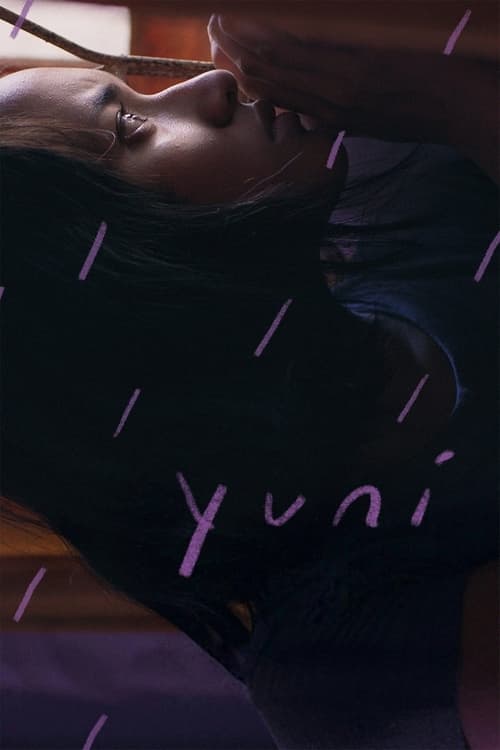
Yuni
2021 · Kamila Andini
When you want an intimate, human drama from a corner of the world you rarely see on screen — something that makes you root hard for one person. More heart-clenching than comfort viewing, but never bleak for bleakness's sake.
What it's about
Yuni is a bright Indonesian student in her final year of secondary school, set on going to university — but in her community, a good marriage proposal is not something a girl refuses. As the proposals arrive one after another, local superstition says a woman who turns down a third will never marry at all. The film follows her friendships, her curiosity about her own life and body, and the tightening pressure of everyone else's expectations.
The experience
Tender, unhurried, and quietly suspenseful — each proposal lands like a countdown tick, and you feel the walls closing in even as the film stays warm, funny, and alive to teenage friendship. It sneaks up on you emotionally.
Performances
Arawinda Kirana carries the film as Yuni — watchful, playful, and increasingly defiant, letting you read the whole conflict in her face without a speech.
The craft
Director Kamila Andini builds the story around texture rather than plot mechanics: the recurring color purple, threads of Indonesian poetry, and the everyday rituals of school and neighborhood that make the pressure on Yuni feel ambient rather than villainous. The filmmaking is patient and sensory, trusting silences and glances to do the arguing.
Why it matters
It won the Platform Prize at the Toronto International Film Festival and became Indonesia's Oscar submission, confirming Andini as a leading voice in Southeast Asian cinema and putting a fresh, female-directed Indonesian film in front of world audiences.
Snapshot
Yuni is Kamila Andini's third feature, a coming-of-age drama about a bright teenage girl in her final year of secondary school in Banten, on the western tip of Java, who fields — and refuses — a succession of marriage proposals while trying to hold open a door to university. The film is built on a piece of local lore that gives its plot its clockwork tension: a woman who turns down a third proposal will supposedly never marry at all. Around that superstition Andini assembles a portrait of adolescent selfhood under communal pressure, threaded with poetry, the color purple, and the unspoken curriculum of what a girl's body is permitted to want. It premiered at the Toronto International Film Festival in September 2021, where it won the Platform Prize, and was subsequently selected as Indonesia's submission for Best International Feature Film at the 94th Academy Awards. Anchored by a breakout performance from Arawinda Kirana, it stands as one of the most internationally visible Indonesian art films of its decade and a key document of the transnational Southeast Asian auteur network that produced it.
Industry & production
Yuni is a four-country co-production — Indonesia, Singapore, France, and Australia — assembled through the kind of festival-funded, cross-border financing that has become the default path for Southeast Asian auteur cinema. The lead producing entity is Fourcolours Films, the Yogyakarta-based company run by director-producer Ifa Isfansyah, Andini's husband and long-standing creative partner. The Singaporean producer Fran Borgia came aboard through his outfit Akanga Film Asia, a company whose credits span much of the region's festival cinema, with France's Manny Films completing the principal co-production triad. This configuration is itself the story of the film's industrial position: rather than emerging from Indonesia's commercial studio system, Yuni was routed through the international co-production and grant ecosystem that connects Jakarta and Yogyakarta to Singapore, Busan, and European soft-money sources.
The exact budget and financing breakdown are not part of the reliably established public record, and I will not invent figures. What is clear is the shape of the enterprise: a modestly scaled art film made for the festival circuit and specialty distribution, with a domestic Indonesian theatrical release following its international premiere. The choice to cast a then-unknown lead, shoot in a specific regional locale, and work partly in local vernacular are all consistent with an auteur production prioritizing texture and authenticity over marketability.
Technology
The granular technical specifications of Yuni — camera bodies, lenses, capture format, aspect ratio — are not well documented in sources I can verify, and I will not fabricate them. What can be said responsibly is that the film reflects the standard technological baseline of 2020s international art cinema: digital acquisition finished for both festival projection and streaming, in service of a naturalistic image rather than a showy one. The film's technological ambitions are legible less in hardware than in restraint — available-light-leaning interiors, a controlled but muted palette punctuated by Yuni's signature purple, and a soundscape that treats ambient and vernacular texture as primary material. If there is a "technology" argument in Yuni, it is that the apparatus is deployed to disappear, so that the observational, near-documentary intimacy of the performances can carry the film.
Technique
Cinematography
The cinematographer is Teoh Gay Hian, whose images favor patient, human-scaled framing over spectacle. The camera tends to stay close to Yuni, tracking the small negotiations of face and posture that make up a teenager's day, and the film's visual grammar is observational rather than declarative — long-ish takes, naturalistic light, a palette held deliberately low so that the recurring purples (a scarf, a wall, a wig, small possessions) register as chromatic events. This disciplined color logic is one of the film's signatures: purple functions as Yuni's private emblem of desire and self-possession, and the cinematography is organized so that the color reads as meaning rather than decoration. Andini's camera repeatedly frames Yuni within thresholds — doorways, windows, classroom rows — a spatial vocabulary of confinement and possibility that the photography sustains without underlining.
Editing
The editor is Lee Chatametikool, one of the most significant figures in Southeast Asian art cinema and best known as the longtime collaborator of Apichatpong Weerasethakul. His presence is a meaningful authorship signal: Chatametikool's editorial sensibility favors duration, breathing room, and the accumulation of small observed moments over propulsive cutting. Yuni moves at the unhurried, attentive tempo his work tends to produce, letting scenes settle so that social pressure builds by accretion rather than by dramatic spikes. The film's rhythm — episodic, patient, organized around the recurring motif of the proposals — allows the superstition-driven plot engine to tighten quietly beneath a surface of everyday life.
Mise-en-scène / staging
Andini stages Yuni in the specific textures of a Banten town: the school, the home, the salon, the streets and small commerce of a community where everyone's business is communal. The staging is attentive to how patriarchal expectation is distributed across ordinary spaces — the classroom where a virginity-testing policy can be floated, the domestic interiors where a proposal is weighed as an economic and social transaction, the peer spaces where sexuality is both policed and fumblingly explored. Costume and production design carry the film's thematic freight economically, above all through the purple motif and through the contrast between school uniforms and the adult roles being pressed onto Yuni. The overall approach is realist and grounded, with symbolic elements integrated into a believable social world rather than imposed on it.
Sound
Sound is central to the film's sensory identity. Beyond a naturalistic bed of ambient life, Yuni foregrounds language and poetry — the Indonesian-language recitation of verse becomes a recurring aural motif, and the film's use of Sapardi Djoko Damono's poetry (notably "Hujan Bulan Juni") is woven into its emotional architecture, later recognized in domestic awards contexts. The original score is by the French composer Alexis Rault, whose contribution supports the film's interiority without overwhelming its observational restraint. Vernacular speech — the local register of the setting alongside standard Indonesian — is itself part of the sound design, situating the story in a precise linguistic and regional milieu.
Performance
The film rests on Arawinda Kirana, whose Yuni is watchful, funny, sensual, and stubborn — a performance that reads adolescent uncertainty and adult resolve as coexisting rather than sequential. It was a breakout that drew significant regional recognition (including at the 2022 Maya Awards, where the film swept multiple categories including Best Actress). The surrounding ensemble — including Kevin Ardilova as a shy classmate, and adult players such as Marissa Anita, Asmara Abigail, and Dimas Aditya in roles that variously enable, constrain, or complicate Yuni's path — is directed toward a naturalism consistent with the film's observational mode, so that the social pressures on Yuni feel embodied by recognizable people rather than by types.
Narrative & dramatic mode
Yuni operates in a realist, character-centered dramatic mode with a deceptively simple structural engine: the arrival of successive suitors, each proposal raising the stakes set by the "third proposal" superstition. This gives an otherwise episodic, slice-of-life narrative a quiet ticking clock. The film resists melodrama; its conflicts are internal and social rather than plotted around villains, and its dramatic pressure comes from the gap between Yuni's desires — for education, for autonomy, for a sexuality she is only beginning to understand — and the expectations of family, school, and community. The poetry motif functions as both refuge and counter-voice, a private interior space in which Yuni can articulate a self that her world would prefer to assign. The ending's exact resolution I will leave unspoiled and un-embellished; what matters formally is that the film is organized around a moral and existential choice rather than a conventional romance payoff.
Genre & cycle
On its surface Yuni is a coming-of-age drama, but it belongs more precisely to a regional and global cycle of festival films centered on adolescent girls navigating patriarchal or religiously conservative societies — a lineage that runs through films about girlhood, bodily autonomy, and the friction between individual aspiration and communal expectation. Within Indonesian cinema specifically, it participates in a wave of women-authored and women-centered films interrogating gender norms, and it can be read alongside the broader 2010s–2020s international art-house interest in the "girl on the threshold of enforced adulthood." Its distinctiveness within that cycle lies in specificity: the localized superstition, the Banten setting, the poetry, and the frank but non-sensational treatment of teenage sexuality.
Authorship & method
Yuni is unmistakably a Kamila Andini film, and it is best understood through both her authorship and her collaborators. Andini co-wrote the screenplay with Prima Rusdi, and her method across her career has been to build intimate, sensorial dramas about girls and women negotiating tradition — from The Mirror Never Lies (2011) to The Seen and Unseen (2017). Her signatures recur here: a child or adolescent female protagonist, a fascination with the body and its symbolic charge, an interest in the porous line between social reality and inner/mythic experience, and a patient observational style.
The collaborators sharpen this authorship. Editor Lee Chatametikool and producer Fran Borgia connect Yuni to the transnational Southeast Asian art-cinema network associated with Apichatpong Weerasethakul and the Singapore–Bangkok–Yogyakarta axis. Cinematographer Teoh Gay Hian supplies the film's grounded, color-conscious image. Composer Alexis Rault brings a European art-film scoring sensibility. And the producing partnership with Ifa Isfansyah and Fourcolours Films situates the film within a family-and-studio lineage of Indonesian auteur production. Andini's own artistic genealogy is relevant context: she is the daughter of the pioneering Indonesian director Garin Nugroho, and Yuni extends a tradition of Indonesian art cinema attentive to region, ritual, and social critique into an explicitly feminist register.
Movement / national cinema
The film is a significant entry in contemporary Indonesian cinema, and specifically in the internationally oriented, festival-facing strand of it that has grown since the post-Reformasi revival of Indonesian filmmaking. It reflects a maturing New Indonesian Cinema in which women directors and women-centered stories have become internationally legible, and in which co-production with Singapore and Europe is a normal route to global visibility. Regionally, Yuni is part of a Southeast Asian art-cinema formation whose shared festival infrastructure, personnel, and slow-cinema-adjacent aesthetics cross national borders — a formation in which Indonesian, Singaporean, Thai, Malaysian, and Filipino filmmaking increasingly overlap.
Era / period
Made and released in 2021, Yuni is a film of the early-2020s moment in two senses. Industrially, it belongs to the pandemic-era festival cycle, premiering at a TIFF navigating the disruptions of that period and reaching audiences through a hybrid of festival, theatrical, and streaming pathways. Thematically, it lands amid a global surge of feminist filmmaking and public reckoning with gender, bodily autonomy, child and early marriage, and the policing of women's sexuality — concerns that in the Indonesian context intersect with live debates about conservative social currents, including the notorious real-world specter of virginity testing, which the film engages directly. It is very much a contemporary film speaking to contemporary anxieties, told through a resolutely local lens.
Themes
Yuni's central theme is female autonomy under communal and patriarchal constraint — the right to choose education, marriage, sexuality, and selfhood against a social order that treats a girl's future as collectively owned. Nested within it are several tightly related concerns: the commodification of marriage and its economic logic; the surveillance of the female body, dramatized through the film's treatment of virginity and its testing; the awakening of adolescent desire, handled with unusual frankness and empathy; education as escape and as threat; and superstition and tradition as instruments of control, embodied by the third-proposal myth. The color purple threads through all of these as a symbol of a self Yuni is trying to keep, and poetry — Sapardi Djoko Damono's especially — becomes the language in which an interior, unpoliced self can briefly exist. Crucially, the film refuses to caricature its community; the pressures on Yuni come from people who largely love her, which is precisely what makes them hard to refuse.
Reception, canon & influence
Yuni was met with strong critical reception on the festival circuit, its TIFF Platform Prize serving as the headline endorsement — a jury award that positioned Andini among directors of international consequence. Its selection as Indonesia's official Oscar submission for the 94th Academy Awards confirmed its status as a national flagship, and it accumulated substantial domestic recognition, sweeping multiple categories at the 2022 Maya Awards (including Best Feature Film, Best Director, and Best Actress) and drawing recognition at the Indonesian Film Festival, including attention to its poetry-driven use of "Hujan Bulan Juni." Reviews tended to praise Kirana's performance, the film's tender specificity, and its handling of difficult material without didacticism; where I cannot verify individual critics' phrasings, I refrain from quoting them.
Influences on the film (backward): Yuni draws on Andini's own prior work and her father Garin Nugroho's tradition of socially attuned Indonesian art cinema; on the observational, duration-conscious grammar of the Southeast Asian festival cinema that its editor and producers helped shape; and on a broader international lineage of girlhood-under-patriarchy dramas. Its literary bedrock is explicitly Indonesian: the poetry of Sapardi Djoko Damono.
Legacy (forward): As one of the most internationally awarded Indonesian films of its period and an Oscar submission, Yuni strengthened the global profile of Indonesian women's cinema and of Andini specifically, who followed it with Before, Now & Then (2022). It helped consolidate a template — locally specific, feminist, festival-financed, transnationally crewed — for the next wave of Indonesian auteur filmmaking, and it launched Arawinda Kirana as a notable regional performer. Its longer-term canonical standing is still settling, as is appropriate for a recent film; but its immediate function as a proof-of-concept for ambitious, women-authored Indonesian cinema on the world stage is already clear.
Reception
It arrived with real festival heat — the Platform Prize at TIFF 2021 and Indonesia's Oscar entry — then settled into life as a quiet festival gem, the film people point to when tracing Kamila Andini's rise alongside Nana: Before, Now & Then.
How Yuni was received, from release to now →
Influences: the films it descends from and the films it influenced
- The Seen and Unseen (2017) — Andini's own prior feature established the sensorial, ritual-inflected observational grammar and child-body symbolism that Yuni carries forward into adolescence.
- The Mirror Never Lies (2011) — Andini's debut set her template of a girl protagonist negotiating tradition across the porous membrane between documentary-grade social reality and myth.
- Opera Jawa (2006) — Her father's fusion of Javanese ritual, poetic stylization, and social critique bequeathed Yuni its art-cinema idiom of region, body, and vernacular tradition.
- Uncle Boonmee Who Can Recall His Past Lives (2010) — Shared editor Lee Chatametikool's duration-accretion cutting and long-take patience — letting scenes breathe past narrative function — is the editorial DNA of Yuni's rhythm.
- Tropical Malady (2004) — Chatametikool's editing and the film's dissolve of mundane realism into folk-myth prefigure Yuni's superstition-driven ticking-clock structure grafted onto naturalism.
- Mustang (2015) — Its naturalistic ensemble of adolescent girls resisting arranged marriage, rendered through their sensory autonomy and bodies under surveillance, is Yuni's most direct girlhood-under-patriarchy model.
- Wadjda (2012) — A nationally-flagship, festival-financed portrait of a girl chafing against patriarchal custom, providing the exact production template (locally specific, feminist, Oscar-submitted) Yuni followed.
- Water Lilies (2007) — Sciamma's observational study of adolescent female desire and the symbolic charge of the body, carried by non-professional breakout performance, models Yuni's handling of awakening desire.
- The Virgin Suicides (1999) — Girls held under domestic surveillance rendered through saturated color-coding and dreamy sensory subjectivity anticipates Yuni's purple color-symbolism motif.
- Before, Now & Then (Nana) (2022) — Andini's immediate follow-up extends the same observational long-take, color-and-body-conscious feminist grammar into a period register.
- What They Don't Talk About When They Talk About Love (2013) — An Indonesian art-film of teenage female desire and the body's negotiation of constraint, from the same feminist New Indonesian wave and transnational festival apparatus.
- Marlina the Murderer in Four Acts (2017) — The other landmark of feminist New Indonesian Cinema, staging female autonomy against patriarchal violence through the same festival-financed, transnationally-crewed model.
- A Land Imagined (2018) — Shares producer Fran Borgia and the Singapore–Bangkok–Yogyakarta axis, deploying the same slow observational realism that dissolves into dream-logic.
- Pop Aye (2017) — A Fran Borgia-produced Southeast Asian festival film from the identical transnational-crew ecosystem that financed and shaped Yuni's grammar.
- The Dancer (Sang Penari) (2011) — Produced within Andini's Fourcolours Films family-studio lineage, it dramatizes a woman's body constrained by ritual tradition in the same Indonesian auteur register.
- Rafiki (2018) — Vivid, near-emblematic color-symbolism paired with adolescent female desire pressing against national and patriarchal constraint parallels Yuni's chromatic and thematic method.
Similar films
- Mustang (2015) — influence & lineage
- Falling in Love Like in Movies (2023) — shared sensibility
- Minari (2021) — shared sensibility
- Pariyerum Perumal (2018) — shared sensibility
- The Little Sister (2025) — shared sensibility
- Sundays (2025) — shared sensibility
- Belén (2025) — shared sensibility
- Violet Perfume: Nobody Hears You (2001) — shared sensibility