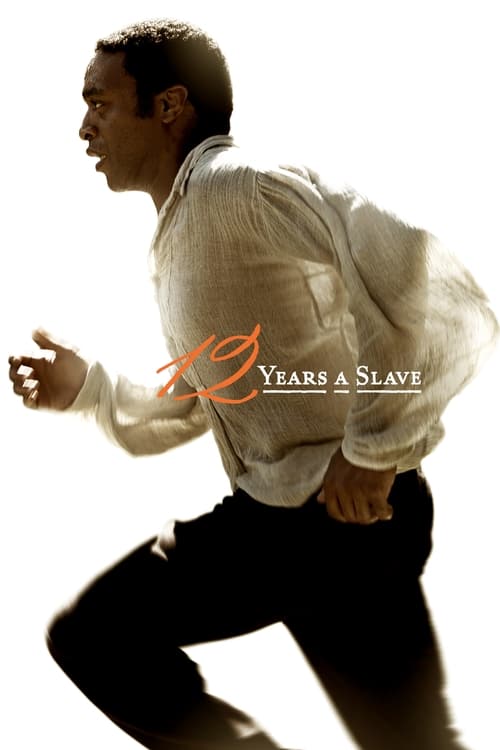
12 Years a Slave
2013 · Steve McQueen
For when you're ready to be challenged — a film you watch because it matters, and one you'll be turning over for days. Not a casual pick; give it your full attention and an evening to recover.
What it's about
Solomon Northup, a free Black musician living with his family in upstate New York, is lured away, drugged, and sold into slavery in Louisiana — the true story from his 1853 memoir. Stripped of his name and legal existence, he endures years under owners ranging from conflicted to sadistic, fighting not just to survive but to keep his inner life, and his hope of home, intact.
The experience
Unflinching in the most literal sense: the camera holds on what other films cut away from, and the length of those shots is the point. It's harrowing and at times very hard to watch, but never gratuitous — the beauty of the images makes the cruelty inside them land harder. You leave shaken and glad you saw it.
Performances
Chiwetel Ejiofor plays Solomon's ordeal as a war to keep his soul intact — much of it in silence, in his eyes — and Lupita Nyong'o, in her film debut, is devastating as the plantation's most brutalized figure; Michael Fassbender is terrifying as a slave owner whose obsession curdles into pure menace.
The craft
Steve McQueen came from gallery art, and it shows in his patience: long, static takes that refuse you the relief of a cut, including one near-lynching held to an unbearable length while plantation life resumes in the background. Sean Bobbitt shoots the antebellum South as lush, poisoned beauty, and John Ridley's script keeps the formal dignity of Northup's nineteenth-century prose.
Why it matters
It won Best Picture and forced American cinema to finally look straight at slavery after a century of evasion, while launching Nyong'o and confirming McQueen as a major filmmaker.
Solomon Northup's 1853 memoir — a free Black musician kidnapped from Saratoga and sold into Louisiana bondage — had waited more than a century for a filmmaker unwilling to soften it. Steve McQueen, the Turner Prize–winning video artist who came to features with Hunger and Shame, brought his gallery-trained patience: the camera holds, and holds, on what American cinema had always cut away from, most famously in a single static wide shot of near-lynching that lasts an unbearable age while plantation life resumes in the background. Sean Bobbitt's cinematography renders the antebellum South in a lush, poisoned beauty; Chiwetel Ejiofor plays Solomon's ordeal as a war to keep his inner life intact, with Lupita Nyong'o, in her debut, as the film's devastating conscience. John Ridley's script preserves the memoir's formal nineteenth-century diction, giving the horror a terrible eloquence. In 2014 it became the first film by a Black director to win the Academy Award for Best Picture — a fact that says as much about the industry's long refusal as about the film's arrival.
A Deleuzian reading
A man hangs from a tree with his toes in the mud.
The full Deleuzian reading of 12 Years a Slave →
Reception
It arrived pre-canonised — Best Picture, instant 'masterpiece' consensus in 2013 — but the years since have shifted the conversation from 'is it great?' (settled) to 'when will you actually rewatch it?', with best-of-the-2010s lists routinely placing it at or near the top anyway.
How 12 Years a Slave was received, from release to now →
Influences: the films it descends from and the films it influenced
- Hunger (2008) — McQueen's debut establishes the house method 12 Years inherits wholesale — the static, minutes-long unbroken take (the 17-minute priest conversation) that traps the viewer inside real duration and refuses to cut away from bodily degradation.
- Shame (2011) — Sean Bobbitt's patient camera that fixes on a performer's face and holds until the emotion curdles — the exact sustained scrutiny later trained on Ejiofor and Nyong'o.
- The Passion of Joan of Arc (1928) — Founds the grammar of the near-unbearable close-up of a martyr's suffering face as the film's central dramatic instrument, the device McQueen revives in the held shots of Patsey's whipping.
- Come and See (1985) — The camera that will not look away from atrocity and lingers on the witnessing face, making duration itself the moral act — the 'refusal to cut away' McQueen adopts at the whipping post and the lynching tree.
- Barry Lyndon (1975) — Painterly, natural-light period tableaux composed like genre paintings, framing historical cruelty with cool distance — the compositional template for McQueen's antebellum-South landscapes.
- Andrei Rublev (1966) — Durational long takes that stage violence in wide, deep-focus shots so cruelty unfolds as unhurried fact — the gallery-trained patience underwriting McQueen's mise-en-scène.
- Citizen Kane (1941) — Deep-focus staging where simultaneous foreground and background action carry meaning at once — the technique behind the shot of Solomon hanging on tiptoe while plantation life proceeds, indifferent, in the sharp background.
- Sankofa (1993) — Renders New World slavery from inside the enslaved subject's lived experience rather than through a white liberator's arc — the point of view 12 Years centers and refuses to soften.
- Amistad (1997) — The prestige antebellum historical drama built on documentary/memoir sourcing and formal period diction that 12 Years inherits, then strips of its redemptive uplift.
- The Last King of Scotland (2006) — Inherits LKOS's model of historical-atrocity drama built on an immersive physical-transformation central performance, with extended duration cuts that force viewer complicity in scenes of suffering and a refusal to aestheticize violence as the film's primary moral instrument.
- There Will Be Blood (2007) — McQueen's use of extended unbroken takes — the whipping sequence, the hanging-tree sequence — to make duration itself a moral experience for the viewer directly extends TWBB's strategy of holding on Day-Lewis past the threshold of comfort, treating the edit's refusal to cut as the film's ethical argument rather than a lapse in conventional pacing.
- Glory (1989) — Recentres the Civil-War-era narrative fully on Black experience and subjectivity, completing the point-of-view correction Glory began but hedged with its white-officer frame.
- Widows (2018) — McQueen and Bobbitt extend the long-take deep-focus principle to genre — the unbroken car conversation shot from the hood, action and dialogue held in one continuous frame.
- Moonlight (2016) — The held, intimate close-up on a Black face in emotional extremity — and the industry space for a Black auteur's formalism — opened directly by 12 Years' Best Picture win.
- The Underground Railroad (2021) — Directly extends the durational holding on the faces of the enslaved and the refusal to cut away from bodily terror, turning McQueen's technique into a long-form visual language.
- Judas and the Black Messiah (2021) — Sean Bobbitt carries the same patient, available-light, faces-first cinematography into another chapter of American racial history, the lens continuity making the craft debt literal.
- Small Axe: Mangrove (2020) — McQueen reapplies the sustained observational take and deep-focus courtroom staging to Black British history, the anthology descended from 12 Years' method and moral gaze.
- Emancipation (2022) — A slave-escape survival narrative built explicitly in 12 Years' wake, foregrounding the scarred, whipped Black body as historical testimony.
- Just Mercy (2019) — Establishes the unflinching, restraint-driven grammar for Black historical trauma — long-held compositions that refuse to look away — that opened commercial-critical space for Just Mercy's subject.
- Selma (2014) — Part of the same post-2013 wave of Black-authored American historical drama, prioritizing the interior dignity of its subjects over the white-savior framing of prior studio treatments.
- Mudbound (2017) — Sean Bobbitt's available-light, long-held stillness over Southern period atrocity shares Mudbound's refusal to cut away and its performance of endurance through composure.
- Nickel Boys (2024) — Adapts a first-person testimony of racial captivity using unbroken durational takes that force the viewer to hold the gaze on violence — a kindred ethics of looking.
- The Butler (2013) — The formal antithesis released the same season: sustained long takes that hold on unbroken duration precisely where The Butler cuts away to survey, and whose awards sweep against The Butler's total shutout became the defining comparison in both films' reception.
Similar films
- Sankofa (1993) — influence & lineage
- Selma (2014) — influence & lineage
- Judas and the Black Messiah (2021) — influence & lineage
- Moonlight (2016) — influence & lineage
- Hunger (2008) — influence & lineage
- Shame (2011) — influence & lineage
- Come and See (1985) — influence & lineage · often watched together
- Schindler's List (1993) — often watched together
All the films related to 12 Years a Slave →
Watch it with: curated runs of related films
- Judgment and Mercy — Watch these together for the way each puts a life on the scales — a jury room, a death-row block, a slave plantation, a gunfighter's conscience — and asks what mercy costs the people handing down the verdict.