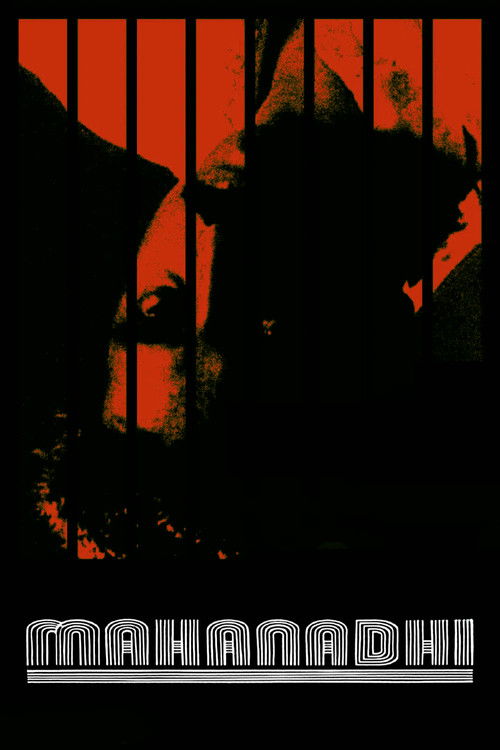
Mahanadhi
1994 · Santhana Bharathi
For when you're ready to be wrecked — a serious, devastating drama for a night when you want cinema that confronts rather than comforts. Not a casual pick; save it for when you can give it your full attention.
What it's about
Krishnaswamy is a gentle, trusting widower farmer who moves his family toward the city and is conned through a chit-fund investment scheme, framed, and thrown in prison. While he endures the years inside, the family he built is scattered into the urban underworld — and the film follows his long, grinding fight to pull the pieces back together.
The experience
Harrowing and heavy — a deliberate descent that spares you very little, punctuated by moments of aching tenderness. It's the kind of film that sits in your chest for days; you come out shaken and moved rather than entertained.
Performances
Kamal Haasan, who also wrote the film, gives one of the most stripped-down performances of his career — no star mannerisms, just a decent man being ground down, and it's all the more devastating for its restraint.
The craft
The writing is the engine: a river-like structure that carries one man from rural innocence through fraud, prison, and the city's lower depths with unblinking honesty. Santhana Bharathi directs it plainly and lets the accumulation do the damage — the restraint is what makes it hit so hard.
Why it matters
Remembered as one of the darkest, most unflinching films in Kamal Haasan's career and a benchmark for Tamil cinema's willingness to confront corruption, trafficking, and institutional indifference head-on.
Snapshot
Mahanadhi — Tamil for "great river" — is a 1994 Tamil-language social crime drama written by and starring Kamal Haasan and directed by his frequent collaborator Santhana Bharathi. It follows Krishnaswamy (Kamal Haasan), a gentle, trusting widower farmer from rural Tamil Nadu who is lured to the city, defrauded through a chit-fund (rotating-credit finance) scheme, framed, and imprisoned. During his years behind bars his family is scattered and consumed by the urban underworld: his young daughter is trafficked into prostitution and his son falls into drug addiction. The film is structured as a descent — a decent man dragged by the current of greed, corruption, and institutional indifference toward the bottom of society. It is remembered as one of the darkest and most unflinching films of Kamal Haasan's career, a work whose title deliberately braids together the names of Indian rivers (Krishna, Kaveri, and their kin) with the metaphor of a life swept downstream. Though not a blockbuster on release, it has accrued substantial critical and cult standing over the decades as a landmark of socially conscious Tamil melodrama.
Industry & production
Mahanadhi belongs to the commercial Tamil (Kollywood) film industry of the early-to-mid 1990s, but sits at the ambitious, star-driven auteur end of that industry rather than the mass-entertainer mainstream. The decisive production fact is Kamal Haasan's dual role as lead actor and author: he is credited with the story and screenplay, and the film is unmistakably a vehicle for his conception of socially engaged cinema. By 1994 Kamal was among Indian cinema's most bankable and creatively autonomous stars, a status that let him greenlight difficult, downbeat material — child prostitution, prison brutality, financial fraud — that a producer would rarely back for a lesser name. Santhana Bharathi, himself an actor and one of Kamal's regular directorial partners of the period, directed. Their working relationship gave the project the feel of a closely held collaboration between star-author and metteur-en-scène rather than a director-driven film in the European auteurist sense.
Precise below-the-line production details — budget, shooting schedule, exact studio arrangements, and verified box-office figures — are not reliably documented in accessible English-language sources, and I will not invent them. What can be stated with confidence is the film's ambition of scope: the narrative moves from a South Indian village to the city and to distant metropolitan brothel districts, requiring location work and a sprawling supporting cast, and it foregrounds a topical social scourge — chit-fund and finance-company frauds that were a live public concern in Tamil Nadu during this era.
Technology
Mahanadhi was made on 35mm photochemical film with synchronous-era production sound and post-dubbing, the standard technological baseline of Indian commercial cinema in 1994. This was a moment of transition in Tamil cinema's technical culture: the early 1990s had raised the industry's visual and sonic aspirations sharply, and productions increasingly pursued a polished, "realist-glossy" image and richer sound design. Mahanadhi is not a technological showcase in the manner of the era's effects-forward spectacles; its tools serve a grounded, observational realism. The film predates the digital editing and sound workflows that would arrive later in the decade, so its cutting was photochemical and its mix analog-era. Its social-issue subject matter — prison, the brothel, the city street — is rendered through conventional location and set-based photography rather than any novel apparatus.
Technique
Cinematography
The film's photography works in the service of moral atmosphere. Its trajectory from sunlit rural openness into the cramped, shadowed interiors of prison cells and brothel corridors is a visual argument: the frame narrows and darkens as Krishnaswamy's world collapses. The compositional grammar favors the human face and figure over spectacle, holding on Kamal Haasan's performance and on the squalid textures of institutional and underworld spaces. I do not have a reliably verified credit for the director of photography and will not attribute the work to a specific name without confidence; the visual strategy, however, is legible in the film itself — naturalistic light, an emphasis on degraded urban interiors, and a restraint that refuses to aestheticize suffering.
Editing
The editing organizes a long, punishing arc of cause and consequence. The film's structure is essentially tragic and cumulative: each sequence tightens the trap, and the cutting sustains dread rather than accelerating toward action-film release. Parallel movement — the imprisoned father set against the simultaneous ruin of his children — is central to the film's grip, and the editing's task is to make the audience feel the helpless distance between them. As with the cinematography, I do not have a securely verified editor credit and decline to fabricate one; the editorial logic, though, is one of patient, escalating dramatic pressure.
Mise-en-scène / staging
Staging is where the film's thesis becomes physical. The village home is open, communal, and warm; the prison is a geometry of bars, walls, and massed bodies; the brothel is a claustrophobic warren of doorways and watching eyes. Krishnaswamy is repeatedly staged as a small, decent figure hemmed in by larger forces — con men, guards, pimps, indifferent institutions. Costume and setting track the family's fall from clean rural simplicity into urban degradation. The naming of the characters after rivers is itself a kind of conceptual mise-en-scène: the film asks us to read individual fates as tributaries of a single "great river" of social corruption.
Sound
Music is by Ilaiyaraaja, the composer whose work defined the sound of Tamil cinema across the 1980s and into the 1990s. His score for Mahanadhi carries the film's emotional and devotional registers — the film is remembered for a Ranganatha-themed devotional song sequence that stands in poignant counterpoint to the surrounding darkness. Ilaiyaraaja's contribution is the film's lyrical conscience: where the drama is bleak and documentary in its cruelty, the music supplies the note of lament and the sense of a sacred order violated. The broader sound design leans on the ambient textures of its milieus — the crowd, the cell, the street — grounding the melodrama in a lived-in aural world.
Performance
Mahanadhi is, above all, a performance film, and Kamal Haasan's Krishnaswamy is widely regarded as one of his major achievements. He plays against his own charisma: this is not a heroic, retaliatory star turn for most of its length but a study in incremental devastation — trust curdling into disbelief, disbelief into grief, grief into a hollowed, obsessive determination to recover his children. The restraint is the point; the film withholds catharsis so that the accumulated weight of loss lands fully. Sukanya, as a woman of the streets who becomes Krishnaswamy's ally in the search for his daughter, brings a bruised humanity to the film's lower depths. The supporting cast populates the machinery of the con and the underworld with recognizable, unglamorous menace. Because the film's power rests so heavily on faces enduring rather than acting out, the ensemble's naturalism is essential to its credibility.
Narrative & dramatic mode
The film's dramatic mode is social tragedy delivered through the melodramatic register native to Indian popular cinema — but a melodrama disciplined toward realism and moral protest rather than sentiment for its own sake. Its narrative engine is the reversal of fortune: an innocent is punished not for any sin but for his virtues of trust and generosity, and the plot machinery exists to demonstrate, step by step, how easily a good life is dismantled by predatory finance, a callous justice system, and organized vice. The structure is linear and cumulative, closer to a downward spiral than a conventional three-act recovery, and it withholds relief until very late. Where mainstream commercial cinema offers reassurance, Mahanadhi trades in warning: its dramaturgy is designed to leave the audience shaken and instructed.
Genre & cycle
The film sits at the intersection of the family drama, the crime film, and the social-problem picture — a lineage in Tamil and broader Indian cinema of films that dramatize a topical societal ill through the ordeal of a representative victim. Its specific hook, the chit-fund / finance-company fraud, ties it to a real cycle of public anxiety in Tamil Nadu about such schemes, and the film functions partly as cautionary tract. It also draws on the enduring melodramatic cycle of the wronged patriarch and the imperiled family. Within Kamal Haasan's own filmography it belongs to his recurrent strand of dark, socially or politically charged realism — a strand that connects to other grim, morally serious projects across his career rather than to his comedies or romances.
Authorship & method
Authorship here is genuinely split and worth stating plainly. Kamal Haasan is the film's controlling creative intelligence as star and writer; the material's bleakness, its social conscience, and its refusal of easy heroism reflect his authorial signature more than any house style. Santhana Bharathi, the credited director, was a close and recurrent Kamal collaborator, and his method on this and related films was to serve and realize the star-author's vision with a steady, unshowy hand — a director who organizes performance and story rather than imposing a flamboyant visual persona. Ilaiyaraaja as composer is the third major author, supplying the emotional and devotional dimension. The cinematography and editing credits I cannot verify with confidence and will not attribute; the film's craft in those departments is nonetheless coherent and purposeful, subordinated throughout to the demands of realist tragedy. The overriding method is collaborative and star-authored: a powerful lead actor using his industry standing to make a difficult, uncommercial-leaning social film within the commercial system.
Movement / national cinema
Mahanadhi is a product of Tamil cinema, one of the principal regional industries of India and a tradition with its own strong lineages of social-reform and social-realist filmmaking alongside its star-driven populism. The film does not belong to a self-declared "movement" in the manner of a new wave; rather, it extends the long Indian tradition of the socially conscious popular film — entertainment yoked to a message — and channels it through the technically ambitious, auteur-inflected Tamil cinema of the early 1990s. Its regional specificity matters: the chit-fund milieu, the village-to-city passage, the devotional idiom of its music, and the river-naming conceit are rooted in a South Indian cultural and social landscape.
Era / period
The film arrives in 1994, at a hinge moment for Tamil and Indian cinema. The early 1990s had seen a surge in the industry's technical polish and thematic ambition, and the sonic guard was changing as a younger generation of composers began to challenge Ilaiyaraaja's long dominance. Mahanadhi is in some sense a film of the older, Ilaiyaraaja-scored sensibility — humanist, melodramatic, morally earnest — made with the heightened craft expectations of its moment. It also reflects a period of real public concern in Tamil Nadu about financial scams that ruined ordinary savers, which gives its central premise a documentary topicality it would have carried strongly for contemporary audiences.
Themes
The governing theme is the vulnerability of goodness in a predatory social order: honesty and trust are recast as liabilities, and virtue invites ruin. Around this core the film gathers a cluster of concerns — the corrosive power of greed and fraudulent finance; the disintegration of the family as the fundamental social unit; institutional failure and cruelty, especially the dehumanizing machinery of prison and the collusive indifference that lets vice flourish; and the trafficking and destruction of children as the ultimate index of a society's rot. The river metaphor of the title binds these together: individual lives are tributaries carried by a larger current they cannot resist, and the "great river" is at once the flow of fate and the flood of social corruption. Underlying it all is a devotional counter-current — a longing for a moral or sacred order — voiced most directly through the film's religious music.
Reception, canon & influence
Mahanadhi was received as a serious, disturbing work and is now widely regarded as one of the standout entries in Kamal Haasan's filmography, frequently cited for the depth and restraint of his central performance and for its unflinching treatment of taboo social subjects. I do not have verified box-office figures and will not invent them; the reliable pattern in its reputation is that of a film whose critical and cult standing has grown over time, its bleak honesty aging into a mark of integrity. Looking backward, the film draws on the deep Indian tradition of the social-problem melodrama and the wronged-family tragedy, filtered through Kamal Haasan's personal commitment to socially and politically serious cinema. Looking forward, its legacy is best understood as reputational and thematic rather than as a discrete school of imitators: it consolidated Kamal's image as an actor willing to dismantle his own star persona in the service of grim, realist storytelling, and it stands as a touchstone reference whenever Tamil cinema turns to stories of financial fraud, institutional cruelty, and families broken by the city. Where the historical record on its precise production and reception is thin, that thinness should be acknowledged rather than papered over — but the film's place as a landmark of dark, socially conscious Tamil drama is secure.
Reception
Too bleak for 1994 audiences, it underperformed at the box office even as critics called it a landmark — three decades on it's routinely ranked among the greatest Tamil films ever made, the textbook flop-to-classic arc.
How Mahanadhi was received, from release to now →
Influences: the films it descends from and the films it influenced
- Bicycle Thieves (1948) — Establishes the neorealist descent architecture Mahanadhi borrows — a decent working man's small economic wound cascading into total ruin, anchored by a father-child dyad and unglamorized location light rather than plot villainy.
- Do Bigha Zamin (1953) — Indian neorealism of debt: the honest man crushed by moneylenders and swallowed by an indifferent metropolis, the wronged-family social-melodrama structure Mahanadhi transposes to Tamil register.
- Mother India (1957) — Codifies the usurious-debt-destroys-the-family melodrama in which economic/institutional cruelty, not a personal antagonist, drives the tragedy — the moral engine Mahanadhi inherits.
- Subarnarekha (1965) — Provides the river-as-tragic-destiny figuration and the family sundered by displacement — the 'great river' metaphor Mahanadhi builds its title and imagery around.
- Apoorva Raagangal (1975) — Kamal's mentor's method — taboo social subject matter played with restraint over spectacle — seeds the against-star realist persona Mahanadhi later fulfills.
- Nayakan (1987) — The prior instance of Kamal dismantling his star image for grimy crime-realism scored by Ilaiyaraaja, with naturalistic light and an inexorable tragic arc — the same author-team craft template.
- Salaam Bombay! (1988) — The city rendered as a trafficking machine that ingests children into brothels and 'welfare' institutions, shot in documentary-naturalistic light — the direct model for Mahanadhi's Bombay-brothel movement.
- Thevar Magan (1992) — Kamal-written, Ilaiyaraaja-scored immediate precursor built on performance restraint and inexorable tragic descent, proving the star-authored realist vehicle just before Mahanadhi.
- Kuruthipunal (1995) — Kamal extends Mahanadhi's entrapment blocking and cumulative dread the very next year into a claustrophobic, restraint-driven realist thriller stripped of heroic release.
- Hey Ram (2000) — Continues Kamal's against-star authorship — subordinating persona to a bleak, morally serious historical realism with naturalistic staging over spectacle.
- Anbe Sivam (2003) — Kamal again suppresses star glamour for a socially conscientious, restraint-forward performance built on the vulnerability-of-goodness thesis Mahanadhi crystallized.
- Angadi Theru (2010) — The metropolis as a grinding entrapment machine for migrants, told through naturalistic light and accreting dread rather than melodramatic peaks — Mahanadhi's city-as-devourer logic extended.
- Visaranai (2015) — Institutional/custodial cruelty destroying ordinary innocents through entrapment blocking and relentless cumulative dread — the vulnerability-of-goodness and narrowing-frame craft carried to its harshest conclusion.
- Peranbu (2018) — Tamil realist tragedy foregrounding a father-child dyad and performance restraint, tracing a descent through vulnerability rather than villainy in Mahanadhi's key.
- Pariyerum Perumal (2018) — Uses a narrowing frame of social entrapment and mounting dread to dramatize a decent man crushed by institutional caste cruelty — the social-problem-film descent updated.
- Jai Bhim (2021) — A family annihilated by custodial/institutional cruelty rendered with restraint and realist tragedy, extending Mahanadhi's indictment of the system-as-antagonist for the good and powerless.
- Kaaka Muttai (2014) — Naturalistic-light Tamil social realism of a poor family pressed by systemic indifference, using observational restraint and child protagonists as the moral index.
Similar films
- Nayakan (1987) — influence & lineage · same viewing thread
- Hey Ram (2000) — influence & lineage
- Anbe Sivam (2003) — influence & lineage
- Pariyerum Perumal (2018) — influence & lineage
- Kireedam (1989) — same viewing thread
- Vada Chennai (2018) — same viewing thread
- Pudhupettai (2006) — same viewing thread
- Asuran (2019) — same viewing thread
All the films related to Mahanadhi →
Watch it with: curated runs of related films
- Blood Feuds and Broken Men — A run of Indian films about ordinary men swallowed by violence, vendetta, and moral compromise — watch these together when you want fate, murky righteousness, and gunpowder sharing the same frame.