An Elephant Sitting Still
2018 · Hu Bo
For when you want to be fully submerged in a film — a serious, patient, soul-scouring watch for a day you can give over to it entirely. Not comfort viewing; the kind of experience you carry for weeks.
What it's about
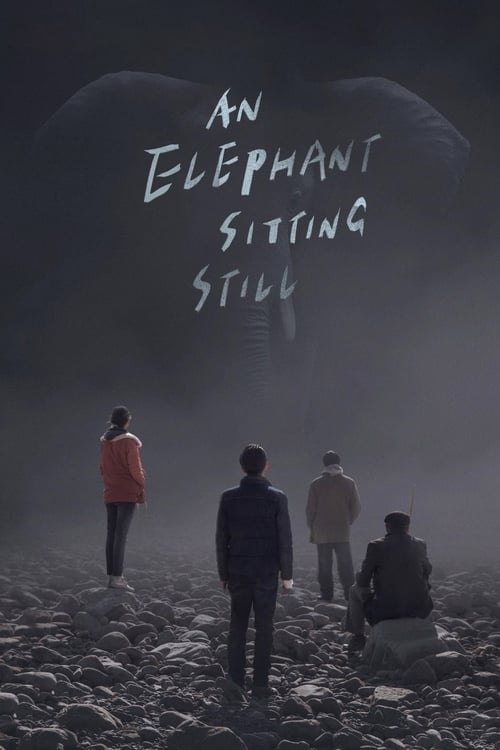
One gray dawn to one gray dusk in a decaying industrial city in northern China. A bullied schoolboy, a girl entangled with a teacher, a small-time hood, and an old man being pushed toward a nursing home all drift through the same bad day — and toward the same rumor: an elephant in far-off Manzhouli that just sits still and ignores the world.
The experience
Four hours that pass like one continuous held breath — long, prowling takes, a world out of focus behind each character's shoulder, bleakness that keeps flaring into unexpected tenderness. It's demanding and slow by design, and it earns every minute for viewers willing to sink into it.
The craft
Hu Bo shoots in long Steadicam takes that hold on the backs of heads while the world blurs behind them, threading four stories through a single day with novelistic patience. Shallow-focus gray-on-gray imagery this deliberate rewards a big screen and zero distractions.
Why it matters
Hu Bo's only feature — he died at twenty-nine before its premiere — it screened at the Berlinale as his testament, won the Golden Horse for best picture, and stands as one of the defining films of recent Chinese independent cinema.
One gray dawn to one gray dusk in a decaying industrial city in northern China: a bullied schoolboy, a girl entangled with a teacher, a small-time hood, and an old man being pushed toward a nursing home all drift toward the same rumor — an elephant in Manzhouli that sits still and ignores the world. Hu Bo, a novelist turned filmmaker, shot his only feature in long, prowling Steadicam takes that hold on the back of a character's head while the world blurs behind them, so that four hours pass as one continuous held breath. The bleakness is total, yet the film keeps flaring with tenderness — strangers offering each other small, useless kindnesses. Hu died by suicide at twenty-nine, before the premiere, after clashes with his producers over the cut; the film screened at the Berlinale as his testament and won the Golden Horse for best picture. It belongs with the great Chinese films of stalled lives, and its final minutes contain one of modern cinema's most piercing sounds, arriving out of darkness.
Reception
It premiered at the 2018 Berlinale just months after Hu Bo's death at 29, and was received from day one as a posthumous masterpiece — since then it's only climbed, becoming a fixture of best-of-the-2010s lists and the defining one-film filmography of its generation.
How An Elephant Sitting Still was received, from release to now →
Influences: the films it descends from and the films it influenced
- Sátántangó (1994) — Tarr personally mentored Hu Bo at a Beijing masterclass, and Elephant's punishing feature-length long takes and mud-gray provincial despair are lifted directly from Tarr's choreographed roving-camera grammar.
- The Turin Horse (2011) — The reduced monochromatic palette and slow gliding takes that hold on characters mired in stalled, repetitive lives are the Tarr method Hu Bo absorbed as his student.
- Elephant (2003) — Harris Savides' steadicam trailing students from behind through corridors — back-of-head framing across a multi-strand single day converging toward violence — is the exact device (and title motif) Hu Bo rebuilds.
- Elephant (1989) — Clarke originated the relentless steadicam-behind-the-walking-figure tracking that Van Sant and then Hu Bo inherited as their governing camera logic.
- Gerry (2002) — Unbroken steadicam follows of drifting figures, holding on the back of the head while the world blurs — the shallow-focus following aesthetic Fan Chao adopts for Hu Bo.
- Xiao Wu (1997) — Founded the Chinese independent grammar of trailing a drifting loner through a decaying provincial town in observational social realism — the template Hu Bo works within.
- A Touch of Sin (2013) — Its braided multi-strand structure of separate despairing lives across contemporary China's economic underside prefigures Elephant's interweaving four-character design.
- West of the Tracks (2002) — Marathon-length takes of rusting northeastern industrial decay establish the exact bleak rust-belt milieu and durational endurance Hu Bo channels.
- Vive L'Amour (1994) — Long, patient held takes on inarticulate young people paralyzed by urban alienation model the tenderness-amid-emptiness register Elephant sustains.
- The Passenger (1975) — Antonioni's roving, subject-detaching camera and studies of alienation with expressive shallow-focus isolation are the modernist root of Hu Bo's estranging framing.
- Kaili Blues (2015) — A contemporary of Hu Bo pushing the Chinese long-take toward extended roving mobile-camera passages through decaying small-town China.
- A Brighter Summer Day (1991) — Sustains the four-hour novelistic scope, low-key palette, and drifting long-take realism to trace youth despair against constricting social conditions.
- Dwelling in the Fuchun Mountains (2019) — Extends the same post-2018 Chinese independent long-take realism — patient tracking of ordinary family lives stalled in a changing provincial economy.
- Once Upon a Time in Anatolia (2011) — A multi-strand ensemble crawling across a single night in bleak provincial landscape, its long takes finding small human kindnesses inside institutional despair — the same tonal architecture.
- The Wild Goose Lake (2019) — Shares the bleak northern-China industrial-fringe setting and the tailing of desperate figures through grimy nocturnal spaces in shallow focus.
- Norte, the End of History (2013) — Contemporary slow-cinema durational endurance and moral bleakness, using extended real-time takes to trap characters inside stalled, hopeless lives.
- 4 Months, 3 Weeks and 2 Days (2007) — Compresses its social-realist dread into a single grim day of long unbroken takes, the same time-unity-plus-duration device Hu Bo builds his structure on.
Similar films
- The Turin Horse (2011) — influence & lineage
- Elephant (2003) — influence & lineage
- Satantango (1994) — influence & lineage
- Kaili Blues (2016) — same viewing thread
- So Long, My Son (2019) — same viewing thread
- Long Day's Journey Into Night (2018) — same viewing thread
- Flowers of Shanghai (1998) — same viewing thread
- The Time to Live and the Time to Die (1985) — same viewing thread
All the films related to An Elephant Sitting Still →
Watch it with: curated runs of related films
- Sinophone Slow Cinema — A run of Chinese-language films — Taiwan's New Wave and its mainland and Bi Gan heirs — where time pools and city, family, and memory recur; watch them near each other, from A Brighter Summer Day to An Elephant Sitting Still, for how they rhyme on drift and the weight of the past.