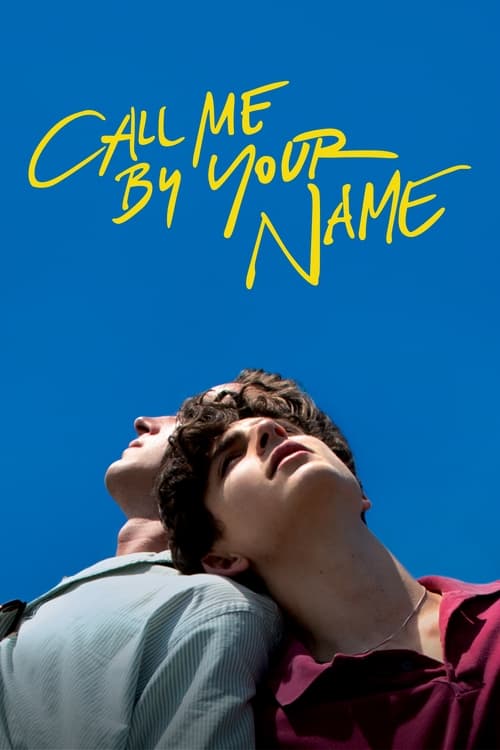
Call Me by Your Name
2017 · Luca Guadagnino
The horniest working prestige director, in the culture's affectionate phrasing: Challengers and Queer in a single year made him the center of every conversation about desire on screen, and his prolific pace (Bones and All, After the Hunt) is itself a talking point. Also permanently attached to the Call Me by Your Name/Armie Hammer asterisk.
When you need a good cry, or want to remember what first love felt like — a slow, sensual summer film for an unhurried evening, gentle in form but emotionally heavy-hitting.
What it's about
Northern Italy, summer 1983. Seventeen-year-old Elio is idling through the season at his family's villa — reading, swimming, transcribing music — when Oliver, a confident American graduate student, arrives to assist Elio's professor father. Over six weeks of meals, bike rides, and half-spoken conversations, attraction builds between them into a first love neither expected.
The experience
Languid, sun-drunk, and quietly overwhelming — it moves at the pace of a long vacation afternoon and then breaks your heart with almost nothing but a look. Expect to leave it tender.
Performances
Timothée Chalamet is astonishing — all coltish deflection until the mask slips — in the role that made him a star, and Michael Stuhlbarg's late monologue as Elio's father is one of the most quoted scenes of modern movie fatherhood.
The craft
Luca Guadagnino directs with a sensualist's patience, and Sayombhu Mukdeeprom's 35mm photography turns peaches, bicycles, and poolside light into a catalog of longing. James Ivory's screenplay, adapted from André Aciman's novel, won him an Oscar at 89 — the oldest competitive winner in the Academy's history. Sufjan Stevens's songs do a lot of the emotional lifting.
Why it matters
A defining art-house hit of the 2010s that launched Chalamet's career, capped Guadagnino's trilogy of desire, and reset expectations for how tender and unhurried a mainstream queer romance could be.
A seventeen-year-old and his father's visiting graduate student circle each other through one languid Lombardy summer in 1983 — reading, swimming, transcribing music, saying everything except the thing itself. Luca Guadagnino, capping what he called his Desire trilogy after I Am Love and A Bigger Splash, adapts André Aciman's novel with a sensualist's patience: Sayombhu Mukdeeprom's single-lens 35mm photography turns peaches, bicycles, and dripping swim trunks into a catalog of longing. The screenplay came from James Ivory, whose Maurice had mapped this territory three decades earlier; at 89 he became the oldest competitive Oscar winner in history. Timothée Chalamet's performance — all coltish deflection until the mask slips — made him a star, and Michael Stuhlbarg's late monologue as the father has entered the canon of great screen speeches about love and grief. The film sits in a lineage of European art cinema (Guadagnino openly invokes Rohmer and Bertolucci) while feeling wholly contemporary in its tenderness. It ends, famously, on a held close-up by a fireplace, Sufjan Stevens on the soundtrack — several unbroken minutes of a face learning what feeling costs.
A Deleuzian reading
A boy comes out of the water and the fabric of his trunks goes dark and heavy and clings to him, and the camera stays a beat past the point where it already has the information.
The full Deleuzian reading of Call Me by Your Name →
Reception
An instant critical darling out of Sundance 2017 — Best Picture nominee, ubiquitous on year-end lists — its afterlife got more complicated: the age-gap discourse intensified and the Armie Hammer scandal made a once-planned sequel quietly evaporate, yet it remains a fiercely beloved touchstone.
How Call Me by Your Name was received, from release to now →
Influences: the films it descends from and the films it influenced
- Death in Venice (1971) — Guadagnino inherits Visconti's slow, aestheticized desiring gaze upon youthful beauty — longing rendered as restraint and drenched in classical music rather than dialogue.
- Stealing Beauty (1996) — The template of a sun-soaked Italian villa summer where an outsider's sexual awakening unfolds among cultured expats, staged as a languid golden-hour idyll of skin and idleness.
- The Dreamers (2003) — Bertolucci's unguarded, tactile filming of young bodies and their casual erotic physicality — the sensual intimacy Guadagnino cites as direct influence.
- A Summer's Tale (1996) — Rohmer's real-time, talk-driven seaside coming-of-age rhythm — natural light, deferred desire, and moral hesitation dramatized through unhurried conversation rather than plot.
- Maurice (1987) — Ivory (CMBYN's screenwriter) had already built the gay period romance of literary adaptation and unspoken repression — the direct authorial DNA of the script.
- A Room with a View (1985) — Merchant-Ivory's Italian landscape as sensual liberator against Northern restraint, and the E.M. Forster-style adaptation of desire suppressed then loosed by place.
- Wild Reeds (1994) — Naturalistic adolescent queer awakening set in a hot provincial summer, treating teenage bodies and confusion with tender, non-judgmental sensuality.
- The 400 Blows (1959) — The held final shot of a young protagonist's face — Truffaut's freeze-frame ache — is the formal ancestor of CMBYN's sustained closing close-up of Elio by the fire.
- Brokeback Mountain (2005) — Queer love expressed as longing and restraint across a landscape, carried by withheld touch and glances more than declaration.
- The Talented Mr. Ripley (1999) — Extends the saturated northern-Italian summer light and queer longing rendered through gaze, surface and diegetic music—desire encoded in sensual texture rather than declaration.
- The Way He Looks (2014) — Stakes an entire romance on sensory tactility and the gesture of touch, resolving affirmingly rather than tragically — the fullest bloom of Ribeiro's low-conflict tenderness.
- Holding the Man (2015) — Carries forward the memoir-sourced first-love register in which sensuous period detail and needle-drops build to elegiac loss withheld for a final emotional rupture.
- Portrait of a Lady on Fire (2019) — Longing and restraint sustained through the held gaze, in period costume, resolving in a lingering final shot of a face overwhelmed by feeling — the CMBYN ending inverted for a woman.
- Aftersun (2022) — A languid holiday steeped in memory and elliptical restraint, mining unbearable longing from an idyllic vacation seen in retrospect, with emotion held just off-screen.
- Bones and All (2022) — Guadagnino's own tactile, sun-warmed coming-of-age intimacy—lingering skin, appetite as tenderness, Chalamet as object of longing—carried whole into the central romance.
- Young Hearts (2024) — Sun-drenched available-light cinematography and a languid summer temporality in which desire is told through glances, proximity and diegetic pop rather than declaration.
- Girls Like Girls (2026) — Provides the template of season-as-sensorium — summer heat, water, and sun-drenched landscape deployed as the erotic register that carries first-love feeling.
- Challengers (2024) — Guadagnino's own subjectivity-forward, sensuous treatment of desire as a disruptive bodily force, with Mukdeeprom's tactile camera — the authorial method Challengers carries into competitive sport.
- Trap (2024) — Showcases Sayombhu Mukdeeprom's warm, naturalistic, face-reading lensing—the art-house intimacy Shyamalan imported to make Hartnett's micro-expressions the suspense.
- Fireworks (2023) — The sun-drenched, tactile Italian-summer first-love idyll Fireworks deliberately answers, replacing Guadagnino's bourgeois safety with provincial danger while keeping the sensory bloom.
- Queer (2024) — The Mukdeeprom protocol Queer inherits verbatim: one 35mm camera, almost no coverage, handheld reframing inside the take, so asymmetrical desire is registered by where the lens chooses to linger — treated as elegy there, as pathology here.
- Tropical Malady (2004) — Cinematographer Sayombhu Mukdeeprom's signature here — languid natural light and humid, sensuous landscape texture — is the same eye he brought to CMBYN's single-lens 35mm look.
- I Am Love (2009) — Guadagnino's own Desire-trilogy method: fetishistic close-ups of food, fabric and sensual objects as displaced eroticism within an Italian bourgeois household.
- A Bigger Splash (2015) — The immediately preceding Desire film — Mediterranean sun, exposed bodies and charged domestic idleness rendered through tactile surfaces.
- Weekend (2011) — Naturalistic, near-real-time queer intimacy built from small gestures and restraint, letting tenderness accrue through everyday closeness rather than melodrama.
- God's Own Country (2017) — Rural queer romance where craft lives in tactile, physical labor and touch — reticence broken by hands, mud and skin rather than dialogue.
- Moonlight (2016) — Queer coming-of-age told through held, luminous close-ups of faces and a plaintive, string-forward score that carries emotion the characters cannot speak.
- Carol (2015) — Extends Carol's model of prestige queer period romance carried by sensuous textured surfaces and performances built on what is left unsaid, desire registered in glances and withheld gestures.
- After the Hunt (2025) — Within Guadagnino's own corpus, sets the professorial-intellectual interior and the recurring-company method — Michael Stuhlbarg as the humane academic presence carried forward here.
- Beautiful Boy (2018) — Establishes Chalamet's unguarded, physically loose performance register and the sun-warmed observational close-ups van Groeningen carries directly over.
- And Then We Danced (2019) — Builds a queer awakening on sun-warmed tactile physicality and a physical, unstarry lead performance, letting bodies and touch rather than dialogue narrate desire.
- Your Name Engraved Herein (2020) — Shares the tactile, half-lit rendering of youthful bodies and the title-as-talisman conceit — the beloved's name as the film's central love-token — plus the ache of belated, retrospective recognition.
- Luca (2021) — Sun-drenched northern-Italian summer coming-of-age whose warm high-key light and queer-allegory reading Luca closely parallels.
Similar films
- Portrait of a Lady on Fire (2019) — influence & lineage · often watched together
- Moonlight (2016) — influence & lineage
- Death in Venice (1971) — influence & lineage
- Maurice (1987) — influence & lineage
- Fireworks (2023) — same viewing thread
- Cinema Paradiso (1988) — same viewing thread
- The Hand of God (2021) — same viewing thread
- The Great Beauty (2013) — same viewing thread
All the films related to Call Me by Your Name →
Watch it with: curated runs of related films
- The Past Is a Foreign Country — A run of films that reach back through memory — lost summers, vanished friends, the golden light of a place you can never return to — best watched in a row when you're in the mood to ache a little.