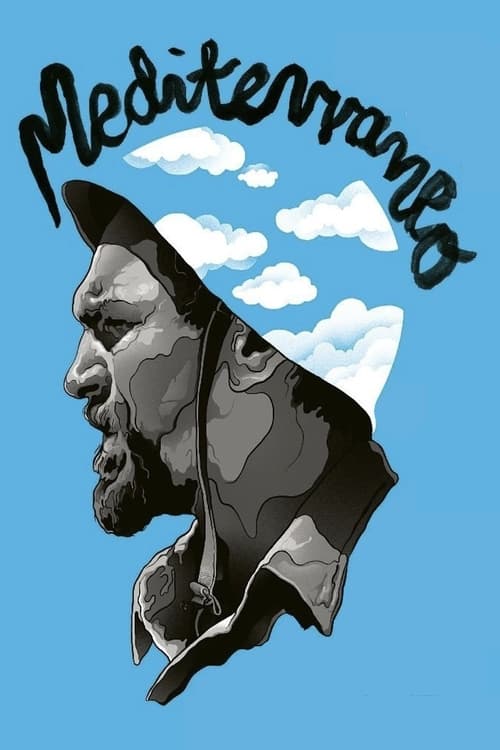
Mediterraneo
1991 · Gabriele Salvatores
For when you want to escape somewhere sunlit and unhurried — a feel-good film with a bittersweet finish, perfect for a low-stakes evening that still leaves you something to feel.
What it's about
June 1941: eight Italian soldiers are put ashore on a tiny Greek island to watch for enemy ships and hold the position. The island seems deserted, the war never shows up, and when their ship is sunk and their radio dies, the garrison is simply forgotten — left to be slowly dissolved by sunshine, wine, olive groves, and the villagers who eventually emerge from hiding. Discipline gives way to painting, football, love affairs, and the dawning question of whether anyone actually wants to be found.
The experience
Warm, loose, and gently funny — a hangout film in uniform, drifting from episode to episode like a long afternoon. Under the comedy runs a melancholy about wasted years and roads not taken that gives the ending its quiet sting.
The craft
The Aegean setting does half the work — whitewashed villages, blinding light, a sea you can practically feel — and the film wisely lets the war-picture machinery of orders and watches fall away piece by piece rather than in one dramatic turn. Its episodic, unhurried structure is the point: time on the island stops, and the film's rhythm makes you feel it.
Why it matters
Winner of the Academy Award for Best Foreign Language Film, it became the international face of a strain of Italian cinema about escape, idyll, and the little man adrift in history.
Snapshot
A platoon of eight Italian soldiers is put ashore on a small Aegean island in June 1941 to watch for enemy shipping. The island appears deserted; the war never arrives; their ship is sunk and their radio destroyed; and the garrison spends three years being slowly dissolved by sunlight, wine, olive trees, and the villagers who eventually come out of hiding. Then the British turn up to explain that Italy surrendered some time ago and nobody thought to tell them.
Mediterraneo is a war film organized entirely around the absence of war — a pastoral comedy that uses the machinery of the combat picture (orders, watches, uniforms, a chain of command) as a set of props to be gradually abandoned. It runs a little over ninety minutes, moves in loose episodes rather than acts, and closes with a coda decades later that reframes the whole idyll as an elegy for a generation that wanted to change its country and didn't. The final title card dedicates the film to everyone who is running away.
It won the Academy Award for Best Foreign Language Film at the ceremony in March 1992, defeating Zhang Yimou's Raise the Red Lantern — an outcome still cited as a signal case of Academy taste favoring warmth over rigor. It was the third and best-known entry in Gabriele Salvatores' informal trilogia della fuga (trilogy of escape), after Marrakech Express (1989) and Turné (1990), and the film that turned a Milanese theater director and a company of cabaret comedians into an internationally legible Italian brand.
Industry & production
The film was made inside the particular ecology of late-1980s Italian cinema: a domestic industry that had lost most of its theatrical audience to television, and whose financing had reorganized around broadcasters and a small number of consolidating production groups. Mediterraneo was produced through Gianni Minervini's A.M.A. Film in partnership with Penta Film, the Cecchi Gori–Berlusconi venture that dominated Italian production and distribution in this period. That structure mattered aesthetically as much as financially: Penta-era Italian films were built for a mixed theatrical/television life, at modest budgets, with running times and tonal registers calibrated to a broad domestic audience.
Shooting took place on Kastellorizo (Megisti), the easternmost inhabited Greek island, close to the Turkish coast — a location choice that is also a quiet historical irony, since Kastellorizo was in fact under Italian sovereignty from 1912 to 1947 as part of the Italian Dodecanese, rather than being an occupied Greek island of the kind the film depicts. The production worked with a small unit on a remote island with limited infrastructure, which is legible in the finished film's economy: few setups requiring heavy equipment, extensive use of existing village architecture, and a cast small enough to inhabit the location rather than dress it.
North American rights were acquired by Miramax, then in the early phase of the foreign-language awards campaigning that would later carry Il Postino and Life Is Beautiful. The Oscar win is the concrete, load-bearing fact of the film's commercial history; beyond it, granular production data — budget, precise domestic grosses, schedule length — is not reliably documented in accessible English-language sources, and this dossier declines to supply numbers it cannot stand behind.
Technology
Nothing in Mediterraneo is technologically ambitious, and that is a deliberate posture rather than a limitation. It was shot on 35mm color negative in a standard widescreen ratio, with an emphasis on daylight exteriors and practical interiors. There are no optical setpieces, no miniature work of consequence, no process photography carrying dramatic weight; the largest practical element is a seaplane, and even that is staged as an event within the landscape rather than as a spectacle.
The one technological fact worth foregrounding is a national one: Italian production practice through this period remained committed to post-synchronized dialogue. Sound was routinely rebuilt in post rather than captured usably on set, a legacy of the industry's dubbing infrastructure and of shooting conditions — wind, sea, generators, mixed-language crews — that made location tracks impractical. The consequence for Mediterraneo is a soundtrack whose voices sit in a slightly forward, acoustically neutral plane, cleaner and closer than the wide sunlit spaces they supposedly occupy. Viewers trained on Anglo-American location sound often read this as a softness or unreality in the film's texture. It is more accurately a house style, and in this case it happens to serve the material: the island sounds like a memory rather than a place.
Technique
Cinematography
Italo Petriccione, Salvatores' regular cinematographer across this period and well beyond it, photographs the island as a continuous field of light rather than a series of dramatic spaces. The palette is built from whitewash, ochre, terracotta, and a very saturated sea-blue; the dominant strategy is to let Aegean daylight do the modeling, with fill used to keep faces readable rather than to sculpt them. Compositions favor the wide and the horizontal — figures placed small against water, harbor, hillside — and the camera is markedly patient, holding on landscape after the actors have finished with it.
The film's key visual argument is one of scale reversal. The opening movement uses the vocabulary of the war picture: a ship, a landing, men in formation, binoculars scanning an empty horizon. As the garrison disintegrates, the framing loosens, uniforms leave the frame, and bodies begin to occupy the landscape rather than patrol it. The horizon, initially a line to be surveilled for enemies, becomes simply the edge of a world. Petriccione's lighting warms perceptibly across the middle section, and the late sequences take on a golden, slightly overexposed quality that reads as remembered rather than observed.
Editing
The picture was cut by Nino Baragli, one of the great figures of postwar Italian editing — the editor of much of Pasolini's filmography and of Leone's Once Upon a Time in America. His presence on a young director's small comedy is the most interesting technical fact about the production, and its effect is visible in the film's refusal to over-articulate. Mediterraneo is edited to permit drift: scenes are allowed to end a beat after their point is made, elisions cover months without announcing themselves, and the passage of three years is achieved largely through accumulation and small changes in appearance rather than through montage or titling.
The cutting is also unusually generous to ensemble comedy. Gags are frequently played in wider, longer takes that let several performers work simultaneously, rather than being built in the shot/reverse rhythm that comedy editing usually defaults to. The one place the editing turns sharp is the ending: the arrival of the outside world and the leap to the epilogue are executed with a bluntness that the preceding hour has not prepared, and the tonal whiplash is the point.
Mise-en-scène / staging
Salvatores came out of theater, and it shows in how he arranges bodies. Groupings are ensemble-first: the eight soldiers are staged as a shifting collective, with individuals detaching for a scene and reabsorbing. The village square, the church, the taverna, and the harbor function as fixed stages that the film returns to, so that the island accumulates a topography the audience learns.
Two staging motifs organize the film's meaning. The first is the football match between soldiers and villagers, which converts the occupation into play and rewrites the relation between armed men and civilians as a game with agreed rules. The second is the church: the lieutenant, an amateur painter, undertakes the restoration of the damaged frescoes and paints the faces of his own men into the sacred images. This is the film's central conceit made literal — the soldiers do not conquer the island, they are absorbed into its iconography. It is also, read less charitably, an image of a national self-portrait being retouched.
Sound
Beyond the post-synchronized dialogue discussed above, the film's sound design is dominated by its score, composed by Giancarlo Bigazzi — a major figure in Italian popular songwriting — with Marco Falagiani. The music is melodic, unashamedly lyrical, and deployed heavily; it functions less as underscore than as the film's emotional weather system, cueing the shift from military comedy to pastoral reverie and finally to elegy. Its idiom is contemporary pop-orchestral rather than period-authentic, which places the film's sympathies firmly in the present tense of 1991 rather than in 1941.
Against this, the diegetic soundscape is deliberately thin: sea, wind, goats, bells, a gramophone, Greek voices the soldiers do not understand. The comedy of untranslatability — Italian and Greek speakers negotiating without a common language — is one of the film's most reliable and most humane devices, and it depends on the soundtrack keeping the Greek untranslated.
Performance
The ensemble is drawn substantially from the Milanese cabaret and theater scene, and the performance style is correspondingly collective and improvisational in feel. Diego Abatantuono, as the blustering Sergeant Lorusso, is the film's engine and its most significant piece of casting: Abatantuono had made his name in the early 1980s playing a broad regional caricature in low comedies, and his subsequent reinvention — through Pupi Avati and then through Salvatores — into an actor of melancholy and restraint is one of the notable career arcs of Italian cinema in this period. Lorusso's authoritarian bluster is played as a costume, and the film's most affecting work is watching it come off.
Claudio Bigagli's lieutenant supplies the film's contemplative register, Giuseppe Cederna's private its romantic yearning, and Claudio Bisio, Gigio Alberti, Ugo Conti and the pair playing the shepherd brothers fill out a group that is characterized economically, almost in the manner of a commedia dell'arte troupe. Vanna Barba, as the island's one professional woman, is given the film's most difficult position — a figure of warmth and availability who is written more as a Mediterranean principle than a person, and whose treatment is one of the fairer grounds on which the film has been criticized.
Narrative & dramatic mode
The film's dramatic mode is the anti-plot. Its structure is: arrival with a mission → loss of contact → dissolution of the mission → an extended, essentially plotless idyll → interruption by the outside world → coda. There is no antagonist, no combat, and no goal that anyone is pursuing by the midpoint. Suspense is replaced by suspension.
This is a genuine formal risk, and the film manages it by substituting an episodic, picaresque rhythm for causal narrative: small self-contained incidents — a stolen mule, a desertion, a love affair, a fresco, a football match — that advance nothing but deepen the world. The mode is comic but not farcical; the jokes emerge from character and from linguistic and cultural mismatch rather than from constructed set-pieces.
The ending performs a deliberate genre betrayal. The idyll is punctured not by tragedy but by information, and the epilogue — men reunited on the same island decades later, one of them delivering a bitter verdict on what their generation actually accomplished back home — retroactively converts the whole film from comedy into lament. The three years on the island stop being a holiday and become the only period of these lives that was worth anything.
Genre & cycle
Mediterraneo sits in the long tradition of the Italian war comedy, whose canonical works are Mario Monicelli's La grande guerra (1959) and Luigi Comencini's Tutti a casa (1960) — films that treat the ordinary Italian soldier as a decent, unheroic, put-upon man betrayed by his state. Monicelli's L'armata Brancaleone (1966) supplies the picaresque-troupe template; the broader commedia all'italiana supplies the technique of using laughter to approach national shame at an angle.
Internationally, its nearest relatives are the anti-war pastoral fables of the 1960s — Philippe de Broca's Le Roi de cœur (1966) above all, with its soldiers finding sanity outside the war — and the comedy of outsiders seduced by a remote community, of which Bill Forsyth's Local Hero (1983) is the cleanest modern instance. These are affinities rather than documented sources; the film's own acknowledged point of departure is Renzo Biasion's Sagapò (1953), a collection of stories drawn from the experience of Italian soldiers in occupied Greece, from which the film takes atmosphere and situation far more than incident.
Within Italian production of its moment, Mediterraneo belongs to what domestic critics tartly labeled cinema carino — "nice cinema" — the well-mannered, modestly scaled, emotionally accessible films made by a generation of younger directors in the late 1980s. It also belongs to a specific export cycle: the run of warm, humanist, past-tense Italian films that found an anglophone audience between Cinema Paradiso (1989) and Life Is Beautiful (1997).
Authorship & method
Salvatores came to film from theater, having co-founded Milan's Teatro dell'Elfo in the early 1970s — a company at the center of Italian experimental performance — and having directed there for a decade before the first feature, a rock-inflected A Midsummer Night's Dream (1983) derived from a stage production. The method that carries over is company-based: a repertory of actors and technicians reused across films, extended location shoots treated as residencies, and a directorial preference for atmosphere and ensemble over authored visual signature.
The core collaborators are stable and identifiable. Screenwriter Enzo Monteleone supplies the film's structure and its politics; Monteleone would later direct El Alamein – La linea del fuoco (2002), a bleak, unsentimental account of Italian soldiers in North Africa that functions almost as a corrective to Mediterraneo's warmth — a useful indication that the softness here was a choice rather than a limit. Cinematographer Italo Petriccione is Salvatores' most durable partner, shooting across the escape trilogy and onward through Nirvana (1997) and Io non ho paura (2003). Editor Nino Baragli brings the authority of postwar Italian practice. Composers Giancarlo Bigazzi and Marco Falagiani provide the film's emotional signature and its most exportable element.
Thematically, Salvatores' authorship in this period is entirely consistent: Marrakech Express, Turné, Mediterraneo, and Puerto Escondido (1992) are all about Italians leaving Italy, and all treat departure as the last available form of political expression for a generation that came of age around 1968 and found the country unchanged. Mediterraneo simply displaces that generation backward into 1941, where the escape can be made literal.
Movement / national cinema
The film is a document of Italian cinema at a low ebb and in partial recovery. Neorealism's inheritance had passed to television and to a handful of political filmmakers; the great genre industries had collapsed; theatrical attendance had fallen catastrophically. What emerged in the late 1980s was a cinema of comedians and theater people — Roberto Benigni, Massimo Troisi, Carlo Verdone, Maurizio Nichetti, and the Milanese cabaret circuit that produced much of Mediterraneo's cast — making comparatively small films with strong personalities at their center.
Salvatores represents the northern, theater-trained wing of that formation, and Mediterraneo represents its most successful export. Against it stands the period's counter-current: Nanni Moretti's self-interrogating first-person cinema and Gianni Amelio's austere social realism (Il ladro di bambini, 1992; Lamerica, 1994), which addressed contemporary Italy directly where Mediterraneo addressed it through a fable set fifty years earlier. Reading the two tendencies together is the most productive way to place the film nationally.
Era / period
The film's dating is doubly significant. Its diegetic period — 1941 to 1943, ending with the September 1943 armistice and the collapse of the Italian war effort — is the founding trauma of modern Italian national identity: the moment the state dissolved and its soldiers were abandoned, disarmed, or massacred by their former allies.
Its production period is equally charged. Mediterraneo appeared in 1991, months before the Mani Pulite corruption investigations began dismantling the parties of the First Republic, amid the rise of the Northern League and in the same year that large-scale Albanian arrivals on the Adriatic coast made migration a central Italian political question. The film offers a Mediterranean of hospitality, fluid borders, and mutual absorption at precisely the moment when the actual Mediterranean was becoming the frontier of Italian anxiety. Whether that is prescient generosity or convenient fantasy is the interpretive question the film keeps generating.
Themes
Escape as politics. The dedication to those who are running away is not ironic. The film argues, through its epilogue, that flight was the only honest response available to a generation whose attempt to change Italy failed — and it knows that this is a defeated argument.
The unmaking of military masculinity. Uniforms, ranks, and orders are systematically stripped away. What remains is not weakness but a different competence: farming, painting, cooking, loving, playing. The film treats the dissolution of the soldier as a liberation rather than a degradation, which is its sharpest departure from war-film convention.
Arcadia and suspended time. Three years pass with almost no dramatization of duration. The island is explicitly outside history, and the intrusion of news — of the armistice, of the war's end — is what destroys it.
Restoration and self-portraiture. The fresco sequence carries the film's most sophisticated idea: the painting of Italian faces into a Greek sacred image is simultaneously an act of reverence, of appropriation, and of national self-flattery.
The "italiani brava gente" question. The film's Italians are gentle, sensual, incompetent at war, and welcomed by the occupied. This maps directly onto the postwar Italian self-narrative of the "good Italian" opposed to the "bad German" — a narrative that historians including Angelo Del Boca and Filippo Focardi have documented as a durable and self-exculpatory construction. The historical record of the Italian occupation of Greece includes participation in the catastrophic Athens famine of 1941–42 and reprisal massacres of civilians. Mediterraneo does not deny these things; it simply sets its story where they are not, which is a defensible fictional choice and also a highly convenient one.
Reception, canon & influence
Critical reception. The film was a substantial domestic success and figured prominently in the Italian awards season before the Oscar; the specific tallies vary by source and are not restated here. Internationally, reception divided along a predictable line. Sympathetic critics praised its warmth, its ensemble, its light comic touch, and its refusal of war-film bombast. Skeptical critics found it slight, sentimental, and evasive — a pretty film about an ugly occupation — and the Academy's decision to prefer it over Raise the Red Lantern hardened that view, so that Mediterraneo has since served in film-culture argument as shorthand for a certain kind of pleasant, unthreatening foreign-language winner. In Italian scholarship its standing is more specific: it is frequently analyzed as a textbook instance of the italiani brava gente myth rendered in popular form, which is a more interesting position than either the praise or the dismissal.
Influences on the film (backward). The commedia all'italiana war films of Monicelli and Comencini; the anti-war pastoral fable in the mode of Le Roi de cœur; Renzo Biasion's Sagapò as source atmosphere; the ensemble and improvisational habits of Italian experimental theater and Milanese cabaret; and the neorealist inheritance of shooting on real locations with a small unit, here repurposed for lyricism rather than social diagnosis.
Legacy (forward). Four strands are traceable. First, the Miramax model: Mediterraneo was an early proof that a modest European film with a strong emotional hook could be campaigned to a foreign-language Oscar, a template applied with escalating force through the 1990s. Second, the commercial legibility of the "Italians in the Greek islands" register for anglophone audiences, which the eventual adaptation of Captain Corelli's Mandolin (2001) inherited — though the novel's own genesis is independent, and no direct line should be asserted. Third, Salvatores' own career: the film gave him the freedom to move into genre (Nirvana, 1997) and adaptation (Io non ho paura, 2003), while the escape trilogy became a fixed reference point in accounts of post-1968 Italian sensibility. Fourth, and unusually literal, the film transformed Kastellorizo's fortunes: a depopulated island became a destination, and the film is credited locally with reviving its tourism — a legacy in which a fantasy of an untouched Mediterranean produced, in the world, exactly the traffic that would end it.
Reception
It won the 1992 Best Foreign Language Film Oscar and was a warm-hearted crowd-pleaser at the time; today it's most often remembered — a little unfairly — as 'the film that beat Raise the Red Lantern,' a perennial entry in Oscar-injustice retrospectives, even as it remains a beloved comfort classic in Italy.
How Mediterraneo was received, from release to now →
How to watch Mediterraneo: what to notice on a first viewing
- Notice the camera linger on the island after actors leave. Petriccione holds wide, horizontal shots of water, harbor, and hillside a beat longer than the scene needs, letting landscape outlast the people in it. The island starts to feel like the real subject, not just a backdrop.
- Watch how loose the soldiers' formations get over time. The opening plays like a war picture, a landing, men in formation, binoculars on the horizon, but the staging gradually loosens as uniforms start leaving the frame. The military machinery is being quietly dismantled in front of you.
- Listen for scenes where nobody shares a common language. The soundtrack leaves the villagers' Greek untranslated, so the comedy comes from Italian and Greek speakers negotiating meaning without subtitles helping either side. You are left guessing along with the soldiers, not given an answer they don't have.
- Watch the soldiers and villagers play a football match. The match turns armed occupation into a game with agreed rules, staged as ensemble comedy rather than as a scene about power. Play does the work that conquest usually does in a war picture.
- Watch Sergeant Lorusso's authority slip a little more each day. Diego Abatantuono plays Lorusso's bluster like a costume he is gradually shedding, scene by scene, rather than a fixed character trait. Watching the authority come off is the film's most affecting piece of acting.
The whole guide to watching Mediterraneo, with the keys for a rewatch →
Influences: the films it descends from and the films it influenced
- Paisà (1946) — Rossellini leaves the Americans' English and the Italians' dialect mutually untranslated so that incomprehension itself becomes the scene's content — the exact device behind Mediterraneo's unsubtitled Greek, and shot the same way, tiny unit on real locations.
- La grande guerra (1959) — Established the war film built from a squad of regional comic types, each with his own dialect and his own species of cowardice, so the front plays in the register of commedia all'italiana rather than heroic action — the structural grammar of Salvatores' platoon.
- Tutti a casa (1960) — The post-8-September-1943 disbandment plot — soldiers whose army evaporates around them and who must improvise a life with no orders arriving — is the same historical hinge and episodic picaresque structure Salvatores strands his garrison inside.
- Il sorpasso (1962) — Risi's sun-struck holiday-time anti-plot, in which scenes accumulate as digressions rather than causal steps and consequence arrives only at the cut-off, is the license for Mediterraneo's refusal of incident across its entire middle.
- Il Vangelo secondo Matteo (1964) — Cut by Nino Baragli, and built on Pasolini's habit of composing faces and groups as frontal quattrocento fresco panels — the painterly staging Mediterraneo literalizes when its soldier restores the church fresco and the film begins arranging the platoon inside its own tableaux.
- Zorba the Greek (1964) — Fixed the export grammar of the Greek island picture — whitewashed village geometry, wide horizontal takes of bare land meeting sea in available daylight, local non-professionals ranged around the visiting foreigner.
- Le Roi de cœur (1966) — The anti-war pastoral fable in which soldiers are abandoned in a place the war has forgotten and the suspension itself becomes a comic utopia — Mediterraneo's premise with the madhouse swapped for an island.
- Il buono, il brutto e il cattivo (1966) — Baragli's willingness to hold a wide composition far past the comic or tense beat, then cut on an unannounced ellipsis rather than a transition, is the editorial signature he carries into Mediterraneo's long-take gags and its silently elapsed years.
- Escape to Victory (1981) — Builds an entire film out of the football match as suspended hostility between captors and captives — the set-piece Salvatores compresses into the single Italians-versus-islanders game that ratifies the truce.
- Marrakech Express (1989) — First assembly of the working unit — Abatantuono's reformed-macchietta persona, Petriccione's available-light exteriors, and the Teatro dell'Elfo company handled as a repertory on an extended location residency.
- Turné (1990) — Transfers the theater company's rehearsal-room method straight to camera: long takes on actors improvising within continuous blocking, dialogue post-synchronized afterward — the performance technique Mediterraneo scales from two actors to a platoon.
- Puerto Escondido (1992) — Closes the escape trilogy with the same crew and the same shape — Italian abroad, plot dissolved into a warm elsewhere, Petriccione deliberately overexposing so the location reads as remembered rather than observed.
- La vita è bella (1997) — Applies at full force the commedia all'italiana move Mediterraneo proved exportable — a stand-up comic's established persona used as the lens through which wartime atrocity is metabolized, with a lyrical score cueing tenderness over horror.
- Captain Corelli's Mandolin (2001) — Inherits the commercial legibility Mediterraneo created for the Italian-occupier-in-the-Greek-islands picture, down to the golden-hour landscape coverage and the music-making-as-fraternization set-piece.
- El Alamein – La linea del fuoco (2002) — Written and directed by Mediterraneo's own screenwriter as its deliberate corrective: same abandoned-Italian-soldiers premise and ensemble-of-types casting, with the warm palette and the comic ellipsis stripped out for desert attrition played in real time.
- Io non ho paura (2003) — Petriccione pushes the wide horizontal landscape framing and the warm memory look to its limit in the wheat fields, letting available daylight blow the highlights so the image itself reads as recollection rather than record.
- Joyeux Noël (2005) — Takes the football-match-as-truce staging as its structural centerpiece and keeps the multilingual soundtrack in which stretches of untranslated speech make mutual incomprehension the dramatic material.
- Il postino (1994) — Another small unit shooting a southern island in flat noon daylight with wide static framings, converting a comedian's late performance into pathos, and carried to the Academy on the identical Miramax campaign playbook.
Similar films
- The Postman (1994) — influence & lineage
- Paisan (1946) — influence & lineage
- The Great War (1959) — influence & lineage
- Life Is Beautiful (1997) — influence & lineage
- Cinema Paradiso (1988) — shared sensibility
- Le Havre (2011) — shared sensibility
- Two Women (1960) — shared sensibility
- Tangerines (2013) — shared sensibility