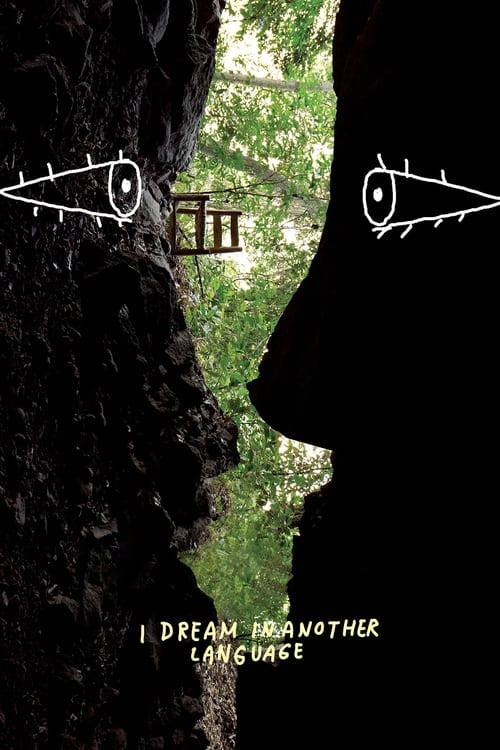
I Dream in Another Language
2017 · Ernesto Contreras
For a reflective night when you want something beautiful and bittersweet — a film about love, memory, and things left unsaid. Comfort viewing with an ache in it; good for when you want to feel something without being put through the wringer.
What it's about
Deep in the Veracruz rainforest, an indigenous language called Zikril is about to die: its last two fluent speakers are old men who quarreled fifty years ago and haven't spoken since. Martín, a young linguist, arrives to record the language before it vanishes — which means he first has to reconcile Evaristo and Isauro, and untangle what really drove them apart. The feud, it turns out, guards something far more tender than a grudge.
The experience
Gentle, lush, and quietly enchanted — the jungle hums, the past keeps surfacing, and the film's touch of magic feels less like fantasy than like grief given a shape. It's tender rather than tense, and it leaves a lump in your throat.
The craft
Contreras shoots the rainforest as a living presence, humid and green, and the sound design treats language itself — the click and music of invented Zikril — as the film's most precious object. The screenplay, by the director's brother Carlos Contreras, braids past and present with a light, sure hand. It's a film of textures and voices that rewards attentive, quiet viewing.
Why it matters
It won the Audience Award in the World Cinema Dramatic Competition at Sundance 2017 and became one of the decade's most beloved Mexican exports — a film that made language extinction, of all things, into a love story people carry with them.
Snapshot
I Dream in Another Language (Sueño en otro idioma) is a Mexican feature that dresses a linguistic-salvage premise in the robes of magical realism and, beneath both, tells a story of buried queer love. A young linguist, Martín, travels into the rainforest of Veracruz to record Zikril, an indigenous tongue whose last two fluent speakers — Evaristo and Isauro — have not exchanged a word in half a century. The rift that Martín takes for a petty grudge turns out to be the wound of a love the men could not name in their youth; the recovery of the language and the recovery of that love become the same act. Directed by Ernesto Contreras from a screenplay by his brother Carlos Contreras, the film premiered in the World Cinema Dramatic Competition at the 2017 Sundance Film Festival, where it won the Audience Award, and went on to dominate Mexico's 60th Ariel Awards. It is a modestly scaled art film with an unusually clean conceptual hook — the death of a language rendered literal in the silence between two men — and it belongs to a lineage of Latin American cinema that treats the natural world as porous to the dead.
Industry & production
The film sits squarely within Mexico's institutionally supported auteur cinema of the 2010s — the ecosystem funded in part through IMCINE and mechanisms such as the FIDECINE/EFICINE tax-incentive structures, which have underwritten much of the country's festival-oriented output since the early 2000s. Precise budget figures are not part of the reliable public record and should not be guessed at; what is clear is that this is a mid-budget independent production rather than a studio picture, built around location work in the Veracruz jungle and a small ensemble. Production was led by producer Mónica Lozano — a major figure in Mexican independent film — alongside a team including Luis Albores, Érika Ávila, Eamon O'Farrill, and international co-producing partners (the credited producers include Dutch-side names such as Raymond Van Der Kaaij and Dijana Olcay-Hot, indicating a co-production arrangement typical of the festival circuit). Distribution in Mexico was handled by Gussi Cinema.
The Sundance selection is the pivotal industrial fact: for a Spanish-language film with substantial dialogue in an invented indigenous tongue, the World Cinema Dramatic slot and the subsequent Audience Award supplied the international visibility that such films depend on, seeding festival bookings (including LGBTQ-focused festivals such as Frameline, which recognized the film's queer core) and arthouse release. Domestically, the six Ariel Awards — including Best Picture — consolidated its standing within the national industry.
Technology
The granular technical specifications of the production — camera systems, lenses, capture format — are not well documented in authoritative sources, and I will not invent them. What can be stated responsibly is that the film is a product of the digital-cinema era of the mid-2010s, when even remote-location Mexican independents shot on professional digital sensors that made extended work in low-light jungle interiors and available-light exteriors practical. The film's ambitions are not technological in the sense of spectacle; its "technology" is closer to craft infrastructure — the ability to record long, quiet, naturally lit scenes in a humid rainforest and to build a convincing sound world (birdcall, water, wind, the invented language) in post. The most conceptually interesting piece of "engineering" in the project is not a device but the construction of Zikril itself.
Technique
Cinematography
Tonatiuh Martínez's photography — honored with the Ariel for Best Cinematography — is the film's most immediately praised craft element. The camera treats the Veracruz rainforest as a saturated, enveloping green space, using the density of foliage and the diffusion of jungle light to make the landscape feel both lush and faintly otherworldly, a place where the boundary between the living and the dead is thin. The visual approach favors composition that situates small human figures within large natural frames, reinforcing the theme of a culture and a language being reabsorbed by the forest. Interiors — the villagers' homes, the spaces where Martín sets up his recording equipment — are rendered with a naturalistic warmth that contrasts with the cooler, more mysterious register of the exterior "threshold" spaces where the film's magical-realist logic surfaces.
Editing
Jorge Macaya's cutting shapes a film that moves between three temporal and tonal layers: the present-day salvage mission, the flashbacks to the young Evaristo and Isauro, and the mythic/fantastical passages. The editing's task is to let the past bleed into the present so that the old men's estrangement gradually reveals its true cause without heavy exposition — a structure that withholds the romantic key until it can land with full weight. The pacing is deliberate and contemplative, in keeping with the film's elegiac subject.
Mise-en-scène / staging
The staging is organized around thresholds and refusals of contact. The central dramatic image is two men who will not occupy the same space or direction of speech; much of the film's blocking concerns the difficulty and eventual possibility of bringing them into a shared frame. The rainforest village, with its modest dwellings and the encroaching jungle, functions as a lived, specific environment rather than a picturesque backdrop, grounding the fantastical elements in tactile ordinariness.
Sound
Sound is central enough that the film won the Ariel for Best Sound. The design carries the dense ambience of the rainforest and, crucially, the sonic texture of Zikril — a language the audience hears at length without always being given subtitles. Contreras has spoken (in interviews around the Sundance premiere) about deliberately withholding captions for much of the Zikril dialogue, reserving translation for select moments, so that the sound of the language becomes an experience in itself rather than a transparent conveyor of information. This makes the film's sound work inseparable from its theme: what is being lost is precisely a set of sounds.
Performance
The performances anchor the film's emotional credibility, especially the two veteran actors playing the estranged elders — José Manuel Poncelis as Isauro and Eligio Meléndez as Evaristo — who had to carry decades of unspoken feeling and to deliver dialogue in a language constructed from scratch. The production's decision to drill the actors toward fluency in Zikril places an unusual demand on performance: they perform not merely emotion but the embodied authority of native speakers of a tongue that does not exist. Fernando Álvarez Rebeil provides the audience's point of entry as Martín, and Fátima Molina as Lluvia supplies a contemporary romantic and ethical counterweight in the village. The film's acting was recognized at the Ariels with a Best Actor win for one of its leads.
Narrative & dramatic mode
The screenplay operates as a mystery of motive wearing the costume of a rescue mission. The surface engine — can Martín get the two speakers to talk so the language can be recorded? — is a MacGuffin whose real content is emotional excavation. The dramatic mode is elegiac and gradually revelatory: the film advances by peeling back the ostensible reason for the men's silence (a woman, jealousy, a masculine grudge) to expose the actual reason (their love for each other, unspeakable in their time and place). This is a recognition plot in the classical sense — the withheld truth reorganizes everything the audience thought it understood. Layered over the realist drama is a magical-realist register that becomes explicit toward the end, when death does not close the possibility of reunion but relocates it to a mythic threshold where the language of the dead can still be spoken. The film thus binds three ideas into one figure: a dying language, a repressed love, and communion with the dead all become the same untranslatable speech.
Genre & cycle
Nominally tagged Fantasy and Drama (and, accurately, Romance), the film is best understood as magical-realist drama with a strong LGBTQ thematic spine. It participates in at least two cycles at once. The first is the international "endangered/last-speaker" narrative — stories organized around linguistic or cultural extinction — which the film approaches through invention rather than documentary. The second is the 2010s wave of Latin American queer cinema that treats same-sex desire historically and rurally rather than in a metropolitan, contemporary key, excavating loves that an earlier generation could not live openly. Its magical-realist mechanics also place it in dialogue with a long-standing Latin American literary and cinematic tradition in which the dead remain conversational presences.
Authorship & method
The film is a fraternal authorship: Ernesto Contreras directing a script by Carlos Contreras, a collaboration the brothers had established on Ernesto's debut feature Párpados azules (Blue Eyelids, 2007), which likewise premiered at Sundance. Contreras's method here centers on a bold conceit executed with restraint — rather than dramatize linguistic death abstractly, he commissioned the creation of an entire fictional language, Zikril, reportedly building a new vocabulary and phonology with linguistic help and then coaching the actors toward fluency. This is the film's signature authorial gesture, and it is an ethically pointed one: by inventing a language rather than appropriating and endangering a real one, Contreras dramatizes the stakes of linguistic extinction while sidestepping the extractive relationship the film itself critiques (the outsider who arrives to "collect" a culture on tape).
The key collaborators reinforce the film's identity: cinematographer Tonatiuh Martínez, whose rainforest imagery gives the film its saturated, threshold-world texture; composer Andrés Sánchez, whose Ariel-winning original score supports the elegiac and mythic registers; editor Jorge Macaya, who interleaves present, past, and myth; and producer Mónica Lozano, whose involvement situates the film within the professionalized top tier of Mexican independent production.
Movement / national cinema
The film belongs to the post–Nuevo Cine Mexicano landscape — the diversified, festival-fed Mexican cinema that followed the early-2000s international breakthroughs of Cuarón, Del Toro, and Iñárritu. That commercial-critical wave opened international pathways that a film like Contreras's could travel through Sundance and beyond, but its sensibility is quieter and more regional, closer to a strand of Mexican filmmaking concerned with rural communities, indigenous cultures, and intimate human drama rather than genre spectacle or urban grit. Its engagement with indigenous language — even a fictional one — resonates with a broader turn in Mexican and Latin American cinema of the 2010s toward centering non-Spanish, non-metropolitan experience.
Era / period
2017 places the film at a specific cultural moment. Globally, questions of endangered languages and cultural preservation had gained mainstream traction, and the film's premise taps that awareness. In the queer-cinema timeline, it arrives amid a run of internationally visible films dramatizing same-sex love across barriers of era and geography, and its recovery of a hidden historical love speaks to a period reckoning with lives that older social orders forced into silence. Technologically and industrially, it is a mature-digital-era independent, made when festival-driven world cinema had well-established distribution and awards circuits that a small Mexican film could realistically enter and win within.
Themes
The film's governing theme is the equivalence of loss: the death of a language, the repression of love, and the finality of death are made into versions of one another. To lose Zikril is to lose the only medium in which Evaristo and Isauro's love was ever, or could ever be, expressed — so language preservation and emotional reconciliation are literally the same project. Secondary themes cluster around it: the ethics of the outsider-collector (Martín's academic desire to "capture" the language mirrors, and is complicated by, his growing human entanglement); memory and the persistence of the past into the present; and the porousness of the boundary between the living and the dead, expressed through the film's mythology of Zikril as a tongue that reaches beyond death. There is also a pointed engagement with masculinity and shame — the way a repressive culture converts love into a decades-long silence explained to the world as a mere quarrel.
Reception, canon & influence
Critically, the film was received warmly on the festival circuit; its Sundance Audience Award in the World Cinema Dramatic competition signaled strong viewer response, and reviews out of the festival (including a Hollywood Reporter notice) engaged seriously with its magical-realist conceit and its emotional payoff, while some critics found the fantastical turn and the salvage-mission framing uneven. Domestically the endorsement was emphatic: at the 60th Ariel Awards the film won six prizes, including Best Picture and Best Original Screenplay, alongside craft wins for cinematography, original score, and sound and an acting award — a near-sweep that placed it among the most honored Mexican films of its year.
Its influences run backward into the deep Latin American tradition of magical realism, where the dead converse and the natural world holds spirits — a lineage with obvious literary roots (the Rulfo–García Márquez axis) and cinematic descendants across the continent. The specific device of a constructed language links it, at a conceptual level, to a broader cinema of invented tongues, though its purpose is thematic rather than world-building spectacle. It also draws on the international "last speaker" documentary and dramatic tradition, which it reworks into fiction.
Forward influence is harder to claim with confidence, and the honest position is that the film's legacy is still modest and localized. Its clearest contribution is as a recognized entry in the 2010s canon of Latin American queer and indigenous-themed cinema — a film frequently cited for the elegance of its central metaphor (a language dying in the silence between two lovers) and for the integrity of inventing a language rather than exploiting a real endangered one. Within Ernesto Contreras's own filmography it stands as his most internationally visible work to date and a consolidation of the concerns present since Blue Eyelids. Any larger claim about films it directly shaped would outrun the documented record.
Reception
It premiered at Sundance 2017 and won the Audience Award for World Cinema Dramatic, then went on to take Best Picture at Mexico's Ariel Awards — yet outside Mexico it never got a big theatrical moment, so it's since settled into 'quietly beloved word-of-mouth discovery' status rather than needing a reappraisal.
How I Dream in Another Language was received, from release to now →
How to watch I Dream in Another Language: what to notice on a first viewing
- Notice how small the human figures look inside the jungle. Martínez frames people small within large, saturated green frames, so the forest visually dominates every scene, as if it might reabsorb them. The landscape is not scenery here. It is slowly swallowing a language and the people who speak it.
- Listen to the invented language without waiting for subtitles. Much of the dialogue in Zikril plays untranslated, so you hear its rhythm and texture directly rather than reading a transparent transcript of it. You are made to experience the sound of a dying language, not just informed that one exists.
- Watch how the film keeps the two old men apart. Much of the blocking is built around thresholds and refused contact, with Evaristo and Isauro rarely occupying the same space or direction of speech. The distance between two bodies in the frame tells you how the men stand with each other.
- Notice the film moving between three different time periods. Macaya's editing interleaves the present-day recording trip, flashbacks to the men as young friends, and passages that tip into myth. The past is allowed to bleed into the present slowly, instead of being explained all at once.
- Notice interiors lit warm while outdoor thresholds feel cooler and stranger. Villagers' homes and Martín's recording setup are lit with a naturalistic warmth, while the exterior spaces where the story's stranger logic surfaces turn cooler and more mysterious. A shift in light is your cue that the film has stepped past the ordinary world.
The whole guide to watching I Dream in Another Language, with the keys for a rewatch →
Influences: the films it descends from and the films it influenced
- Pedro Páramo (1967) — Adapts Rulfo's structure in which the dead testify to the living and a son reconstructs a father from fragmentary, out-of-order voices — the collapsed three-temporal-layer / withheld-revelation editing grammar the film inherits.
- Like Water for Chocolate (1992) — Codifies the García Márquez–inflected Mexican magical realism where feeling literally reshapes the physical world and the dead linger — the magical-realist register the film's late fantastical turn stands on.
- Cabeza de Vaca (1991) — Immerses a Spanish outsider in an indigenous cosmology through deliberately untranslated speech and human figures dwarfed by wilderness — the withheld-subtitles plus figures-in-landscape technique.
- Nell (1994) — Builds a private invented tongue an actress is coached to speak with total fluency, then stages the clinician-outsider who arrives to study and record her — the constructed-language-fluency and collector-ethics core in miniature.
- The Enigma of Kaspar Hauser (1974) — Centers a linguistically non-normative outsider who is 'collected' and exhibited by curious society, dramatizing the extractive gaze that studies a strange mind — the outsider-collector-ethics motif.
- Atanarjuat: The Fast Runner (2001) — Tells myth from wholly inside an endangered language (Inuktitut), the spirit world contiguous with the living and the land — the last-speaker / indigenous-myth narrative frame reworked into fiction.
- Párpados azules (Blue Eyelids) (2007) — Establishes the Contreras brothers' fraternal director/writer method — restrained, deadpan-tender chamber drama pinned to a single conceptual conceit — that this film consolidates.
- Japón (2002) — Anchors the post-nuevo-cine-mexicano rural sublime in which the human figure is a small mark inside overwhelming, saturated landscape — the figures-in-landscape compositional debt.
- Silent Light (Stellet Licht) (2007) — Shoots a near-extinct minority language (Plautdietsch) among non-actors as figures held in vast terrain, staging love and death in hushed long takes — the endangered-tongue plus figures-in-landscape approach.
- The Milk of Sorrow (La teta asustada) (2009) — Carries trauma through improvised private Quechua songs inside a curse-logic magical realism — indigenous language as thematic vessel rather than ethnographic decor.
- Ixcanul (2015) — Stages a Kaqchikel-language drama as figures set against volcanic landscape with a mythic undertow — the endangered-language plus figures-in-landscape lineage extended into Central America.
- Embrace of the Serpent (2015) — Follows the extractive ethnographer who arrives to record a vanishing indigenous knowledge, structured across two braided time layers around a salvaged object — the collector-ethics plus recognition/withheld-revelation architecture.
- Apocalypto (2006) — Performs an entire feature in a reconstructed indigenous tongue (Yucatec Maya) with immersive subtitling and jungle-green figures-in-landscape — full spoken-language immersion as formal principle.
- Arrival (2016) — Makes a constructed language (Heptapod) the film's thematic engine, withholding comprehension from viewer and protagonist alike while fusing language with time, love, and death — the invented-language / language-love-death-equivalence device.
- Coco (2017) — Renders Mexican magical realism where the dead converse with the living and a person persists only while remembered and spoken of — the same speech-as-survival, language-equals-life-and-death metaphor.
Similar films
- Embrace of the Serpent (2015) — influence & lineage
- Coco (2017) — influence & lineage
- The Mysterious Gaze of the Flamingo (2025) — shared sensibility
- Deaf (2025) — shared sensibility
- Zama (2017) — shared sensibility
- Minari (2021) — shared sensibility
- Identifying Features (2020) — shared sensibility
- Tótem (2023) — shared sensibility