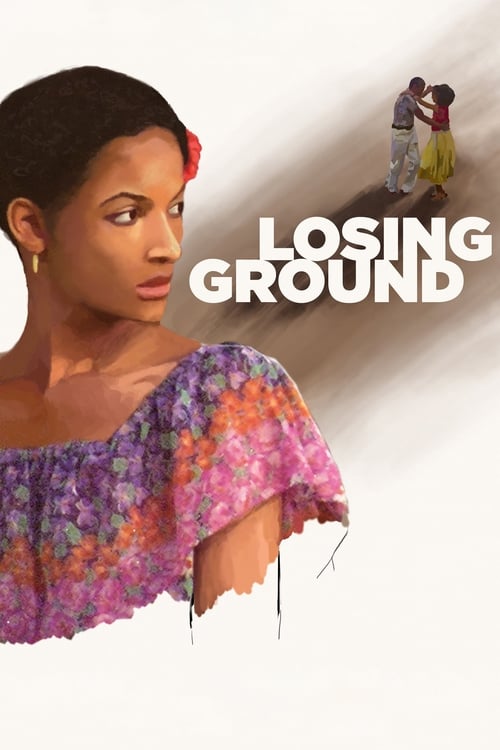
Losing Ground
1982 · Kathleen Collins
For when you want grown-up conversation on screen — a smart, warm summer film about love and self-discovery, best for a reflective evening when you'd rather feel understood than dazzled.
What it's about
Sara, a poised philosophy professor researching the nature of ecstatic experience, spends a summer upstate with her husband Victor, a painter chasing raptures of his own. The season strains their marriage along every fault line — intellect versus instinct, her composure versus his charm — as Sara starts wondering what ecstasy might feel like from the inside rather than the page.
The experience
Sunlit, talky, and sneakily funny — a film of long conversations, dancing, and simmering marital friction that feels loose in the moment and lands with real weight. It's intimate without ever being heavy.
Performances
Bill Gunn, the maverick filmmaker turned actor, plays the husband with a charming, maddening self-absorption that keeps you laughing and wincing at once.
The craft
Kathleen Collins directs with a playwright's ear for dialogue and a painter's eye for summer light, made independently on a shoestring. The talk-rich, sun-drenched style gives it the feel of eavesdropping on brilliant people at their most unguarded.
Why it matters
One of the first fiction features directed by a Black American woman, unreleased in Collins's lifetime and essentially unseen until a 2015 restoration revealed a missing piece of American film history.
One of the first fiction features directed by a Black American woman, and for three decades one of American cinema's great missing pieces. Kathleen Collins — playwright, professor, civil-rights veteran — made this sunlit, talk-rich comedy of a marriage on $125,000, and could not get it released; she died in 1988 at forty-six, and the film sat unseen until her daughter shepherded a restoration to theaters in 2015. Its heroine, a philosophy professor researching 'ecstatic experience' while her painter husband chases his own raptures upstate, was something American movies had simply never offered: a Black woman intellectual whose dilemmas are aesthetic, erotic, and metaphysical rather than sociological. Bill Gunn, the maverick director of Ganja & Hess, plays the husband with charming, maddening self-absorption. Collins works in a register closer to Rohmer than to anything in the American independent cinema of her moment — conversation as action, ideas as weather. That such a film existed in 1982, and that we nearly lost it, is one of the sharper rebukes in the history of American film culture.
Reception
Made in 1982 but never given a theatrical release, it sat essentially unseen for over three decades until a 2015 restoration (championed by Collins' daughter and released by Milestone Films) turned it into one of cinema's great rediscoveries — now widely hailed as a landmark of Black independent film.
How Losing Ground was received, from release to now →
Influences: the films it descends from and the films it influenced
- My Night at Maud's (1969) — Rohmer's 'moral tale' structure, in which extended philosophical conversation about chance, faith, and desire replaces incident, is the template Collins adapts for Sara's dialectical debates over reason versus ecstasy.
- Claire's Knee (1970) — Rohmer's method of filming an intellectual's detached erotic fascination in bright summer daylight — desire narrated and observed rather than consummated — underwrites Collins's sunlit framing of Sara's ecstatic longing.
- Ganja and Hess (1973) — Gunn's fusion of the erotic and the metaphysical in a Black art-cinema register directly seeds Collins's film, which casts Gunn himself as Victor and inherits his mode of ecstatic interiority.
- Shadows (1959) — Cassavetes's self-financed, actor-driven improvisational realism established the American-independent template for filming Black urban life outside the studio system that Collins works within.
- Faces (1968) — Cassavetes builds a marriage's disintegration entirely from long, close, dialogue-heavy two-handers, the same conversational duration Collins uses to stage the crisis between Sara and Victor.
- A New Leaf (1971) — May's woman-authored comedy of marriage, cut to actors' comic timing on a modest budget, is a precedent for a woman directing marital comedy in an actor's-cinema idiom.
- Symbiopsychotaxiplasm: Take One (1968) — Greaves's Black-authored film-within-a-film about actors performing and reperforming a scene prefigures Collins's device of Sara acting inside a student's film-within-the-film.
- Daughters of the Dust (1991) — Dash's painterly, sun-drenched centering of Black women's consciousness extends Collins's project and stands as the next Black-woman-directed US theatrical feature to carry that baton.
- The Watermelon Woman (1996) — Dunye's Black-woman author-protagonist recovering an erased Black actress mirrors Collins's own lost-and-restored authorship, turning the archival gesture into meta-form.
- Drylongso (1998) — Smith's sunlit, self-authored Black-woman coming-of-age indie continues Collins's lyrical low-budget mode of everyday Black interiority shot in natural light.
- Medicine for Melancholy (2008) — Jenkins constructs a day-long film almost entirely from Rohmerian conversation between two Black intellectuals, directly extending Collins's talk-as-action inheritance from Rohmer.
- Pariah (2011) — Rees stages a young Black woman's ecstatic self-becoming in an intimate, naturally-lit independent register descended from Collins's foregrounding of Black-woman interior awakening.
- Killer of Sheep (1978) — Burnett's sunlit 16mm neorealism of unheroic everyday Black life shares Collins's turn away from melodrama toward ordinary texture within the same late-70s Black-independent moment.
- Illusions (1982) — Dash's contemporaneous portrait of a poised Black woman navigating a white industry is a 1982 sibling in the same wave of Black-woman-authored independent filmmaking centered on intellectual interiority.
- Personal Problems (1980) — Gunn's Black 'meta-soap opera' of domestic interiority, shot on video, works the same years and register as Collins — the inner life of Black couples rendered without genre armor.
- Bless Their Little Hearts (1984) — Woodberry's patient naturalist long takes tracking a marriage eroding under economic strain share Collins's domestic-drama craft of letting conversation and silence carry the rupture.
Similar films
- Daughters of the Dust (1991) — influence & lineage
- Personal Problems (1980) — influence & lineage
- Eve's Bayou (1997) — shared sensibility
- Compensation (1999) — shared sensibility
- Certain Women (2016) — shared sensibility
- Sunrise: A Song of Two Humans (1927) — shared sensibility
- Long Day's Journey Into Night (1962) — shared sensibility
- My First Summer (2020) — shared sensibility