Pariah
2011 · Dee Rees
For when you want a coming-of-age story that feels lived-in and true, not sanded down — something moving that earns its emotion. It's an emotional watch, but the kind that leaves you feeling fuller, not wrecked.
What it's about
Alike is seventeen, a gifted poet in Brooklyn, and living two lives: out at the club with her best friend, buttoned-up and church-ready by the time the bus gets her home to her mother. She knows exactly who she is — a young lesbian coming into her own — but almost no one in her life can be allowed to see all of her at once. The film follows her through first crushes, tightening family pressure, and the slow, dangerous work of deciding which version of herself survives.
The experience
Intimate and tender, with a low hum of dread whenever Alike walks through her own front door. It moves quietly but hits hard — you spend the film holding your breath for her, and the warmth of the club scenes makes the silences at home ache more.
Performances
Adepero Oduye plays Alike with startling transparency — you can watch her rebuild herself in real time as she changes clothes on the bus, and every code-switch registers on her face before a word is spoken.
The craft
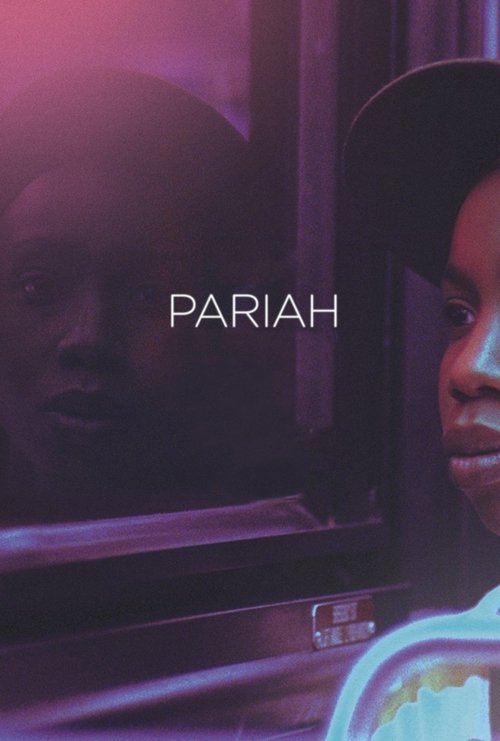
Bradford Young's cinematography is the revelation: Brooklyn nights soaked in deep blues and pinks, finding lushness where low-budget indies usually settle for grit. Dee Rees, expanding her NYU thesis short, builds the whole film around costume and light as storytelling — worth watching somewhere dark enough to let those colors bloom.
Why it matters
A landmark of Black queer American cinema whose influence runs straight through the decade that followed — later filmmakers have openly acknowledged the debt — and it launched both Rees and Young into major careers.
Dee Rees's debut announced two major talents at once: her own, and that of cinematographer Bradford Young, whose low-light photography bathes Brooklyn nights in saturated blues and pinks, finding lushness where American independent film usually finds grit. Alike, a seventeen-year-old poet played with extraordinary transparency by Adepero Oduye, changes clothes on the bus between the club and her mother's house — a costume-change motif that carries the whole film's argument about code-switching and the exhausting labor of being differently legible to different audiences. Expanded from Rees's NYU thesis short and shepherded to Sundance with Spike Lee as executive producer, Pariah sits at the headwaters of a remarkable current in Black American cinema; its DNA is visible in Moonlight, whose director has acknowledged the debt, and Young went on to shoot Selma and Arrival. Rees draws partly on her own coming-out, and it shows in the film's refusal of melodrama's easy villains — even the hardest scenes are played as collisions of love and fear. The final line of Alike's poetry lands like a door opening.
A Deleuzian reading
A girl changes her clothes on a bus.
The full Deleuzian reading of Pariah →
Reception
A Sundance 2011 breakout that critics adored but audiences barely saw — often marketed in the shadow of Precious — Pariah has since been fully canonized as a landmark of Black queer cinema, sealed by a Criterion Collection release in 2021.
How Pariah was received, from release to now →
Influences: the films it descends from and the films it influenced
- She's Gotta Have It (1986) — Rees was Lee's NYU mentee and PA, and Pariah inherits his brownstone-Brooklyn mise-en-scène and insistence on unmediated Black interiority staged in domestic interiors rather than spectacle.
- Daughters of the Dust (1991) — Arthur Jafa's lyrical, saturated cinematography of Black women plus a poetry-driven, non-linear structure — the template for framing a Black-female protagonist through verse rather than plot mechanics.
- The Watermelon Woman (1996) — The New Queer Cinema precedent of a self-authored Black lesbian protagonist claiming screen space, giving Pariah its lineage in Black-lesbian first-person storytelling.
- Eve's Bayou (1997) — Inherits the tradition of centering a young Black girl's interior perception through expressive, mood-driven color cinematography (Bradford Young), treating a coming-of-age gaze as a subject worthy of formal beauty.
- Losing Ground (1982) — Rees stages a young Black woman's ecstatic self-becoming in an intimate, naturally-lit independent register descended from Collins's foregrounding of Black-woman interior awakening.
- Drylongso (1999) — Bradford Young's expressive, warm-hued color cinematography wrapped around an intimate first-person Black coming-of-age — the same authored gaze and painterly-realist palette Smith pioneered on 16mm.
- Compensation (1999) — Character-driven Black independent feature privileging interior emotional legibility and expressive framing over plot — inheriting the intimate, poetically composed authorship Davis modeled.
- Madame Satã (2002) — Uses handheld, body-close intimacy (Bradford Young) to chart a Black queer coming-into-self, inheriting Madame Satã's fusion of tactile camera with the drama of self-authorship.
- Mudbound (2017) — Rees extends her own anti-melodramatic, poetry-framed authorship — multiple first-person voiceovers and naturalist Black interiority — into a period ensemble.
- A Thousand and One (2023) — Bradford Young's underexposed, richly saturated grain lighting Black skin in low-light NYC interiors — the tactile cinematographic grammar Rockwell inherits.
- Girls Like Girls (2026) — Advances the interiority-forward queer coming-of-age built on saturated, expressive lighting and a protagonist's private self-narration of emerging desire.
- Killer of Sheep (1978) — The LA Rebellion model of observational, plotless anti-melodrama that lets Black working-class life accrue meaning through mundane episodes instead of dramatic climaxes.
- Tongues Untied (1989) — Uses spoken poetry as the narrative spine for Black queer identity, the same device Pariah threads through Alike's written verse and closing recitation.
- The Godfather (1972) — Gordon Willis's 'Prince of Darkness' underexposure and top-lit shadow is the low-light grammar Bradford Young adapts to render dark skin with deliberately withheld light.
- In the Mood for Love (2000) — Christopher Doyle's expressionistic saturated color and pooled low light — the jewel-toned nightclub and neon palette Young echoes to make emotional heat visible.
- Restless City (2011) — Shot the same year by Bradford Young, sharing his shallow-focus, saturated-color portraiture of African-diaspora New York as a sibling experiment in the same lens language.
- Middle of Nowhere (2012) — Bradford Young again lighting Black skin in soft, warm low-key interiors, extending Pariah's method of finding intimacy in underexposed domestic space.
- Mother of George (2013) — Young pushes Pariah's saturated palette further into rich reds and telephoto shallow focus, treating Nigerian-American Brooklyn with the same painterly close framing.
- Ain't Them Bodies Saints (2013) — Young's naturalistic magic-hour and available-light photography carries Pariah's commitment to shooting into darkness rather than filling it.
- Selma (2014) — Young scales Pariah's dark-skin-forward, low-light exposure discipline up to a historical epic, proving the technique holds beyond intimate indie scale.
- Moonlight (2016) — Directly influenced by Pariah — a queer Black coming-of-age told in chapters, with James Laxton's saturated, tender low-light rendering of dark skin descending straight from Young's work.
- Girlhood (2014) — A sibling Black-girlhood coming-of-age built on code-switching between selves and vivid saturated color (the blue-lit lip-sync scene) rather than melodramatic incident.
- Rafiki (2018) — An African lesbian coming-of-age that inherits Pariah's fusion of hyper-saturated color and queer first-love tenderness against a hostile social frame.
Similar films
- Moonlight (2016) — influence & lineage
- Mudbound (2017) — influence & lineage
- Girls Like Girls (2026) — shared sensibility
- House of Hummingbird (2019) — shared sensibility
- A Thousand and One (2023) — shared sensibility
- Blue Is the Warmest Color (2013) — shared sensibility
- Precious: Based on the Novel 'Push' by Sapphire (2009) — shared sensibility
- Blue Jean (2023) — shared sensibility
All the films related to Pariah →